
Sign up to save your podcasts
Or

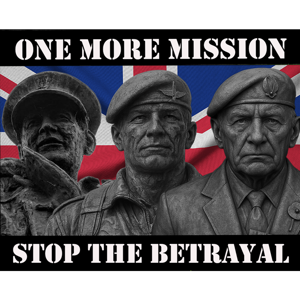


Remembrance is about yesterday, today and tomorrow.
From Cape Town, South Africa — where the tradition of the two-minute silence has its origins — in this special edition of One More Mission , Lt. Col. Simon Barry, former Para, reflects on the enduring meaning of Remembrance.
Veterans and serving personnel from Britain, South Africa and across the Commonwealth come together in a ceremony marked by dignity, sincerity and a shared sense of service and sacrifice.
Beyond nationalities, backgrounds and generations, Remembrance remains a powerful bond between those who have served and those who continue to serve.
But Remembrance must be more than ceremony, political gesture or public performance. It demands that we honour those who served yesterday, recognise those who serve today, and remember those who will be called upon to serve tomorrow.
Remembrance is not a performance. It is a duty.
One More Mission — Remembrance Day 2026.
In this episode of One More Mission, former Parachute Regiment Lt. Col Simon Barry examines one of the most contentious elements of the Government’s proposed Northern Ireland legacy arrangements: the role of the Irish Government.
The UK and Irish governments have pledged reciprocal cooperation in addressing the past. But what will reciprocity mean in practice?
Simon examines the Republic’s historic role as a base for IRA activity, the movement of weapons and explosives across the border, its record on extradition, and serious allegations of collusion involving individual members of An Garda Síochána.
British military, police, and government records remain available for investigators to scrutinise decades later. Will investigators have comparable access to Irish records, witnesses, and evidence?
And if Irish state agencies themselves come under scrutiny, who investigates the investigators?
Simon argues that veterans should not oppose legitimate investigation, but they should demand equal scrutiny, equal disclosure, and equal accountability on both sides of the border.
If Britain is expected to open its files and investigate its own people, will the Republic of Ireland genuinely be required to do the same?
One More Mission is the JusticeforVeterans.uk podcast examining the political, legal and historical issues affecting those who served.
#JusticeForVeterans #OneMoreMission #NorthernIreland #Veterans #Legacy #BritishArmy #Lawfare
Airborne Veterans Form Up | Terry Woods & Simon Barry on the Legacy Bill
Former Parachute Regiment officers Terry Woods and Lt Col (Retd) Simon Barry discuss the future of Northern Ireland legacy legislation and why they believe veterans should engage directly with their Members of Parliament before Parliament returns.
For Terry Woods, the issue is deeply personal. His brother was among the 18 soldiers murdered in the Warrenpoint ambush in August 1979. Terry later joined 2 PARA and completed the same Northern Ireland emergency tour.
Their conversation examines:
The future of the Legacy Bill following recent political changes.
Why they believe the 2023 Act remains a lawful alternative.
Duty of care to those sent on operations.
The implications for future generations of service personnel.
Why veterans should tell their own story rather than allow others to define it.
This conversation is also a call to the Airborne community ahead of the Parachute Regimental Association AGM, encouraging veterans to engage respectfully with their MPs and ensure Parliament hears directly from those who served.
justiceforveterans.uk is an independent initiative providing information, analysis and practical support to veterans seeking to engage constructively with the democratic process.
Visit: justiceforveterans.uk
#JusticeForVeterans #NorthernIreland #OperationBanner #ParachuteRegiment #BritishArmy #Veterans #LegacyBill #Warrenpoint #Airborne #MilitaryHistory
In this episode of One More Mission, JusticeforVeterans.uk speaks with former Parachute Regiment officer Lt Col Simon Barry about one of the central questions in the Northern Ireland legacy debate:
What obligations does the state continue to owe those it sent into harm's way?
The conversation examines the Armed Forces Covenant, retrospective investigations, military law, trust between government and the Armed Forces, and the wider implications for those serving today.
Topics include:
• The state's duty to those who serve.
• The Armed Forces Covenant and whether it is being honoured.
• Repeated legacy investigations.
• Retrospective application of legal standards.
• Accountability, finality and the rule of law.
• The role of regimental associations.
• The impact on serving personnel, recruitment and retention.
• Whether current legacy proposals strengthen or weaken trust in government.
• What a balanced legacy process might look like.
Rather than focusing on personalities or political rhetoric, this discussion explores the principles that underpin the relationship between the nation and those who serve it.
About One More Mission
One More Mission is the podcast from JusticeforVeterans.uk, featuring in-depth conversations on the Northern Ireland legacy debate, military service, law, public policy and the Armed Forces Covenant.
The aim is simple: to provide context, evidence and thoughtful discussion on issues affecting veterans and the wider military community.
If you found this discussion valuable, please consider liking the video, subscribing to the channel and sharing it with others interested in these issues.
#JusticeForVeterans #OneMoreMission #OperationBanner #NorthernIreland #ArmedForcesCovenant #Veterans #MilitaryHistory #BritishArmy #RuleOfLaw #Legacy
Former Parachute Regiment officer Lieutenant Colonel Simon Barry joins One More Mission to discuss the resignations of John Healey and Al Carns, Britain's defence readiness, the Armed Forces Covenant and the future of the Northern Ireland legacy debate.
Topics include:
• Why Al Carns' resignation matters
• Military leadership and "falling on your sword"
• Defence spending and national readiness
• Lessons from Ukraine
• Defence procurement and military capability
• The Armed Forces Covenant
• Veterans and trust in public institutions
• Northern Ireland legacy investigations
• The future of the campaign for fairness for veterans
• What "One More Mission" means today
Whether discussing defence policy, leadership or the treatment of veterans, this conversation centres on a simple question: what obligations does a nation owe those it asks to serve?
If you find the discussion valuable, please like, subscribe and share.
#Veterans #BritishArmy #ParachuteRegiment #Defence #Military #NorthernIreland #ArmedForcesCovenant #NationalSecurity #OneMoreMission
John Healey’s resignation as Defence Secretary has been presented as a dispute over budgets and spending targets.
In reality, it raises a much larger question: is Britain prepared to match its security challenges with the resources, policies and political decisions required to meet them?
Healey reportedly concluded that it was not.
His departure follows a prolonged disagreement over defence spending, with concerns that investment is not keeping pace with the threats facing the UK and its allies. Coming ahead of a major NATO summit, the resignation inevitably focuses attention on Britain’s defence posture and long-term preparedness.
JusticeforVeterans.uk asked former SAS commanders Dr Robert Parr and George Simm for their reaction.
Both argued that defence cannot be reduced to equipment programmes and spending percentages alone.
They pointed to broader concerns about morale, retention, legal uncertainty, and the treatment of veterans.
Dr Parr argued that Britain faces growing pressure from adversaries operating in the grey zone between peace and conflict, while simultaneously undermining confidence among those who serve and have served.
George Simm described Healey’s resignation as the act of a politician following conviction rather than convenience and suggested that the disagreement over funding may have been only one part of a broader frustration with the direction of policy.
Whether one agrees with their assessment or not, the underlying issue remains. Defence is ultimately about credibility.
Potential adversaries judge not only military hardware and budgets but also political resolve, national cohesion, and a country's willingness to support those it asks to serve.
Healey’s resignation does not end that debate. It may simply have made it harder to avoid.
In this episode of One More Mission, former Parachute Regiment officer Lieutenant Colonel Simon Barry discusses the growing concern among veterans over the Government's Northern Ireland legacy proposals and the wider implications for those who served in Iraq, Afghanistan and other operations.
Topics include parliamentary voting records, the importance of constituency engagement, the impact of investigations and legal processes on veterans and their families, and why many former servicemen believe the current debate extends far beyond Northern Ireland.
Simon also discusses the role of regimental associations, the significance of parliamentary abstentions, concerns about future precedent, and why veterans are increasingly encouraging others to examine the voting records of their MPs.
A wide-ranging discussion on accountability, representation, military service and the relationship between the nation and those it asks to serve.
Learn more at: https://justiceforveterans.uk
Former Parachute Regiment, Lieutenant Colonel Simon Barry discusses the Republic's role during the troubles, cross-border security, the legacy process, and the concept of selective forgetting. The conversation delves into the challenges of extradition, the impact of political reality on the peace process, the role of Jonathan Powell, the changing political language, and the process as a form of punishment. It concludes with a reflection on the possibility of an honest legacy without a clear understanding of the Republic's role.
Takeaways
Chapters
What happens when politicians acknowledge the impossible pressures faced by soldiers and police officers in split-second situations — while supporting legacy processes that veterans believe ignore that reality altogether?
In this episode of the Justice for Veterans Podcast, Lt Col Simon Barry discusses the growing contradictions at the heart of the Northern Ireland legacy debate.
The conversation explores:
• Why the phrase “agents of the state” risks dehumanising those who served
• The widening gap between political decision-makers and those sent to carry out policy on the ground
• The impact of legacy investigations on veterans, families and communities
• Why younger generations of veterans are beginning to pay attention
• The implications for future military operations and morale
• The changing political atmosphere around the Legacy Act and current legislation
• The role of Westminster, Dublin and Sinn Féin in shaping the debate
• Why many veterans now believe the issue extends far beyond Northern Ireland
This is a conversation about responsibility, memory, lawfare, political language and the human realities often lost beneath abstraction.
Listen, subscribe and share.
www.justiceforveterans.uk
A small delegation of senior veterans, led by former Parachute Regiment Major-General Dair Farrar-Hockley, met officials at No.10 just days after the Government voted to carry its Troubles legislation into the next parliamentary session.
In this episode of One More Mission, those present speak candidly in the immediate aftermath.
The meeting itself was described as cordial, with officials from the Ministry of Defence, the Northern Ireland Office, and Downing Street in attendance. While bound by confidentiality, the delegation makes clear that their concerns were heard—and, in some cases, recognised.
But the underlying message is harder-edged.
With around 1,200 unresolved deaths linked to Operation Banner, serious questions are raised about whether the Government’s stated aim of delivering “justice, information and answers for all” is achievable in practice—or whether the process risks becoming the punishment.
Alongside this, the episode explores:
Featuring additional insight from Paul Young, this is a grounded, first-hand account from those directly involved—recorded at a moment when the issue is moving back to the centre of political and public debate.
This is not history. It is ongoing.
Subscribe for more episodes of One More Mission.
From the publisher's feed
One More Mission is a JusticeForVeterans.uk podcast about what happens after service — when veterans and their…