
Sign up to save your podcasts
Or



Sounds are incorporated into poems as part of a poet's observational paradigm and thereby shape the meanings of poems. Because many of us are especially attentive to sounds at night and of the night, today I read poems about night sounds by Thomas Hardy, James Joyce, Robert Frost, Maxine Kumin, Carolyn Kizer, and Alejandra Piznarik. I end the program with two of my own poems.
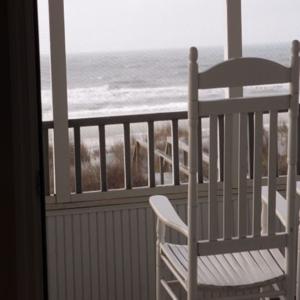
My program today follows up on my programs about the whiteness and cold of winter. The physical and emotional and aesthetic contexts of winter at the ocean are powerful affirmations of life experienced, so today I read poems about the ocean in winter, celebrating the clarities made possible by whiteness and cold that wraps the sands and waters. I read poems by Walt Whitman, Sara Teasdale, John Betjeman, Thomas McGrath, and Joseph Millar. I end the program with two of my own poems.
My program today is about how poets incorporate the idea of cold and coldness into their poems, to create texture, to control mood and tone, to provide symbolic or metaphoric significances, and to create and direct images that resonate connotatively for different readers. I read poems by Annie Lennox, D.H. Lawrence, Federico Garcia Lorca, William Carlos Williams, Roberta Hill Whiteman, and James Wright. I end the program with two of my own poems.
We had our first significant snowfall and the horizon is white. I was struck by that whiteness, so I read poems today that use the color white -- directly or indirectly -- to create texture, to control mood and tone, to provide symbolic or metaphoric significances, and to create and direct images that resonate connotatively for different readers. I read poems by Emily Dickinson, A.E. Housman, Robert Frost, Philip Larkin, W.S. Merwin, Sylvia Plath, and Wisława Szymborska. I end the program with two of my own poems.
I read poems about the Brooklyn Bridge today, during the beginning of the month named for the two-faced god Janus, and ask you to consider how both this month and bridges point in two directions, both forward and backwards, to the past and to the future, to memory and to prophecy. I read poems by Walt Whitman, Marianne Moore, Hart Crane, Jack Kerouac, Harvey Shapiro, and Alfred Corn. I end the program with one of my own poems.
Today’s program continues my consideration of December as a time of reflection and remembrance and focuses on several poets we lost this year. I read poems by Lawrence Ferlinghetti, Adam Zagajewski, Friederike Mayröcker, Jean Binta Breeze, Robert Bly, and Thomas Kinsella.
Today’s program continues my consideration of December and focuses on poems that incorporate an actual or a metaphorical hearth or fireplace into their lyrical or narrative frames. I read poems by J.R.R. Tolkien, William Butler Yeats, C.K. Williams, Robert Hayden, and Ken Hada. I end the program with two of my own poems.
Today’s program continues my consideration of the end of the calendar year and is the second of several programs that focus on poets born in December. I read poets who were born in the second week of December, during various decades and in various countries: Bjornstjerne Bjornson, Padraic Colum, Delmore Schwartz, Emily Dickinson, Nelly Sachs, and Grace Paley.
Today’s program continues my consideration of the end of the calendar year and is the first of several programs that will focus on poets born in December. I begin with poets who were born in the first week of December, during various decades and in various countries. I read poems by Rainer Maria Rilke, translated by Alfred Corn; William Stanley Braithwaite, Joyce Kilmer, Ira Gershwin, Yosano Akiko, and Pearl Cleage.
From the publisher's feed