
Sign up to save your podcasts
Or

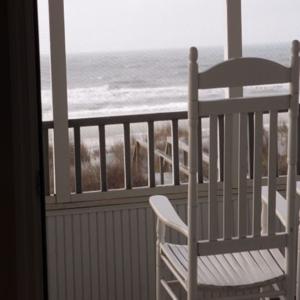


As I discussed in my program last week, highways lead us to new destinations and to new discoveries there, so today I reconsider one such recent destination and read poems about Maine and about the ocean by Robert Lowell, Edna St. Vincent Millay, Lillian-Yvonne Bertram, Pam Burr Smith, George Oppen, and Louise Bogan. I end the program with three of my own poems.
The search for something new, the act of going somewhere, is a foundational part of our country's identity and poets have explored its attractions and impacts. Today I read poems about highways and roads and journeys, about leaving a place and going to a different place to find something new, by Walt Whitman, Willie Nelson, James Wright, James Applewhite, Gregory Corso, and Bruce Springsteen. I end the program with one of my own poems.
To celebrate midsummer and the summer solstice -- and the mix of pagan and Christian elements in some of those celebrations, particularly in Northern Europe -- today I read poems about John the Baptist and about Salome by Vachel Lindsay, Conrad Aiken, Thomas Merton, Ai, Carol Ann Duffy, Eric Pankey, and Dorothy Parker. I end the program with one of my own poems.
I talk about the translation of poetry today because I have a new book of my translations now available. It is titled Alternating Masks: Selected Poems of Kornelijus Platelis and is the comprehensive translation into English of poems by the most acclaimed contemporary Lithuanian poet and one of the most accomplished of contemporary European poets. So I read my translations of Platelis' poems to celebrate the appearance of this new book.
In my program last week, I talked about how monuments create symbolic significance in our lives. They are objects specifically made to create such meanings. Today I consider how we endow things of the natural world with symbolic significances. I use the cormorant as an example of imposed symbolic meaning on natural objects and read poems by Robinson Jeffers, Eavan Boland, Kobayashi Issa, Macdara Woods, Li-Young Lee, and Christopher Isherwood. I begin the program with two of my own poems.
Poets and other writers have considered the role of monuments in human society and human history. So today, to commemorate Memorial Day, and to follow up on my concluding poem about a Civil War monument from last week's program, I read poems about monuments by Percy Bysshe Shelley, Robert Lowell, Elizabeth Bishop, Derek Walcott, Seamus Heaney, and Gordon Henry. I end the program with one of my own poems.
To follow up on last week's program about one of the joys of my childhood, I read poems about being a boy, about boyhood, including positive memories and some that are less so. I include poems by Ken Hada, Charlotte Perkins Gilman, William Matthews, e.e. cummings, Gary Snyder, Robert Bly, and Gwendolyn Brooks. I end the program with one of my own poems.
The wonderful colors of May -- beginning with delicate greens and then deepening to fuller textures and hues blossoming everywhere -- are one of the reasons why May is my favorite month. Lilacs are another. To celebrate the return of all of the natural joys of May, I read poems about lilacs by Walt Whitman, Amy Lowell, Philip Levine, John Hiatt, and Kornelijus Platelis. I end the program with one of my own poems.
Today, as an adjunct to my programs last fall about poverty, and to continue my look at poetry inspired by immigration, I read poems about the conditions and destinies of working people. They are by Ella Wheeler Wilcox, Philip Levine, Kenneth Patchen, Langston Hughes, Rose Pastor Stokes, and Bob Hicok. I end the program with one of my own poems.
Today, as a continuation of my focus on immigration, and in celebration of Cinco de Mayo, I read poems by Chicano poets Gloria Evangelina Anzaldúa, Lorna Dee Cervantes, Sandra Cisneros, Juan Felipe Herrera, Tino Villanueva, and Daniel A. Olivas, and by Mexican poets Octavio Paz and Carmen Boullosa.
From the publisher's feed