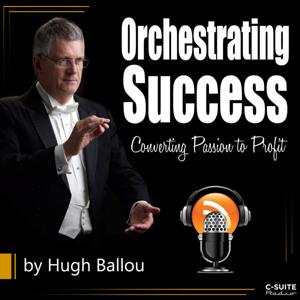
Orchestrating Success

Orchestrating Success

Download on the App Store

Orchestrating Success episodes

  • OS 015 - Legacy Interview with Cal Turner, Jr.

    Cal Turner received his B.A., cum laude, from Vanderbilt University in 1962. Following his graduation from Vanderbilt, Mr. Turner served for more than three years as an officer in the United States Navy. In December 1965, he began his career at Dollar General, the company founded by his father and grandfather in 1939. He succeeded his father as president in 1977 and as chairman in 1988. At the time of his retirement in 2003, Dollar General had grown into a New York Stock Exchange retailer with more than 6,000 stores in 27 states and annual sales in excess of $6 billion.

    Mr. Turner has served on the boards of a number of civic and charitable organizations, including the Easter Seal Society of Tennessee, Inc., Leadership Nashville, the PENCIL Foundation and the YMCA of Middle Tennessee. From 2000 – 2001 he was president of the Board of Governors of the Nashville Area Chamber of Commerce. He is a past chairman of the Board of Trustees of Lindsey Wilson College in Columbia, Kentucky, a current member of the Board of Trustees of Fisk University in Nashville, Tennessee, and Vanderbilt University in Nashville and present Chairman of the YMCA of Middle Tennessee.

    In 1988, Mr. Turner accepted the Presidential Award for Private Sector Initiatives from President Ronald Regan at a White House ceremony.  In 1991, the Sales and Marketing Executives of Nashville recognized Mr. Turner with the Summit Award for his excellence in management.  He received the Silver Hope Chest Award in 1992, an honor presented annually by the Middle Tennessee chapter of the National Multiple Sclerosis Society.  In 1994, he was honored as Nashvillian of the Year by the Easter Seal Society of Tennessee.  In 1997, he received the Alexis de Tocqueville Society Volunteer of the Year Award from the United Way of Middle Tennessee, and, in 1998, he received the Vanderbilt Distinguished Alumnus Award.  In 2002, Meharry Medical College presented Mr. Turner with the school’s prestigious Salt Wagon Award, given for acts of kindness and commitment to Meharry Medical College and its mission.

    Cal Turner’s commitment to the Methodist Church has been a lifelong personal ministry of faith. The Tennessee Conference of the United Methodist Church inducted Mr. Turner into the Fellows of the Society of John Wesley in 2001, for distinguished service to local church mission and ministry. In 2002, Mr. Turner was award the Stanley S. Kresge Award by the United Methodist Higher Education Foundation for his commitment to higher education.

    He and his wife Margaret are the parents of Cal Turner, III, who, with his wife Hope, are the parents of Cal Turner, IV, Alex Turner and Will Turner.

    Learn more about your ad choices. Visit megaphone.fm/adchoices

    45 min
  • OS 013 - Legacy Interview with David Stanley
    Interview with David Stanley
    Hugh: This is Hugh Ballou. Today, I am interviewing David Stanley. David, you and I have known each other about ten years.
    David: It has been a while. How are you doing today?
    Hugh: I’m doing great. I interviewed you years ago, in 2007, for my book Transforming Power about your leadership skills and putting a team together to do a movie. Your themes have been around your brother, Elvis. You are launching an initiative called “My Brother Elvis.” Give us a little background on who you are, your relationship with Elvis, and why this vision is so important to you and to others.
    David: Let me start off by saying I am excited about the new foundation called My Brother Elvis Foundation, which is a charity designed to educate and support and fight against the drug abuse problems that we have in America today. Some may ask why I would want to do that and what that has to do with Elvis. I spent seventeen years with Elvis Presley beginning in 1960 when my mother divorced my father and remarried Vernon Presley, Elvis’s father. I became Elvis’s stepbrother and moved into Graceland in 1960, and I lived there for seventeen years. This was a great experience. Elvis was a wonderful human being. He took me into his family. He really raised me. He was my father figure, my mentor, the person I looked up to. It was unusual to be driven to school in a pink Cadillac every day; I got a lot of attention for being Elvis’s brother. It was a very cool lifestyle.
    In 1972, I went to work for Elvis as his personal bodyguard. Working for Elvis meant being part of his entourage, traveling with him everywhere. I went on tours with him, to movie studios. Wherever he went, I went. When I toured with Elvis, I saw a chink in the armor. Elvis had a drug problem. He started off taking a couple pills to help him sleep. That number went from two to four, four to six, six to eight, and by the late ‘70s, Elvis had a very serious drug addiction problem. Unfortunately, we lost Elvis to a drug overdose on August 16, 1977. I was there. I walked into his bedroom to discover his lifeless body.
    While this is a very brief interview, it’s hard to discuss all of this in detail. That’s why I wrote a book called My Brother Elvis: The Final Years, which is about the final five years of my life with Elvis on the road and the things we are discussing right now. I wrote this book to tell this story about Elvis’s tragedy.
    Growing up with Elvis, he was such a giver. He was always giving to charities, giving his time and money. He kept writing checks to different charities throughout the world. That was his ultimate gift. I thought about my life. I was brought up this way. I saw the tragedies of what drugs can do firsthand, and now I am telling his story. Elvis’s death does not have to be in vain. Sure, it was a tragedy. Sure, he was a wonderful, loving person, a wonderful father, and a great big brother. He was the king of rock and roll. But the tragedies and realities of the human side of Elvis Presley cost him his life. I said to myself, “I can write this book and share this story. I’m not going to do a tell-all.

    Learn more about your ad choices. Visit megaphone.fm/adchoices

    27 min
  • OS 012 - Transforming Your Leadership Skills with Ed Krow
    Ed Krow is the Talent Transformation Expert for businesses looking to achieve 8 figure growth. He delivers captivating, high-energy keynote presentations that challenge the traditional model of HR and prepare decision makers for motivating their people with a win-win strategy.In his career, Ed has helped over 250 clients, including Fortune500 companies, achieve talent and culture transformations. As a result, audiences value Ed’s deep understanding of the employee/employer dynamic and his ability create a connection with them right away. On stage, he provides practical approaches, tools, and relevant stories to inspire action.A speaker, trainer and coach certified by The John Maxwell Team; Ed’s topics bring a refreshing perspective on how to leverage what is commonly viewed as “people problems” and turn negative growth into business success.Ed is a member of the National Speakers Association, the Forbes Coaches Council, and a regular contributor to Forbes.com. He is the author of "Strategic HR: Driving Bottom Line Results Through Your People."When he’s not on stage or helping clients, Ed teaches at Millersville University. His first love is family, with golf vying for atight second. If you do catch him at home, he’s likely cheering forthe Notre Dame or Baltimore Ravens football teamsThoughts from Ed KrowBe Like SALT: A Well-Seasoned Approach to LeadershipI'd like you to think about what salt does for us. Our bodies need sodium as a vital nutrient. Salt is a preserver of foods and meats. Salt enhances flavor for us in our food. In olden times, salt was extremely valuable and was used as a trading mechanism. In fact, the word “salary” comes from the Latin word for salt. Now, we're not sure why, although there are some stories that say that Roman soldiers, during the height of the Roman Empire, were actually paid in salt due to its value. In fact, the availability of salt has been pivotal to civilization.Perhaps you’ve heard the phrase, “She’s salt of the earth”? When we say that, we mean that person is a good and honest person.At any rate, why do I say that we need to be like salt? As leaders, it's our job to enhance our people to make them better than they were when they came to us. That's the same thing that salt does for our food: It makes it taste even better.As leaders, isn't it our job to engage our people and preserve them for the company, just like salt does for foods? And isn't it our job to ensure that our workplace is healthy, thriving and has all the nutrients it needs to be successful? Just like salt for the human body.When we think about salt, we probably take it for granted. It's on every restaurant table; it's in every kitchen; it's probably on your dining room table. It's there when we need it to add a touch of spice to things. As leaders, we need to be there, be readily available for our people. It's OK if we're in the background, but we're there when they need us to add that little pizzazz that they need to get through their workday or to get through that big project.However, we also know that too much salt is not good for us. It can cause high blood pressure, among other things. Being an overbearing leader can have the same result. Not allowing our people to make decisions for themselves, not allowing our folks the opportunity to thrive on their own without our influence, is extremely detrimental. An overbearing leader stifles the creative flavor of their people, much like using too much salt on food takes away from the enjoyment of that food. If we routinely over-lead our people, it's not healthy for their development or for their long-term engagement with the organization.I believe we need to be like salt.

    Learn more about your ad choices. Visit megaphone.fm/adchoices

    30 min
  • OS 012 - Legacy Interview with Ken Courtright
    Ken Courtright is the founder of Today’s Growth Consultant, a two-time Inc. 5000 designee with revenues that have doubled in each of the last 5 years. Started in 1992, the company is now an international, multimillion-dollar enterprise. TGC has worked with over 3,300 companies in 49 states.
    Ken is the author of the upcoming book Guerilla Marketing Today, part of the best-selling Guerilla Marketing series, and best-selling author of Online Income: Navigating the Internet Minefield and co-author with Brian Tracy of Against The Grain. He is currently working on his next book Trust Trumps Everything: Why Your Digital Footprint Determines Your Income. He's a popular speaker for business and academic groups.
    As a regularly requested guest on business growth Ken has been interviewed by WGN in Chicago, The Daily Herald, The Biography Channel, A&E and USA Today, among others.
    In 2012 Today’s Growth Consultant launched “Income Store” which helps individuals, companies and private equity firms buy revenue-generating websites at two times earnings.
    He lives with his wife, Kerri, and their three children outside of Chicago.
    Here's the transcript:
    Interview with Ken Courtright
    Hugh: Ken, what does legacy mean to you, and how are you creating legacy?
    Ken: Kerri and I have spoken of legacy since day one, since 1992, before children. We were talking about getting into business, creating at least a very strong revenue stream. In the mid-to-late ‘90s, it switched to a desire for multiple revenue streams. Then it became vocal, and we even did a dream board of it in 2006 to where we wanted to ensure that our children started on our shoulders. What I mean by that is we don’t want to spoil our kids. As a matter of fact, our second oldest and our youngest—we have four kids—are at coding camp this summer. They were learning Python and other coding languages. Our oldest daughter, she is 18, just spent ten days at our corporate office in Pennsylvania studying under our chief marketing officer and one of our creative directors so she can work part-time for us when she goes off to college.
    Our view is we had some very difficult times in 1999 financially. To put it lightly, we couldn’t wait to be broke. We were in such debt. We were in such a financial situation. We couldn’t wait just to have no money, to not owe people. What we wanted to do was: How do we raise four children in a way where we don’t spoil them; we don’t give them too much; they work for what they get; they have a complete respect for money, time, work, and effort; but at the same time, when they hit young adulthood, they are physically standing on our shoulders with a different vantage point? I don’t want them pulling cones at Dairy Queen, not that that’s bad. I want them getting a different vision, and I want them to be able to hit the ground running financially.
    At a very young age, we started teaching them about savings accounts, just like how my dad between 16 and 18 years old brainwashed me that I will not have a credit card, I will pay my home off in five years, and I will buy used cars until I can afford a new car. I lived exactly the lifestyle of my father. We had 17 years in a one-bathroom home with multiple children. We delayed gratification, where the rest of my friends were driving fancy cars and living in massive homes. Today, we have the fancy cars and the massive home on a private ski lake.
    19 min
  • OS 009: Identify What Blocks a Leader's Success, Pt 2
    Unblocking ourselves starts with knowing ourselves. This 2-part session is about knowing self through the work of Murry Bowen, who created a very useful and relevant leadership system. Here's part 2.
    Here's the transcript:
    About Murry Bowen
    A psychiatrist, Bowen had dedicated his life to the “human cause,” producing a remarkable new theory of human behavior, family systems theory, also known as Bowen theory. The new theory has the potential to replace most of Freudian theory and to radically change treatment approaches, not only in psychiatry, but in all of medicine. Potential applications of Bowen theory extend beyond the human family to nonfamily groups, including large organizations and society as a whole.*
    *Gilbert, Roberta M. (2011-03-14). Extraordinary Relationships . Leading Systems Press LLC. Kindle Edition.
    Other Bowen Terms Relating to the 8 Concepts in Part 1
    Guiding Principles
    Statements that guide our decisions personally as well as in organizations. Written principles provide a foundation for differentiating self and for alignment in groups.
    Anxiety
    When the leader is anxious, that emotion spreads to everyone in the group. This leads to everyone in the group emotional system potentially escalating the emotional state and making decisions based on emotions rather than using sound thinking.
    Focus Child
    When the leader focuses the negating energy on one person is like the parent blaming one child continually for bad behavior. This is a downward spiral where the focus child (or blamed person in the group) actually takes on the behavior that they are accused of.
    Basic Self/Pseudo Self
    Basic Self is making decisions using our guiding principles. Pseudo Self is making decisions to gain the favor if others regardless of our own principles.
    Fusion
    Reflexive, or automatic, behavior in families moves toward undifferentiation of fusion with others.  The condition of fusion is the "eclipse" of one self by another self or by a relationship system. When fusion occurs, an individual loses personal distinctive attributes and becomes lost or submerged in the characteristics of the other or the relationship system.
    Nodal Event
    A nodal event is a significant change, such as a migration, that brings with it many related changes.  In retrospect, a nodal event appears as a turning point in the intergenerational history of a particular family.  Patterns of interaction in these periods generally reflect important characteristics of the overall functioning of a family. Nodal events also include birth, marriage, death, divorce, illness, institutionalization, and occupational change.  These complex major shifts in a family's relationship network trigger automatic behavior patterns that may or may not be adaptive for the family undergoing these changes.
     
    Links:
    8 Bowen Concepts on the Bowen Center Site: http://www.thebowencenter.org/pages/theory.html (http://www.thebowencenter.org/pages/theory.html)
    Books on Bowen Syetems:
    Extraordinary Relationships: A New Way of Thinking About Human Interactions http://amzn.to/HuEHlG (http://amzn.to/HuEHlG)

    Learn more about your ad choices. Visit megaphone.fm/adchoices

    21 min
  • OS 008 - Identify What Blocks a Leader's Success, Pt 1
    About Murry Bowen
    A psychiatrist, Bowen had dedicated his life to the “human cause,” producing a remarkable new theory of human behavior, family systems theory, also known as Bowen theory. The new theory has the potential to replace most of Freudian theory and to radically change treatment approaches, not only in psychiatry, but in all of medicine. Potential applications of Bowen theory extend beyond the human family to nonfamily groups, including large organizations and society as a whole.*
    *Gilbert, Roberta M. (2011-03-14). Extraordinary Relationships . Leading Systems Press LLC. Kindle Edition.
    8 Concepts of Bowen Family Systems
    Links to The Bowen Center
    Triangles
    When there are three people in a relationship. Triangles are neither good nor bad - they are. Triangles sometime have one person on the outside when the other two are strongly connected causing tension.
    More: http://www.thebowencenter.org/pages/concepttri.html
    Differentiation of Self
    Strong grounding in personal guiding principles where a person does not depend on the approval of others for decisions. Each person in a group emotional system thinks for themselves rather than opting in to the will of the group in what's called "group think."
    More: http://www.thebowencenter.org/pages/conceptds.html
    Nuclear Family Emotional System
    The basic family unit is where we learn patterns and behaviors. By observing our family, we learn about ourselves and gain abilities to observe other emotional systems.
    More: http://www.thebowencenter.org/pages/conceptnf.html
    Family Projection Process
    We all inherit problems and strengths from our parents who have projected their fears and hopes to us. Observing these patterns frees us the be independent and function in basic self.
    More: http://www.thebowencenter.org/pages/conceptfpp.html
    Multigenerational Transmission Process
    We all posses learned behaviors that have been taught to us knowingly and unknowingly through multiple generations. Response to these emotional triggers results in less differention of self. Observing these patterns allows us to make good decisions staying true to our basic self.
    More: http://www.thebowencenter.org/pages/conceptmtp.html
    Emotional Cutoff
    This is where we avoid or minimize contact with people with whom we have unresolved tension. Often, we establish new relationships as a substitute with the same issues appearing over time. Meanwhile, the tension continues with the original person creating unresolved anxiety.

    Learn more about your ad choices. Visit megaphone.fm/adchoices

    14 min

About Orchestrating Success

From the publisher's feed

Converting Passion to Profit is a podcast by Hugh Ballou, The Transformational Leadership Strategist teaching leaders to convert their ideas into income. Each session is packed with practical concepts…