
Sign up to save your podcasts
Or



Hello Overthinkers! In honor of it almost being spring we will be offering paid subscriptions 20% off until March 20th! Redeem here :)
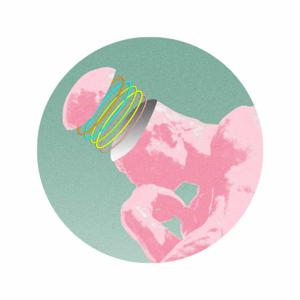
Is the way we interact with technology moving us towards a cyborg future? In episode 164 of Overthink, Ellie and David take a closer look at Donna Haraway’s seminal essay, “A Cyborg Manifesto,” in which Haraway critiques the increasing technologization of everyday life and questions what it means to be a feminist and a socialist in the age of informatics and cybernetics. They discuss her critique of identity politics, her notion of the “homework economy,” the increase of miniaturization in technology, and her appeal to pleasure and responsibility. Why should we discard the assumption that technology has deepened mind-body dualism? And what might the theory of the cyborg look like in light of the rise of generative AI? In the Substack bonus segment, your hosts discuss how the cyborg can be found in popular media like Severance and Crimes of the Future, and how the cyborg differs to Frankenstein’s monster.
Go to Quince.com/overthink for free shipping on your orders and 365-day returns. Now available in Canada, too. Visit Progressive.com to see if you could save on car insurance.
Works Discussed:
Donna Haraway, “A Cyborg Manifesto”
Dave Yan, “Posthuman Creativity: Unveiling Cyborg Subjectivity Through ChatGPT”
Highlight: The Homework Economy and Feminization of Work
* Haraway describes the homework economy, characterized by the feminization of work
* Technology inevitably impacts our homes and households
* For example, workplace changes affects the structure of the family, e.g. male “digital nomads” become domestic subjects, which was traditionally the space of feminity
* Ellie and David also connect Haraway’s ideas to AI
* Many LLMs, and even AI in general, are feminized
* E.g. Siri and Alexa have female voices
* What other connections did you see between Haraway and AI?
Can Buzzfeed quizzes, Myers-Briggs Types, and Enneagrams tell us anything valid about who we are? In episode 163 of Overthink, Ellie and David discuss personality. They talk through the Big Five personality test and its legitimacy, the history of the Myers-Briggs Type Indicator test (MBTI), and how the concept of personality emerged out of abnormal psychology. Why did the concept of personality replace using literature to understand the self? How does the concept of personality presuppose a fixed concept of the self? And what is the connection between MBTI and World War II? In the Substack bonus segment, your hosts think about how personality tests might be susceptible to the Barnum effect and their reduction of the self to egos.
Go to Quince.com/overthink for free shipping on your orders and 365-day returns. Now available in Canada, too. Visit Progressive.com to see if you could save on car insurance.
Works Discussed:
Theodor Adorno, The Authoritarian Personality
Merve Emre, What’s Your Type? The Story of the Myers-Briggs, and How Personality Testing Took Over the World
Colin Koopman, How We Became Our Data: A Genealogy of the Informational Person
Highlight: The Big Five
* Ellie & David took a popular personality test in preparation for this episode, known as the Big Five
* The term “Big Five” was coined by Lewis Goldberg in 1981
* Openness measures open-mindedness to new ideas and experiences
* Conscientiousness measures thoughtfulness, impulse control, and goal-direct behaviors
* Extroversion measures sociability, assertiveness, and talkability
* Agreeableness measures levels of kindness, cooperation, and altruism
* Neuroticism measures emotional instability
* This way of “measuring” personality does not type people, as those like MBTI do
Hello Overthinkers! Happy Friday :)
David gave us some insight into his course load this semester at San Francisco State University. Which course sounds the most interesting to you?
To what extent is drug addiction voluntary? In episode 162 of Overthink, Ellie and David chat with philosopher Hanna Pickard about her book, What Would You Do Alone in a Cage with Nothing but Cocaine? A Philosophy of Addiction. They discuss how the “broken brain model” of addiction emerged to combat the moral model of addiction and explore the consequences of both of these models. What drives some people into addiction? What does it mean to say that addiction is a brain disease? How should responsibility and blame fit into our understanding of this condition? And how do we identify when somebody’s patterns of drug use have crossed the threshold into addiction? In the Substack bonus segment, your hosts think about the temporality of addiction and what it means to hold an “addict identity.”Works Discussed: Alan Leshner, “Addiction Is a Brain Disease, and It Matters”Gabor Maté, In the Realm of Hungry Ghosts: Close Encounters with AddictionHanna Pickard, What Would You Do Alone in a Cage with Nothing but Cocaine? A Philosophy of Addiction
Highlight: Consequences of the Broken Brain Model
* Hanna Pickard borrows a phase from sociologist Nick Haslam for describing the broken brain model: it’s a mixed blessing in terms of its practical effects
* On the positive side, it’s increased public support for research and treatment of drug addiction
* On the negative side, the broken brain model:
* Increased stigma because it associates people with addiction with dangerousness and difference
* Increased internalized stigma among those with addiction; they feel like something is wrong with them and their brain
* As a result, it can impede problem recognition and recovery
* If your addiction means your brain is broken, you may be pushed to denial, thus not seek help or treatment
* If you believe your brain is broken, then you can’t fix it
What does it mean to be spontaneous? In episode 161 of Overthink, Ellie and David get spontaneous. They look at Aristotle’s theory of spontaneous generation, at spontaneity’s role in politics, and at the dark side of spontaneity. How do different cultures and physical spaces enable or inhibit spontaneity? What is the relationship between spontaneity and human freedom? And is Lenin correct in arguing that leftists need to resist spontaneity in political organizing? In the Substack bonus segment, your hosts think through the relationship between spontaneity and habit, how spontaneity plays into the recording of Overthink episodes, and the habitual spontaneity of those with Tourette’s Syndrome.
Go to Quince.com/overthink for free shipping on your orders and 365-day returns.
Works Discussed:
Aristotle, Physics
Lucy Cooke, The Truth About Animals
Jonathan Gingerich, “Spontaneous Freedom”
Immanuel Kant, Critique of Pure Reason
Vladimir Lenin, What is to Be Done?
Highlight: Vladimir Lenin on Spontaneity
* Vladimir Lenin was a central figure in the Bolshevik party and played a prominent role in the 1917 Russian Revolution
* In the second half of the 1975, there was growing discontent with the Czar and conditions were getting worse for the people, so spontaneous uprisings arose
* Lenin asked how do we transform society? and how can spontaneous actions lead to collective change?
* He understood spontaneity as something that “comes out of the blue” in a way—nobody could have predicted that it would happen now rather than a week ago
* Spontaneously alone is not yet an organized struggle that is supported by a party and has revolutionaries devoted to it
* Consistent uprisings require consciousness
* Without consciousness, Lenin warns that just spontaneity would (1) make people only worry about what’s happening to themselves and their network and (2) cause reform, not a revolution
Hello Overthinkers! We hope you enjoy another episode in our Closer Look format. We’d love to hear your thoughts about the episode and any questions or comments you have for Ellie and David :)
What does it mean to say that the good life is a life of pleasure? Although you might think of champagne and caviar, Hellenistic philosopher Epicurus actually considered the good life to be more about appreciating the simple things in life and letting go of the things that bring us only temporary pleasure but lead to pain in the long run. Why has Epicureanism so often been misrepresented, and what did Epicurus really say? In episode 160 of Overthink, Ellie and David investigate the teachings of Epicurus in The Epicurus Reader. They explain his four-part cure on how to life a better life, including why we shouldn’t be worried about death. They also offer critiques on his view of justice and its lack of application to political life. How can attaining ataraxia lead us to achieving eudaimonia and living the good life? In the Substack bonus segment, your hosts elaborate on whether or not Epicurus’s argument that we should not fear death is convincing.
Go to Quince.com/overthink for free shipping on your orders and 365-day returns.
Works Discussed:
Brad Inwood and Lloyd P. Gerson, The Epicurus Reader: Selected Writings and Testimonia
Highlight: Epicurus’s Four Part Cure
* What’s good is easy to get
* The good pleasure, or the absence of pain
* What’s terrible is easy to endure
* Do not add suffering to our pain; embrace life
* Don’t worry about death
* Don’t fear Gods or the gods in plural
* Ellie and David discuss more about points 3 and 4 in the episode! Namely (1) why would we fear them in the first place and (2) how do we overcome that fear?
What does it mean to be ill? In episode 159 of Overthink, Ellie and David discuss illness. They explore how illness has been mythologized, how it may alienate us from our bodies, and how it impacts social relationships. Is science the solution to the mythologization of illness, or is the scientific model of illness its own form of mythology? How should we conceptualize illness? Is it as a “deviation” from a norm? And if so, what norm? Finally, what can we learn about illness from a phenomenological approach that centers the patient’s first-person experience? In the Substack bonus segment, your hosts think about the distinction between the mental and the physical in connection to illness and the intersection between mind and body in illness.
Go to Quince.com/overthink for free shipping on your orders and 365-day returns.
Works Discussed:
Georges Canguilhem, The Normal and the Pathological
Havi Carel, Illness: The Cry of the Flesh,
Susan Sontag, Illness as Metaphor
SK Toombs, The Meaning of Illness: A Phenomenological Account of the Different Perspectives of Physician and Patient
Highlight: Susan Sontag’s Illness as Metaphor
* Susan Sontag famously argued that illness has often been mythologized and treated as metaphor, which then leads to dangerous and problematic consequences
* She gives two main examples: tuberculosis and cancer
* Before treatments were developed, they were both seen as arbitrary death sentences that essentially fell from the sky and could target anybody
* The way we describe these diseases has important social consequences, like treating patients to be socially shunned and treated as contagious, even if the disease is not actually contagious
* Another facet of Sontag’s argument is that fatal diseases are thought to be obscene
* Our deepest fears become associated with disease
* With tuberculosis, patients were thought to have a spiritual problem that caused them to contract it
Hello folks! Ellie and David just hosted an exclusive live yesterday which you can find here. We would love your thoughts in the comments or in our chat, as well as any questions or comments you have for the podcast :) Without further ado, we hope you enjoy the episode!
Should we be sympathetic towards manipulators? In episode 157 of Overthink, Ellie and…
How do new forms of social control under capitalism foreclose the possibility of social critique? In episode 156 of Overthink, Ellie and David take a deep dive into Herbert Marcuse’s 1964 classic, One-Dimensional Man. Marcuse analyzes how 1950s conformism narrows the private space of human thinking, turning us into one-dimensional beings. Your hosts talk about Marcuse’s diagnosis of life under capitalism, and his assessment of how analytic philosophy’s obsession with formal logic encourages conservatism and prevents us from subversive thought. In the Substack bonus segment, your hosts discuss what freedom looks like for Marcuse and how critical Marcuse would be of Overthink.
Works Discussed:Herbert Marcuse, One-Dimensional ManStephen Whitfield, “Refusing Marcuse: 50 Years After One-Dimensional Man”Paul Mattick, “One Dimensional Man In Class Society”
Highlight: False Needs
* Marcuse writes about a classic Marxist distinction between real/vital needs and false needs
* Real needs are objectively necessary for humans, e.g. food, shelter, and social contact
* False needs include a new phone or clothing from a specific brand
* The difference between real and false needs is not always evident to us
* We just experience all our needs as the same type of need
* Many of our false needs come from external forces that are serving other interests
* Advertising for a company will make us want that object, which ultimately benefits the company and not us
* Then, the false needs that have been fed to us distract from other, more substantive criticisms
From the publisher's feed