
Sign up to save your podcasts
Or

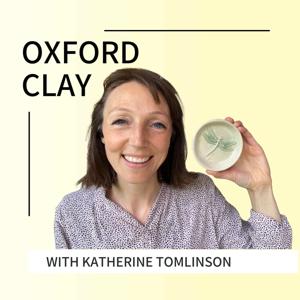


In this mini episode of the podcast I tell you about a beautiful greeny-brown coloured stoneware pottery glaze I’ve made with ash recycled from incense sticks.
Rather than throwing the incense ash away after burning, it can be collected and recycled into a pottery glaze coloured only by the natural trace metals in the ash!
The stoneware pottery glaze recipe used in this episode is:
40 parts - Sieved Incense Ash (sieved with a 100 mesh size sieve)
40 parts - Cornish Stone
20 parts - Quartz
You can watch the video version of this episode on YouTube.
✨Support the Podcast
-------------------------------
Resources for Potters:
⭐ Pottery Paperback Books available from Amazon
Free Pottery Guides:
🆓 Download the Free How to Make a Pottery Glaze Workbook (suitable for beginners):
🆓 Download the Free How to programme an Electric Kiln for bisque and stoneware glaze firings (includes full kiln firing schedule)
------------------------------------
In a pottery class you might have a defined project to work on, but you can still experiment lots!
In this episode, I talk about three ways to simply and easily experiment with surface decoration in a pottery class by;
✨ - Pressing an object into the surface of the clay
✨ - Making a bespoke tool to create a specific mark in your pottery, for example, fish scales!
✨ - Leaving areas of your pottery un-glazed to create interesting colours and surfaces.
The workshop that inspired this episode was run by Ruth Harris at Catkin Tree Studio. You can view workshops here: https://www.catkintreestudio.co.uk/events/workshops/
You can watch the video version of this episode on YouTube.
✨Support the Podcast: https://www.oxfordclay.co.uk/support
-------------------------------
Resources for Potters:
⭐ Pottery Paperback Books available from Amazon
Free Pottery Guides:
🆓 Download the Free How to Make a Pottery Glaze Workbook (suitable for beginners):
🆓 Download the Free How to programme an Electric Kiln for bisque and stoneware glaze firings (includes full kiln firing schedule)
------------------------------------
It's Spring in the UK, and this is an ideal time to identify deciduous trees that will drop their leaves in the Autumn. Or perhaps you live in the southern hemisphere, where deciduous trees are doing this right now!
Did you know that any plant material can be burned into ash and made into a pottery glaze! Leaves are no exception to this, and many beautiful pottery glazes can be made with leaves that fall naturally as part of a plant’s growing cycle. As Potters, we can collect these leaves, create ash from them and make them into a pottery glaze.
The episodes referred to in this episode about how to make a pottery glaze from leaf ash are here:
🍂70. How to Make a Pottery Glaze with Fallen Leaf Ash - Creating the Leaf Ash
🍂71. How to Make a Pottery Glaze from Fallen Leaves - Making the Glaze
In this episode, I talk about 13 amazing reasons to make a pottery glaze from fallen leaves.
🍂 - Connects you to an ancient pottery tradition.
🍂 - Ash glaze recipes are often very simple and easy to make.
🍂 - Leaf ash creates many unique and special-looking pottery glazes.
🍂 - Leaf ash glazes work really well with colouring oxides.
🍂 - Fallen leaves are free and abundantly available.
🍂 - Leaf ash can be locally sourced.
🍂 - Leaf ash made from fallen leaves is a renewable glaze-making ingredient.
🍂 - Using ash reduces a Potter’s reliance on mined pottery materials.
🍂 - Fallen leaves create more ash for glazing than wood does.
🍂 - Using fallen leaves stops trees from being felled for ash.
🍂 - Leaf ash glazes are naturally coloured with trace metals in the ash.
🍂 - Foraging for leaves in nature is good for your well-being.
🍂 - Foraging is a natural activity for humans.
The pottery glaze recipe for a stoneware leaf ash glaze is:
40 parts - Sieved Leaf Ash
40 parts - Cornish Stone
20 parts - Quartz
You can watch the video version of this episode on YouTube.
✨Support the Podcast: https://www.oxfordclay.co.uk/support
-------------------------------
Resources for Potters:
⭐ Pottery Paperback Books available from Amazon
Free Pottery Guides:
🆓 Download the Free How to Make a Pottery Glaze Workbook (suitable for beginners):
🆓 Download the Free How to programme an Electric Kiln for bisque and stoneware glaze firings (includes full kiln firing schedule)
------------------------------------
Doing pottery brings so much joy! Join me for this episode of the podcast where I talk about some mental re-frames that can support your joy as a Potter even more!
🌈 - The importance of enjoying making pottery in the present moment
🌈 - Seeing ‘failure’ as an opportunity for learning
🌈 - The importance of not judging your early work and instead celebrating the evolution of your pottery skills.
🌈 - Allowing yourself to play and experiment in your pottery and how this can inspire your creativity.
🌈 - The importance of following your curiosity and the things you enjoy learning about.
🌈 - Allowing yourself to make things your way, however that feels right for you in your own body.
🌈 - How the pottery learning journey isn't linear, and that's ok - you're doing it right!
You can watch the video version of this episode on YouTube.
✨Support the Podcast: https://www.oxfordclay.co.uk/support
-------------------------------
Resources for Potters:
⭐ Pottery Paperback Books available from Amazon
Free Pottery Guides:
🆓 Download the Free How to Make a Pottery Glaze Workbook (suitable for beginners):
🆓 Download the Free How to programme an Electric Kiln for bisque and stoneware glaze firings (includes full kiln firing schedule)
------------------------------------
Flat rolled out clay has a very annoying tendency to curl up as it dries!
In this episode I talk about the three things I do in my pottery to make ‘perfectly’ flat (although nothing in pottery is ever perfect!) drinks coasters.
✔️ Wedging (or kneading) the clay very well before making anything.
✔️ Rolling the clay out at an even thickness using rolling guides.
✔️ The importance of gently compressing the wet clay as it dries.
You can watch the video version of this episode on YouTube.
✨Support the Podcast: https://www.oxfordclay.co.uk/support
-------------------------------
Resources for Potters:
⭐ Pottery Paperback Books available from Amazon
Free Pottery Guides:
🆓 Download the Free How to Make a Pottery Glaze Workbook (suitable for beginners):
🆓 Download the Free How to programme an Electric Kiln for bisque and stoneware glaze firings (includes full kiln firing schedule)
------------------------------------
Yes you can! In fact they are an amazing way to add beautiful decorative details to pottery.
Silicone sugar craft moulds from cake making can be used by Potters who want to create intricate surface decorations for their pots. Clay is simply pressed into the mould, left to dry a little, removed from the mould and then attached to pottery as a sprig decoration.
I use silicone moulds in my pottery to make dragonfly, butterfly and bird decorations that I then attach onto my pottery with slip. In this episode, I share with you 5 tips I’ve learned when using silicone sugarcraft moulds in pottery:
✨Dust a little cornflour into the mould before using it to help the clay sprig decoration release from the mould.
✨Add a little paper pulp to the clay you’re using to press into your mould. Paper makes clay super strong and prevents the clay sprig decoration from breaking when being removed from the mould.
✨Use vinegar (applied to the main body of the pot), and slip to attach the decoration to the pot.
✨Dry your pottery slowly in a plastic storage box to prevent the sprig decoration from cracking off the pot.
✨Press out your designs from the mould onto a folded cloth or tea towel so the clay decorations are not damaged as they are removed from the mould.
You can watch the video version of this episode on YouTube.
✨Support the Podcast: https://www.oxfordclay.co.uk/support
-------------------------------
Resources for Potters:
⭐ Pottery Paperback Books available from Amazon
Free Pottery Guides:
🆓 Download the Free How to Make a Pottery Glaze Workbook (suitable for beginners):
🆓 Download the Free How to programme an Electric Kiln for bisque and stoneware glaze firings (includes full kiln firing schedule)
------------------------------------
For the last 200 years, industrial society has used a linear economic model that takes raw materials, makes them into products, sells them to consumers who then eventually throw them away. Natural resources are ‘lost’ in this process and this model is widely regarded as unsustainable.
Contrastingly in the circular economic model, resources are continuously reused, recycled and retained in the supply chain.
In this episode, I talk about some opportunities for Potters to use the circular economy model and reuse materials in their work, such as;
♻️ - Copper from electrical waste
♻️ - Rusting iron
♻️ - Post-consumer glass (you could also use sea glass found on the beach!)
♻️ - Ash from wood-burning stoves and heaters
♻️ - Leaves naturally fallen from trees and shrubs
The book that inspired this episode is called ‘Doughnut Economics: Seven ways to think like a 21st-century Economist. By Kate Raworth published in 2017 by Random House.
You can watch the video version of this episode on YouTube.
✨Support the Podcast: https://www.oxfordclay.co.uk/support
-------------------------------
Resources for Potters:
⭐ Pottery Paperback Books available from Amazon
Free Pottery Guides:
🆓 Download the Free How to Make a Pottery Glaze Workbook (suitable for beginners):
🆓 Download the Free How to programme an Electric Kiln for bisque and stoneware glaze firings (includes full kiln firing schedule)
------------------------------------
In this episode, I talk to you about the 6 different ways in which I use my favourite pottery tool - a cotton tea towel!
💡 - To reclaim wet clay on.
💡 - To wedge (or knead) clay on to remove excess water from clay thats a little bit too wet.
💡 - As a rolling cloth when rolling out clay.
💡 - Between pieces of wet flat clay as it’s drying.
💡 - In a technique to make a perfectly flat rim or base of a pot.
💡 - To remove condensation in a damp box when drying clay slowly and evenly.
You can watch the video version of this episode on YouTube.
✨Support the Podcast: https://www.oxfordclay.co.uk/support
-------------------------------
Resources for Potters:
⭐ Pottery Paperback Books available from Amazon
Free Pottery Guides:
🆓 Download the Free How to Make a Pottery Glaze Workbook (suitable for beginners):
🆓 Download the Free How to programme an Electric Kiln for bisque and stoneware glaze firings (includes full kiln firing schedule)
------------------------------------
Some thoughts created by our brains, support us when making pottery, and some definitely less so! Join me for this episode where I talk about some thoughts I've had in pottery that haven’t supported my pottery such as ‘I’ll never be good at pottery’, ‘I’ll never be as good as them’ (in an evening class setting) and ‘I don't like my finished pot’!
I talk about some alternative thoughts you can replace these with to truly support yourself in your pottery-making and make your mind a safer and kinder space to learn.
You can watch the video version of this episode on YouTube.
✨Support the Podcast: https://www.oxfordclay.co.uk/support
-------------------------------
Resources for Potters:
⭐ Pottery Paperback Books available from Amazon
Free Pottery Guides:
🆓 Download the Free How to Make a Pottery Glaze Workbook (suitable for beginners):
🆓 Download the Free How to programme an Electric Kiln for bisque and stoneware glaze firings (includes full kiln firing schedule)
------------------------------------
I created this episode for anyone who thinks they might like to write a book but hasn't yet - you can do it!
The world needs to hear your ideas and unique voice!
In this episode, I talk about how I follow my curiosity to write books on pottery. I speak about how my ideas form, and how I experiment, research, write and format my books before publishing.
You can watch the video version of this episode on YouTube.
✨Support the Podcast: https://www.oxfordclay.co.uk/support
-------------------------------
Resources for Potters:
⭐ Pottery Paperback Books available from Amazon
Free Pottery Guides:
🆓 Download the Free How to Make a Pottery Glaze Workbook (suitable for beginners):
🆓 Download the Free How to programme an Electric Kiln for bisque and stoneware glaze firings (includes full kiln firing schedule)
------------------------------------
From the publisher's feed
Chats about pottery with an environmental focus. Tune in for pottery tips and a discussion of issues in the handmade pottery industry today. Oxford Clay creates resources for Potters seeking a more environmentally friendly pottery practice.
Oxford Clay website: www.oxfordclay.co.uk