
Sign up to save your podcasts
Or



SUBHEAD: Do words have consequences and can speech pave the way to violence? Join us as we discuss how rhetoric in America is making acts of political violence and genocide more likely.
As the world gets to grips with the attempt on US presidential candidate Donald Trump's life, political rhetoric within America deployed by some politicians plays on social tensions and exacerbates polarisation making acts of violence more likely. While inflammatory rhetoric is condemned by liberals, Israeli politicians and officials routinely apply the same blood-bating speech against Palestinians, but many of the same liberal will remain silent. Palestinians have been described as 'human animals', 'terrorists' and have been threatened with ethnic cleansing by Israeli officials, how does this rhetoric normalise violence against Palestinians? Join Mouin Rabbani and Nasim Ahmed as they delve into this question. Also on the show, we explore the latest updates on Israel's ongoing genocidal offensive in Gaza, the United Nations experts on famine and Tel Aviv's 'targeted starvation campaign' in Gaza, US President Joe Biden saying he has no ability to influence Israel, the US proposing to disable it's Gaza aid pier and we end with a discussion on Israel's alliance with the far right.
In this episode of Palestine This Week, Nasim Ahmed and guest Mouin Rabbani kick off with a startling report from the Lancet which forecasts that the death toll in Gaza could hit 186,000 - a staggering 7.9% of the population. The pair also look at claims that Israel is trying to derail a US-backed ceasefire plan and discuss the contentious 'Hannibal directive' used by the Israeli army on 7 October.
Nasim and Mouin then turn their attention to Israel's plans for Gaza after the war, including the experimental 'Hamas-free bubbles' scheme, and what's been called the biggest land grab in the West Bank for decades. They mull over how these developments might affect the chances of a future Palestinian state and shake up the region's political landscape.
The show also touches on recent diplomatic spats, like the ICC prosecutor's decision to issue arrest warrants over a Gaza visit, which has ruffled feathers in both the US and UK. They round off by discussing the Arab League's move to stop calling Hezbollah a terrorist organisation and how the UK Labour Party's position on Gaza might have swayed recent election results.
This episode offers a thorough and eye-opening look at the complex and ever-changing situation in the Middle East.
Israel approved 5 new settlement outposts last week and voted in favour of restrictions on the Palestinian Authority, with Tel Aviv already in control of the Palestinian banking system and tax revenues, is the occupation state now looking to take over complete control of the occupied Palestinian territories?
This week's Palestine This Week with Nasim Ahmed and guest Mouin Rabbani tackle the worsening situation in the West Bank and Israel's tightening control over the occupied territory. The discussion kicks off with a look at Israeli Finance Minister Bezalel Smotrich's plan for permanent control of the West Bank, questioning whether this is another ploy by Israel to squeeze concessions from the international community. The talk then turns to the worrying rise in settler violence, as highlighted in a recent New York Times piece, which paints a bleak picture of the apartheid-like conditions Palestinians are enduring under occupation.
The show also addresses the troubling reports of sexual abuse of Palestinians at Israel's Sde Teiman detention centre, dubbed by some as a "death camp" on par with Abu Ghraib and Guantanamo.
The conversation then moves to the Israeli military's struggles, including heavy damage to armoured vehicles in Gaza and growing unrest within its ranks, as shown by the Supreme Court's recent ruling to abolish the ultra-Orthodox Jewish military exemption and reports of low morale and soldiers refusing to serve.
Finally, the show explores the West's continued backing of Israel, including unprecedented moves by US lawmakers to censor the Palestinian death toll and Germany's introduction of an Israel 'loyalty' test in its new citizenship law, and how such policies may be affected by the upcoming elections in light of of the large campaign donations from pro-Israel billionaires.
A leaked document shows Israel knew about plans for 7 October attacks in advance, but did not act upon the information, leading to the events on that fateful day.
Did the IDF know about Hamas' 7 October attack plans and did nothing to stop it? A document leaked to the Jerusalem Post seems to show the Israeli military had detailed intelligence about Hamas' plans to carryout 7 October attack, in which 1,143 Israeli were killed and 250 were taken hostage, but despite having this information, Tel Aviv decided not to act to stop the strike. Meanwhile, an Israeli strike on Gaza's Al-Shati camp killed 50 Palestinian civilians and another Israeli attack near the International Red Cross (IRC) left 22 people dead. Despite Israel inflicting a high death toll on Gaza, a senior Israeli military official has said Hamas is stronger than ever and Tel Aviv will fail to crush them. His comments will add further pressure onto Benjamin Netanyahu's government, delving into all the latest developments from Gaza join MEMO's weekly review show with Nasim Ahmed and guest Mouin Rabbani. We also discuss reports of an Israeli plan to go to war with Lebanon and how Wikipedia has labelled the Anti-Defamation League (ADL), a pro-Israel US advocacy group, an unreliable source of information that should not be trusted. MEMO weekly review also explores the transfer of power from the IDF to pro-settler civil groups in the West Bank. Catch the full episode here.
Reports from Gaza appear to show the US's humanitarian pier was used to assist in the massacre of Palestinians Israel carried out on Saturday in order to release hostages held in Nuseirat camp. Is this a victory for Tel Aviv or just further proof that Washington has blood on its hands? Join this week's discussion.
Time and again since October 2023, Israel has declared areas of Gaza to have been cleared of Al-Qassam fighters, but the Palestinian resistance has reappeared and struck back. Many in Tel Aviv's military intelligence services have warned that destroying the resistance's capabilities is impossible and Israel cannot continue to seek such an outcome from its war on Gaza. Israel, however, insists that the bombs will continue to fall until the resistance is beaten, but can this happen?
Rabbani also unpacks the rise of extremist settler ideology in Israel and the ethnic cleansing of Palestinians in the occupied West Bank and the shocking details of Israel's High Court ruling in favour of Jewish residents, displacing Palestinian families in Silwan. Join us as we explore the implications of Israel's parliament moving to designate UNRWA as a 'terrorist organisation' and discuss the Guardian's exposé of Israel's decade-long war against the ICC through the intimidation of judges and politicians. You will not want to miss our new episode of MEMO's weekly review show.
Just days after the International Court of Justice ordered Israel to halt its Rafah offensive, occupation forces targeted tents housing displaced Palestinians, killing at least 35, many of whom were trapped and left to burn to death. Scenes from the attack shook the world, with Israel's staunchest ally, Germany, condemning its actions. Following the ICC and ICJ rulings, are things changing for Israel on the international scene? Tune in to this week's episode to hear insights from our experts.
Join Nasim Ahmed and regular guest Mouin Rabbani for this week’s episode of MEMO's weekly review show where we dive into the harrowing events unfolding in Gaza. In this episode, we discuss the recent attack on a UN-run "safe zone" in Rafah, where at least 45 displaced Palestinians were killed by 2000lb bombs dropped by Israel on tents sheltering displaced Palestinians. Nowhere is safe for Palestinians who, since 7 October, have watched their homes, schools, hospitals, mosques and churches razed to the ground.
We'll also explore the intense fighting in northern Gaza, the alleged capture of Israeli soldiers by Hamas, and the international legal landscape following the ICJ and ICC's demands for Israel to halt its offensive and application for arrest warrants. With European countries now shifting their stance and Germany's strong response, the global reaction is intensifying.
The podcast also explores the historical bias of the ICC and the image that it only seeks prosecution of African leaders and the challenges faced by its chief prosecutor, Karim Khan, in changing the court's image. Lastly, we address Israel's decision to withhold tax revenue from the Palestinian Authority as a punitive measure.
Tune in as we also discuss why the US and UK have doubled down on their unwavering support for Israel despite mounting pressure from international bodies and how we should interpret President’s Biden’s pier in Gaza being washed away.
Don't miss Rabbani's insights on the impact of these developments and the broader implications for international justice and accountability.
Will the International Criminal Court's announcement that it seeks to issue arrest warrants for senior Israeli officials bring an end to Israel's bombing of Gaza? Watch Palestine This Week and join the discussion.
In this week’s review, we dive into the death of Iran's President Ebrahim Raisi and Foreign Minister Hossein Amir-Abdollahian in a helicopter crash, examining the implications for Iran's internal politics and international relations. We also discuss the key development on the legal front following the groundbreaking move by the International Criminal Court seeking to issue arrest warrants for key Israeli and Hamas leaders, including Prime Minister Benjamin Netanyahu and Defence Minister Yoav Gallant.
As the number of resignations continues to grow both in Washington and Israel as a result of Netanyahu's handling of the war on Gaza, we discuss Benny Gantz's ultimatum and demand for a clear post-war governance plan for Gaza, while discussing the US's shifting focus towards helping Israel declare a semblance of victory.
In light of the developments in Israel and Gaza, we look at the timing of US National Security Adviser Jake Sullivan's visit to Saudi Arabia and Israel.
Israel has announced that it has launched a renewed military offensive on the Jabaliya camp in the north of Gaza, an area it had 'cleared' of resistance fighters. Are Hamas fighters gaining strength?
Tune in to the latest episode of MEMO’s weekly review show with host Nasim Ahmed and guest Mouin Rabbani. In this edition we delve into CNN's shocking report on the abuse and torture of Palestinians in an Israeli military detention centre, the resurgence of Al-Qassam fighters in northern Gaza, and the growing disagreement between the US and Israel over the offensive in Rafah.
The show also examines the controversy surrounding the UN's revised figures of civilian casualties, Egypt's decision to join the genocide lawsuit against Israel, and the UN General Assembly's vote to back thePalestinian bid for membership. Additionally, we analyse US President Joe Biden's comments on Hamas being motivated by "ancient hatreds" and the implications of the State Department's report on Israel's actions in Gaza. Join us for an insightful and informative discussion on the critical issues from the past week.
As Israel begins its ground invasion of Gaza’s southernmost city of Rafah, Palestine This Week looks at the timing of the offensive, which has been launched despite a framework for a ceasefire being on the table.
Host Nasim Ahmed and guest Mouin Rabbani discuss the talks to agree a truce and what they mean for Palestinians on the ground and, as Israel expands its military attacks on Gaza, what the global response will be.
Over the past week, the US has advanced the controversial Anti-Semitism Awareness Act, which conflates legitimate criticism of Israel with anti-Jewish hate, in a move that could silence pro-Palestine activism both on and off campus.
But America isn’t only working to silence criticism of the occupation state within its borders, the ICC has called on US officials to stop issuing threats against its personnel as they look into possible Israeli war crimes in the occupied Palestinian territories.
Join Ahmed and Rabbani as they unpack what all this could mean for the region and for activists calling for peace for Palestinians.
From the publisher's feed
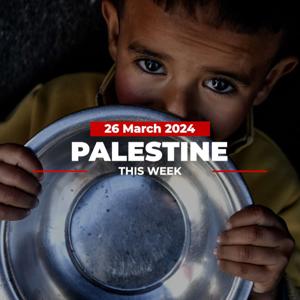
Palestine This Week with Nasim Ahmed is a weekly analytical review of the biggest stories coming out of Palestine.

1,461 Listeners

1,507 Listeners

6,109 Listeners

267 Listeners
562 Listeners
202 Listeners

4,445 Listeners
409 Listeners

605 Listeners

143 Listeners

2,457 Listeners
365 Listeners

471 Listeners
0 Listeners

0 Listeners