
Sign up to save your podcasts
Or

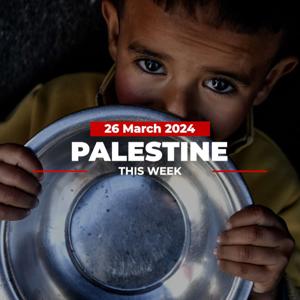


In this episode of Palestine This Week, we look at Israel’s ongoing violations of the Gaza ceasefire, with more than 80 breaches and dozens of Palestinians killed. We break down the events in Rafah and the shifting US position, as Washington moves to provide legal and political cover for continued Israeli attacks.
We also examine growing fears of internal conflict in Gaza, the proposed Egypt-led stabilisation force, and the expected ICJ ruling on Israel’s blockade of UN agencies. A new UN report documents rising killings in the West Bank, while across Europe, Palestine solidarity is being criminalised—from arrests in the UK to protest bans in Germany and the row over Maccabi Tel Aviv’s football match.
This episode of Palestine This Week begins with the ceasefire agreement signed in Egypt. We analyse the political spectacle surrounding the signing. We discuss President Trump’s speech in the Israeli Knesset and his public admission of the influence of the Zionist lobby in American politics.
The episode also covers the murder of Saleh Aljafarawi by Israeli-backed armed gangs, the media’s double standards in the coverage of the hostage deal and Israel’s high-tech propaganda war.
Two years into Israel’s genocidal assault on Gaza, nearly 70,000 Palestinians are dead, most of them civilians. Despite the unprecedented destruction, Israel has failed to defeat Hamas or secure the release of hostages — the very goals it claimed justified its campaign. As negotiations take place in Cairo, this episode asks: why has Israel’s war dragged on, and what has it really achieved?
From crumbling international support to cracks within Zionism itself, we explore how the pillars on which Israel stands — military dominance, global backing, media control — are now visibly crumbling. Plus: a leaked plan for Gaza’s post-war governance, Israel’s $7K-a-post media war, and rising tensions between Israel and Jews around the world.
00:00 Intro
00:21 Two years into Gaza genocide — how did we get here?
11:49 Has Israel crushed resistance — or destroyed itself?
19:23 Ceasefire deal? Or more proof Netanyahu never cared about hostages?
33:00 Leaked: Gaza to be run by billionaires, not Palestinians.
37:23 Israel’s media war — $7K per post to sell genocide.
46:58 Tensions explode: Israel embraces the far right.
53:30 Is Israel making life more dangerous for Jews everywhere?
In this episode, we dive into Donald Trump’s so-called Gaza “Peace Plan,” a proposal that, beneath the surface, looks less like a path to peace and more like a high-tech experiment in subjugation. Gaza has long been treated as a testing ground, from weapons that are later marketed as “battle-tested” to political experiments imposed from the outside. Now, with Trump’s plan and the Jared Kushner-Tony Blair blueprint, the stage is being set for something even more far-reaching: a model of technological domination that could extend well beyond Palestine.
We trace the history of peace plans imposed on Palestinians, showing how they’ve consistently denied justice, demanded impossible concessions, and then blamed Palestinians for rejecting them. Today’s plan is no different, but it comes at a moment when Israel’s global standing has collapsed, its genocide in Gaza has turned it into a pariah, and Washington is scrambling to provide an off-ramp. Far from offering freedom, the plan masks economic fantasies, colonial governance, and a vision of Gaza not as a society to rebuild but as beachfront real estate to redevelop.
In this episode of Palestine This Week, we unpack a flurry of diplomatic, military and geopolitical developments shaping Palestine and the wider region. Host Nasim Ahmed is joined once again by analyst Mouin Rabbani to explore the wave of state recognitions of Palestine—why it’s happening now, and what it might mean in practice. The conversation also dissects Israel’s furious reaction to this recognition.
With G7 members now backing Palestinian statehood, we ask whether they are prepared to take concrete punitive action if Israel proceeds with annexation of the West Bank.
We also turn to Donald Trump’s upcoming summit with key Arab and Muslim leaders, where he is expected to lay out his so-called "principles" for post-war Gaza governance. What’s actually on the table, and what role will Arab states be expected to play in this post-genocide order?
The discussion then turns to the fallout from Israel’s strike on Qatar and the silence from Washington. With no consequences imposed, is the Middle East being remade around an unchecked Israeli war machine? The new Saudi-Pakistan security pact and the potential collapse of the US-backed IMEC project are examined as signs of a shifting geopolitical landscape. Is Pakistan Riyadh’s nuclear insurance policy? And is Washington still capable of shaping outcomes in a region where its red lines are routinely ignored?
In this episode of Palestine This Week, we unpack the findings of a new United Nations report which concludes that Israel’s conduct in Gaza meets the legal definition of genocide. Led by the former chief judge of the Rwanda tribunal, the report’s findings places renewed pressure on international institutions to act.
We also look at the fallout from Israel’s unprovoked strike on Doha. With reports emerging that Donald Trump was informed of the attack in advance yet failed to intervene, the episode examines the impact of US failure to protect a key ally.
Meanwhile, Netanyahu has issued fresh threats against Qatar while promoting a vision of Israel as a militarised “Super Sparta”. We ask what this means in reality.
Finally, we address Israel’s role in stoking anti-Muslim hatred globally. From Netanyahu’s scapegoating of Muslim migration to his embrace of far-right figures in the West, a dangerous alliance is taking shape.
The show links this dehumanising rhetoric to real-world violence—including in Gaza, where Islamophobic mercenaries operate deadly aid distribution centres under Israeli cover.
This episode of Palestine This Week begins with Israel’s latest unprovoked escalation: a bombing in Qatar targeting Hamas’s negotiating team. Nasim Ahmed and Mouin Rabbani assess the implications of this unprecedented strike, reportedly carried out with the approval of US President Donald Trump. The discussion explores what the attack reveals about Israel’s approach to diplomacy, the credibility of ongoing negotiations, and the growing fragility of regional stability.
Attention then turns to the humanitarian catastrophe in Gaza, as newly revealed Israeli military data confirms that most Palestinians detained are civilians, not fighters. Combined with internal Israeli reports that over 83 per cent of those killed in Gaza are non-combatants, the evidence points to a war being waged against a people rather than a movement.
With details of President Donald Trump’s post-genocide vision for Gaza leaked, we begin this episode of Palestine This Week by examining the grotesquely named "GREAT Trust"—the Gaza Reconstitution, Economic Acceleration and Transformation Trust. A $100 billion scheme devised by figures like Tony Blair and Jared Kushner, the plan proposes to lease over 30 per cent of Gaza’s public land to foreign investors under a multi-decade custodianship—effectively gentrifying a devastated territory while its people are still under siege.
Topics also discussed in this episode include the International Association of Genocide Scholars’ resolution confirming that Israel’s actions in Gaza meet the legal definition of genocide under the UN Convention—backed by 86 per cent of voting members—and an interview with Professor William Schabas, who calls South Africa’s ICJ case “arguably the strongest genocide case ever presented.”
We also examine the US denial of visas to Palestinian Authority officials, the UK, France and Germany’s decision to reimpose sanctions on Iran, and Turkey’s announcement ending all economic ties with Israel. All these developments are unpacked in light of the ongoing genocide in Gaza.
In this episode of Palestine This Week, we begin with the IPC’s declaration of famine in parts of Gaza—only the fifth time in history such a designation has been made. We examine how Israel has sought to discredit the finding while continuing to block aid and target food infrastructure.
The episode also covers leaked Israeli military data showing that 83 per cent of those killed in Gaza are civilians, the assassination of journalists in Nasser Hospital, and disturbing reports of systematic torture of Palestinian detainees. We look at Israel’s expanding settlement project in the West Bank, Western complicity in enabling these crimes, and the political cover that sustains them.
The episode concludes by confronting the war on Palestinian memory itself—challenging efforts to erase a history that stretches back thousands of years and reaffirming that Palestine is not a modern invention, but a name and a people rooted in the land for millennia.
In this episode of Palestine This Week, host Nasim Ahmed and analyst Mouin Rabbani examine Benjamin Netanyahu’s call for a “Greater Israel” and the role of Christian Zionism in sustaining Israel’s project of dispossession and genocide. The conversation unpacks how end-times theology and religious fanaticism, from Balfour to present-day judges at the International Court of Justice, have shaped Israel’s founding and continue to corrupt international law.
The episode also exposes how religious zealotry has infiltrated global institutions, from courtrooms to aid agencies, eroding the credibility of international law and continuing Palestinian suffering.
From the publisher's feed
Palestine This Week with Nasim Ahmed is a weekly analytical review of the biggest stories coming out of Palestine.

1,461 Listeners

1,508 Listeners

6,108 Listeners

269 Listeners
562 Listeners
202 Listeners

4,445 Listeners
409 Listeners

605 Listeners

143 Listeners

2,461 Listeners

365 Listeners

471 Listeners
0 Listeners

0 Listeners