
Sign up to save your podcasts
Or

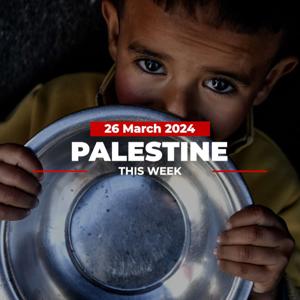


In this episode of Palestine This Week, we begin with Benjamin Netanyahu plan to “take control” of Gaza, We also discuss the killing of five Al Jazeera journalists, including Anas al-Sharif, in a drone strike outside al-Shifa Hospital. More than 270 journalists have been killed since the war began, more than in several major wars combined.
We go through the new report by Doctors Without Borders, “This Is Not Aid, This Is Orchestrated Killing”, which shows how the Gaza Humanitarian Foundation has turned aid centres into death traps. Hundreds have been killed and thousands injured while trying to collect food.
The conversation then turns to whether Israel has become a sinking ship and even a liability for Jews worldwide. Former senior Israeli officials like ex-Shin Bet chief Ami Ayalon and former Knesset speaker Avram Burg warn the apartheid state has lost its way, while some Jewish leaders are calling for sanctions and legal action against their own government.
We round out the episode with Boris Johnson’s claim that Taiwan has more right to statehood than Palestine, and the arrest of pro-Palestine protesters in London — dramatically staged in front of the statue of Nelson Mandela.
This episode of Palestine This Week begins with Hamas’s latest statement that it will not disarm unless a Palestinian state is established with Jerusalem as its capital. The response came after claims that Hamas had agreed to disarm unconditionally. From there, we take a closer look at Hamas’s position on the two-state solution and how it has changed over time. We also explore the broader history of the two-state proposal—asking the crucial question: who has really rejected it? Has it been Hamas, or has Israel been the consistent obstacle to peace?
Also in this episode:
Palestine recognised—but does it matter? As the UK, Canada and others endorse statehood, we ask whether this move challenges Israeli impunity or simply distracts from ongoing genocide.
Gaza’s annihilation: Aid workers and UN officials reveal the scale of destruction—making Gaza the most bombed territory in modern history.
Trump threatens Canada over Palestine: A US trade deal hangs in the balance as Trump lashes out at Ottawa for recognising Palestinian statehood.
Palestine This Week begins with the grim announcement from the Integrated Food Security Phase Classification (IPC): famine is now officially under way in Gaza. As the UN body confirms the worst-case scenario, we examine Israel’s shifting narrative including placing blame on the UN. We also explore how international backlash is shaping Israel’s starvation policy, with expert insight from Alex de Waal on the unprecedented nature of what’s unfolding in Gaza.
Next, we unpack B’Tselem’s latest report, formally declaring that what’s happening in Gaza amounts to genocide. We then turn to recent revelations that USAID found no evidence of Hamas diverting aid, collapsing yet another key pillar in Israel’s justification for its policy of starvation in Gaza.
We close with a look at the collapse of ceasefire negotiations and by asking why Israel is so alarmed by France and Saudi Arabia's push to recognise a Palestinian state.
In this episode of Palestine This Week, we look at Israel’s recent attack on Gaza’s only Catholic church, the same one the late Pope Francis was calling daily since the start of Israel’s genocide. Three people were killed in the strike, which many have condemned, but questions remain about why the world stayed silent when over a thousand mosques were destroyed before this. We also cover a settler arson attack on a historic Christian town and examine how Israel’s campaign is targeting Palestinian Muslims and Christians alike.
We then unpack two major Israeli media investigations that expose Benjamin Netanyahu’s shifting goals in Gaza. The focus is no longer on fighting Hamas but on destroying buildings and making life unliveable. Israeli soldiers are wearing masks to avoid war crimes charges, and new satellite data shows that more than 70 per cent of buildings in Gaza have been levelled. At the same time, 28 foreign ministers have demanded a ceasefire, calling Israel’s aid policies dangerous and in breach of international law.
Also in this episode, we examine Israel’s bombing in Syria, how the International Criminal Court is standing firm against pressure to drop its arrest warrants against Netanyahu, and the growing clampdown on free speech in UK and US
In this week’s episode of Palestine This Week, we begin with the so-called “Humanitarian City”, which is now clearly emerging as a strategy to build concentration camps in Israel’s plan to ethnic cleansing Gaza. We examine how Israel is enforcing depopulation zones through forced starvation and lethal drone attacks. Drawing on chilling investigations by +972 Magazine and Forensic Architecture, we break down the mechanics of how genocide is being operationalised in plain sight.
We then shift focus to the West Bank, where settler violence has reached new extremes. From the burning of the historic St. George Monastery to the brutal killing of a Palestinian-American man from Florida, we expose the double standards in US foreign policy and the deepening “Israelisation of America”.
On the international front, we cover the upcoming UN summit on a two-state solution, the disturbing role of the EU’s anti-Semitism coordinator in lobbying against sanctions on Israel. We close with a look at the emergency summit in Bogotá led by South Africa and Colombia, and Tucker Carlson’s claim that Epstein was an Israeli asset.
In this episode of Palestine This Week, we unpack Israel’s latest scheme for Gaza: a so-called “humanitarian city” that critics say is a cover for mass internment and forced transfer. Far from offering safety, the plan is seen as part of Israel’s long-standing effort to remove Palestinians from their land. We examine explosive revelations about the involvement of the Boston Consulting Group and staff linked to the Tony Blair Institute, alongside legal analysis from Professor Eyal Benvenisti, who warns that such population transfers are a grave violation of international law.
The discussion turns to a powerful new report from UN Special Rapporteur Francesca Albanese exposing over 60 corporations, including Microsoft, Alphabet and Palantir, profiting from the Gaza genocide. As the line between technology and war crimes blurs, Nasim Ahmed and Mouin Rabbani explore the emergence of what they call a "genocide-industrial complex" and the implications for international accountability.
Tune in to hear more on the latest ceasefire talks, regional developments, and the UK’s decision to label Palestine Action a terrorist group, just as the US removes an Al-Qaeda-linked group from its own terror list. We break down what these double standards mean and why they matter. All that and more in this week’s episode.
Palestine This Week opens with a close look at Gaza, where talk of a ceasefire deal is gaining traction. Reports suggest that Israeli Prime Minister Benjamin Netanyahu will soon travel to Washington to finalise an agreement. But behind the diplomatic theatre lies a deeper concern: has anything really changed on the ground? As Israeli attacks continue, the episode asks what purpose this ceasefire would serve—and for whom.
The discussion moves to the worsening humanitarian crisis in Gaza. Since the end of May, more than 549 Palestinians have been killed while trying to collect aid, taking the total to more than 56,000. Alongside this, new research suggests that the true death toll could be many times higher than reported.
In the West Bank, Israeli settler violence has reached a new intensity. Homes and vehicles are being torched with military backing, in what Israeli media timidly describe as a “quiet pogrom.” At the same time, Israeli ministers are threatening to impeach Arab MK Ayman Odeh, while openly calling for ethnic cleansing.
Host Nasim Ahmed and guest Mouin Rabbani end the episode by reflecting on the international fallout from Zohran Mamdani’s victory in New York and Bob Vylan’s chant “death, death to the IDF.”
Subscribe to our YouTube channel: https://tinyurl.com/447fpn8k
Visit our website: https://www.middleeastmonitor.com/
Follow us on social media:
Instagram https://www.instagram.com/middleeastmonitor
Facebook https://www.facebook.com/middleeastmonitor
TikTok https://www.tiktok.com/@middleeastmonitor
X https://www.x.com/middleeastmnt
As the dramatic ceasefire places a temporary pause to the latest hostilities between Israel and Iran, we break down how and why this fragile agreement came together, what each side hoped to gain, and who ultimately walked away with the upper hand.
President Donald Trump’s intervention has exposed deep divisions within US policy circles. “America Firsters” clashed with “Israeli Firsters”—and once again, the “Israeli Firsters” prevailed, drawing the US into yet another conflict. But at what cost? The fallout has further damaged Israel’s global image, as both Zionism and the Israeli state increasingly resemble a toxic brand.
While global attention fixates on Iran, Israel’s assault on Gaza continues with ruthless intensity. Palestinians searching for food and aid are being targeted with deadly force, compounding an already catastrophic humanitarian crisis. A scathing EU review has documented over 30 violations of its agreement with Israel. In this episode, Nasim Ahmed and Mouin Rabbani unpack the deeper implications of the latest developments
Subscribe to our YouTube channel: https://tinyurl.com/447fpn8k
Visit our website: https://www.middleeastmonitor.com/
Follow us on social media:
Instagram https://www.instagram.com/middleeastmonitor
Facebook https://www.facebook.com/middleeastmonitor
TikTok https://www.tiktok.com/@middleeastmonitor
X https://www.x.com/middleeastmnt
On this episode of Palestine This Week, we dive into the rapidly escalating war between Israel and Iran. Mouin Rabbani joins Nasim Ahmed to unpack the timing, motives, and wider implications of Israel’s unprovoked strike, launched even as Iranian officials were engaged in negotiations with the US. Meanwhile in Gaza, another mass casualty event unfolded as starving civilians were killed while queuing for food.
We examine Israel’s stated justification for the attack: an IAEA report claiming Iran is in breach of its obligations under the non-proliferation agreement. Yet the same document explicitly acknowledges there is no evidence Iran is developing a nuclear weapon.
Is this ambiguous language being manipulated to serve long-standing political goals? We also discuss Iran’s release of documents alleging collusion between Israel and the IAEA and what it could mean if Iran walks away from the Nuclear Non-Proliferation Treaty altogether.
We examine the legal justifications offered by Israel for its attack—specifically the claim of a “pre-emptive strike.” Yet prior to the attack, US Director of National Intelligence Tulsi Gabbard told the Senate that Iran was not actively pursuing a nuclear weapon. CNN reporting echoed that conclusion, citing American intelligence assessments that Iran was at least three years away from being able to build and deliver one.
We close by looking at how this war is being sold by the same voices who cheer leaded the Iraq invasion. With Netanyahu facing domestic collapse, has he gambled on a wider war to save his political career? What are the risks if Arab states, China, and Russia allow this to continue unchecked?
This week’s episode opens with the news of sanctions imposed by the UK on Israel’s far-right ministers Itamar Ben-Gvir and Bezalel Smotrich. The UK joined a small bloc of Western states attempting to pressure Israel over its Gaza genocide. But does targeting two of the most extreme figures in the government of Benjamin Netanyahu signal genuine attempt to hold Israel to account, or is it diplomatic window dressing by governments that criminalises the Boycott Divestment and Sanctions (BDS) movement while selling weapons to Israel? We interrogate the contradictions and timing of this move with host Mouin Rabbani.
We then unpack a startling revelation from The New York Times: Israel is arming Palestinian militias in Gaza in a new strategy to fragment the besieged territory and sow chaos. We revisit the history of Israeli support for Hamas to divide Palestinian unity, and discuss how arming criminal elements today mirrors a decades-old tactic of manipulation, one that may well backfire. Central to this story is the figure of Yasser Abu Shabab, a warlord in southern Gaza. Just who is who is Abu Shabab?
In our third segment, we explore the BBC’s rare departure from its usual deference to Israel, via an investigative report by Jeremy Bowen. With claims that Israel is committing war crimes and genocide in Gaza, and insights from international law experts, this may be the most forthright report ever aired by the BBC. We consider whether this marks a shift in the UK media landscape or is a one-off anomaly prompted by global outcry.
Finally, we zoom out to assess growing international backlash against Israeli impunity. From France and the UK backtracking on Palestinian statehood to David Cameron’s threats to defund the International Criminal Court, and the hijacking of an aid ship carrying Greta Thunberg.
We close the show with a discussion over revealing case of Eyal Yakoby, the pro-Israel student who stood next to US Speaker of the House Mike Johnson claiming he no longer felt safe—despite enjoying unprecedented institutional support from the US government. Judge dismissed Yakoby’s case against the University of Pennsylvania, who found no evidence of anti-Semitism.
From the publisher's feed
Palestine This Week with Nasim Ahmed is a weekly analytical review of the biggest stories coming out of Palestine.

1,461 Listeners

1,508 Listeners

6,108 Listeners

269 Listeners
562 Listeners

202 Listeners

4,445 Listeners
409 Listeners

605 Listeners

143 Listeners

2,461 Listeners

365 Listeners

471 Listeners
0 Listeners

0 Listeners