
Sign up to save your podcasts
Or

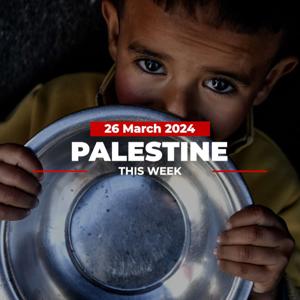


Israel refused to release the 600 Palestinians who were set to be freed as part of last weekend's prisoner exchange citing Hamas’ delivery of a wrong body instead of detained Israeli Shiri Bibas on Thursday, but is this just an effort to give credence to its plans to relaunch its bombing campaign in Gaza?
Is Israel manufacturing pretexts to derail the Gaza ceasefire agreement? What does the Arab world’s alternative vision for post-genocidal war Gaza look like? This episode of Palestine This Week brings you exclusive insights into these pressing questions as the first phase of the ceasefire deal reaches its critical final days. With negotiations hanging in the balance and regional leaders meeting in Riyadh, we explore the diplomatic manoeuvring that could determine Gaza’s future.
Joining us this week is Muhammad Shehada, reporting directly from Cairo where he’s been closely monitoring the ongoing negotiations. As a visiting fellow with the European Council on Foreign Relation’s Middle East and North Africa programme and a Gazan researcher and human rights advocate, Shehada brings a unique perspective to the issue.
We examine the significance of the summit in the Saudi capital, Riyadh, where Arab leaders are presenting a united front against the forced displacement of Palestinians. Could we see a return of the Arab Peace Initiative of 2002 and can the region remain united in rejection of US President Trump's Gaza “Riviera” proposal. Our analysis explores whether Arab states are prepared to use their considerable leverage - from normalisation agreements to strategic partnerships - to prevent the ethnic cleansing of Gaza and the West Bank, where Israel has escalated its military aggression by deploying tanks and troops.
We also investigate Israel’s controversial handling of the release of the Bibas family and how it might be used to undermine the ceasefire agreement and manufacture consent for continuing the genocide. We examine the far-reaching implications of the Trump administration’s decision to halt funding for Palestinian Authority security forces, while unpacking the glaring disparity between Israeli media’s candid admissions of genocidal intent and Western media’s reluctance to acknowledge this reality.
US President Donald Trump continues to ignore Israel's violations of the Gaza ceasefire while mounting pressure on Palestinians, is the truce now on the brink of collapse?
Palestine This Week looks at repeated violations of the ceasefire agreement with Gaza and Prime Minister Benjamin Netanyahu’s shifting position which has dominated headlines. With US President Donald Trump and Netanyahu issuing threats, the negotiations have teetered on the brink of collapse, raising questions about who truly holds the upper hand in these talks.
Attention then turns to the horrific reports of Palestinian detainees subjected to torture in Israeli prisons. The case of Dr Hussam Abu Safiya, director of Kamal Adwan Hospital in Gaza, has highlighted the brutal treatment of prisoners, with many released detainees displaying clear signs of abuse. Yet, Western media has largely ignored these reports, reinforcing the stark contrast between how Israeli hostages and Palestinian prisoners are portrayed.
The episode then exposes another war crime committed by Israeli occupation forces: the use of Palestinians as human shields. An 80-year-old Palestinian man was found with an explosive cord tied around his neck, used as a shield by Israeli troops. Further reports suggest that Palestinians have been forced to wear an Israeli army uniform, effectively turning them into bait to draw fire.
Shocking new studies also take centre stage. A recent Lancet report reveals that life expectancy in Gaza has nearly halved over the past year, dropping from 75.5 years to just 40.6. An unprecedented decline which underscores the scale of the humanitarian catastrophe. Meanwhile, Alex de Waal’s extensive 'London Review of Books' analysis meticulously documents how Israel has weaponised starvation, restricting food access and humanitarian aid to control the Palestinian population.
As the conversation moves forward, the episode delves into Trump’s ongoing efforts to push for the ethnic cleansing of Gaza. With the next phase of the prisoner exchange deal approaching, Netanyahu faces pressure from all sides. Meanwhile, regional dynamics are shifting. The UAE has reportedly pushed for a softening of Arab League language on displacement, signalling possible support for Trump’s agenda.
We also look at how events in Gaza have led to the arrest of a Zionist in America who attempted to kill two men he thought were Palestinians only to discover his victims were Israelis. The victims bizarrely claimed it was an anti-Semitic attack, despite the shooter’s clear intent to target Palestinians. Adding to the irony, both victims later took to social media to call for “Death to Arabs.”
The UK government’s refusal to grant asylum to Gazans also comes under scrutiny. Authorities are now working to close a loophole that had allowed a Palestinian family to enter under a scheme originally designed for Ukrainians. This blatant double standard raises serious questions about Britain’s moral and historical obligations, especially given its direct role in the creation of Israel and its ongoing complicity in the occupation and genocide of Palestinians.
US President Donald Trump has said he is committed to 'buying, owning Gaza' and forcibly displacing Palestinians, is this just a continuation of Israel's genocidal campaign against the enclave?
Is Donald Trump's plan to 'take over Gaza' reckless posturing or a dangerous proposal for ethnic cleansing that could unite the world against the US and Israel? In this episode of Palestine This Week, host Nasim Ahmed and expert guest Mouin Rabbani tackle this question while examining the latest developments in the region. The show begins with the release of three Israeli captives, which has sparked an international row over the treatment of hostages.
Also featured are damning legal and military revelations: former UK Supreme Court Justice Lord Sumption described Israel’s military campaign as 'grossly disproportionate' with an arguable case for genocide, while former Israeli Defence Minister Yoav Galant admitted to ordering the controversial Hannibal Directive on 7 October 2023, killing Israeli captives along with their captors and +972 magazine’s investigation into Israel’s use of toxic gases in Gaza indicates violations of multiple international conventions, including the Chemical Weapons Convention and Rome Statute.
Recent proposals regarding Gaza’s future receive thorough examination, particularly focusing on regional responses such as Jordan’s apparent readiness to repel Israel’s expulsion of Palestinians into its territory at any cost and Saudi Arabia’s categorical rejection of Trump’s plan for ethnic cleansing . The show explores how these stances impact broader diplomatic relations and potential normalisation efforts in the Middle East.
The episode concludes with an in-depth analysis of evolving US foreign policy positions regarding UN bodies, particularly the Human Rights Council and UNRWA and examines shifts in attitudes toward Middle East policy in the US, including changing perspectives on Iranian sanctions and international engagement.
Israeli Prime Minister Benjamin Netanyahu was once overheard speaking about using war as an opportunity to 'get all the Arabs out' and 'clear the West Bank', with US President Donald Trump now in the White House, are Netanyahu's aspirations seeing fruition and will Palestinians be forcibly displaced once again?
This week host Nasim Ahmed and regular guest Mouin Rabbani examine Israel’s expanding policy of forced displacement, from the deportation of Palestinian hostages to neighbouring countries to Washington’s reported plans for population transfers. Israel has deported dozens of Palestinian hostages to Egypt where they remain effectively imprisoned. Are these deportations part of a broader strategy of permanent displacement, especially as Israel implements restrictive new policies at the Rafah crossing that allow Palestinians to exit the besieged enclave but prevents their return to Gaza?
Over 150,000 Gazans remain stranded in Egypt since Israel's destruction of the crossing in May 2024, while Washington reportedly considers relocating portions of Gaza's population to Syria in addition to Jordan and Egypt. What do these developments, coupled with the presence of American military contractors manning checkpoints in Gaza, signal for Palestinians?
The 'Gazafication' of the West Bank is also accelerating, with Israel conducting simultaneous explosions in Jenin refugee camp, destroying up to 20 homes in a single neighbourhood last week. In addition to that, the Israeli Knesset has approved a draft law permitting settlers to purchase Palestinian land in the occupied West Bank, signalling moves towards permanent annexation. These developments align with previously revealed aspirations of Israeli Prime Minister Benjamin Netanyahu, who was once overheard by British journalist Max Hastings speaking about using war as an opportunity to 'get all the Arabs out' and 'clear the West Bank'.
On the international front, major developments discussed include President Donald Trump’s reported plans to withdraw US forces from Syria, the extension of the Lebanon ceasefire until 18 February and the International Court of Justice (ICJ). Particularly noteworthy is the scandal involving incoming ICJ President Julia Sebutinde, whose position may be compromised by allegations of plagiarism and concerns about her ideological commitment to Zionism.
As the Gaza ceasefire took effect, Israeli occupation forces began destroying vital infrastructure in the occupied West Bank city of Jenin, forcing thousands of Palestinians to flee their homes. One week on and Israel's actions have continued unabated. Is the West Bank facing the same fate as Gaza?
This week’s Palestine This Week opens with the latest developments from Gaza, where Israel has opened fire on Palestinians attempting to return to the north, leaving tens of thousands stranded in the Netzarim Corridor. Regular guest Mouin Rabbani and host Nasim Ahmed, examine Israel’s violation of the ceasefire agreement which came into effect last week and the humanitarian crisis deepening as displaced Gazans are prevented from returning home. The discussion includes a revealing analysis of the hostage exchanges, examining the stark contrast between the condition of released Israeli soldiers and earlier claims about their treatment.
Shifting our focus to the occupied West Bank, we unpack Israel’s launch of 'Operation Iron Wall' in Jenin, provocatively named after Ze'ev Jabotinsky’s 1923 essay which laid the ideological foundation for right-wing Israeli politics. This operation, launched on President Donald Trump’s second day in office, coincides with Israel’s imminent ban on UNRWA operations in the occupied West Bank.
On the international front, we explore the seismic shifts in US policy following Trump’s return to office. His executive order suspending foreign aid while maintaining support for Israel, coupled with his controversial proposal to relocate Palestinians from Gaza, signalling his support for another round of ethnic cleansing. His appointment of Elise Stefanik as UN ambassador, who claims Israel has a biblical right to the West Bank, further underscores this shift.
The episode also examines the concerning developments in academic freedom, with Harvard’s adoption of the IHRA definition of anti-Semitism effectively restricting criticism of Israeli policy. While Australia's Prime Minister Anthony Albanese has revealed that “paid actors” might be behind some anti-Semitic attacks.
As the ceasefire in Gaza comes into effect and captives are released by both sides, reports are emerging that the deal was first put on the table in December 2023, bringing into question what Israel has achieved in the 12 months since, with one Israeli newspaper commenting that this is 'the first time Israel lost a war'.
The dramatic hostage deal between Hamas and Israel takes centre stage in the latest episode of Palestine This Week. Host Nasim Ahmed and Middle East analyst Mouin Rabbani discuss revelations that the captives were kept alive in northern Gaza, right under the Israeli occupation forces' noses, challenging Israel’s narrative about its military campaign and intelligence capabilities.
The timing of the deal draws particular scrutiny, with insights into Trump’s influence in securing the agreement - reportedly achieving more in one meeting with Netanyahu than Biden managed in a year. The discussion explores the Qatari foreign minister’s striking admission that this deal mirrors the framework proposed in December 2023, suggesting 13 months of unnecessary devastation in Gaza.
The show examines the Times of Israel’s remarkable acknowledgment that “For the first time, Israel just lost a war,” breaking down 14 reasons why Palestinians might be considered the victors and not Israel. The conversation also explores the potential release of Marwan Barghouti and its implications for Palestinian politics, while questioning whether Israel will honour the agreement given internal opposition and National Security Minister Itamar Ben-Gvir’s resignation.
The impact on US politics features prominently in the analysis, with recent polling data revealing how Gaza has significantly affected Biden’s voter base. The figures show 29 per cent of Biden’s 2020 voters switched their support citing Gaza as their primary concern - above both the economy and immigration.
Poland has given Israeli Prime Minister Benjamin Netanyahu immunity from arrest under the ICC warrant, while the Lancet has revealed that the death toll in Gaza has been underreported by 41%. Will the new Trump administration bring a change to the realities Palestinians in Gaza have faced for the last 15 months?
Palestine This Week tackles the shocking findings of a new Lancet report suggesting the Palestinian death toll in Gaza has been underreported by 41 per cent. At a time when academic institutions are taking unprecedented steps to condemn Israel’s destruction of Gaza’s educational system and talks of a potential ceasefire for hostage deal gain momentum, this week’s show examines these developments and their implications on the region.
The conversation navigates through a series of interconnected developments, from the American Historical Association’s landmark vote condemning Israel’s destruction of Gaza’s educational system to Poland’s controversial decision to grant Israeli Prime Minister Benjamin Netanyahu immunity from ICC arrest warrants. A particularly revealing segment examines Israel’s growing territorial ambitions, with discussion of calls for settlement expansion in the occupied West Bank and concerning rhetoric about occupying the Sinai Peninsula and Mount Hermon in Syria.
Nasim Ahmed and Middle East analyst Mouin Rabbani bring their analytical expertise to these complex issues, concluding with a critical examination of President Joe Biden’s legacy, US foreign policy through the lens of Donald Trump’s sharing of Professor Jeffrey Sachs’ comments accusing America of fighting Israel’s wars and a former Biden official’s criticism of US failure to curb the occupation state’s military onslaught in Gaza.
As fears rise that Israel seeks to decimate central Gaza in the same way it has the north, many see the Palestinian Authority's actions in the West Bank as an extension of Israel's efforts to wipe out any opposition to its occupation. Is the PA silencing criticism of Israel or is it keeping order in the occupied territories?
We begin our first Palestine This Week of 2025 with a look at the latest developments in Gaza and the wider region. From the devastating situation in the besieged enclave, where chilling calls from Israeli officials are urging the forced transfer of civilians under threat of “complete annihilation", to concerns that occupation forces may seek to visit the same level of death and destruction in southern Gaza as they have already inflicted in the north.
This comes amid reports of Hamas rebuilding its military strength despite immense destruction and the detention of Dr Hussam Abu Safiya, raising questions about whether Israel’s actions are part of a broader strategy to continue its aggression without negotiating a ceasefire and the release of captives.
We also turn our attention to revelations that no rape allegations have been filed in connection to the 7 October attacks, challenging sensationalist narratives and raising critical questions about the role the media played in framing public discourse. Meanwhile, the Palestinian Authority’s suspension of Al Jazeera and its controversial crackdown in the West Bank are examined, with critics suggesting these actions align with the PA’s long-standing role in suppressing Palestinian resistance.
In Syria, we examine the role European powers play in leveraging sanctions as a tool to shape the country’s political future. These measures raise questions about their true intent: Is the goal to support the rebuilding of a war-torn nation, or is it, as many suspect, to ensure that the new government ultimately fails?
Our regular guest, Mouin Rabbani, joins host Nasim Ahmed as we unpack international stories. Among them is the investigation into the actions of IDF soldier Yuval Vagdani in Brazil, where a case was brought against him for alleged war crimes and crimes against humanity. Reports suggest that Vagdani fled or escaped - allegedly with Israeli facilitation - to avoid arrest. We also look into the Biden administration’s proposed $8 billion arms deal with Israel and a new bill targeting the International Criminal Court (ICC).
Join us for Palestine This Week as we reflect on a historic and transformative year in Palestinian history. In this special end-of-year episode, host Nasim Ahmed and Middle East analyst Mouin Rabbani examine the seismic events from over the past year that have reshaped the region and redefined global understanding of the Palestinian struggle.
From Israel’s ongoing genocide in Gaza to the dramatic fall of the Assad regime in Syria, this week’s review places current events within their broader historical context. We explore how the past year has exposed the true nature of Zionism, shattered the façade of Western media objectivity, and potentially marked the beginning of the end of Israeli impunity through landmark cases at the International Court of Justice (ICJ) and International Criminal Court (ICC).
The conversation delves into critical questions about Palestinian resistance and its capacity for renewal in the face of unprecedented challenges. We assess the changing regional dynamics, including the weakening of Iran's 'Axis of Resistance' and the implications of potential Arab normalisation with Israel under a possible second Trump presidency.
Looking ahead to 2025, this engaging discussion offers unique insights into what the future might hold for Palestine, Israel and the broader Middle East.
Friday's terror attack on a Christmas market in Germany raises fresh concerns about the rise of Islamophobia and far-right extremism in Europe. How does this and Israel's war on Gaza highlight the media's biased coverage?
This week’s Palestine This Week opens with a detailed look at the situation in Gaza, focusing on several important reports including Human Rights Watch's 184-page study 'Extermination and Acts of Genocide' and the World Peace Foundation's findings about deaths from starvation. The discussion includes disturbing testimony published in Haaretz about Israeli occupation soldiers' conduct and arbitrary 'kill zones' in Gaza.
Host Nasim Ahmed and political analyst Mouin Rabbani explore key regional developments, including diplomatic moves in Syria with US officials meeting Hay'at Tahrir Al-Sham representatives, and growing tensions as Houthi forces in Yemen launched attacks on Tel Aviv. Their analysis examines the Palestinian Authority’s recent security deployment in the West Bank and its implications for Israeli military operations in Gaza.
The show explores media coverage of the conflict, highlighting the BBC's structural bias in reporting and Facebook's restriction of Palestinian news outlets, which has led to a 77 per cent decline in traffic since 7 October 2023. Analysis includes recent statements by Israeli ministers gleefully announcing their intention to ethnically cleanse Palestinians.
The show concludes with discussion of Friday’s terror attack at a Christmas market in Magdeburg, Germany, which left five dead, including a nine-year-old child, and over 200 injured. The suspect, identified as a far-right extremist and vocal supporter of Israel, had repeatedly expressed anti-Muslim views on social media, echoing rhetoric similar to that of Norwegian neo-Nazi Anders Behring Breivik. The attack raises fresh concerns about the rise of Islamophobia and far-right extremism in Europe.
From the publisher's feed
Palestine This Week with Nasim Ahmed is a weekly analytical review of the biggest stories coming out of Palestine.

1,461 Listeners

1,508 Listeners

6,108 Listeners

269 Listeners
562 Listeners
202 Listeners

4,445 Listeners
409 Listeners

605 Listeners

143 Listeners

2,461 Listeners
365 Listeners

471 Listeners
0 Listeners

0 Listeners