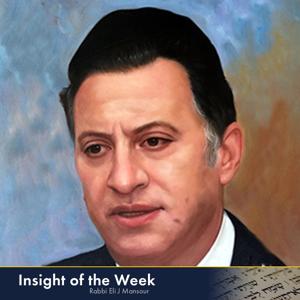
Parasha Insight

Parasha Insight

By Rabbi Eli MansourReligion & SpiritualityJudaism
Download on the App Store

Parasha Insight episodes

  • Parashat Korah- Our Responsibility as Princes
    The Torah begins the story of Korah's brazen uprising against Moshe Rabbenu by introducing him as "Korah, son of Yitzhar, son of Kehat, son of Levi." Rashi notes that the Torah traces Korah's genealogy back to Levi, but it stopped there, without going one generation further, mentioning "the son of Yaakob." This was done, Rashi explains, in fulfillment of Yaakob Abinu's request before his passing. In Yaakob's parting words to his sons, when he addressed Shimon and Levi, he proclaimed, "Bi'khalam Al Tehad Kebodi" – that his honor should not be associated with their "congregation" (Bereshit 49:6). This refers to the "congregation" assembled by Korah for the purpose of challenging the authority of Moshe Rabbenu. Yaakob did not want his name mentioned in the context of this sinful uprising, and so the Torah identified Korah only as "son of Yitzhar, son of Kehat, son of Levi," without adding, "son of Yaakob." Several later scholars addressed the obvious problem with Rashi's comments – his assumption that the Torah should have traced Korah's lineage all the way back to Yaakob. Rashi says that the Torah would have mentioned also "son of Yaakob" if not for Yaakob's request that his name be omitted – but why would Yaakob's name have needed to be mentioned? For that matter, why did the Torah bother tracing Korah's lineage even back to Levi? The Torah already presented the genealogy of the tribe of Levi, back in the Book of Shemot (6), and Korah's family background is included there. Why did the Torah go through the trouble of telling us that Korah was the "son of Yitzhar, the son of Kehat, the son of Levi," and why would it have added also "son of Yaakob" if Yaakob hadn't asked not to be mentioned? A fascinating answer is given by the Maharal of Prague (Rav Yehuda Loew, 1512-1609), in his Gur Aryeh. He explains that the Torah wanted to emphasize the extent of Korah's evil in launching this uprising against Moshe, by noting his distinguished lineage. Korah himself was a prominent member of the nation, among those who carried the ark during travel, but also descended from outstanding Sadikim – Yitzhar, Kehat, Levi, and the patriarchs. Of course, Korah's revolt would have been a grievous sin no matter who he was, but his prominent family background made it particularly severe. This is why the Torah made a point of mentioning his distinguished, righteous predecessors – and would have gone as far as mentioning also Yaakob Abinu, except that Yaakob asked that his name be omitted from this context. The Maharal's explanation brings to mind an insight of the Maggid of Dubna (1741-1804) regarding a verse in Parashat Behukotai (26:42). This verse appears in the section known as the "Tocheha," where G-d warns of the dreadful calamities that He would bring upon Beneh Yisrael as punishment for their misdeeds. G-d in this verse proclaims that He would remember the covenant He made with the patriarchs. It seems that He is now offering consolation, emphasizing that despite His anger, and although He would be punishing the people, He would nevertheless have compassion due to His covenant with the Abot. However, the next verse then continues the description of the exile that the Jewish People would suffer on account of their sins – indicating that the comforting conclusion of the Tocheha has not yet begun. The Maggid of Dubna thus explains that in this verse, G-d warns the people that their wrongdoing is exceptionally severe because of whom they descend from – the sacred patriarchs, with whom Hashem made a special covenant. As heirs of this covenant, and members of this special nation, their misdeeds are considered graver. The Maggid draws an analogy to two people who committed the same minor misdemeanor – a prince, and a poor peasant. The peasant is sentenced to several weeks of prison, whereas the prince is handed a ten-year jail sentence. The reason is that the prince's offense is far more grievous due to his family background, because he is the king's son, a member of the royal family. We, Am Yisrael, must live with this awareness, that we are royalty, that we are "princes," the children of Abraham, Yishak and Yaakob. As members of the "royal family," who have received and studied the Torah, which instructs us how to live a "regal" lifestyle, more is expected of us than of other people. We are bidden to maintain the high standards demanded of Hashem's special nation who represent Him to the rest of the world, and always strive to be worthy of this unique privilege.
    1 hr 10 min
  • Parashat Shelah- The Spies & The Cluster of Grapes
    Parashat Shelah tells the famous story of the Meragelim – the twelve spies sent by Moshe to see the Land of Israel and report back to the nation. Unfortunately, ten of the twelve spies betrayed their mission, frightening the people and convincing them not to proceed into the land. In telling this story, the Torah makes a point of mentioning that during the spies' excursion through the land, they cut a vine with a cluster of grapes, and they brought it back to the people to show them a sample of the land's fruit (13:23). This appears to have been a very significant act – for in the next verse, the Torah tells that the spies named that location "Nahal Eshkol" – "the Valley of the Cluster," commemorating this cluster of grapes. We must wonder, why was this particular act worthy of such commemoration? Why did the spies consider this such a significant event that they found it necessary to memorialize it by changing the location's name? A closer examination of the text reveals yet another difficulty. The Torah tells that this area was renamed to commemorate "the cluster that Beneh Yisrael cut from there." Curiously, the Torah speaks of "Beneh Yisrael" taking this cluster grapes, when in truth only twelve members of the nation – the twelve spies – performed this act. Why? The answer emerges from the comments of the Seforno (Rav Ovadia Seforno, Italy, 1475-1550) in explaining Moshe's instruction that the spies should bring fruit from Eretz Yisrael (13:20). The Seforno writes that this act functioned as a Halachic "Hazaka" – display of ownership. When a person purchases land, the property Halachically enters his possession in one of three ways – the transfer of money to the seller, receiving from the seller a deed of sale, or performing an act of "Hazaka" whereby he demonstratively establishes ownership over the property. A "Hazaka" can take on several different forms, such as erecting a fence around the property, and performing agricultural work in the land. According to Seforno, this was the purpose of the spies' seizing fruit from Eretz Yisrael. This was intended not simply to bring the people a sample of the land's exceptional, high-quality produce, but also to formally take possession of the Land of Israel. Hashem was giving this land to Beneh Yisrael – but they needed to perform an act of acquisition to establish their ownership. This is the significance of the severing of a vine. Quite understandably, then, this was a very significant act that was worth commemorating, as it marked the point when we formally took possession of our homeland. And, this explains why the Torah speaks of "Beneh Yisrael" cutting the vine – because the spies performed this act as representatives of the entire nation, who thereby collectively became owners over the Land of Israel. This was the moment when the Jewish People established their eternal ownership over our beloved land.
    51 min
  • Parashat Behaalotecha- The Leviyim’s Sacrifices
    We read in Parashat Behaalotecha of the formal consecration of the Leviyim as G-d's special servants who would work in the Mishkan. This process included the offering of sacrifices – specifically, one bull as an Ola (burnt-offering), and a second bull as a Hatat (sin-offering). Rav Levi Yitzhak of Berditchev (1740-1809), in his work Kedushat Levi, notes that pair of sacrifices are listed in two different sequences in this section. When the Torah first mentions the requirement to bring two bulls, it mentions first the Ola, followed by the Hatat (8:8). Later, however, in describing the procedure to be followed for the process of consecration, G-d commands Moshe to offer the Hatat and then the Ola (8:2). Rav Levi Yitzhak explains this discrepancy by citing an insight he heard from his father about the general topic of the sequence required when both an Ola and Hatat are offered. In general, the Hatat offering – which is brought for the purpose of earning atonement – is sacrificed before the Ola, which is sacrificed as a gift to earn Hashem's favor. Quite naturally, as the Gemara (Zebahim 7b) explains, the sinner must first achieve a pardon for his wrongdoing before he can then proceed to win the King's favor and affection. Therefore, the Hatat must be offered before the Ola. However, Rav Levi Yitzchak's father noted, we know that the Ola sacrifice does, in fact, achieve atonement – for sins of Mahashaba (improper thoughts). Although a person who is guilty of having bad intentions is not required to bring a sacrifice, he has the opportunity to achieve atonement through the offering of the optional Ola sacrifice. Seemingly, then, the Ola resembles the Hatat, in that it, too, serves to attain forgiveness, and we must therefore ask why the Hatat is offered before the Ola. Rav Yitzchak Levi's father answered based on the general rule that Hashem does not hold us accountable for our wrongful intentions unless they lead to action. One who harbored wrong intentions does not really need an Ola sacrifice for atonement, since he is not liable to punishment for his sinful thoughts. The exception to this rule is idol-worship. One who harbors thoughts of pagan beliefs is liable to punishment regardless of whether or not he acted upon those thoughts. And therefore, Rav Levi Yitzchak's father asserts, when a sin involving idolatry has been committed, the Ola sacrifice indeed precedes the Hatat, because one must first atone for the thoughts which led to the worship, and then for the worship itself. Returning to the sacrifices of the Leviyim, Rav Levi Yitzhak explains that these offerings were brought on behalf of the entire nation to atone for the grave sin of the golden calf. Fundamentally, as this sin was one of idol-worship, the Ola should have been offered first, before the Hatat, and for this reason, in the initial command, the Ola is mentioned first. However, Rav Levi Yitzhak writes, the truth is that Beneh Yisrael did not truly intend to betray G-d and worship the golden calf. They created a graven image not to replace Hashem, but rather as a means through which they mistakenly thought they could draw close to Hashem. While this was, indeed, a grievous sin, and one which resembled idol-worship, the people did not actually worship a foreign deity. Therefore, when these two sacrifices were actually offered, the Hatat was brought before the Ola, as is done in the case of sins other than idol worship.
    0 min
  • Parashat Naso- Our Marriage with G-d
    The Torah in Parashat Naso tells of the special gifts and sacrifices brought by the Nesi'im – the leaders of the tribes – in honor of the inauguration of the Mishkan. To celebrate this event, the Nesi'im donated wagons to be used by the Leviyim to transport the Mishkan during travel, and then each tribal leader offered a series of sacrifices one day. Each day for twelve days, a different Nasi brought these sacrifices. The Torah introduces this account with the words, "Va'yehi Be'yom Moshe Kalot Moshe Le'hakim Et Ha'Mishkan" – "It was on the day when Moshe finished erecting the Mishkan…" (7:1). Rashi observes that the word "Kalot" resembles the word "Kalla" – "bride." This allusion, Rashi explains, indicates to us that on this day, the day when the Mishkan was completed and began functioning, Beneh Yisrael were like a bride entering under the wedding canopy with her groom. This was the day of Beneh Yisrael's "wedding" with G-d. Rashi's comments must be reconciled with the well-established tradition viewing Ma'amad Har Sinai – G-d's revelation to our ancestors at Mount Sinai – as our nation's "wedding" with the Almighty. Indeed, several customs we observe at weddings commemorate aspects of Ma'amad Har Sinai. For example, we adorn the Hupa with flowers, just as Mount Sinai grew beautiful flowers at the time of the Revelation. And it is customary for the groom to leave the Hupa and walk toward the bride to greet her as she makes her way to the Hupa, as G-d is described as coming from Mount Sinai to greet the people as they made their way from the camp to the foot of the mountain ("Hashem Mi'Sinai Ba" – Debarim 33:2). If our "wedding" with the Almighty occurred on Shabuot, the day of Matan Torah, then how can Rashi speak of the day of the Mishkan's inauguration – which happened nearly ten months later – as the "wedding day"? The answer lies in the tragic event that transpired in between Matan Torah and the inauguration of the Mishkan – the sin of the golden calf. We might say that the day of Matan Torah marked the first stage of the wedding process – what we call "Kiddushin" (betrothal). This is the stage when the groom gives the bride a ring and designates her as his wife. The marriage is completed with the stage of "Nisu'in," when the bride and groom go into private for the first time. The "Nisu'in" between Beneh Yisrael and Hashem was to occur forty days after Ma'amad Har Sinai, on the 17 th of Tammuz, when Moshe came down the mountain with the two tablets. This day was to have marked the completion of the "wedding," whereby our nation was fully "married" to the Almighty. In the interim, however, Beneh Yisrael had betrayed G-d – like a bride who was unfaithful to her groom – by worshipping a foreign deity. Under such circumstances, of course, the "wedding" could not continue. Beneh Yisrael needed to repair the relationship through repentance and through the building of the Mishkan. Once the Mishkan was completed, the "wedding" could now be resumed. Therefore, Rashi writes that on the day of the Mishkan's inauguration, Beneh Yisrael resembled a bride going into the Hupa – because this day marked the renewed "wedding" which had been discontinued as a result of the sin of the golden calf. Not coincidentally, Parashat Naso is almost always read shortly after the celebration of Shabuot, the day which celebrates the beginning of our "marriage" with G-d. Parashat Naso tells of the completion of the "wedding," how our nation succeeded in recovering from the tragic failure of the golden calf, in rebuilding our trust and faithfulness, so we could again be worthy of "marrying" Hashem, of entering into a unique, intimate bond with Him. The story of the Mishkan's completion teaches us that we need to earn this special relationship through loyalty and devotion. If we prioritize other interests and concerns over the Torah, if we choose to place our trust in people and forces other than Hashem, then we are betraying Him and thus become unworthy of His special protection and blessings. If we want to benefit from our relationship with G-d, we need to earn it through unbridled fealty to His commands, and by remaining uncompromisingly and unflinchingly committed to the Torah, without being misled by the alluring "golden calves" that threaten to pull us away from our loyalty to Hashem.
    1 hr 3 min
  • Shavuot- Being G-d’s Servants
    Shavuot- Being G-d's Servants The Mechilta famously tells that before G-d gave the Torah to Beneh Yisrael, He offered it to other nations. He first asked the descendants of Esav if they wanted the Torah, and they replied by questioning what the Torah demanded. G-d said that the Torah forbids murder – whereupon the people of Esav said they could not possibly abide by such a command. G-d then offered the Torah to the nation of Moab, and they, too, asked what it entailed. He said that it forbids immorality, illicit intimate relationships – and the people of Moab refused. G-d then offered the Torah to the nation of Yishmael. When they heard that the Torah forbids stealing, they declined. One of the commentators to the Mishna – the Mirkebet Ha'mishneh (Rav David Moshe Abraham Ashkenazi, 1680-1745) – explains the meaning and significance of this story. The Mechilta here is teaching us that accepting the Torah requires accepting the parts of the Torah that we find difficult, that force us to go against our natural instincts and inclinations. Hashem first told the people of Esav about the prohibition of murder – because they were violent by nature, and in order to accept the Torah, they needed to commit to restraining their violent impulse. This is something they were not prepared to do. And the same is true of Moab and immorality, and Yishmael and theft. The first thing G-d told each of them was the command which they would find most difficult – because this is precisely what accepting the Torah requires: that we be prepared to break our nature, to act in opposition to our instinctive tendencies. Rav Yisrael Salanter, in one of his more famous letters ( Or Yisrael , 17), elaborates on this concept, on the need to observe the Torah even when this is difficult, when this requires struggle. He writes that even if a person observes many Misvot, and generally follows a religious lifestyle, he might still not earn the title "Ebed Hashem" – a servant of Hashem. An "Ebed," a servant, is somebody who works ("Obed"). If a person fulfills Misvot only when he finds it convenient, what it does not entail hardship or difficulty, then he is not working, and so he is not actually serving Hashem. We become Hashem's servants only when we commit to observe even those Misvot which we find challenging, to abide by Hashem's rules even when this demands a great deal of struggle. There is a famous Yiddish expression among Ashkenazi Jews, "Shver tsu zayn a Yid" – "It is difficult to be a Jew." This expression is commonly viewed with disdain, as something one should never say, as it reflects a cynical, negative attitude toward Judaism. We are to be proud of Jewish life and always emphasize – to ourselves, to our children, and to others – the unparalleled joy and beauty of Torah life. I would suggest, however, a different perspective on this expression, that it makes an important and powerful comment about what Judaism is all about. Being a Jew means remaining committed even when this is difficult. Of course, Jewish life is, generally, beautiful. But often, it requires struggling to overcome difficult challenges. And accepting the Torah means committing ourselves to follow the Torah even when this requires struggle. Thus, indeed, "it is difficult to be a Jew" – being a Jew means accepting that it will sometimes be difficult. When Hashem came to Beneh Yisrael to offer them the Torah, they immediately responded with the resounding declaration, "Na'aseh Ve'nishma" – "We will perform and we will hear" (Shemot 24:7). Curiously, however, the Gemara (Shabbat 88a) tells that Hashem suspended the mountain over Beneh Yisrael and threatened to drop it on them if they did not accept the Torah. Many commentators raised the question of why Hashem needed to threaten Beneh Yisrael after they had enthusiastically expressed their commitment by declaring "Na'aseh Ve'nishma." One answer is that Hashem sought to impress upon them the obligation to observe the Torah under all circumstances, even when it is difficult and inconvenient. It was easy to announce "Na'aseh Ve'nishma" – but there would be many times in the future when they would be far less enthusiastic, when Torah observance would be a challenge, when they would need to struggle. G-d therefore held the mountain over them – to make it clear that they were becoming His servants, and this means serving Him even when this requires hard work. We must serve Hashem not only when we are "in the mood," when we feel like it, but even when we don't. Every person has his own set of struggles in Torah observance. What comes easy for one person is a struggle for somebody else. We need to each find our own weaknesses, our own areas of struggle, the parts of Torah observance which pose a special challenge for us. We must then make the commitment to accept this struggle, to work hard, to put in the effort, to do the best we can, to serve Hashem to the very best of our ability even when we find it difficult.
    59 min
  • Parashat Behar/Behukotai- The Spirit of the Law, the Spirit of the Relationship
    Parashat Behar begins with the Misva of Shemita, which requires farmers to refrain from agricultural activity for an entire year every seven years. The Torah refers to this year as "Shabbat L'Hashem" – "A sabbath to God" (25:2), and as "Shabbat Shabbaton" (25:4), a phrase whose meaning is not, at first glance, clear. The Seforno (Rav Ovadia Seforno, Italy, 1475-1549) explains the first expression, "Shabbat L'Hashem," to mean that this year is to be devoted to Hashem. G-d commands farmers to refrain from agricultural work so that they can spend this year involved in Torah learning and prayer. Just as we refrain from work one day a week, Shabbat, in order to spend a day engrossed in spirituality, similarly, once in seven years, farmers are to spend a year devoted to the nurturing of their soul. As for the term "Shabbat Shabbaton," the Seforno writes that this instructs farmers to refrain also from certain activities related to agriculture that are not technically forbidden by the formal laws of Shemita. To understand the Seforno's intent, we must take a step back and examine the notion of the "Takanot" – the laws enacted by the Sages to safeguard the Torah. It goes without saying that the Torah is perfect, and does not and will never require any amending. The purpose of the Rabbis' "Takanot" was most certainly not to "improve" the already perfect Torah. Rather, they were intended to uphold the spirit of the law. It is possible, for example, for a person to avoid all the activities forbidden by the Torah on Shabbat, while treating the day not much different than a weekday. A businessman can run his business on Shabbat without performing any acts that constitute Biblical acts of Shabbat desecration. He can go to his office with a non-Jewish taxi service, manage his employees, and even write with a "Shinui" – a deviation, like with his weaker hand – such that he has a pretty typical business day without transgressing any Torah violations. A person can also spend Shabbat cleaning his garage and washing his car without desecrating Shabbat on the level of Torah law. Clearly, however, this is not how the Torah wants us to spend Shabbat. In addition to the letter of the law, there is the spirit of the law, the purpose for which the law exists. The Shabbat prohibitions are intended to create a certain atmosphere, an aura of serenity, joy, calm, holiness, and spiritual growth. The Rabbis saw that people were observing the letter of the law without observing the spirit of the law. In many areas, they were able to abide by the strict letter of the Torah's commands, but while missing the entire point of these commands. And so the Sages enacted many laws in order to ensure that we not only technically observe the Torah's commands, but also achieve the goals which these commands are meant to lead us to. According to the Seforno, this is the meaning of "Shabbat Shabbaton." The Torah indicates to us that besides refraining from the specific forms of agricultural activity forbidden by the laws of Shemita, farmers must also maintain a certain aura during this year, an aura of spiritual engagement and holiness. To that end, they are to refrain from even technically permissible forms of work, so that the Shemita year will be spent in a fundamentally different way than the other six years. What is true about Shabbat and Shemita is true also of our relationships. In a good marriage, the husband and wife do not need to be told what to do for one another, and what not to do. They understand what the other wants, and they try to fulfill those wishes to the best of their ability. I am reminded of the time when a fellow called me to ask if it was acceptable to miss his evening Torah study in order to go out with his wife for their anniversary. I told him that I don't have time for questions such as these. This should not even be asked. It should be obvious that one owes it to his wife to spend time with her on their anniversary. One does not need to ask a Rabbi to authorize his going out with his wife on their anniversary. This is something that he should not need to be told. The fellow went home and said, "The Rabbi said we can go out tonight." This is now how it is done. A man does not spend time with his wife because the Rabbi said so. He spends time with his wife because he knows that this is what she wants and what she expects. He should not wait to be told – by her or by a Rabbi – that this is what he should do. In our relationship with Hashem and in our relationships with other people, we are to extend beyond the technical "dos" and "don'ts," the strict letter of the law, and try as much as possible to do what we intuitively know they want us to do.
    56 min
  • Parashat Emor- The “Pillar” of Torah
    The famous second Mishna of Pirkeh Abot teaches that the world stands on three "pillars": Torah, Aboda (service of G-d), and Gemilut Hasadim (dispensing kindness). These three "pillars" are embodied by our three patriarchs – Abraham, Yishak and Yaakob. Abraham was the paragon of kindness, devoting his life to helping others. Even after undergoing Berit Mila at an advanced age, he sat outside in the scorching heat looking for people who needed hospitality. He spared no efforts in seeking to help any person who required assistance. Yishak, who was placed on an altar and nearly sacrificed, represents the highest standards of "Aboda," serving Hashem, living one's life in complete subservience to the Almighty and being prepared to make whatever sacrifices He demands. Finally, Yaakob Abinu embodies the quality of diligent Torah study, having spent the first decades of his life fully immersed in Torah learning. In light of this parallel, it seems that the Mishna's list of three "pillars" is presented out of order. We would have perhaps expected the Mishna to list the "pillars" in the order of the three Abot (patriarchs) – beginning with Hesed, followed by Aboda, and culminating with Torah, corresponding to the order of the Abot – Abraham, Yishak and Yaakob. The answer, perhaps, is that the Mishna wanted to emphasize that we need to learn Torah in order to achieve the other two pillars. Without Torah knowledge, we will not have the information we need to serve Hashem. A person who does not learn Torah will decide on his own how to pray, and how to perform Misvot. He will just make up his service of Hashem. We need to learn Torah in order to know how to perform "Aboda," how to serve Hashem in the right way. This is true also of Hesed. We might think that Hesed is instinctive and intuitive, that we can figure out on our own when and how to help other people. But this, too, is mistaken. The Torah guides us not only with regard to our service of Hashem, but also with regard to Hesed, explaining to us the right way to help people. We need to learn what our responsibilities and obligations are, when we are supposed to help, and what kind of help we are to offer. We find an example in the beginning of Parashat Emor, where the Torah presents a series of laws relevant to the Kohanim. A Kohen is not permitted to come in contact with a dead body, except in the case of the death of an immediate family member. Of course, we know that tending to the burial of the deceased is a precious Misva. But without learning Torah, we would not have known that for a Kohen, this is actually a sin, unless he is dealing with the remains of a family member. Moreover, a Kohen Gadol is not permitted to come in contact with a dead body even in the case of a deceased family member – but he is allowed, and even required, to tend to the burial of a Met Misva, a body that has nobody else to bury it. This is just one example of how we need the Torah to give us the guidelines of when and how to perform kindness. Torah knowledge is indispensable for living a life of Aboda and of Hesed. The "pillar" of Torah is therefore mentioned by the Mishna first – because without it, we can never reach the other two "pillars."
    31 min
  • Parashat Kedoshim- Elevating the Person, Not the Mistake
    We find in Parashat Kedoshim (19:17) the command "Hochi'ah Tochi'ah Et Amitecha" – to reprimand one's fellow who acts improperly, so that he will improve his behavior. King Shlomo, in the Book of Mishleh (9:8), offers advice regarding the proper approach to the delicate topic of Tocheha – reprimanding and rebuking. He teaches, "Al Tochah Letz Pen Yisna'eka, Hochah Le'hacham Ve'ye'ehaveka" – "Do not reprimand the scoffer, lest he despise you; reprimand the wise, and he will love you." The simple meaning of this verse is that King Shlomo is telling us whom to criticize and whom not to criticize. The "Letz," the "scoffer," should not be expected to accept criticism, and so it is best not to criticize him. Many people are simply not receptive to criticism, as they assume they are always correct, and have little interest in hearing what others have to say. Their instinctive reaction to criticism is something to the effect of, "Who are you to talk?" "What do you know?" "Don't tell me what to do." The wise person, by contrast, understands that he has something to learn from all people, even those who are not necessarily as smart as he is. With wisdom comes the humility to recognize that all people, even the brightest and most successful, make mistakes and have more to learn. And so the wise person is open to constructive criticism, and willing to accept rebuke. Therefore, Shlomo tells us not to bother reprimanding the "Letz," the arrogant cynic, but to offer criticism to the wise person who is open to being corrected and advised. Rav Yaakov Kamenetsky (1891-1986) offered an additional explanation of this verse – suggesting that King Shlomo here teaches us not whom to reprimand, but how to reprimand. He is telling us that when we offer criticism, we should do so in a manner that makes the person feel like a wise person, and not like an evil "scoffer." Unfortunately, our instinct when giving criticism is to emphasize the severity of the misdeed, and how ashamed the person should feel for having committed such an act. This approach, while instinctive, is not only ineffective, but counterproductive. If we emphasize to the person the gravity of his wrongdoing, he is likely to either reject the criticism altogether, or simply despair. He will either not want to own up to the fact that he did something terrible, and thus dismiss the criticism, or he will acknowledge the severity of his bad behavior and decide that he's just bad and so there is no reason for him to try to improve. King Shlomo thus advises us, "Do not reprimand the scoffer" – do not criticize in a way that makes the person feel lowly. Instead, "…reprimand the wise" – make him feel important, wise and capable. The right way to criticize is by emphasizing to the individual his greatness, his vast potential, how much Hashem loves him and wants him to do the right thing, how much he is capable of achieving. If we criticize in a manner that makes the person feel "wise" and capable of greatness, then he will embrace the criticism, rather than reject it. This perhaps sheds new light on the continuation of the verse here in Parashat Kedoshim. After commanding, "Hochi'ah Tochi'ah Et Amitecha," the Torah adds, "Ve'lo Tisa Alav Het." This is commonly understood to mean, "and do not bear sin on his account," that is to say, if we fail to criticize, then we are held partially accountable for the person's continued misconduct. Alternatively, however, this could be read to mean, "Do not elevate the sin." When we reprimand, we should not emphasize the severity of the act, which will cause the person to despair. Rather than "elevate" the sin, we should instead elevate the person. We should emphasize not how bad the person behaved, but rather how good he is capable of behaving, how great he can become. This is a critical lesson relevant to education. When raising children or teaching students, the focus must be on building the child's self-esteem, making the child feel capable and helping him realize his potential. Rather than "elevate" the child's inevitable mistakes and failings, we must instead "elevate" his sense of self-worth, so he recognizes how great he can be and sets out to achieve that greatness.

    0 min
  • Parashat Mesora- The “Joy” of Sara’at
    Most of Parashiyot Tazria and Mesora deals with the intricate laws of Sara'at – a kind of infection which would surface on people's skin, garments, or homes. The Torah outlines specific requirements that must be obeyed by a person who sees a suspicious discoloration that might signify the presence of Sara'at, as well as the procedures to be followed should a discoloration be confirmed as Sara'at. A person confirmed to be stricken with bodily Sara'at would be banished from his city until he is cured. A garment with Sara'at, in certain situations, needed to be burned, and a home stricken with Sara'at would, in some instances, be dismantled. The Rabbis explained that Sara'at would befall a person as a punishment for certain sins. Even Sara'at on the body was not a medical condition, some sort of dermatological disorder. It was rather a punishment that G-d would bring upon a person on account of his misdeeds. In light of this, Rav Moshe Alshich (Sefat, 1508-1593) raised the question of why the Torah begins its discussion of Sara'at by addressing the situation of "Adam Ki Yiheyeh Be'or Besaro Se'et O Sapahat…" – where an "Adam" has a discoloration on his skin. "Adam" is one of several different words used by the Torah in reference to the human being, and the Alshich writes that this word refers specifically to "Shelomeh Emuneh Yisrael" – the faithfully observant among the Jewish people. It signifies a high level of obedience to Hashem, and is thus reserved for those who are religiously committed. The question naturally arises, then, as to why it is used here, in Parashat Tazria, in reference to a person stricken by Sara'at. If Sara'at would befall somebody who was guilty of grave misdeeds, then why is he called "Adam" – a title of distinction reserved for the spiritually devoted? The Alshich answers that to the contrary, it is only those who are generally righteous and pure whose bodies are impacted by the impurity of sin. If a person is entirely impure, then the sins he commits do not affect him to such an extent that he would be stricken by Sara'at because of them. It is only if a person is otherwise pure that an occasional misdeed would result in a Sara'at infection. A stain is noticeable only on an otherwise clean garment; if a garment is already covered with mud, a drop of food that falls on it will not be discernible. Likewise, it is only in a generally "clean" soul that the "stain" of sin causes a Sara'at infection. For this reason, the Alshich writes, Sara'at does not occur nowadays – because we are not on a high enough level of purity that the contamination of an occasional sin would leave an impression in the form of Sara'at. The Alshich explains on this basis a word used by the Torah later in this introductory verse: "VE'HAYA Be'or Besaro Le'nega Sara'at" ("And it shall be in the skin of his flesh a Sara'at affliction"). Ironically, the word "Ve'haya" is understood by our Sages as an allusion to joy. When this word is used, the Gemara (Megilla 10) teaches, it indicates an element of celebration. Seemingly, then, the word "Ve'haya" has no place here in the context of Sara'at infections. The Alshich explains that while the manifestation of Sara'at is, of course, very unfortunate, a harsh punishment brought upon a sinner, at the same time, it is a cause for joy, as it shows the person's overall stature of greatness. The fact that his "stain" is discernible proves that his soul is otherwise "clean." The onset of Sara'at thus brings the joy of knowing that one is generally pure and can retain his state of pristine purity through the process of Teshuba, by correcting the misdeeds for which he was punished with Sara'at.
    16 min
  • Parashat Shemini- Our Unique Spiritual Potential
    The Torah in Parashat Shemini introduces the subject of "Ma'achalot Asurot" – the forbidden foods, outlining the general principles that govern which foods are permissible for consumption and which are not. In its conclusion of this topic, the Torah connects these laws to the concept of Kedusha, the sanctity of Beneh Yisrael: "Ve'hitkadishtem Vi'hyitem Kedoshim Ki Kadosh Ani" – "You shall sanctify yourselves and be sacred, for I am sacred…" (11:44). This association between "Ma'achalot Asurot" and the concept of Kedusha is underscored by the Rambam, who includes these laws in the "Kedusha" section of his halachic code. To explain this connection, Rav Eliyahu Bakshi-Doron (1941-2020), former Sephardic Chief Rabbi of Israel, draws our attention to an important passage in the Midrash Tanhuma (Shemini, 6), which offers an analogy to a doctor who visited two ailing patients. He noticed that the first patient was gravely ill with little chance of surviving, whereas the second was likely to recover. The doctor told the first patient's family member to feed him whichever foods he wanted, whereas the family of the second patient were given very strict instructions regarding the patient's diet. Since the first patient in any event was not likely to live, the doctor explained, he could be allowed to enjoy whichever foods he wished. The second, however, had the potential to live, and so he needed to care for his health so that he could recover. The Midrash explains that the same is true of Am Yisrael and the other nations of the world. While there is no physical difference between us, and our bodies are no different than the bodies of other peoples, we are destined to "live," as the verse says in the Book of Debarim (4:4), "Ve'atem Ha'debekim B'Hashem Elokechem Haim Kulechem" – "And you, who are attached to Hashem your G-d, are living." Rav Bakshi-Doron explains that we are destined to receive a portion in the next world, in the eternal afterlife, where our souls will exist together with Hashem, and this is the "life" to which we are uniquely destined. We are "sacred" in the sense that we are given the potential to build a special connection with the Almighty. Therefore, we are given a special "diet" that we must follow. We of course do not understand the spiritual effects of kosher food and non-kosher food, but Hashem Himself – the greatest "doctor" – informed us of which foods we must abstain from in order to preserve our spiritual health so we can build a unique connection with Him and become the holy people that we are meant to become. Rav Bakshi-Doron adds that this explains why the laws of "Ma'achalot Asurot" appear here in Parashat Shemini, which also tells of the events that took place when the Mishkan was inaugurated. The purpose of the Mishkan, as Hashem famously told Moshe back in Parashat Teruma (Shemot 25:8), is "Ve'shachanti Be'tocham" – that Hashem would reside among His people. Through the Mishkan, Hashem came to live intimately with us, to dwell within each and every member of our nation. The Mishkan, then, signifies the special relationship that we are to build with our Creator, the unique spiritual potential that we have been given. This is the connection between the Mishkan – the most powerful symbol of our unique spiritual potential – and "Ma'achalot Asurot," the laws we must observe in order to bring that potential into fruition. Hashem chose us to become a special nation – and to that end, He equipped us with special potential and abilities. This does not mean we are naturally better than others – rather, it means that we are given the responsibility and the challenge to rise to greater heights, and we are guaranteed the ability to meet this challenge if we truly strive to. Once we recognize our unique spiritual mission, and the unique potential we have to complete this mission, we will feel more confident and more driven to pursue spiritual greatness, to maximize our potential, and become the great people that we are expected to become.
    31 min

About Parasha Insight

From the publisher's feed

Relevant weekly insights by Rabbi Eli Mansour - delivered directly to your computer and/or mobile device

More shows like Parasha Insight

The Rabbi Sacks Legacy by Rabbi Lord Jonathan Sacks

The Rabbi Sacks Legacy

557 Listeners

A Torah State Of Mind by Rabbi Shlomo Farhi

A Torah State Of Mind

82 Listeners

Daily Morning Class by Rabbi Meyer Yedid

Daily Morning Class

28 Listeners