
Sign up to save your podcasts
Or

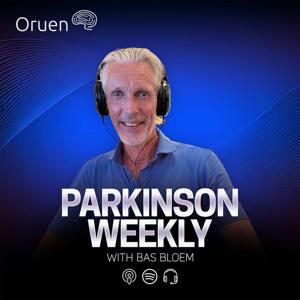
By Oruen CNS
Parkinson Weekly is your go-to podcast for the latest insights in Parkinson’s disease. Each week, Professor Bas Bloem, Consultant Neurologist in the Department of Neurology at Radboud Univer
... more

The podcast currently has 44 episodes available.
The most played episodes among Podcast App listeners.
🎙️ We’re back with the 38th episode of Parkinson Weekly, hosted by Prof. Bas Bloem — and the third instalment of the Parkinson Weekly Helpdesk. In Episode 38 of Parkinson Weekly, Professor Bas Bloem returns with the third Helpdesk episode, answering questions submitted by listeners from around the world. This week, Bas explores the important relationship between Parkinson’s and the gut, including constipation, SIBO and how gut health can affect levodopa absorption and weight loss. He also discusses emerging research into intermittent hypoxia and its potential effects on Parkinson’s symptoms, before looking at whether Parkinson’s may be increasing among younger people and why more research into young-onset Parkinson’s disease is needed. Have a question you’d like Bas to answer in a future episode? Email us at [email protected] – we’d love to hear from you.

🎙️ We’re back with episode 32 of Parkinson Weekly, hosted by Prof. Bas Bloem. In Episode 32 of Parkinson Weekly, Prof. Bas Bloem returns with the third Parkinson Weekly Helpdesk, answering three insightful questions from listeners. This episode explores the fascinating relationship between art, dopamine, creativity, and brain function, including how art may support wellbeing in Parkinson’s disease and why future clinical trials could help define its therapeutic potential. Bas also discusses altered perception in Parkinson’s, including hearing, vision, proprioception, posture awareness, and how practical tools such as visual feedback may help support therapy. The episode concludes with an open and thoughtful discussion on lifespan in Parkinson’s disease. Bas explains why honest conversations about prognosis, quality of life, falls, swallowing, infections, and multidisciplinary care are essential, while also highlighting the positive impact that specialist support and services such as ParkinsonNet can have on outcomes. A wide-ranging Helpdesk episode covering creativity, perception, realistic hope, and practical ways to support better living with Parkinson’s disease. Have a question you’d like Bas to answer in a future episode? Email us at [email protected] – we’d love to hear from you.
🎙️ We’re back with episode 31 of Parkinson Weekly, hosted by Prof. Bas Bloem. In Episode 31 of Parkinson Weekly, Prof. Bas Bloem explores an often overlooked but deeply important aspect of Parkinson’s disease: shame. Discussing a thought-provoking new paper published in Movement Disorders Clinical Practice, Bas examines how feelings of shame can significantly affect the lives of people living with Parkinson’s. The episode highlights findings from a Swiss study investigating the relationship between shame, anxiety, guilt, dyskinesias, depression, apathy, and overall quality of life in Parkinson’s disease. Bas reflects on why this under-recognised issue deserves far greater attention in clinical practice and everyday conversations. Importantly, the discussion goes beyond medication, emphasising the value of open communication, awareness, and non-pharmacological support in helping reduce the burden of shame for people with Parkinson’s and their families. A thoughtful and compassionate episode shedding light on the emotional realities of living with Parkinson’s disease — and why acknowledging these experiences is an essential step toward better care. You can read the full article here: https://pubmed.ncbi.nlm.nih.gov/40384367/ Have a question you’d like Bas to answer in a future episode? Email us at [email protected] – we’d love to hear from you.
In Episode 40 of Parkinson Weekly, Prof. Bas Bloem explores what he describes as one of the most exciting and encouraging developments in Parkinson’s clinical research: multi-arm, multi-stage (MAMS) clinical trial platforms. As our understanding of the biological processes underlying Parkinson’s disease continues to grow, so too does the number of potential treatments that could target these mechanisms and potentially slow disease progression. The challenge is how to test these promising therapies quickly, efficiently and reliably. Traditional clinical trials can take years, require large numbers of participants and often need a separate placebo group for every treatment being investigated. MAMS platforms offer a different approach, allowing several potential treatments to be tested simultaneously against a shared control group. Crucially, these platforms also incorporate planned interim analyses. Treatments showing little or no evidence of benefit can be stopped early and replaced by new candidates, while those showing promising signals can continue through the trial. The aim is to reduce costs, make better use of participants and, most importantly, identify promising therapies more quickly. Prof. Bloem discusses how this approach has already been successfully used in areas such as cancer and COVID-19, and looks at the growing international movement to bring the same model to neurological diseases. For Parkinson’s disease, he highlights the Edmond J. Safra Accelerating Clinical Trials in Parkinson’s Disease (EJS ACT-PD) platform in the UK, alongside similar initiatives emerging internationally. He also discusses some of the treatments being evaluated through these new trial approaches, including telmisartan, terazosin and UDCA. The episode also considers the challenges involved, from selecting appropriate placebo groups to identifying sensitive biomarkers that can provide an early indication of whether a treatment is working. While these platforms will not change clinical care tomorrow, Prof. Bloem explains why they represent genuine hope for the Parkinson’s community: a smarter, faster and more collaborative way of determining which potential treatments deserve to move forward. Could this new generation of clinical trials help accelerate the search for disease-modifying treatments in Parkinson’s? Have a question you’d like Bas to answer in a future episode? Email us at [email protected] – we’d love to hear from you.
🎙️ We’re back with the 39th episode of Parkinson Weekly, hosted by Prof. Bas Bloem - on this week’s episode, Prof. Bas Bloem explores an intriguing new approach to one of the most common challenges faced by people with Parkinson’s disease: poor sleep. Could something as simple as blue light therapy make a difference? Prof. Bloem discusses a recent placebo-controlled study investigating blue light delivered through specially designed glasses in people with Parkinson’s experiencing sleep problems. Participants received either blue or red light therapy for two weeks, with the results showing a significantly greater improvement in sleep quality and daytime sleepiness among those receiving blue light. In this episode, Prof. Bloem explores:Why blue light may help regulate the body’s biological clock and sleep–wake cycleThe improvements seen in sleep quality and daytime sleepinessWhy the lack of improvement in motor symptoms may actually strengthen the findingsThe potential for blue light therapy as an easy, home-based interventionWhy larger and longer Phase III studies are still needed before it can become an established treatmentWhile the study involved only 30 participants and further research is required, the findings offer an encouraging glimpse at a potentially safe, non-invasive way of improving sleep for people living with Parkinson’s disease. Have a question you’d like Bas to answer in a future episode? Email us at [email protected] – we’d love to hear from you.
The podcast currently has 44 episodes available.