
Sign up to save your podcasts
Or

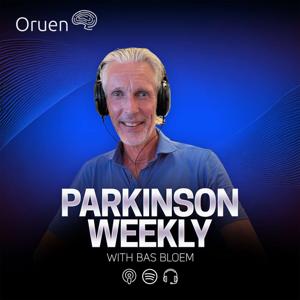


🎙️ We’re back with the twenty first episode of Parkinson Weekly, hosted by Prof. Bas Bloem.
In this episode, Bas explores a surprising and often overlooked question: is hearing loss part of the Parkinson’s disease phenotype?
Discussing a 2026 systematic review and meta-analysis published in Movement Disorders, he highlights compelling evidence that hearing impairment is common in Parkinson’s — affecting nearly 80% of patients across pooled studies. High-frequency hearing loss was particularly prevalent, and abnormalities in central auditory processing suggest this is not simply age-related decline, but potentially linked to Parkinson’s-specific brain changes.
Bas reflects on why this matters clinically, including the association between hearing loss, cognitive decline, and social isolation. The key message: hearing impairment is common, under-recognised, and should not be dismissed as “just ageing.”
An important episode that broadens our understanding of the non-motor and sensory features of Parkinson’s disease.
👉 You can read the full article here: https://pubmed.ncbi.nlm.nih.gov/41618507/
And don't forget, you can listen here:
Have a question you’d like Bas to answer in a future episode? Email us at [email protected] – we’d love to hear from you.
🎙️ We’re back with the twentieth episode of Parkinson Weekly, hosted by Prof. Bas Bloem.
In this episode, Bas discusses Exploring the impact of Parkinson’s disease on driving: a population-based survey, a large real-world study examining how Parkinson’s affects driving ability, licence retention, and conversations between patients and healthcare professionals.
Driving is closely tied to independence, identity, and quality of life — yet both motor and non-motor symptoms of Parkinson’s can compromise safety behind the wheel. Bas walks listeners through the findings of this population-based survey, which showed that most people with Parkinson’s still hold a valid driving licence, often many years after diagnosis, with many voluntarily adapting their driving habits by reducing distances or avoiding night-time travel. However, fewer than half had discussed driving with a healthcare professional, highlighting an important and often overlooked gap in routine care.
He explores the broader factors that influence safe driving, including cognitive slowing, executive dysfunction, visual–spatial challenges, and the ability to respond under pressure — issues that may not always be captured during standard clinic assessments. Bas also considers the limitations of self-reported confidence and discusses the potential role of structured or simulator-based testing.
This episode provides practical, real-world guidance for clinicians, patients, and families, emphasising the importance of regular conversations, early identification of risks, and supportive strategies to help people with Parkinson’s maintain safe mobility and independence for as long as possible.
👉 You can read the full article here: https://pubmed.ncbi.nlm.nih.gov/39545559/
Have a question you’d like Bas to answer in a future episode? Email us at [email protected] – we’d love to hear from you.
🎙️ We’re back with the nineteenth episode of Parkinson Weekly, hosted by Prof. Bas Bloem.
In this episode, Bas shines a light on an often overlooked aspect of Parkinson’s disease: cognitive challenges and the practical “detours” people use to navigate them in daily life. He pays tribute to the late Marina Noordegraaf — artist, advocate, and person with Parkinson’s — whose pioneering work helped make these invisible thinking obstacles visible.
Building on her earlier work around motor “detours” for freezing of gait, Bas explores Marina’s beautifully illustrated book Detours through the Parkinsonian Brain, which focuses on strategies to compensate for cognitive difficulties such as slowed thinking, attention problems, planning challenges, memory lapses, and executive dysfunction. Drawing on interviews with more than 450 people with Parkinson’s and over 130 care partners, the project captures real-world solutions developed by patients themselves.
Bas discusses the concept of functional cognition — how cognitive skills translate into everyday performance — and why challenges often emerge not in clinic-based tests but in complex, stressful, real-life situations. He highlights the practical tools outlined in the book, including environmental adjustments, behavioural strategies, and simple communication techniques to help patients and families manage thinking obstacles more effectively.
This episode offers a thoughtful and highly practical perspective for clinicians, patients, and caregivers alike, emphasising that while cognitive symptoms may not always be visible, they are common, impactful, and often manageable with the right strategies.
Have a question you’d like Bas to answer in a future episode? Email us at [email protected] – we’d love to hear from you.
🎙️ We’re back with the eighteenth episode of Parkinson Weekly, hosted by Prof. Bas Bloem.
In this episode, Bas discusses new evidence on an old drug: amantadine. He reviews the PREMANDYSK study, a large multicentre, randomised, placebo-controlled trial conducted across 15 specialist centres in France and published in Movement Disorders, which investigated whether early use of amantadine can delay or prevent the development of levodopa-induced dyskinesias in people with Parkinson’s disease.
Bas walks listeners through the study’s innovative delayed-start and washout design, explains why amantadine’s unique dopaminergic and NMDA-antagonist properties make it biologically plausible for this role, and highlights the key findings — including a 50% reduction in peak-dose dyskinesias at 18 months, lower levodopa dose escalation, and modest benefits for freezing of gait, fatigue, and quality of life, without an increase in adverse events.
He also offers a balanced interpretation of what the results do — and do not — tell us about true disease modification, discusses important limitations such as follow-up duration and patient selection, and reflects on how these findings may influence clinical decision-making today. Bas closes by reappraising amantadine’s place in Parkinson’s care, particularly as an underrated, cost-effective option for the right patient, while emphasising the need for further long-term research.
👉 You can read the full article here:
https://pubmed.ncbi.nlm.nih.gov/41316871/
Have a question you’d like Bas to answer in a future episode? Email us at [email protected] – we’d love to hear from you.
🎙️ We zijn terug met de zeventiende aflevering van Parkinson Weekly, gepresenteerd door prof. Bas Bloem.
Bas bespreekt het Artikel van de Week: Incidence and Spatial Variation of Parkinson’s Disease in the Netherlands in 2017–2022, gepubliceerd in The Lancet Regional Health – Europe. Hij licht de innovatieve methodologie van het onderzoek toe, waarbij meerdere nationale databronnen zijn gebruikt om nieuwe gevallen van de ziekte van Parkinson in Nederland in kaart te brengen. Daarnaast belicht hij de belangrijkste bevindingen, waaronder een stabiele incidentie gedurende de onderzoeksperiode, duidelijke regionale patronen in nieuwe diagnoses en demografische verschillen in risico. Bas staat ook stil bij wat deze resultaten wel — en niet — zeggen over de rol van omgevingsfactoren bij de ziekte van Parkinson, de beperkingen van het onderzoek en de mogelijke richtingen voor toekomstig onderzoek.
👉 Je kunt het volledige artikel hier lezen:
https://www.thelancet.com/action/showPdf?pii=S2666-7762%2825%2900357-6
Heb je een vraag die je Bas in een toekomstige aflevering zou willen stellen? Stuur ons een e-mail via [email protected] – we horen graag van je.
🎙️ We’re back with the seventeenth episode of Parkinson Weekly, hosted by Prof. Bas Bloem.
Bas discusses the Article of the Week: Incidence and Spatial Variation of Parkinson’s Disease in the Netherlands in 2017–2022, published in The Lancet Regional Health – Europe. He breaks down the study’s innovative methodology, which used multiple national data sources to map new Parkinson’s cases across the Netherlands, and highlights the key findings, including stable incidence over the study period, distinct regional patterns in new diagnoses, and demographic differences in risk. Bas also considers what these results may — and may not — tell us about environmental contributions to Parkinson’s disease, the study’s limitations, and where future research might be headed.
👉 You can read the full article here:
https://www.thelancet.com/action/showPdf?pii=S2666-7762%2825%2900357-6
Have a question you’d like Bas to answer in a future episode? Email us at [email protected] – we’d love to hear from you.
🎙️ We’re back with the sixteenth episode of Parkinson Weekly, hosted by Prof. Bas Bloem.
In this episode, Bas discusses the Article of the Week: Mucuna pruriens in untreated Parkinson’s disease in sub-Saharan Africa: A 12-month, multicenter, randomized, controlled trial. He explores the study’s design, key findings, and what this important research tells us about alternative, accessible treatment options for Parkinson’s disease, particularly in under-resourced settings, as well as its broader implications for global Parkinson’s care.
👉 You can read the full article below:
https://pubmed.ncbi.nlm.nih.gov/41269916/
Have a question you’d like Bas to answer in a future episode? Email us at [email protected] – we’d love to hear from you.
🎄🎙️ We’re back with a special Christmas bonus episode of Parkinson Weekly, hosted by Prof. Bas Bloem.
In this festive episode, Bas reflects on the many developments, conversations, and lessons from 2025, offering a thoughtful and wide-ranging look at where Parkinson’s disease research and care stand today. From scientific progress and clinical practice to people, policy, and purpose, he shares his perspective on what has changed — and what still needs to evolve. Bas also looks ahead to the future, outlining his outlook on Parkinson’s disease treatment in the years to come, with a message of realism, optimism, and continued collaboration as we move into the next chapter.
Have a question you’d like Bas to answer in a future episode? Email us at [email protected] – we’d love to hear from you.
🎙️ We’re back with the fifteenth episode of Parkinson Weekly, hosted by Prof. Bas Bloem.
In this week’s episode, Bas explores the next generation of neuromodulation with a focus on Adaptive Deep Brain Stimulation (aDBS), joined by special guest Dr. Martijn Beudel. Together, they unpack how aDBS moves beyond traditional continuous stimulation by dynamically responding to a patient’s brain signals in real time. The discussion highlights the potential of this personalised approach to improve symptom control, reduce side effects, and reshape the future of Parkinson’s disease treatment, while also addressing the clinical challenges and research still needed to bring aDBS into wider practice.
Have a question you’d like Bas to answer in a future episode? Email us at [email protected] – we’d love to hear from you.
🎙️ We’re back with the fourteenth episode of Parkinson Weekly, hosted by Prof. Bas Bloem.
In this week’s episode, Bas delves into the rapidly evolving world of artificial intelligence and its growing influence on Parkinson’s disease care and healthcare in general. He explores how AI-driven tools offer remarkable new possibilities — from earlier diagnosis to personalised treatment strategies — while also highlighting the ethical, clinical, and practical concerns that come with relying on algorithms in healthcare. Bas reflects on how the promise of AI must be balanced with caution, transparency, and rigorous scientific validation.
Have a question you’d like Bas to answer in a future episode? Email us at [email protected] – we’d love to hear from you.
From the publisher's feed
Parkinson Weekly is your go-to podcast for the latest insights in Parkinson’s disease. Each week, Professor Bas Bloem, Consultant Neurologist in the Department of Neurology at Radboud…
Have a question you’d like Bas to answer on the podcast? Email us at [email protected] – we’d love to hear from you.
Stay informed, stay connected, and join us every week for clear, expert-led discussions on Parkinson’s.