
Sign up to save your podcasts
Or



In episode 104, Theresa and Kathryn sit down with high school music educator Amelia Armstrong to explore what student-centered teaching can look like in real classrooms. Amelia shares her 22-year journey at Platteville High School in Wisconsin, where she has expanded a traditional choir program into a vibrant, inclusive music department that includes guitar, digital audio production, and flexible general music offerings. Throughout the conversation, Amelia reflects on learning alongside her students, embracing discomfort, and letting go of the idea that teachers must always be the expert. Her stories highlight how curiosity, modeling lifelong learning, and responding to student interests have helped her reach students who might not otherwise enroll in music classes.
The conversation dives deeply into practical strategies for student-centered learning, including choice-based assessments, differentiation through voice and choice, and creating classroom cultures where students feel empowered to contribute ideas, identify challenges, and advocate for their needs. Amelia describes how small shifts—like letting students choose repertoire order, tempos, assessment formats, or warm-ups—can lead to greater ownership and engagement without sacrificing rigor. She also emphasizes the importance of curiosity, reflection, and representation in music education, showing how these approaches prepare students not just as musicians, but as thoughtful, confident humans. This episode is full of concrete ideas and inspiration for educators looking to make their classrooms more responsive, inclusive, and joyful.
Connect with Amelia and learn more:
Learn more about Pass the Baton:
Support the show
Learn more about Pass the Baton
In this Episode 103, Theresa and Kathryn sit down with Emily Langerholc—elementary music teacher, PhD student, and author—to explore what it really means to embrace popular music in the classroom. Emily shares how her early love for MTV and radio shaped her musical identity, and how discovering that popular music counts as legitimate scholarly work opened the door to her lifelong passion for bridging classical and contemporary worlds. She discusses the growing acceptance of popular music in music education, why it matters for student engagement, and how connecting classroom concepts to the music students already know can transform their understanding of theory, creativity, and musicianship.
Emily offers practical examples of how she integrates popular music into both elementary and secondary settings—from using familiar songs to teach meter and mode, to remixing classical themes, to empowering students to arrange, create, and explore music on their own terms. She also speaks candidly about the challenges: the limits of ensemble schedules, the reality that not every student will be hooked by pop music, and the ongoing work of reaching the “other 80%.” Throughout the conversation, Emily emphasizes the bigger goal: helping students see themselves as musicians beyond the classroom and cultivating lifelong music-making in whatever form it takes. Tune in for inspiration, concrete ideas, and a fresh perspective on expanding what counts as music in our programs.
Connect with Emily and learn more:
Learn more about Pass the Baton:
Support the show
Learn more about Pass the Baton
In episode 102 Theresa and Kathryn talk with Dr. Rhoda Bernard—singer, pianist, educator, and founding Managing Director of the Berklee Institute for Accessible Arts Education—to explore what truly accessible music education looks like in today’s classrooms. Rhoda shares her journey through music teacher identity and her deep work in designing arts education programs that meaningfully include learners with disabilities. She breaks down common barriers students face—both visible and invisible—and offers powerful mindset shifts to help teachers move from deficit-based thinking to asset-based, student-centered instruction.
Throughout the conversation, Rhoda provides practical, immediately usable strategies for increasing accessibility in any music setting, from general music to ensembles. She discusses the importance of multimodal teaching (especially visuals), anticipating barriers during planning, and “messing with the notation” to support diverse learners. Rhoda also illuminates how inclusive practices naturally foster student ownership, agency, and community—benefiting all musicians, not just those with disabilities. Her new book, Accessible Arts Education: Principles, Habits, and Strategies to Unleash Every Student’s Creativity and Learning, offers an even deeper dive into these ideas and features first-person perspectives from artists with disabilities. This inspiring conversation is full of tools and mindset shifts you can bring into your classroom tomorrow.
Connect with Rhoda and learn more:
Learn more about Pass the Baton:
Support the show
Learn more about Pass the Baton
In episode 101, Theresa and Kathryn sit down with David Davis, a music educator whose journey from traditional instruction to deeply student-centered, culturally responsive teaching is both relatable and transformative. David shares how his early experiences, especially working in diverse school settings, pushed him to rethink long-held norms about excellence, proficiency, and what it truly means to be a musician. He discusses the power of listening to students, treating them as co-teachers, and embracing creativity as a core component of music learning rather than an occasional add-on.
David also brings to life several of his innovative projects, including the beloved “Kinder Connect” lessons, the powerful “Elders Wisdom Children’s Song” composition project, and even a fully student-created virtual musical born during COVID. Throughout the conversation, he emphasizes risk-taking, redefining the teacher’s role as coach, and rebuilding music education around connection, culture, and intrinsic motivation. Whether you teach band, orchestra, general music, or anything in between, David’s stories will leave you inspired to try something new, and to empower your students to lead, create, and thrive.
Connect with David and learn more:
Learn more about Pass the Baton:
Support the show
Learn more about Pass the Baton
In this special 100th episode of Pass the Baton, co-hosts Kathryn Finch and Theresa Hoover celebrate two major milestones — five years since their book Pass the Baton was released and 100 podcast episodes of amplifying student-centered music education. They reminisce about how their collaboration began on Twitter, how their shared passion for empowering students led to writing the book, and how the podcast grew from a YouTube series during the pandemic into a thriving platform for teacher inspiration and connection.
The celebration continues with a visit from past guest Dr. Shane Colquhoun, who reflects on the progress of music education, the importance of authenticity in teaching, and the need to empower both students and teachers. Kathryn and Theresa also share lessons they’ve learned from past guests — from student feedback to rethinking grading — and discuss how their own thinking about empowerment has evolved. The episode wraps up with lighthearted reflections, gratitude to listeners, and excitement for what’s ahead as Pass the Baton continues to grow and inspire.
Links from this episode:
Learn more about Pass the Baton:
Support the show
Learn more about Pass the Baton
In episode 99, Kathryn and Theresa dive into the art of concert preparation—reimagining performances as opportunities for empowerment and inclusion rather than stress and perfection. They discuss how shifting the focus from the final product to the process helps students feel ownership and pride in their growth as musicians. From giving students a voice in repertoire choices and program notes to including all learners through flexible, inclusive approaches, Kathryn and Theresa share practical ideas for creating concerts that truly celebrate every student.
They also emphasize collaboration—with colleagues, families, and students themselves—as a way to make concerts more meaningful and manageable. The hosts encourage teachers to involve students behind the scenes, build comfort through rehearsing transitions, and reflect together after performances to celebrate growth and community. Whether you’re planning your first winter concert or your fiftieth, this episode offers inspiration to make every performance an empowering experience for all.
Links from this episode:
Learn more about Pass the Baton:
Support the show
Learn more about Pass the Baton
In episode 98, Theresa and Kathryn welcome choir director and music educator Darlene Machacon. Darlene shares how she has reimagined her high school choir program to give students increasing ownership of their learning—from running sectionals and leading warmups to planning and producing an entire pops concert. By scaffolding responsibility throughout the year, she empowers students to collaborate, make musical and creative choices, and experience the confidence that comes from truly leading their ensemble.
Darlene also highlights the importance of community and connection in music education. From partnering with school clubs to incorporating meaningful themes in concerts, she emphasizes how music can extend beyond the classroom and create powerful shared experiences. Listeners will leave inspired with practical ideas for offering students more agency—whether that’s handing over warmups, letting students select rehearsal priorities, or building a full-scale performance that is truly theirs.
Connect with Darlene and learn more:
Learn more about Pass the Baton:
Support the show
Learn more about Pass the Baton
In episode 97, Theresa and Kathryn talk with Chris Ricketts, music educator, curriculum leader, and doctoral researcher from Portsmouth, UK. Chris shares insights from his work across nine schools in the Bohunt Education Trust, where he focuses on curriculum development, student voice, and building inclusive, co-constructed learning experiences that reflect students’ real musical lives. He discusses the challenges of engaging students in music beyond the compulsory years, the role of teacher autonomy, and how authentic student choice can transform classroom culture.
Chris also reflects on his research and international experiences, including presenting at the Association for Popular Music Education Conference in the U.S. We explore practical ways to embed student voice—through songwriting, peer feedback, ensemble work, and co-constructed projects—and the importance of balancing autonomy with structure. Whether you’re teaching in a traditional ensemble or experimenting with modern band, Chris offers thought-provoking ideas and actionable strategies for amplifying student voices and making music education more relevant, engaging, and empowering.
Connect with Chris and learn more:
Learn more about Pass the Baton:
Support the show
Learn more about Pass the Baton
In episode 96, Theresa and Kathryn sit down with Rebecca Sensor, middle school choir director and president-elect of the Pennsylvania Music Educators Association. Rebecca shares how her choir program transformed its traditional spring concert into a fully student-driven “Pops Concert,” where students select, arrange, and even mash up popular songs that resonate with them. From brainstorming on day one of school to building ballots of potential repertoire, Rebecca describes how giving students a voice in the process leads to deeper engagement, ownership, and creativity.
Throughout the conversation, Rebecca highlights the powerful impact of student choice—not only on concert performances, but also on students’ confidence, collaboration, and lifelong music-making. She also discusses how this approach has shifted her own teaching philosophy, the challenges and joys of balancing student ideas with practical rehearsal needs, and the little strategies that make rehearsals more meaningful. This inspiring episode offers both big-picture insights and practical takeaways for music educators who want to empower their students and make concerts more personal and memorable.
Connect with Rebecca and learn more:
Learn more about Pass the Baton:
Support the show
Learn more about Pass the Baton
In episode 95, Theresa and Kathryn sit down with Yogi “Y?” Guyadin, a teaching artist, musician, and “artivist” whose work centers student voices, creativity, and connection. Y? shares his powerful personal journey—from growing up surrounded by vibrant soundscapes in Queens to learning music through deep listening and instinctive exploration. He explains how his unconventional path led him to education, where he champions an approach grounded in student agency, multiple intelligences, and culturally responsive practices.
We explore Y?’s concept of cipher pedagogy, a model that invites collaboration, improvisation, and co-creation in the classroom. He emphasizes the importance of building environments where students and teachers can thrive through authenticity, emotional connection, and nervous system regulation. Whether you're a traditional music educator or exploring new territory, Y? offers a compelling vision for making music education more inclusive, joyful, and transformational.
Connect with Y? and learn more:
Learn more about Pass the Baton:
Support the show
Learn more about Pass the Baton
From the publisher's feed
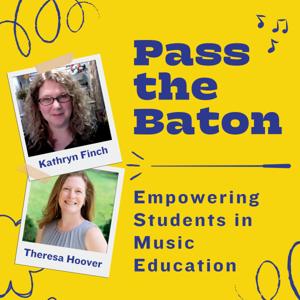
Welcome to Pass the Baton: Empowering Students in Music Education! Kathryn Finch and Theresa Hoover are two music educators passionate about helping teachers transform their students from passive…