
Sign up to save your podcasts
Or

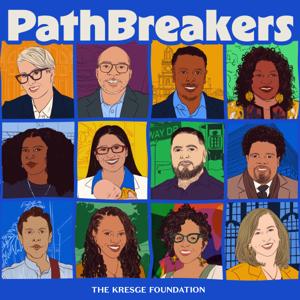


Danielle Bergstrom began her career as a city planner. That work, which she did in Fresno for 10 years, put her up close and personal with the goings-ons of City Hall. And seeing the “sausage making” there, as she says, convinced her that city residents needed the same insider understanding of what was happening in local government. That is when she started Fresnoland – a nonprofit, paywall-free investigative news platform now serving 1.5 million residents across Fresno and Madera County, dedicated to transparency in local politics.
In this episode, Danielle shares:
Why she left policy work to build a newsroom
The values that guide Fresnoland’s reporters and why they don’t aspire to be “objective” in the traditional journalistic sense
The challenges she and her staff face while reporting on City Hall, and how Fresnoland is taking on Fresno’s culture of closed-door government
How a new Fresnoland live event series is broadening the public’s civic imagination
Plus the backstory behind some big, recent local headlines and how Fresnoland got its name.
Next Episode, we head to New Orleans. Stay tuned for conversations about climate justice in one of the most climate vulnerable cities in the country.
Subscribe to PathBreakers on [Spotify] | [Apple Podcasts] | [YouTube]
Learn more about Fresnoland at Fresnoland.org
Listen all of Season 2 at https://pathbreakers.kresge.org
Co-Hosts: Tracey Pearson and Jamie Bennett
Producer: Juliet Hinely
Managing Editor: Krista Jahnke
Production support: Jennifer Kulczycki and Tracey Pearson
Special thanks on this episode to Kresge’s American Cities Program, especially Chantel Rush Tebbe and Anand Sharma.
Thanks for listening!
Our final stop on this Season 2 PathBreakers Tour is New Orleans, coming out in October.
More than 200,000 immigrant farmworkers power Central California's agricultural industry, including over 60,000 people from many diverse and distinct Indigenous Mexican communities. Across those communities, more than 16 unique Indigenous Mexican languages are spoken, bringing issues of access and translation to the front and center of daily life – navigating work, civic engagement, and social services. When Latino communities are treated as linguistically homogeneous, much critical information remains out of reach.
The Centro Binacional para el Desarrollo Indígena Oaxaqueño (the Binational Center for the Development of Oaxacan Indigenous Communities, or CBDIO) was founded in Fresno in 1993 because Indigenous farmworkers in California’s Central Valley could not access social services offered only in English and Spanish. Since 1993, their mission and services have grown tremendously beyond language justice to also include building community power through economic justice, education justice, health justice, immigration justice, and worker justice. The CBDIO has also entered its second generation of leadership with Dr. Sarait Martinez as Executive Director.
In this episode, Dr. Martinez shares about:
The invisibility that Indigenous Mexican communities face even within Latino spaces
What “language justice” means in practice and how they work to ensure people can participate in decisions about their lives regardless of what language they speak
How the CBDIO transformed the “3 sisters” farming method into their “4 sisters” organizing framework
CBDIO’s recent wins recovering over $50,000 in stolen wages and expanding interpreter access.
Next Episode, meet Danielle Bergstrom. Danielle spent a decade as a city planner before deciding the most powerful way to shape Fresno was to start her own news platform and tell people what was actually happening in their city.
Subscribe to PathBreakers on [Spotify] | [Apple Podcasts] | [YouTube]
Learn more about the CBDIO at https://www.centrobinacional.org/
Listen all of Season 2 at https://pathbreakers.kresge.org
Co-Hosts: Tracey Pearson and Jamie Bennett
Producer: Juliet Hinely
Managing Editor: Krista Jahnke
Production support: Jennifer Kulczycki and Tracey Pearson
Special thanks on this episode to Kresge’s American Cities and Arts Programs, especially Kara Elliott-Ortega and Katie Van Dusen.
Thanks for listening!
Hugo Morales grew up picking produce in the farm fields of Fresno with his family. When he returned to Fresno after college, he saw that his community – the Central Valley’s half-million Latino farmworkers – barely had radio in their own language, much less a radio station controlled by their own community. In 1976, Hugo and a group of activists and artists set out to change that. And by 1980, Radio Bilengüe – the nation’s first multilingual news and cultural radio station built to empower the Latino community – was broadcasting live from Fresno. Over the last 45 years, Radio Bilengüe has grown into the largest public radio network of its kind in the United States with 30 public radio stations and 75 affiliate stations across five states.
In this episode Hugo shares about:
Flyering on telephone polls to get the station started
What it means for a community to own its narrative by owning its own airwaves
How the station blends music, culture, and hard news to support cultural preservation and community safety
How his other organizing work in and around Fresno is interconnected with Radio Bilengüe
Ways the radio station has literally saved lives
And Radio Bilengüe’s plans for a bricks and mortar cultural center in downtown Fresno
Next episode, meet Dr. Sarait Martinez, who leads the only Indigenous women-led organization serving Indigenous communities in the Fresno region. She's working to close the harmful structural gaps created when institutions don’t account for distinct Indigenous languages or cultural context.
Subscribe to PathBreakers on [Spotify] | [Apple Podcasts] | [YouTube]
Tune in to Radio Bilengüe at RadioBilengue.org
Listen all of Season 2 at https://pathbreakers.kresge.org
Co-Hosts: Tracey Pearson and Jamie Bennett
Producer: Juliet Hinely
Managing Editor: Krista Jahnke
Production support: Jennifer Kulczycki and Tracey Pearson
Special thanks on this episode to Kresge’s American Cities Program, especially Chantel Rush Tebbe and Anand Sharma.
Thanks for listening!
Fresno, California is smack-dab in the middle of the state, halfway between Los Angeles and San Francisco, a city surrounded by farmland. But Fresno is the 9th most diverse city in the nation. And its population and history is deeply shaped by Indigenous communities like Mixtecs and Zapotecs, Chicano farmworkers, and large Southeast Asian communities too.
Fresno has historically been a city whose story has been told by outside forces — agribusiness interests, state planners, commercial media, national narratives that flatten its complexity. All season, we've been asking “who has the power to shape their city?” And a city like Fresno is the perfect place to ask: whose story gets to shape the way things work? Whose story is this city?
To kick off our Fresno City Series, Kresge President and CEO, Rip Rapson, sits down with Jerry Dyer – Fresno’s 26th mayor and its longest-serving police chief before that – for a conversation at the historic Warnors Theater. Mayor Dyer shares:
What makes Fresno “four cities in one,”
How Interstate 5 was routed to bypass the Central Valley and the economic isolation that followed
Changes, advancements and challenges in the agricultural economy that built the region
The benefits he sees in blending the long-standing agricultural economy with a developing manufacturing economy.
His ambitious downtown and Chinatown revitalization plans he hopes will define his legacy.
Plus culinary districts, adaptive reuse housing projects, brewery districts, and more.
And before Mayor Dyer and Rip Rapson dive in, Co-hosts Tracey and Jamie share some good news about the PathBreakers podcast.
Next episode (out September 16th) we meet the first of our three featured Fresno PathBreakers.
Each of our upcoming guests are leading projects and building systems across Fresno for cultural inclusion and preservation. Next week we’ll talk to Hugo Morales of Radio Bilingüe. Hugo built a community and cultural news radio station from scratch when he realized his community – and Fresno’s half-million farmworkers – couldn’t get programming in their own languages.
Subscribe to PathBreakers on [Spotify] | [Apple Podcasts] | [YouTube]
Learn more about Mayor Dyer: https://www.fresno.gov/mayor/
Listen to all of Season 2 at https://pathbreakers.kresge.org
Host: Rip Rapson, President & CEO, Kresge Foundation
Co-Hosts: Tracey Pearson and Jamie Bennett
Producer: Juliet Hinely
Managing Editor: Krista Jahnke
Production support: Jennifer Kulczycki and Tracey Pearson
Video interview captured and edited by by Meza Studio
Logo animation: Collin Leix
Special thanks on this episode to Nicole Owens and her team at the Warnors Theater, Jennifer Kulczycki Director of External Affairs and Communications at Kresge, and to Kresge’s American Cities and Arts Programs, especially Kara Elliott-Ortega and Katie Van Dusen.
Thanks for listening! And please stay tuned for more from Fresno.
Anna McQuiston says the MidSouth is at a tipping point. While the region – which comprises 6 counties and 38 cities across West Tennessee, East Arkansas, and North Mississippi – has been facing population loss, it also has potential for upwards of 100,000 new jobs in the next 10 years. How do you ensure that those jobs go to locals who have been sticking it out in leaner times? And how do you build infrastructure to support a thriving region with leadership that will collaborate rather than compete for resources? As Executive Director of the MidSouth Development District, Anna McQuiston says it all comes down to the magic of teams that can trust each other.
In this episode, co-hosts Tracey Pearson and Jamie Bennett talk with Anna McQuiston about:
How Anna gets mayors and civic leaders across the region to “get real” with each other and share experiences, information and ideas without competition and posturing.
The importance of regionalism and pooling resources to build stability across the region.
Her findings from the recent “State of the Region” convening she organized to address shared challenges and opportunities for leaders across the MidSouth.
How she approaches the balance of stabilizing long-time families and attracting new residents to the region.
The advice she was given the summer before graduate school that she uses every single day.
***
Stay tuned for our next city series all about what PathBreakers are up to in Fresno, California.
Our Fresno series launches in September.
***
Subscribe to PathBreakers on [Spotify] | [Apple Podcasts] | [YouTube]
Learn more about the MidSouth Development District at https://www.midsouthdd.org/
Preview all of Season 2 at https://pathbreakers.kresge.org
Co-Hosts: Tracey Pearson and Jamie Bennett
Producer: Juliet Hinely
Managing Editor: Krista Jahnke
Production support: Jennifer Kulczycki and Tracey Pearson
Graphics: Alejandro Herrera
Logo animation: Collin Leix
Special thanks on this episode to Kresge’s American Cities Program, especially Chantel Rush Tebbe and Anand Sharma.
Most real estate developers have dollar signs in their eyes. But in the rare instance when the developers actually come from the communities being redeveloped, they are able to see the equations very differently. This is the case for father-daughter real estate development duo Archie Willis and Alex Willis-Boddie at ComCap Partners, a South Memphis-based real estate development and public finance firm focused on equitable community development in historically Black neighborhoods. Traditional developers would say ComCap projects will never “pencil out,” but Alex and Archie’s methods and track record show otherwise when it comes to community benefit.
In this episode, co-hosts Tracey Pearson and Jamie Bennett talk to Archie and Alex about:
How their methods for community engagement and trust-building are central to their approach.
The complex "capital stacks" they build (involving low-income housing tax credits, new market tax credits, philanthropic funds, public subsidies, and partnerships with local, state, and federal agencies) to fill funding gaps and make their projects happen.
Several large-scale redevelopment projects they’ve done recently, like their transformation of old public housing in South Memphis into mixed-income housing and community hubs, as well as the adaptive reuse of vacant schools like Northside High School into workforce development centers.
Some of the Willis family legacy in Memphis, including the landmark civil rights work of Archie’s father, and their generational commitment to making a difference in the lives of local residents.
***
Next episode (out July 29th) we zoom up to the regional level and talk to Anna McQuiston of MidSouth Development District, who brings together mayors and municipal governments across a three-state mid-south region to collaborate for the resources and plan for a future that will stabilize families in Memphis and beyond.
***
Subscribe to PathBreakers on [Spotify] | [Apple Podcasts] | [YouTube]
Learn more about ComCap Partners at https://comcap-partners.com
Preview all of Season 2 at https://pathbreakers.kresge.org
Co-Hosts: Tracey Pearson and Jamie Bennett
Producer: Juliet Hinely
Managing Editor: Krista Jahnke
Production support: Jennifer Kulczycki and Tracey Pearson
Graphics: Alejandro Herrera
Logo animation: Collin Leix
Special thanks on this episode to Kresge’s American Cities Program, especially Chantel Rush Tebbe and Anand Sharma.
There’s a two-mile corridor along Walker Avenue in South Memphis that Marlon Foster calls The Knowledge Quest Kid Zone. It’s a multi-site neighborhood campus dedicated to holistically and measurably improving the lives of South Memphis kids and the parents and adults around them. In a zip-code where the statistics reveal a history of severe disinvestment, Marlon Foster’s Knowledge Quest is helping families rebuild stability household by household.
Through our Memphis episodes we are asking “What does it take to create a city with long-term family stability?” At Marlon Foster’s Knowledge Quest campus, the answers are already in the neighborhood.
In this episode, co-hosts Tracey Pearson and Jamie Bennett talk to Marlon about:
How stabilizing the life of a child requires stabilizing the life of the family around that child.
The “two gen”, asset-based, and “H20” models through which Knowledge Quest frames their work with children, parents, and community.
The research behind Adverse Childhood Experiences and the importance of preventing long-term negative outcomes.
Marlon’s 27-year journey building Knowledge Quest – from a single “office” in the backroom of his grandmother’s house to a multi-building campus offering after-school programs, early childhood education, family stability centers, a teen tech center and a 3 acre USDA-certified organic urban farm.
***
Next episode (out July 22nd) we head over to Archie Willis and Alex Willis-Boddie’s offices at ComCap Partners – a Memphis-based real estate development firm that specializes in developing real estate in historically Black neighborhoods that have suffered from disinvestment and redlining, and require creative financing solutions beyond traditional market forces.
***
Subscribe to PathBreakers on [Spotify] | [Apple Podcasts] | [YouTube]
Learn more about Knowledge Quest at https://knowledgequest.org/
Preview all of Season 2 at https://pathbreakers.kresge.org
Co-Hosts: Tracey Pearson and Jamie Bennett
Producer: Juliet Hinely
Managing Editor: Krista Jahnke
Production support: Jennifer Kulczycki and Tracey Pearson
Graphics: Alejandro Herrera
Logo animation: Collin Leix
Special thanks on this episode to Kresge’s American Cities Program, especially Chantel Rush Tebbe and Anand Sharma, and to the Human Services Program, especially Dr. Raquel Hatter.
Thanks for listening! And please stay tuned for more from Memphis.
Memphis is a city with serious momentum and serious ambition. Neighborhoods that were written off are being reinvested. Families who have been here for generations are choosing to stay and build. Leaders across sectors are making long-term bets on the city’s future — not just on downtown, but on the communities that have always been the real foundation of Memphis.
Memphis is growing. But who gets to shape what this growth means? And what does it take to ensure the people who are already there — and the children growing up there now — inherit a city where they can thrive long-term?
In this first episode of our Memphis city series, Kresge President and CEO, Rip Rapson, interviews Memphis Mayor Paul Young on location at Cossitt Library, the city’s original public library.
They discuss:
Mayor Young’s “Memphis Story” – from growing up as a preacher’s kid, to going to school for city planning, and then later becoming the city’s housing director before being elected mayor in 2024.
The importance of civic commons, creative hubs, and inclusive public spaces for cross-community connections.
His programs supporting youth employment and family economic mobility, including partnerships with local businesses and holistic support for families.
His dual approach to community safety that has resulted in a 42% reduction in crime in the last 2 years.
His vision for Memphis becoming one of the nation’s fastest-growing and most equitable cities, ensuring that long-term residents benefit from the city’s growth and revitalization.
Next episode (out July 15th) we head into Memphis neighborhoods. First stop: South Memphis, where we meet Marlon Foster, Founder and Executive Director of Knowledge Quest – a neighborhood-based community development organization whose foundational belief is that you can’t stabilize the life of a child without also stabilizing the life of the family around that child. Stay tuned!
Subscribe to PathBreakers on [Spotify] | [Apple Podcasts] | [YouTube]
Learn more about Mayor Young: https://memphistn.gov/government-mayor/
Preview all of Season 2 at https://pathbreakers.kresge.org
Host: Rip Rapson, President & CEO, Kresge Foundation
Co-Hosts: Tracey Pearson and Jamie Bennett
Producer: Juliet Hinely
Managing Editor: Krista Jahnke
Production support: Jennifer Kulczycki and Tracey Pearson
Video interview captured by IFS Productions
Interview Video Editor: Mark Marx and Carmel Flanagan
Logo animation: Collin Leix
Special thanks on this episode to everyone at the Cossitt Library, to Kresge’s American Cities Program, especially Chantel Rush Tebbe and Anand Sharma, and to the Human Services Program, especially Dr. Raquel Hatter.
Thanks for listening! And please stay tuned for more from Memphis.
When a $6 billion bridge comes to your neighborhood, who decides what the residents get in return? Simone Sagovac and the community-elected Southwest Detroit Community Benefits Coalition have spent nearly 20 years ensuring that the answer is written by residents, not imposed by developers or government.
Southwest Detroit sits at one of the busiest freight crossings in North America. The Ambassador Bridge — currently the only U.S.-Canada crossing that allows large commercial trucks — funnels tens of thousands of semi-trucks through the area every day. But those trucks don't stay on the highway. For decades, drivers have cut through residential streets to reach intermodal facilities, using neighborhood roads as shortcuts. And the impacts to the neighborhood are tremendous. Residents can't sleep because of the noise. House foundations crack from the constant vibration. Kids aren't allowed to play outside because of traffic and pollution. Asthma rates are double elsewhere in the city. When a federal environmental impact study concluded in 2008 that a second bridge could be built nearby (doubling truck traffic from 10,000 to 20,000 trucks per day) the Coalition was formed to challenge that finding and force a reckoning.
In this episode, co-hosts Tracey Pearson and Jamie Bennett speak to Simone at a pivotal moment – just as the new Gordie Howe International Bridge is soon set to open, and enforcement of newly secured trucking and pollution regulations will be put to the test.
In this episode they discuss:
The industrial history and vibrant social culture of the Delray neighborhood
The organizing and advocacy that secured $48 million in community benefits addressing environmental health, housing stability, job access, and quality of life.
The extensive data sets collected over time by teams of trained neighborhood volunteers that helped them make their case
The parallel city-wide Trucks Off Our Streets initiative that is reducing freight trucks on neighborhood streets across Detroit
Learn more:
About Kresge: https://kresge.org/pathbreakers-podcast/
About the coalition: https://swdetroitcbc.org/
About Trucks Off Our Streets: https://www.trucksoffourstreets.org/
Stay tuned for our Memphis city series launching this July. In Memphis, we will talk to Mayor Paul Young and three pathbreaking Memphians about what it takes to create a city where families can thrive for generations.
A commercial corridor in Detroit went from 10% occupancy to a thriving neighborhood hub–and they’re just getting started. In this episode, co-hosts Tracey Pearson and Jamie Bennett talk to Caitlin Murphy about how one Northwest Detroit alliance is building opportunity block by block.
Our Detroit arc continues with the long-term work of corridor revitalization. Murphy and Live6's work demonstrates that building neighborhood opportunity requires coordinated action across multiple fronts simultaneously — and that the work moves "at the speed of trust" with residents leading the way. This episode reveals that neighborhood revitalization isn't about attracting outsiders; it's about creating conditions where current residents can stay, thrive, and build wealth.
They discuss:
*Ways they are lowering barriers to business ownership and incubating new neighborhood businesses
*How they help residents living in homes with “tangled titles” sort out the paperwork and start receiving the benefits of home ownership
*What their recent Michigan Main Street designation means for the corridor
*And why Live6 intentionally staffs its organization with longtime neighborhood residents
Learn more:
About Kresge: https://kresge.org/pathbreakers-podcast/
About Live6 Alliance: https://www.live6detroit.org/
This episode is part of the Detroit arc of PathBreakers Season 2, “Building Neighborhoods of Opportunity.” The arc explores how Detroit neighborhoods are forging their own pathways to opportunity — through information access, place-based economic revitalization and community organizing.
Stay tuned for our finale episode of the Detroit city series featuring Simone Sagovac of the Southwest Detroit Community Benefits Coalition. In that episode Tracey,Jamie , and Simone discuss how the Coalition secured community benefits from a $6 billion international bridge that opens in the neighborhood this year.
And then in July we launch our second city series all about Memphis, Tennessee, and what it takes to build a city where families can thrive for generations.
CREDITS:
Hosts: Tracey Pearson and Jamie Bennett
Producer: Juliet Hinely
Managing Editor: Krista Jahnke
Show Art: Alejandro Herrera
PathBreakers is produced by the Kresge Foundation, founded in 1924 with a mission to promote human progress.
From the publisher's feed