
Sign up to save your podcasts
Or

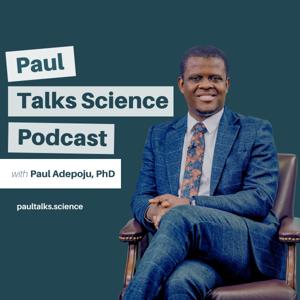


Polio eradication has spent decades building an extraordinary system for finding children that ordinary health services can miss. But as eradication gets closer and funding begins to change, what happens to the people, surveillance networks, laboratories and community relationships built along the way?
In this episode, journalist Paul Adepoju travels through reporting from Nigeria and Ethiopia to examine what the final stretch of polio eradication really looks like.
In Bauchi State, Nigeria, community workers show why reaching a child can depend as much on trust as on vaccines. In Ethiopia, thousands of community volunteers help health workers find newborns, pastoralist families, displaced communities and children living beyond the reach of routine health services.
The episode also explores a bigger question: when polio is finally gone, can countries preserve the infrastructure that helped eradicate it?
Featuring Rabi’u Baswua, Adachi Ekeh of Nigeria Health Watch, Professor Heidi Larson of the Vaccine Confidence Project, Legesse Kidanne of the CORE Group Partners Project in Ethiopia, and Dr Mohamed Gedi of the WHO Regional Office for Africa.
Reported and presented by Paul Adepoju.
This reporting was supported by the United Nations Foundation Polio Press Fellowship.
Ebola crossed from the Democratic Republic of the Congo into Uganda 15 times during the 2026 Bundibugyo outbreak. Five more people became infected within Uganda. Yet the virus did not take hold in the wider community. How did responders break the chain of transmission?
In this episode of Paul Talks Science, I speak with Dr Henry Kyobe Bosa, who helped lead Uganda’s Ebola response. He explains how contact tracing and quarantine helped health workers find the five locally acquired cases soon after symptoms began. We also discuss the infections among health workers who did not initially know they were treating Ebola patients, the risk of further cases crossing the border, and why surveillance must continue after an outbreak is declared over.
This conversation informed my report for The Lancet: “Uganda ends Ebola outbreak but risk remains”.
For more of my reporting on the Bundibugyo outbreak, read “Research response to the Bundibugyo ebolavirus outbreak” in The Lancet Microbe and “Can the world really develop a vaccine in 100 days?” in Devex.
Oxford researchers have begun the first-in-human trial of a vaccine against Bundibugyo Ebola virus. In this episode, Paul Adepoju speaks with Katrina Pollock, chief investigator of the trial at the Oxford Vaccine Group, about how the study is being run, what Phase 1 can and cannot tell us, the challenge of proving protection during an active outbreak, and what needs to happen before a vaccine can move into wider use.
Nigeria is planning a major expansion of radiotherapy, with 35 additional linear accelerators expected to boost the country’s capacity to treat cancer. But buying the machines is only the beginning.
In this episode of Paul Talks Science, I speak with Runcie C.W. Chidebe, Executive Director of Project PINK BLUE, about what radiotherapy access really looks like for patients in Nigeria and what must happen for this new investment to make a difference.
We discuss why some radiotherapy machines and centres have previously stopped functioning, shortages of trained professionals, maintenance and service contracts, treatment costs that can run into millions of naira, long journeys to access care, limited insurance coverage, and the burden all of this places on patients and their families.
Runcie also explains why simply increasing the number of machines will not automatically increase access, and why workforce development, affordability, state-level investment and accountability will be crucial as the expansion moves forward.
This conversation followed my reporting for The Lancet Oncology on Nigeria’s planned radiotherapy expansion. You can read the published story here: Nigeria plans major expansion of radiotherapy capacity
The big question: Nigeria may be getting more cancer-treatment machines, but will the patients who need them actually be able to use them?
New research has revealed persistent inequalities in cancer outcomes among First Nations people in Ontario, Canada.
The study found higher colon cancer incidence at younger ages and poorer survival after breast, cervical, and colon cancer diagnoses. Its publication coincides with Ontario’s decision to lower the starting age for colorectal cancer screening from 50 to 45, making more than one million additional people eligible.
But earlier screening addresses only one part of the problem. For people living in remote First Nations communities, an abnormal result or cancer diagnosis can lead to long-distance travel, unreliable transport, bureaucratic funding processes, fragmented services, and difficulties accessing culturally safe care.
In this episode, Dr Jill Tinmouth, the study’s corresponding author, explains what prompted the research, what the findings reveal about cancer screening and survival, and why more attention must be paid to the pathway between diagnosis, treatment, and follow-up.
The conversation forms part of my reporting on First Nations cancer inequalities for The Lancet Oncology.
In this episode of Paul Talks Science, I explore South Africa’s cancer care crisis through the lens of the country’s first imPACT Review, an international assessment supported by the International Atomic Energy Agency, WHO and the International Agency for Research on Cancer.
The episode builds on my newly published The Lancet Oncology news feature, “South Africa’s first imPACT Review”, which examines whether the review can help turn long-recognised cancer-care gaps into funded, measurable action.
My guest is Salomé Meyer of Cancer Alliance, one of South Africa’s long-standing cancer advocates. She explains why the review matters, what it reveals about access to cancer diagnosis and treatment, and why South Africa now needs more than another cancer policy document.
We discuss cancer prevention, screening, early detection, patient navigation, provincial inequalities, public and private cancer care, the need for a national cancer control plan, and why advocates see this moment as South Africa’s own “cancer moonshot”.
A medicine can exist and still not reach the patient who needs it.
In this episode, Paul Adepoju speaks with Herb Riband, Executive Director of Access Accelerated, about why access to medicines often breaks down between the laboratory, the procurement system and the patient. They discuss the financing gap for non-communicable diseases, the limits of focusing only on lower prices, and why African countries are increasingly looking at market shaping, pooled procurement and stronger local systems to make medicine supply more reliable.
This conversation builds on Paul’s Re:solve Global Health story, “Can market shaping improve medicine access across Africa?” Read the story here
In this episode of Paul Talks Science, Paul Adepoju expands on his Lancet Microbe article, “International response to hantavirus outbreak,” with infectious disease expert Dr Neil Vora.
The conversation goes beyond the MV Hondius cruise ship outbreak to ask what this episode reveals about spillover risk, cruise ships as outbreak spaces, and why preventing viruses from jumping from animals to humans must become a bigger part of global health security.
From quarantine and contact tracing to wildlife trade, climate change, surveillance and One Health, this episode looks at why rare outbreaks are no longer something the world can afford to treat as rare.
In this episode, Paul Adepoju speaks with infectious disease expert Dr Amesh Adalja about why the Bundibugyo Ebola outbreak is exposing gaps the world should have closed long ago.
While Ebola vaccines have transformed response to some outbreaks, most countermeasure development has focused on Ebola Zaire, leaving rarer but still deadly filoviruses such as Bundibugyo, Sudan and Marburg with fewer tools ready when they are needed. Adalja explains why outbreak preparedness keeps falling into cycles of panic and neglect, what mRNA technology could realistically change, and why a broader viral-family approach may be essential for the next generation of vaccines and treatments.
The conversation builds on Paul’s Scientific American report, “Vaccines for Bundibugyo Ebola Virus Outbreak Are Being Developed, but None Are Ready Yet,” which examines how the current outbreak has renewed questions about vaccine readiness, political will and the cost of waiting until a virus is already spreading.
This is a conversation about the outbreak we should have seen coming — and what it will take to stop being surprised by the next one.
On World Malaria Day, the spotlight turns once again to one of the world’s oldest and deadliest diseases. This year, the story feels different. For decades, the malaria vaccine was seen as the breakthrough the world was waiting for. Now it’s here. So why does the fight against malaria still feel unfinished?
In this episode, I speak with Photini Sinnis, a professor at the Johns Hopkins Bloomberg School of Public Health and a leading expert on how malaria infection begins in the body.
We unpack what the arrival of malaria vaccines really means—and what it doesn’t. Why these vaccines were never meant to be a “magic bullet.” Why bed nets, drugs, and vector control still matter. And why combining tools, rather than relying on one breakthrough, may be the only realistic path forward.
We also go deeper into the science: the hidden complexity of the malaria parasite, the push toward multi-stage vaccines, and the knowledge gaps that still define this field. Along the way, we confront a harder truth—why global health innovation doesn’t always move at the same speed for every disease.
There is real progress. There is renewed optimism. But there is no simple solution.
This is the malaria paradox: more tools than ever before, yet a fight that is far from over.
From the publisher's feed