
Sign up to save your podcasts
Or



Send us Fan Mail
What if the most powerful part of therapy is the space between the boxes on our diagrams—the arrows where trust lives and change begins? We invited researcher and evaluator Dr. Melissa Chapman-Hayes to sit in the guest chair and talk candidly about why she stayed close to psychotherapy, how early mentorship shaped her lens, and why relational work is the quiet engine beneath good data.
We dig into nursing’s unique role in psychotherapy: clinicians who spend the most time with patients often have the strongest relational skills, yet face billing, time, and visibility barriers. Melissa lays out a practical roadmap for building the case: tailor messages to audiences, combine defensible outcomes with human stories, and treat credibility as something defined by the people you need to persuade. From hospital leaders to accrediting bodies to the general public, evidence lands when it feels useful, plainspoken, and real.
Stigma looms large. We explore it as a public health crisis and focus on self-stigma as the most actionable barrier. Leadership vulnerability—like a commanding general sitting in a clinic to normalize care—can reshape culture. Access is more than coverage; it’s fit. We talk about finding the right therapist, why a few sessions are a fair test, and how telehealth expands options while leaving equity gaps. The conversation gets specific about cultural relevance too, from adapting CBT for a Black man with early cognitive decline to navigating directories that rarely capture identity or modality with nuance.
We close on isolation: a modern condition that technology both softens and sharpens. Loneliness erodes mental and physical health, yet connection can be prescribed, coached, and built through groups, community touchpoints, and brave conversations. If every data point is a person, every story is a chance to shift a system—one relationship at a time.
If this resonated, subscribe, share it with a colleague, and leave a review. Your feedback helps more listeners find thoughtful conversations about psychotherapy, nursing, stigma, and the future of mental health care.
Let’s Connect
Dr Dan Wesemann
Email: [email protected]
Website: https://nursing.uiowa.edu/academics/dnp-programs/psych-mental-health-nurse-practitioner
LinkedIn: www.linkedin.com/in/daniel-wesemann
Dr Kate Melino
Email: [email protected]
Dr Sean Convoy
Email: [email protected]
Dr Melissa Chapman
Email: [email protected]
Send us Fan Mail
What happens when a treatment designed to help may also carry injuries we rarely measure? We sit down with Sarah Price Hancock, co-founder and trustee of the Ionic Injury Foundation, to unpack ionic injury as a physiologic framework for understanding electrical exposure—including ECT—and the real-world consequences that can follow. Sarah shares her lived experience after 116 ECT sessions, the profound memory loss that reshaped her life, and the delayed neurologic symptoms that only made sense once she studied electrical injury research outside of psychiatry’s usual lanes.
Together we map the biology: rapid perfusion spikes, bradycardia, and reperfusion injury; blood–brain barrier shifts that may invite inflammatory cascades; and potential acquired channelopathies that present as episodic weakness, spasms, or exercise intolerance. We contrast short-term ECT outcome data with the lack of long-term tracking and the high variability in dosing, electrode placement, and anesthetic choices. The conversation stays grounded in practice: what to add to intake questions, which referrals actually help (neuropsych, central auditory and visual processing, vestibular and balance testing), and how to route patients toward rehabilitation and accommodations that restore function at school and work.
This is also a story about trust and agency. Sarah lays out simple tools for rebuilding a sense of control, and we discuss how clinicians can presume competence, partner on decisions, and stay curious when symptoms fall outside familiar patterns. Whether you support ECT, question it, or simply want better outcomes, this episode offers concrete steps to assess, document, and treat possible electrical injury with the same rigor we give any other trauma. If this conversation sparks ideas or challenges your assumptions, share it with a colleague, subscribe for more, and leave a review with one change you’d make in your practice today.
Let’s Connect
Dr Dan Wesemann
Email: [email protected]
Website: https://nursing.uiowa.edu/academics/dnp-programs/psych-mental-health-nurse-practitioner
LinkedIn: www.linkedin.com/in/daniel-wesemann
Dr Kate Melino
Email: [email protected]
Dr Sean Convoy
Email: [email protected]
Dr Melissa Chapman
Email: [email protected]
Send us Fan Mail
What if the most powerful tool in mental health isn’t a pill or a protocol, but disciplined curiosity? We sit down with Marcus Evans—psychoanalyst, longtime psychiatric nurse, and trainer at the Tavistock—to explore how a psychoanalytic lens can make care more humane for people living with psychosis, borderline states, and severe distress.
Marcus takes us from old asylum wards to modern outpatient clinics, showing how labels help as rough maps but fail as destinies. He explains why some patients act out when supervision eases, how a harsh inner critic and fragile ego can be mistaken for manipulation, and what staff can do to contain projected fear and shame without losing boundaries. We talk through the practical balance between medication and psychotherapy: when small doses open the door to therapy, why “therapeutic omnipotence” is a trap, and how multidisciplinary support—psychiatry, OT, family systems—creates the holding environment needed for real change.
Across stories and strategies, one theme repeats: people want to be understood, not processed. Instead of chasing a magic bullet or a perfect code in the DSM, Marcus shows how to read behavior as communication and build plans that pace risk, supervision, and discharge to the person’s actual capacity. It’s a grounded, compassionate approach that protects clinicians from burnout and helps patients feel less alone with their minds.
If this conversation resonates, follow the show, share it with a colleague, and leave a review. Your support helps more listeners find thoughtful, practical mental health content and keeps these deeper conversations alive.
Let’s Connect
Dr Dan Wesemann
Email: [email protected]
Website: https://nursing.uiowa.edu/academics/dnp-programs/psych-mental-health-nurse-practitioner
LinkedIn: www.linkedin.com/in/daniel-wesemann
Dr Kate Melino
Email: [email protected]
Dr Sean Convoy
Email: [email protected]
Dr Melissa Chapman
Email: [email protected]
Send us Fan Mail
A busy inpatient hallway, a tight clock, and a patient who needs more than a prescription—this is where the art of psychiatric nursing matters most. We sit down with Dr. Shawn Gallagher, a dual-certified PMHNP and FNP, former ISPN president, and retired Army officer, to explore how small choices—eye contact, posture, sitting at the bedside—turn brief encounters into meaningful care. Sean shares mentorship pearls from his consultation-liaison roots, why perception of time can be altered without changing the clock, and how to set clean expectations for 15–20 minute visits that still feel human.
We dive into the “invisible ink” of psychiatry: the detective work of CL practice, the unspoken rules of formularies and cultures of prescribing, and the social determinants that drive outcomes as much as any medication. Sean explains how dual training empowers whole-person care on inpatient units, where diabetes, hypertension, and acute psychiatric needs often collide. He also opens up about imposter syndrome—how even experienced clinicians feel it—and offers practical strategies to disarm “gotcha” moments with transparency, curiosity, and a dose of humor.
The conversation closes with a thought experiment: what would Hildegard Peplau celebrate today, and where would she push us further? She might applaud broader scope and stronger science while warning that progress can dilute the therapeutic relationship. The charge is clear: use systems and technology to protect the human core, not replace it. If you’re a PMHNP, RN, student, or interdisciplinary teammate seeking practical steps to build trust under pressure, this one will sharpen your craft and renew your purpose.
If the episode resonates, follow the show, share it with a colleague, and leave a quick review—what simple habit has improved your patient rapport the most?
Let’s Connect
Dr Dan Wesemann
Email: [email protected]
Website: https://nursing.uiowa.edu/academics/dnp-programs/psych-mental-health-nurse-practitioner
LinkedIn: www.linkedin.com/in/daniel-wesemann
Dr Kate Melino
Email: [email protected]
Dr Sean Convoy
Email: [email protected]
Dr Melissa Chapman
Email: [email protected]
Send us Fan Mail
A sailor on a dark deck, a torn letter, and a young corpsman learning to spot distress without a sound—that’s where our conversation begins. From that simple observation grew Stress First Aid, a peer-driven framework that replaces stigma with language people can use in real time: green, yellow, orange, red. We sit down with Dr. Richard Westfall to unpack how one napkin sketch—and a crucial shift from “disorder” to “injury”—reframed leadership, changed how teams support one another, and brought practical mental health tools into the flow of work.
We walk through the seven C’s of Stress First Aid—check, coordinate, cover, calm, connect, competence, confidence—and show how they function like ABCs for the mind. You’ll hear why safety and calming come first, how to use connection without turning into a therapist, and why “help me understand” is one of the most effective lines you can carry into any shift. We explore meaning versus mattering—how purpose draws us in, but feeling valued keeps us—and discuss what burnout teaches at different stages of a career. Novices need micro-burnouts to learn limits and recovery; veterans crash bigger because they ride the wave longer. Neither is failure. Both are predictable—and coachable.
Dr. Westfall shares field-tested ways to use the color continuum in emergency settings to de-escalate quickly, and we talk about building cultures where peers step toward distress instead of away from it. If you lead a unit, precept a new clinician, or simply want better support at work, you’ll leave with language and structure you can use today: focus on safety, calm the body, connect as trusted others, build capability for the next hour, and restore confidence by reminding people they matter.
If this resonated, follow the show, share it with a colleague who could use the Seven C’s, and leave a review with one takeaway you’ll try on your next shift. Your story might be the cue someone else needs to move from orange back to yellow.
Let’s Connect
Dr Dan Wesemann
Email: [email protected]
Website: https://nursing.uiowa.edu/academics/dnp-programs/psych-mental-health-nurse-practitioner
LinkedIn: www.linkedin.com/in/daniel-wesemann
Dr Kate Melino
Email: [email protected]
Dr Sean Convoy
Email: [email protected]
Dr Melissa Chapman
Email: [email protected]
Send us Fan Mail
What if the most powerful change in mental health care happens in the space between two people—guided by skill, grounded in science, and held with genuine regard? That’s where we go with Dr. Sara Jones, a psychiatric mental health nurse practitioner, researcher, and clinic owner who builds care around psychotherapy as a core competency, not an optional extra.
We start with the spark: a seventh-grade encounter with Sybil that—despite later controversy—ignited a lifelong curiosity about how talk, relationship, and presence can heal. From there, Sarah maps an integrative practice: a strong CBT backbone for structure and measurable change; a Rogerian stance that makes hard work feel safe; and somatic-informed tools that honor how trauma lives in the body, especially for first responders. She shows how motivational interviewing, reframing, and brief behavioral strategies fit into short visits without pretending every session is a full protocol, and why even five minutes of focused psychotherapy can move ambivalence, build adherence, and restore hope.
We dig into system realities with candor. Large organizations often push PMHNPs into 15-minute med checks, citing cost and role stereotypes, while private practice offers flexibility to schedule 30–90 minute sessions and sustain therapy financially. We challenge myths about “therapy not paying” and spotlight the real barriers: mindset, training access, and a lack of preceptors who model integrated care. Sarah makes the case for a stronger pipeline—clear scope education, therapy-focused clinical hours, and continuing education that blends CBT, MI, and somatic skills into ethical, evidence-based practice.
Looking ahead, we talk standards and stewardship. The field thrives when programs invest in psychotherapy training and when clinicians demonstrate outcomes that matter: reduced crises, better engagement, and patients who feel truly cared for. If you’re a PMHNP, student, educator, or curious clinician, this conversation offers tools you can use tomorrow and a vision you can help build.
If this resonates, follow the show, share it with a colleague, and leave a review. Your feedback helps us bring more smart, practical conversations to the people who need them.
Let’s Connect
Dr Dan Wesemann
Email: [email protected]
Website: https://nursing.uiowa.edu/academics/dnp-programs/psych-mental-health-nurse-practitioner
LinkedIn: www.linkedin.com/in/daniel-wesemann
Dr Kate Melino
Email: [email protected]
Dr Sean Convoy
Email: [email protected]
Dr Melissa Chapman
Email: [email protected]
Send us Fan Mail
What happens when mental health patients can't afford therapists, lack access, or have nowhere to turn? Enter the Psychiatric Mental Health Nurse Practitioner, uniquely positioned to bridge critical gaps in our mental health system.
In this illuminating conversation, host Dan Wesemann and Melissa Chapman welcomes Dr. Stephanie Bennett and Dr. Humberto Reinoso from Mercer University's nursing faculty to explore how PMHNPs are increasingly providing psychotherapy alongside medication management. Both guests share candid stories of "falling into" psychotherapy practice when faced with patients who desperately needed therapeutic support but had limited options.
The discussion reveals the distinctive nursing approach to mental health—a holistic perspective that considers the whole person rather than compartmentalizing care. As Dr. Reinoso poignantly describes, many patients feel "on an island," isolated with their struggles, and the nurse's therapeutic presence becomes the vital connection back to wellness. Dr. Bennett shares a particularly moving account of working with a patient weekly for over a year, initially feeling overwhelmed but ultimately witnessing profound transformation through small, consistent steps.
The conversation doesn't shy away from systemic challenges. Insurance models often discourage spending extended time with patients, with practitioners facing pressure to conduct brief medication management sessions instead of comprehensive therapy. Yet both guests remain optimistic about the future, emphasizing that nursing's inherent focus on presence and relationship offers a valuable template for truly integrated mental health care.
For students and practicing PMHNPs alike, this episode provides valuable insights into expanding your therapeutic toolkit beyond medication management. The guests highlight how nursing education is evolving to better prepare practitioners for this dual role, while emphasizing that sometimes the most powerful intervention is simply being present and listening deeply to a patient's story.
Have you witnessed the power of therapeutic presence in your own practice? Share your experiences in the comments, and don't forget to subscribe for more conversations at the intersection of nursing and mental health care.
Let’s Connect
Dr Dan Wesemann
Email: [email protected]
Website: https://nursing.uiowa.edu/academics/dnp-programs/psych-mental-health-nurse-practitioner
LinkedIn: www.linkedin.com/in/daniel-wesemann
Dr Kate Melino
Email: [email protected]
Dr Sean Convoy
Email: [email protected]
Dr Melissa Chapman
Email: [email protected]
Send us Fan Mail
Dr. Celeste Foster shares her journey into psychodynamic practice and how her work with children experiencing medically unexplained symptoms led her to pursue specialized training in adolescent psychotherapy at the Tavistock Clinic.
• Originally trained in mental health nursing heavily influenced by Hildegard Peplau's relational approach
• Found that practice had shifted toward medicalization and symptom-focused models
• Developed interest in psychoanalytic approaches when working with children who couldn't articulate psychological experiences
• Research revealed nurses perform complex psychodynamic interventions without recognizing their value
• When asked directly about their contribution to care, nurses struggled to define their role beyond "keeping patients safe"
• Detailed research using work discussion groups showed nurses practicing sophisticated psychoanalytic techniques
• Identified container-contained relationships, decoding counter-transference, and interpreting symbolic communications as core nursing interventions
• Barriers include internalized professional insecurities and historical stigma around psychoanalysis
• Political context of care work being systemically devalued and considered less important than technical skills
• Growing optimism as more nurses reclaim psychoanalytic theory in their practice and writing
• Success of programs teaching psychoanalytic concepts to primary care nurses working in challenging environments
The team at Peplau's Ghost continues to explore the psychodynamic foundations of psychiatric nursing. Listen to more episodes by subscribing and sharing your thoughts with us.
Let’s Connect
Dr Dan Wesemann
Email: [email protected]
Website: https://nursing.uiowa.edu/academics/dnp-programs/psych-mental-health-nurse-practitioner
LinkedIn: www.linkedin.com/in/daniel-wesemann
Dr Kate Melino
Email: [email protected]
Dr Sean Convoy
Email: [email protected]
Dr Melissa Chapman
Email: [email protected]
Send us Fan Mail
What makes therapy truly effective? Is it the therapist's expertise, the specific methodology, or something else entirely? Shana Trahan brings a refreshing perspective to these questions, drawing from her unique background as a 21-year educator, military officer, and practicing psychotherapist.
From the very beginning of our conversation, Shana's natural ability to connect with others becomes apparent. This innate capacity to create safe spaces for vulnerability has informed her entire approach to therapeutic work. Shana reveals what truly drives therapeutic success: client engagement. "The therapist almost has the easy work," she explains, "it's really about the client being honest, following through on their part, doing that homework, being intentional and consistent."
Shana's commitment to integrative therapy emerges as another cornerstone of her practice. Rather than adhering rigidly to a single methodology, she draws from various evidence-based approaches to meet each client's unique needs. While optimistic about the future of mental healthcare, Shana doesn't shy away from addressing systemic challenges, particularly the disconnection between practitioners and insurance companies that can impede service delivery.
Shana's insights will transform how you engage with your own healing process. Listen now to discover why successful therapy flows "like honey down a honeycomb" when clients fully commit to the work.
Check out Shana's book:Anxiety Fix
The Trahan Therapy Center; 832-726-0839
Let’s Connect
Dr Dan Wesemann
Email: [email protected]
Website: https://nursing.uiowa.edu/academics/dnp-programs/psych-mental-health-nurse-practitioner
LinkedIn: www.linkedin.com/in/daniel-wesemann
Dr Kate Melino
Email: [email protected]
Dr Sean Convoy
Email: [email protected]
Dr Melissa Chapman
Email: [email protected]
Send us Fan Mail
What if psychiatric mental health nurse practitioners could practice in a way that truly transforms lives instead of just managing symptoms? Dr. Brooke Finley joins us to share her remarkable journey from traditional nursing to psychoanalytic practice, revealing a path many NPs don't even know exists.
From her earliest days volunteering in healthcare at age 16, Dr. Finley found herself drawn to the profound human connections that emerge in moments of vulnerability. Despite being told that psychiatric nursing "wasn't real nursing," she persisted, eventually discovering psychoanalysis—a therapeutic approach that offered the depth she had been seeking. Through her own personal analysis and extensive professional training, she developed a practice model that places the therapeutic relationship at the center, rather than medication management.
Dr. Finley challenges the status quo with thought-provoking insights, suggesting that "probably 70% of people on drugs right now wouldn't need to be on them if they had good therapy." She dismantles common myths about private practice, revealing how therapist-focused care can be both financially sustainable and professionally fulfilling. Her work through the Finley Psychoanalytic Psychotherapy Fellowship aims to build bridges between nursing and psychoanalysis, creating pathways for NPs to incorporate these powerful therapeutic principles into their practice.
Most compellingly, Dr. Finley connects modern psychotherapy practice back to nursing's roots, reminding us that Hildegard Peplau envisioned psychiatric nurses as primarily therapists who would provide intensive clinical work with their patients. This historical perspective offers a powerful validation for NPs seeking deeper engagement with their patients. As Dr. Finley puts it, "You can only take patients as far as you've gone yourself"—a challenge to both personal and professional growth that resonates with the true spirit of nursing. Visit finleypsych.com to learn more about the fellowship or connect with Dr. Finley directly.
Dr. Brooke Finley ([email protected])
Let’s Connect
Dr Dan Wesemann
Email: [email protected]
Website: https://nursing.uiowa.edu/academics/dnp-programs/psych-mental-health-nurse-practitioner
LinkedIn: www.linkedin.com/in/daniel-wesemann
Dr Kate Melino
Email: [email protected]
Dr Sean Convoy
Email: [email protected]
Dr Melissa Chapman
Email: [email protected]
From the publisher's feed
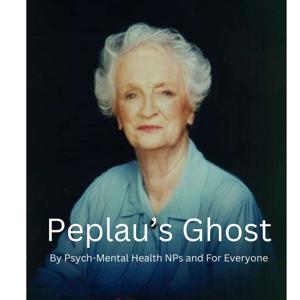
Psychiatric-Mental Health Nurse Practitioners (PMHNP) discussing using psychotherapy within their practice. Four PMHNP program directors and a biostatistician from across the Unites States sharing…