
Sign up to save your podcasts
Or

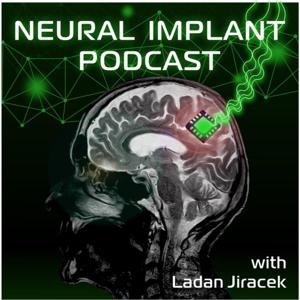

Dr. Phil Kennedy is a neurologist who has implanted patients with a neural recording device that can detect firing patterns attributed to certain words. This device can help locked-in patients communicate with others by detecting these firing patterns and outputting words on a computer. He has also had himself implanted with this same device. In this episode, Dr. Kennedy discusses how the device works, and his experience being implanted with his own device.
Top three takeaways:
[0:00] Ladan introduces the episode and the guest, Phil Kennedy, who explains how he decided to be implanted
[3:45] Kennedy explains the procedure he underwent in Belize and how and where the electrodes were implanted
[6:00] Kennedy explains how since the incision wouldn't fully close, the electronics eventually had to be removed
[9:20] In neural recording, slow-firing units should not be ignored, as they may contribute substantially to the accuracy of the signal
[11:45] Silent speech can be obtained by giving a patient a word to think about several times and recording the firing patterns that happen
[15:00] Obtaining more firing units can be used to distinguish the firing patterns brought on by similar sounding words
[19:00] More units are not entirely necessary for a prosthetic; rather, conditioning the units already obtained may be more effective
[21:30] Without resolution in the recorded signal, true signal from each unique firing patterns is difficult to obtain. Garbage in, garbage out.
[24:00] Kennedy explains how he has the idea of opening up implant centers around the world to help more locked-in patients communicate
[27:20] Neurosurgery is not dangerous if the surgeon knows what he's doing
[30:15] Kennedy explains why the signals obtained through electrodes last over time; features of the electrode prevent scarring at the site of implantation and collect accurate signals over time
[33:45] You don't need a high channel count for a prosthetic; you need stable signals over time that can be used as often as needed
[37:00] Ladan gives an outro for the episode and discusses a book and documentary coming out called Unlocking Eric, which documents one of Dr. Kennedy's patients
 View all episodes
 By Ladan Jiracek

4.8
1717 ratings
Dr. Phil Kennedy is a neurologist who has implanted patients with a neural recording device that can detect firing patterns attributed to certain words. This device can help locked-in patients communicate with others by detecting these firing patterns and outputting words on a computer. He has also had himself implanted with this same device. In this episode, Dr. Kennedy discusses how the device works, and his experience being implanted with his own device.
Top three takeaways:
[0:00] Ladan introduces the episode and the guest, Phil Kennedy, who explains how he decided to be implanted
[3:45] Kennedy explains the procedure he underwent in Belize and how and where the electrodes were implanted
[6:00] Kennedy explains how since the incision wouldn't fully close, the electronics eventually had to be removed
[9:20] In neural recording, slow-firing units should not be ignored, as they may contribute substantially to the accuracy of the signal
[11:45] Silent speech can be obtained by giving a patient a word to think about several times and recording the firing patterns that happen
[15:00] Obtaining more firing units can be used to distinguish the firing patterns brought on by similar sounding words
[19:00] More units are not entirely necessary for a prosthetic; rather, conditioning the units already obtained may be more effective
[21:30] Without resolution in the recorded signal, true signal from each unique firing patterns is difficult to obtain. Garbage in, garbage out.
[24:00] Kennedy explains how he has the idea of opening up implant centers around the world to help more locked-in patients communicate
[27:20] Neurosurgery is not dangerous if the surgeon knows what he's doing
[30:15] Kennedy explains why the signals obtained through electrodes last over time; features of the electrode prevent scarring at the site of implantation and collect accurate signals over time
[33:45] You don't need a high channel count for a prosthetic; you need stable signals over time that can be used as often as needed
[37:00] Ladan gives an outro for the episode and discusses a book and documentary coming out called Unlocking Eric, which documents one of Dr. Kennedy's patients

4,998 Listeners

4,166 Listeners

10,581 Listeners

136 Listeners
758 Listeners
532 Listeners

112,408 Listeners

15,334 Listeners

1,085 Listeners

29,249 Listeners

10,793 Listeners
28 Listeners