
Sign up to save your podcasts
Or

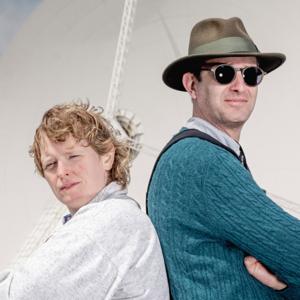


Clare and Jesse continue their mini series – The Hustle – with Serena Brown, talking to photographers about how they have gone about finding commissions and generally navigating the murky waters of professional photography.
Serena is a photographer based in London. She studied on the BA Photography programme at Falmouth and graduated in 2018. Within 6 months of getting her degree, Serena had managed to secure a photoshoot with Nike, and since then has worked on commercial and editorial assignments for similarly well-known brands, and magazines like Rolling Stone, the Face and the Wall Street Journal.
In 2023 a photograph of her sister taken at her grandmother’s house in Ghana was in the last 5 finalists of the Taylor Wessing portrait prize. This resulted in receiving the inaugural commission from the National Portrait Gallery that required her to photograph someone of historical significance to be accessioned to the gallery’s permanent collection.
Serena chose to photograph fellow Londoner Dr. Rosamund Adoo-Kissi-Debrah CBE, who began campaigning against air pollution following the tragic death of her daughter, Ella in 2013. As a result of Rosamund’s work, in 2020 the coroner amended Ella’s death certificate to include air pollution as a cause of death, making Ella’s the first recorded death – worldwide –inked to air pollution.
You can read about the commission on the NPG’s website, and watch a short film of the shoot on Serena’s website. You can also read more about Ella and her legacy here.
https://www.serenabrown.co/
@_serenabrown
PLEASE BE ADVISED:
Unfortunately we experienced some technical issues that we weren’t aware of at the time of the interview, so the recording is a bit glitchy in places – mostly at the beginning. We are disappointed about this but ask listeners to bear with us and we promise to do better next time.
Jesse and Clare welcome Robert Darch for the first of a micro-series they are loosely calling ‘The Hustle’ where they talk to photographers about how they’ve navigated the often opaque territory of professional photography: how they’ve gone about making contacts, getting assignments, and ultimately finding ways of supporting the pursuit of the work that they really want to make.
Robert Darch is a graduate of the University of Wales, Newport and Plymouth University, where he completed his postgraduate studies in Photography. His work explores themes such as rural identity, memory, imagined futures, and psychological states, drawing from his own experience to create narratives that help contextualise a personal response to place.
Robert is the author of three very successful photobooks; The Moor, Vale, and The Island, and has featured in Facing Britain, a touring retrospective of the last sixty years of British Documentary Photography and included in Another Country: British Documentary Photography since 1945, by Gerry Badger.
Robert also works on editorial assignments for the Guardian, Sunday Times and the Financial Times, and on long-term commissions for Beaford and the Devon Wildlife Trust. Robert also works on the BA(Hons) Photography (online) programme at Falmouth University.
See Robert’s work, or connect at:
https://www.robertdarch.com/
@RobertDarch
Photo: Tavis Amosford
Jesse and Clare talk to Linda Jarrett and Justin Quinnell about their creative practices, both of which involve alternative processes and working with communities.
Justin Quinnell is an artist and educator based in Bristol and Linda Jarrett is an artist based in New Zealand.
They talk about the value of analogue and alternative photographic processes and the greater sense of community that these can come with. They discuss how alternative processes can communicate ideas to new audiences and are remarkable tools for learning.
See their work, or connect via:
@justin_quinnell
https://www.pinholephotography.org/
@lindajarrettphotography
https://lindajarrett.com
If you have and questions, or themes, that you’d like Jesse and Clare to discuss in an episode, please get in touch or leave a comment.
Thank you for listening!
"Play is the highest form of research."
-Albert Einstein.
Clare and Jesse talk to George Bull and Michal Iwanowski about photography and 'play'. They ask how play has featured in their education and creative practices, and discuss their experiences of students' willingness (or not as the case may be) to play, experiment, take creative risks and get things 'wrong'.
George Bull is a photographer and lecturer in photography at Henley College in Berkshire and completed the MA Photography (online) programme at Falmouth University in 2025.
https://www.georgecbull.com
@George_C_Bull
Michal Iwanowski is an artist and lecturer in photography at Cardiff Metropolitan University. He has exhibited widely and his work is in numerous collections.
His project 'Go Home Polish' which explores his identity in a post-Brexit climate was first published as a photobook and will be exhibited at Y Storiel in Bangor on March 20th, to mark the 10th anniversary of Brexit referendum.
https://www.michaliwanowski.com
@MichalIwanowski
Thank you also to Joe Costigan @CostiganJoe for the playful artwork! (Sorry we ever doubted the wisdom of using a fisheye lens for a portrait!)
Join by Dr. Catarina Fontoura, Course Leader for BA(Hons) Photography (online) at Falmouth University, Jesse and Clare discuss the challenges of teaching a subject that is steeped in politics, in an unprecedented time of polarised viewpoints.
Clare and Jesse explore the idea of graduate “opportunities” such as prizes, awards and other ways to get your work noticed. They ask what best practice looks like, in terms of organisations running such schemes, and to what extent such things exploit new graduates trying to get started in the creative industries.
Helping them navigate this are Siân Addicott, Director of Ffotogallery - the photography development agency for Wales, and Philippa James - photographer, Associate Lecturer at Oxford Brookes, and graduate of the MA Photography programme at Falmouth University.
Siân mentions Ffotogallery’s annual ‘Ffocws’ exhibition and mentorship scheme for recent graduates as well as those who are entering the industry through other routes. Philippa talks about various activities, including her experience as a finalist for the National Portrait Gallery’s Taylor Wessing Portrait Prize.
https://www.ffotogallery.org
https://philippajames.net
Jesse and Clare talk to Michelle Sank and Geoffrey Bird, both educators and photographers, about their experiences of returning to study photography at postgraduate level as 'mature students'.
Michelle is a celebrated documentary photographer and environmental portraitist, and Lecturer on the MA Photography (online) programme at Falmouth University.
Geoffrey Bird is a photographer and teacher at the Vancouver British Columbia Institute of Technology, and graduate of the Falmouth MA.
The episode discusses the challenges that getting back to study after an extended period of time can bring, and also asks what maturity brings to a cohort of students, and a creative practice more generally.
@Sank_Michelle
@Geoffrey_Brid
PhotoPhone theme tune by @MichaelJamesUK
Portrait by @CostiganJoe
Thank you so much, Alan Pelz-Sharpe for giving us this topic to discuss!
If you have a topic you'd like Clare and Jesse to explore in an episode, please add a comment here, or use this form.
Jesse and Clare talk to Haley Morris-Cafiero @hmorriscafieroand Dawn Rodgers @dawn_s_rodgers about ‘autobiographical’ approaches. Or, in other words, putting yourself literally or emotionally in the picture.
This episode discusses Haley and Dawn’s creative approaches as photographic practitioners and how, as educators, we should go about supporting students who make work in these ways.
https://www.haleymorriscafiero.com
https://www.dawnrodgers.co.uk/shop-1/p/sorrow
Jesse and Clare ask how Artificial Intelligence is effecting how we teach and talk about photography. In this episode, they are joined by artist and educator, Dr. Wendy McMurdo, and Katy Hundertmark who is managing editor and curator of Foam in Amsterdam.
In preparation for this episode, we had a play with our profile picture using StableDiffusionWeb.com It used c. 0.000042 KWh of electricity to produce.
PhotoPhone theme © Michael James @MichaelJamesUK
PhotoPhone profile photo © Melane Uhkoette @Mel.MelanieUhkoetter
Further reading and works discussed in the episode:
FOAM International Photography Magazine no.66. Missing Mirror: Photography through the Lens of A.I.FOAM: Amsterdam.
Future's Institutes https://efi.ed.ac.uk/
Linn Hershman Leeson https://www.lynnhershman.com/
Gem Fletcher. ‘Lynn Hershman Leeson’ in FOAM pp.129 -144
‘Interview: Hito Steyerl and Noa Levin’ in FOAM pp.12-17
Shannon Vallor. 2024. The AI Mirror: How to Reclaim Our Humanity in an Age of Machine Thinking. Oxford: Oxford University Press
ECAL/ University of Art and Design Lausanne https://ecal.ch/en/school/network/people/milo-keller/
Justine Kurland. 2022. Scum Manifesto. London: MACK
Marketa Kinterova https://marketakinterova.cz/?portfolio=public-space-%e2%80%93-workshop
Ahmet Polat. Processing
Fred Ritchin. 2025. The Synthetic Eye: Photography Transformed in the Age of AI. London: Thames & Hudson
World Press Photo https://www.worldpressphoto.org/news/2023/could-an-ai-image-win-old-version
Xin Li - Magic Wand Tool https://www.foam.org/talent-2024/artist/xin-li
Aperture no. 257 ‘Image Worlds to Come: Photography & AI. Aperture: New York
Photoworks Annual 31. ‘Multi Multi’. Photoworks: Brighton.
Naomi M. Elcott & Tim Trombley. 2025. ‘How Can Image-Makers Open Up AI’s Mysterious “Black Box” https://aperture.org/editorial/how-can-image-makers-open-up-ais-mysterious-black-box/
Jesse and Clare discuss what HE adds to photography. In
https://www.laurahynd.com/
https://www.instagram.com/laura_hynd/
https://www.colinpantall.com
https://www.instagram.com/colinpantallteaching
With the shift from an industrial-based to a knowledge-based economy in the late 1990s and early 2000s, coupled with New Labour’s expansion of higher education to meet the demands of this new economic model, there was a significant surge in students pursuing photography at the university level. This trend was propelled not only by technological advancements but also by the rapid growth of the creative industries leading to a departure from the traditional Further Education and vocational college routes for photography training.
In more recent times, there has been a rise in non-academic courses and workshops offering training across a diverse range of topics, from creative processes to portfolio
Often offered by individual professionals or independent organizations, these courses allow knowledge sharing without the bureaucratic constraints of universities—such as fixed curricula, academic calendars, and predefined learning outcomes.
Do these courses provide both participants and facilitators with a more holistic, flexible opportunity to teach and learn about the craft and profession of photography?
Moreover, could these alternative training paths be seen as viable substitutes for university-based photography education? Or should they be regarded as complementary, addressing areas that universities traditionally place less emphasis on, such as professional practice?
There are ongoing debates about the tensions between academic and professional training in creative fields. The rise—or perhaps, the growing visibility—of non-academic
But how has this increasing academicization impacted the medium of photography?
What has it contributed, and what has been lost?
How has the ‘academic turn’ shaped or challenged our approach to making, understanding, and using the camera?
PhotoPhone theme © Michael James @MichaelJamesUK
Photo © Melane Uhkoette @Mel.MelanieUhkoetter