
Sign up to save your podcasts
Or

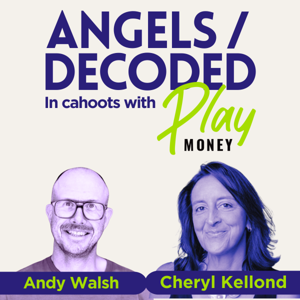


Angels Decoded is now the Play Money Podcast, and we’re kicking off the new format with our first guest.
More than $300 billion sits in donor-advised funds across the US, already given away and already tax-deducted, and most of it is parked in index funds earning fees for folks like Fidelity and Vanguard.
Patrice Brickman runs Inspire Access, a 501(c)(3) that moves that idle capital into women and underrepresented founders. You grant the money as you would to any charity, Inspire Access makes the investment, and returns flow back into your DAF to be used again. Patrice calls it renewable philanthropy.
The anchor story is what she and Cheryl built together. DAF money usually moves in $25,000 or $50,000 blocks, so they cracked a way to land it on Play Money as a personal impact fund, letting donors write small checks across a portfolio. The breakthrough came mid-Zoom, Patrice with foils in her hair and Cheryl hauling a bag of rice. Getting started takes one form, and if the money has already left your pocket, the risk to you is zero.
Episode outline
Listen: Apple | Spotify | YouTube
Links
Start here: letsplaymoney.com/daf
Inspire Access: https://www.inspireaccess.org/
Patrice Brickman - https://www.linkedin.com/in/patrice-brickman/
Patrice Brickman is the Founder and CEO of Inspire Access, a nonprofit investing philanthropic dollars into underrepresented founders. She also founded Inspire Capital, a venture fund backing women and minority-led businesses, and sits on the board of Maryland’s TEDCO.
Andy Walsh - https://www.linkedin.com/in/anwalsh/
2x exited founder and host of Startups Decoded (Top 2% globally). Andy helps founders sharpen judgment and build companies through practical experience and operator insight.
Cheryl Kellond - https://www.linkedin.com/in/c2kprofile/
Founder of Play Money and active angel investor. Cheryl focuses on democratizing angel investing and helping new investors build diversified portfolios while supporting founders with practical guidance and community.
Access All Areas.
Disclaimer
The views and opinions shared on the Play Money Podcast are for informational purposes only and do not constitute investment, tax or legal advice. Always consult a qualified professional before making any financial, tax or legal decisions.
Cheryl's calling it Affogato August. This summer, the deals that caught fire on Play Money weren't the moonshots, they were Thai-flavored ice cream and decaf coffee, both gone in days at six-figure SPVs. Andy and Cheryl unpack why CPG keeps working as everyone's first angel check: it's the one category where your gut is basically already doing the diligence for you.
The anchor story is Liquid Death, the late-stage deal that pulled in a wave of angels who'd never written a check before, who then went on to build portfolios three times faster than the platform average, and diversified well outside CPG. Sixty percent of investors into last summer's CPG deals were first-timers. This episode is about why that on-ramp works, and what it teaches angels who think they need something more sophisticated to start.
Episode outline
Listen: Apple | Spotify | YouTube
Andy Walsh - https://www.linkedin.com/in/anwalsh/
2x exited founder and host of Startups Decoded (Top 2% globally). Andy helps founders sharpen judgment and build companies through practical experience and operator insight.
Cheryl Kellond - https://www.linkedin.com/in/c2kprofile/
Founder of Play Money and active angel investor. Cheryl focuses on democratizing angel investing and helping new investors build diversified portfolios while supporting founders with practical guidance and community.
Access All Areas.
Disclaimer
The views and opinions shared on Angels Decoded are for informational purposes only and do not constitute investment or legal advice. Always consult a qualified professional before making any financial or legal decisions.
Pam Scott runs Impact Investor, a group built from three kinds of angels who rarely agree with each other: operators who grill the fundamentals, advocates who care about the impact story, and seasoned investors who pressure-test the terms.
Cheryl calls the resulting diligence more rigorous than most VCs manage. Pam calls it the only reason she's learned more in two years than in the twenty before it.
The anchor story is Baritone — a band-aid-sized sleep apnea diagnostic, backed by specialist VCs and fast-tracked by the FDA — that Pam's group bet on as a unit before it ever reached Play Money. Less than 5% of accredited women currently invest. This episode is about what deal flow looks like once that number starts moving.
Episode outline
Listen: Apple | Spotify | YouTube
Pam Scott - https://www.linkedin.com/in/curiouspam/
Pam Scott spent two decades advising founders for equity before she noticed the pattern: the women she was betting on kept getting a sliver of the capital. She built Impact Invest Her to fix the investor side of that math, not just the founder side.
Andy Walsh - https://www.linkedin.com/in/anwalsh/
2x exited founder and host of Startups Decoded (Top 2% globally). Andy helps founders sharpen judgment and build companies through practical experience and operator insight.
Cheryl Kellond - https://www.linkedin.com/in/c2kprofile/
Founder of Play Money and active angel investor. Cheryl focuses on democratizing angel investing and helping new investors build diversified portfolios while supporting founders with practical guidance and community.
Access All Areas.
Disclaimer
The views and opinions shared on Angels Decoded are for informational purposes only and do not constitute investment or legal advice. Always consult a qualified professional before making any financial or legal decisions.
Most angels think heavy diligence makes them safer.
Cheryl Kellond says it just makes them slower, and less trusted. She told a founder to skip an angel group's pitch process entirely, because they grill founders for hours before writing checks that barely clear five figures. The math never worked.
Diligence still matters, but it needs to scale with the check size. Cap tables and incorporation checks are hygiene, borrowed trust from whoever vetted the deal before you. What actually matters is reading the founder and reading the market, and even that should run through people you trust, not just your own hours.
Episode outline
Listen: Apple | Spotify | YouTube
Andy Walsh - https://www.linkedin.com/in/anwalsh/
2x exited founder and host of Startups Decoded (Top 2% globally). Andy helps founders sharpen judgment and build companies through practical experience and operator insight.
Cheryl Kellond - https://www.linkedin.com/in/c2kprofile/
Founder of Play Money and active angel investor. Cheryl focuses on democratizing angel investing and helping new investors build diversified portfolios while supporting founders with practical guidance and community.
Access All Areas.
Disclaimer
The views and opinions shared on Angels Decoded are for informational purposes only and do not constitute investment or legal advice. Always consult a qualified professional before making any financial or legal decisions.
The power law is the most quoted idea in angel investing, and it’s also the most misunderstood.
Cheryl Kellond is back to dismantle it. VCs took a principle from nature, one big winner can dwarf everything else, and twisted it into a rule that only ten billion dollar outcomes count. The result is angels sitting on the sidelines, convinced they need to find the next Uber before writing a single check.
The math tells a different story. Around ninety percent of startup exits happen under $100 million, with the median sitting near $44 million. Get in early at a $5 million post-money valuation and a $50 million exit is a monster multiple. Thirty bets turns angel investing into a predictable, high-performing asset class that beats public markets without ever touching a unicorn.
The sharpest turn comes late, when Cheryl defends the VCs Andy just put on trial. VCs aren’t villains, they’re doing the job their LPs pay them to do. The mistake is angels thinking that job is theirs too. It isn’t. Angels have different math, different incentives, and a very different definition of winning.
Episode outline.
Listen: Apple | Spotify | YouTube
Subscribe now
Andy Walsh - https://www.linkedin.com/in/anwalsh/
2x exited founder and host of Startups Decoded (Top 2% globally). Andy helps founders sharpen judgment and build companies through earned experience and operator insight.
Cheryl Kellond - https://www.linkedin.com/in/c2kprofile/
Founder of Play Money and active angel investor. Cheryl focuses on democratizing angel investing and helping new investors build diversified portfolios while supporting founders with practical guidance and community.
Access All Areas.
Disclaimer.
The views and opinions shared on Angels Decoded are for informational purposes only and do not constitute investment or legal advice. Always consult a qualified professional before making any financial or legal decisions.
Cheryl Kellond is back, and this time she’s calling out angel group sins.
Three of them. Hoarding diligence, forcing minimum check sizes, and treating a cap table seat like a status symbol. If you’ve spent more than five minutes around an angel group, you’ve watched at least one of these play out.
The pattern underneath all three is the same, scarcity thinking dressed up as process. Groups that sit on diligence instead of sharing it, groups that force $10K minimums on people who’d rather write ten $1K checks, groups that need a direct cap table seat to feel like they matter. Cheryl’s watched the same founder gain or lose a million dollars in funding, purely based on whether the group backing them chose to open up or lock down.
The fix isn’t complicated. Share your diligence, drop the arbitrary minimums, use an SPV instead of clogging the cap table. Do that, and you’re not just getting a founder funded faster, you’re setting up a better return for yourself too.
Episode outline
Listen: Apple | Spotify | YouTube
Subscribe now
Andy Walsh - https://www.linkedin.com/in/anwalsh/
2x exited founder and host of Startups Decoded (Top 2% globally). Andy helps founders sharpen judgment and build companies through practical experience and operator insight.
Cheryl Kellond - https://www.linkedin.com/in/c2kprofile/
Founder of Play Money and active angel investor. Cheryl focuses on democratizing angel investing and helping new investors build diversified portfolios while supporting founders with practical guidance and community.
Access All Areas.
Disclaimer
The views and opinions shared on Angels Decoded are for informational purposes only and do not constitute investment or legal advice. Always consult a qualified professional before making any financial or legal decisions.
The startup map is being redrawn. Not by VCs flying in to write checks, but by founders who never left home. Cheryl Kellond has watched it happen from the inside, and this conversation is a real-time dispatch from the ground.
The big insight here is simple: regional founders aren't disadvantaged anymore. AI has erased the knowledge gap. What they have instead is something money can't replicate: deep domain expertise, local networks, and proximity to the actual problem. That's a competitive moat, not a consolation prize.
We also got into why most VCs are just lazy. Not malicious, not strategic, lazy. The best arbitrage in early-stage investing right now is sitting outside San Francisco and New York, and most institutional capital is too comfortable to go look for it.
Episode outline
Listen: Apple | Spotify | YouTube
Andy Walsh - https://www.linkedin.com/in/anwalsh/
2x exited founder and host of Startups Decoded (Top 2% globally). Andy helps founders sharpen judgment and build companies through practical experience and operator insight.
Cheryl Kellond - https://www.linkedin.com/in/c2kprofile/
Founder of Play Money and active angel investor. Cheryl focuses on democratizing angel investing and helping new investors build diversified portfolios while supporting founders with practical guidance and community.
Access All Areas.
Disclaimer
The views and opinions shared on Startups Decoded are for informational purposes only and do not constitute investment or legal advice. Always consult a qualified professional before making any financial or legal decisions.
Most angels hear the word dilution and flinch. Cheryl Kellond hears it and gets excited. By the end of this episode, you will too.
Cheryl and Andy break down why dilution is almost always a signal that something good is happening, the pie got bigger, and why the angels who panic about ownership percentages are missing the point entirely. The math is simple once you stop letting the word scare you.
The episode opens with a Portuguese tart and an Australian meat pie, because apparently that’s how you explain equity to people. But the analogy lands: a smaller slice of a much bigger pie is almost always the better outcome. What matters isn’t your percentage, it’s what that percentage is worth when the company exits.
Cheryl walks through what actually happens at each funding round, why angels shouldn’t follow VCs into follow-on bets, and the AngelList data on why doubling down is usually a mistake. The better move is more shots on goal, not more money into the same bet.
Cheryl unpacks cram down rounds, what they are, why founders use them, and why angels almost always misread them as opportunity when they’re actually a distress signal. If a company is trying to get you to reinvest by threatening to convert your preferred shares to common, that’s not an attractive deal. That’s a company in trouble using your fear against you.
She also shares the story that led her to build Play Money the way she did, a cram-down dressed up as a late-stage opportunity, a room full of angels leaning in, and deal terms nobody volunteered to show anyone.
Topics covered:
You don’t need to be a VC to understand dilution. You just need to stop treating it like a dirty word.
Listen: Apple | Spotify | YouTube
Subscribe now
Andy Walsh
2x exited founder and host of Startups Decoded (Top 2% globally). Andy helps founders sharpen judgment and build companies through practical experience and operator insight.
Cheryl Kellond
Founder of Play Money and active angel investor. Cheryl focuses on democratizing angel investing and helping new investors build diversified portfolios while supporting founders with practical guidance and community.
Access All Areas.
Disclaimer: The views and opinions shared on Startups Decoded are for informational purposes only and do not constitute investment or legal advice. Always consult a qualified professional before making any financial or legal decisions.
Founders aren’t always lying. But they’re not always telling the full story either.
Cheryl Kellond and Andy Walsh unpack the revenue terms that trip up new angel investors, and the specific ways AI companies are stretching numbers in ways that would make an accountant sweat.
The episode starts with a real example: a company doing $40M in gross marketplace value that was actually generating $10M in revenue. Both numbers were true. Neither was wrong. But only one of them tells you what the business is actually worth.
From there, Cheryl breaks down the three revenue patterns that catch angels off guard, marketplace GMV vs. take rate, the two completely different things that “ARR” can mean, and whether a company’s unit economics get better as they grow or just get worse faster.
Then it gets interesting. AI companies are playing a different game entirely. Multi-year contracts where year one is free. Run rates built on a single good day. Revenue that looks like $10M but cost $20M to generate. These aren’t always bad-faith moves, but they are traps for investors who don’t know what to ask.
The bigger point: great founders building real businesses are getting overshadowed by AI headline numbers that don’t hold up to a single follow-up question. Knowing what to ask levels the playing field.
Topics covered:
You don’t need to be a CFO to invest well. You just need to know what questions to ask first.
Listen: Apple | Spotify | YouTube
Subscribe now
Andy Walsh - https://www.linkedin.com/in/anwalsh/
2x exited founder and host of Startups Decoded (Top 2% globally). Andy helps founders sharpen judgment and build companies through practical experience and operator insight.
Cheryl Kellond - https://www.linkedin.com/in/c2kprofile/
Founder of Play Money and active angel investor. Cheryl focuses on democratizing angel investing and helping new investors build diversified portfolios while supporting founders with practical guidance and community.
Access All Areas.
Most founders are taught to believe angel funding is just a stepping stone to venture capital.
In Ep#16 of Angels Decoded, Cheryl Kellond and Andy Walsh challenge that idea completely, arguing that angel capital may actually be the most important money a company ever raises.
The conversation explores the growing divide between mission-aligned businesses and venture-backed growth at all costs. Cheryl explains why more founders are realizing that traditional VC funding can sometimes pull companies away from the very reason they were started in the first place.
Using examples like Patagonia, Costco, Whole Foods, and Anthropic, the episode unpacks how ownership structures, investor expectations, and company charters can shape the long-term ethics, culture, and direction of a business.
The discussion also reframes the role of angel investors entirely. Instead of being “minor league” capital, angels may be the investors best positioned to help founders stay aligned to mission while still building highly profitable companies.
The bigger takeaway: the earliest capital a founder takes often determines the future of the company itself. Inspired by Eric Ries’s (The Lean Startup), brand new book Incorruptible.
Topics covered:
Sometimes the smartest investment isn’t just backing a company.
It’s protecting the reason the company exists in the first place.
Listen: Apple | Spotify | YouTube
Subscribe now
Andy Walsh
2x exited founder and host of Startups Decoded (Top 2% globally). Andy helps founders sharpen judgment and build companies through practical experience and operator insight.
Cheryl Kellond
Founder of Play Money and active angel investor. Cheryl focuses on democratizing angel investing and helping new investors build diversified portfolios while supporting founders with practical guidance and community.
Access All Areas.
From the publisher's feed