
Sign up to save your podcasts
Or

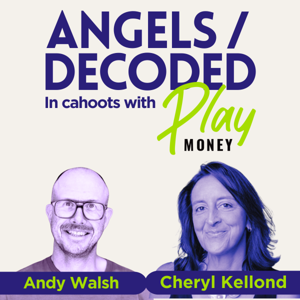


Many new angels think their first check has to be big to matter.
In reality, the opposite is often true. Oversized early bets can limit diversification and reduce the odds of success. The real advantage in angel investing comes from building a portfolio over time.
In Ep#5 of Angels Decoded, Cheryl Kellond and Andy Walsh unpack the psychology and strategy behind check size, portfolio construction, and why writing smaller checks can actually create more impact for both founders and investors.
The data is simple: returns improve once investors reach around 30 investments. That means angel investing isn’t about one big bet. It’s about thoughtful diversification, learning over time, and backing founders in a way that fits your financial reality.
This conversation also explores how SPVs make small checks practical, why angels should check their ego at the door, and how even a $1,500 investment can create meaningful influence when paired with experience and support.
Listen & Watch:
Apple || Spotify || YouTube
The Realities We Break Down
1) The Check Size Myth
Many new angels assume bigger checks equal more value. In reality, writing smaller checks allows investors to build diversified portfolios and learn the ecosystem without overextending early.
2) The 30-Investment Rule
Data from AngelList shows the strongest returns typically appear after 30 investments. Diversification, not conviction, is the statistical edge in early-stage investing.
3) Why SPVs Make Small Checks Work
Small checks don’t need to burden founders. When angels invest through SPVs, founders receive one clean entry on the cap table while investors participate collectively.
4) Impact Beyond Capital
Sometimes the most valuable angels aren’t the ones writing the biggest checks. Experience, introductions, and operational insight can matter far more than the dollar amount invested.
The Big Idea
Angel investing isn’t about writing the biggest check.
It’s about building a portfolio, supporting founders, and deploying capital thoughtfully over time. Small checks, when combined with experience and network, can drive meaningful impact for both startups and the broader innovation ecosystem.
Chapters
00:00 Introduction
00:44 Why investors obsess over check size
04:35 The impact of small checks on founders
07:45 Angel investing and impact
12:04 Diversification and the 30-investment rule
14:57 Starting small and learning the ecosystem
17:30 Why small checks still matter
Andy Walsh
2x exited founder and host of Startups Decoded (Top 2% globally). Andy helps founders sharpen judgment and build companies through practical experience and operator insight.
Cheryl Kellond
Founder of Play Money and active angel investor. Cheryl focuses on democratizing angel investing and helping new investors build diversified portfolios while supporting founders with practical guidance and community.
Access All Areas.
Subscribe: Substack
Web: angelsdecoded.com
Resources
Startups Decoded Podcast: https://startupsdecoded.com
AngelList: https://angel.co
Every new angel investor wants to see their name on the cap table.
It feels official. It feels powerful. It feels like you’re really “in the game.” But in reality, that small line on a cap table can create a surprisingly large operational burden for the founder you’re trying to support.
In Ep#4 of Angels Decoded, Cheryl Kellond and Andy Walsh unpack the practical realities of cap tables, dilution, and why many angels misunderstand the role they should play once they invest.
The uncomfortable truth is simple: small checks shouldn’t slow companies down. When angels insist on being directly on the cap table without understanding the legal mechanics behind it, they often introduce friction that founders have to spend time and money managing.
This conversation explores why the best angels focus less on status and more on support.
Listen & Watch: Apple || Spotify || YouTube
Subscribe now
The Realities We Break Down
1) The Hidden Cost of Cap Tables
Every individual investor listed on a cap table creates administrative work. Legal filings, shareholder approvals, and document updates all add up. Over time, each name can cost a startup $1,500–$2,000 in legal overhead.
2) The ROFR Problem
Most angels don’t know what a Right of First Refusal (ROFR) actually is. But if you’re on the cap table, you’ll be asked to sign documents tied to it. One confused signature can delay a financing or acquisition.
3) Dilution Isn’t the Enemy
Early investors often obsess over dilution. But if a company is raising new capital and growing, dilution simply means the business is becoming more valuable. Fewer shares at a much higher value is still a win.
4) Influence vs. Impact
Being on the cap table doesn’t give angels meaningful power. The most valuable angels are the ones who help founders with introductions, advice, encouragement, and real-world experience.
The Big Idea
Angel investing works best when it functions as support, not control. Small checks shouldn’t create large operational headaches. Whether through SPVs or thoughtful investment structures, the goal should always be the same: Give founders capital without slowing them down.
Chapters
00:00 Introduction and Collaboration Plans
00:20 Understanding Cap Tables and SPVs
03:35 Dilution and Its Implications for Angel Investors
08:54 Cap Tables vs SPVs — What Actually Matters
18:06 Angels Decoded End Card
The Hosts
Andy Walsh: 2x exited founder and strategist. He helps investors and founders navigate the “power dynamics” of early-stage capital without the fluff.
Cheryl Kellond (aka “Shezza”): 3x founder and CEO of Play Money. She’s on a mission to move accredited professionals from the sidelines into the game with a data-backed, pragmatic approach.
Access All Areas.
Subscribe: Substack
Web: angelsdecoded.com
Resources
Startups Decoded Podcast
AngelList
There is no such thing as a "simple" direct investment.
If you think being directly on a startup’s cap table is a badge of honor, you’re likely creating a massive administrative burden for the founder you claim to support. In Ep#3 of Angels Decoded, Cheryl Kellond and Andy Walsh unpack why the Special Purpose Vehicle (SPV) is the pragmatic choice for anyone looking to move from "hobbyist" to "professional" investor.
The reality is sharp: Most individual angels lack the time to manage 1065 tax forms, K-1s, and the endless "Rofer" (Right of First Refusal) documents that flood an inbox during a growth round. By pooling capital into an SPV, you aren't just simplifying your life; you’re de-risking the founder’s future by keeping their cap table clean for institutional VCs.
The "Under the Hood" Realities We Unpack:
The numbers paint the real story. If you want to support a founder, don't just give them capital, give them optionality and a friction-free path to their next round. This conversation is the roadmap for how to do exactly that.
Chapters
The Hosts
Access All Areas.
There is no such thing as an "expert" angel investor.
If you believe a single large return makes you an expert, you’re treating angel investing like a lottery ticket.
In Ep#2 of Angels Decoded, Cheryl Kellond and Andy Walsh unpack why that "one-off" mindset is a recipe for failure.
The reality is pragmatic: the only reliable predictor of returns in early-stage startups is the number of checks you write. Using data science from AngelList, we explore the "magic number" where angel investing shifts from a gamble to a predictable asset class.
The Hard Truths We Unpack:
The numbers paint the real story. If you’re looking to move past the "lurking" phase and build a data-backed roadmap for private market investments, this conversation is where it is at.
Chapters
About the Hosts
Andy Walsh: 2x exited founder, host of Startups Decoded, and strategist helping founders sharpen judgment and execute with speed.
Cheryl Kellond: 3x founder, 3x Ironman, and founder of Play Money, a platform designed to move accredited professionals from "lurking" to "leading" in private markets.
Access All Areas.
Writing an angel check is easy. Knowing why is the flex.
In the debut episode of Angels Decoded, Andy Walsh and Cheryl Kellond trade the “country club” luncheon for the raw truth about early-stage capital. Angel investing is no longer just for semi-retired hobbyists on the driving range; it’s becoming the most strategic leverage a founder can have.
Subscribe now
The Death of the “Dumb Money” Myth
For decades, angel investing was seen as a social activity, a philanthropic nod to a friend’s kid or a way to pass time at a luncheon. But the landscape has shifted. Within the last five years, a new wave of operator-led capital has emerged.
This isn’t just money; it’s a strategic lead. Because angel capital isn’t tied to the rigid “billion-or-bust” math of large VC funds, it gives founders the optionality they need to survive the “messy middle” of building a business.
The 20 Million Household Opportunity
There are currently 20 to 25 million US households that meet the criteria for “accredited investor” status. Yet, statistics show that way less than one million have actually made an investment.
According to recent surveys, 75% of accredited investors say they want to invest in startups but don’t know where to start. They are held back by three perceived barriers:
Play Money: The “Lurk and Learn” Model
Cheryl Kellond, 3x founder, 3x Ironman, and active angel with 50+ companies, is solving this through Play Money. It’s designed to be the “Instagram meets AngelList” for the next generation of investors.
The goal? To allow the millions of people sitting on the sidelines to “get reps” seeing deals without the pressure of an immediate check. By democratizing the “spidey sense” of veteran operators, the platform moves investors from lurking to leading.
The Three Gates of Validation
How do you ensure you aren’t just gambling? Cheryl outlines the three gates every deal on Play Money must pass:
What’s in the Episode?
Subscribe. Then Decide.
Angel investing is the ultimate craft for those who want to turn capital into cultural and financial impact. This isn’t about noise; it’s about practical intelligence for people who want to own a piece of the future.
From the publisher's feed