
Sign up to save your podcasts
Or

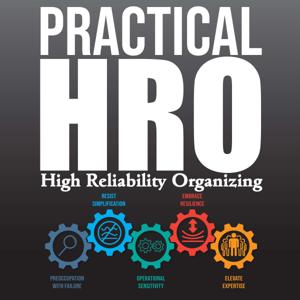


We often talk about business in the abstract, philosophies, strategies, what ifs. This episode looks at an ongoing crisis, with direct and fatal consequences for those involved. Rather than debate the technical and operational aspects, this podcast aims to draw attention to the underlying and pervasive role that culture plays in companies. If all we focus on are the processes and procedures, and ignore the business decisions regarding people and culture, we have missed a critical opportunity to help change the way businesses operate.
There have been volumes already written about these accidents, and volumes more will be. Much has been written about the design, technical, training, service, business, and regulatory aspects and decisions at the core of these accidents.
So what was it that really changed, what is no longer done, or believed, or understood? What changes brought on the collision of deregulation and Wall Street? Was there something that fundamentally makes the difference when collectively considering the long-term implications of deregulation, Wall Street, and all the other aspects? I believe there is. It is High Reliability Organizing.
This episode looks at the first step necessary to implement HRO in your organization – leadership buy-in. While the implementation, execution and benefits of HRO are unique to every business, there are some practical steps that every organization has to take, the first of which is buy-in by the folks running the organization. Without the commitment, in time, talent and treasure, this effort will stall. It happens far more often than not, despite it being one of the best means of differentiation in the market.
There is an outline of Step 1 on my blog at PracticalHRO.com.
Practically speaking, you’ve got to get buy-in before you can move forward.
This episode looks at a critical aspect of implementing High Reliability Organizing – specifically where in the organization does it belong? Who should lead HRO efforts? Where do HRO processes, issues and, ultimately, decisions come from? What happens when HRO conflicts with another primary business objective?
Using org structure to support and match the HRO framework addresses this so it should be strategically thought through. In general, the argument I put forward is that it should emanate from close to the top of the organization, but likely not the tippity top.
Our case study is set at a medium size regional hospital, working to develop strong credentials from a variety of agencies like Agency for Healthcare Research and Quality (AHRQ). Over time hospital leadership had sought to improve patient experience scores and had tried a number of efforts, typically in specific, siloed operational departments. Few of these efforts brought significant improvement, which, over time, was becoming a challenge for the organization.
0:42 Today’s Episode
1:20 Definition: HRO
2:25 Case Study Intro
2:48 Part I: Accepting a Simple Cause
4:08 Part II: The Review
8:17 Part III: Weak Signals
11:07 Part IV: Lessons Learned
This is our third podcast in a series focusing on high reliability organizing. Our first podcast took on the basic definition. This and the previous podcast look at the 5 principles of mindful organizing. Episode 3 specifically looks at the last two principles that collectively form the containment portion of HRO.
Following that is our section on topical information such as news or book reviews. Episode 3 reviews a recent article by the medical director and patient safety officer for the Division of Healthcare Improvement at The Joint Commission.
As usual, the episode ends with a discussion on some aspect of implementing HRO. Episode 3 specifically looks at H. R. O. with an quick Health Care case study that demonstrates that root cause is very often not what you think it will be, which can get in the way of the organization addressing the issue.
0:57 Today's Episode
2:35 HRO Framework Review
3:50 The Containment Habits
4:55 Failures, Mistakes and Accidents, Oh My
14:45 Expertise Does Not Always Live Where You Think It Does
25:35 HRO in the News: Dr. Ed Pollack, Joint Commission
30:15 HRO Implementation – The Case of the Missing Valet
In its most basic form Risk Management recognizes one basic truth… mistakes happen. In response to this, organizations should prepare two complimentary collections of actions (1) – establish methods to anticipate risks to prevent them and (2) – when prevention fails, establish methods to contain the results. In addition to preventing mistakes and then limiting the impact, these two collections of actions form a feedback loop that improves the risk management outcomes over time.
This episode explores the Anticipation Habits. In the "HRO In The News" section we look at HRO and the Veterans Hospital Administration. The closing section investigates the implementation of a Just Culture over the typical culture of blame.
This is the first podcast in a series focusing on high reliability organizing so it's an introduction to the concept.
Our first segment opens up with a definition of HRO in the 5 habits that make up the framework of higher reliability organizing
Following that will have a section on topical information such as is our own and news or book review and in this podcast we look at this year's Malcolm Baldrige award winners
The podcast will end with a discussion on some aspect of implementing HRO in today specifically we look at H. R. O. in a section called HRO is not the program of the month.
From the publisher's feed