
Sign up to save your podcasts
Or

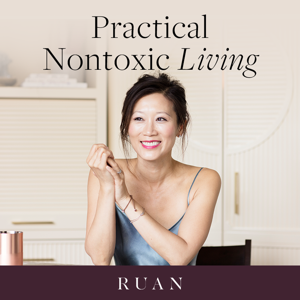


How much can the chemicals in everyday life—in our water, food packaging, and personal care products—affect fertility? And how much of it is within our control?
Dr. Carmen Messerlian is a reproductive epidemiologist and former Harvard professor who has spent her career studying how environmental exposures relate to couples' fertility and pregnancy outcomes. She is also the founder of Vie, a fertility platform for couples.
We talk about body burden and why she doesn't aim for perfection, the first change she'd make at home, and why she sees the months before conception as a window of both vulnerability and opportunity for each partner. She explains how many months she suggests for preparing for conception, and that the egg that became you formed while your mother was still in your grandmother's womb. She also shares her own experience of pregnancy loss.
Guests speak for themselves. Their conclusions are their own, including where they state them more firmly than the published research does. Nothing in this episode is medical advice.
Follow Practical Nontoxic Living™ wherever you listen so the next conversation finds you.
Many of the exposures Carmen describes come from what we buy, own, and do every day. The Ultimate Home Detox™ is how I guide people through them: first the 40-Day Home Detox™, room by room and product by product at your own pace, then a year in the D-Tox Academy™ for the decisions that keep coming. Whether you're preparing to conceive or have reasons of your own, I read every application.
Learn more about the Ultimate Home Detox → ruanliving.com/40-day-home-detox
Is mold hiding in your home? Does it always smell musty? Is black mold necessarily dangerous? And how can you investigate a possible mold problem without spending a fortune?
In Episode 137 of Practical Nontoxic Living™, Sophia Ruan Gushée talks with Michael Rubino, founder of HomeCleanse and author of The Mold Method, about mold in our homes, potential health concerns, and practical approaches to mold prevention, testing, and remediation.
Sophia also makes a confession: Four years after discovering mold in her home office rug, she still hasn't removed it. The prospect of dealing with the rug—and potentially uncovering a much bigger problem—has felt overwhelming. But after speaking with Michael, she begins to see a more manageable path forward.
In this episode, we explore:
Where mold can hide—even without visible growth or a musty smell
Early signs of water intrusion around windows, roofs, bathrooms, and HVAC systems
How humidity affects mold growth and what levels Michael recommends
Why the color of mold doesn't reliably indicate its potential health risks
Mycotoxins and chronic inflammatory response syndrome (CIRS)
The differences between air, surface, and dust testing
When Michael recommends testing your home for mold
Questions to ask when hiring a mold inspector or remediation professional
How to evaluate air purifiers based on filtration, coverage, and air changes per hour
Michael also shares why he believes identifying moisture problems early can help homeowners avoid more extensive—and expensive—repairs.
Whether you're dealing with a known mold problem or simply want to be proactive about your indoor environment, this conversation offers a framework for asking informed questions and deciding what to investigate next.
You can also watch the conversation on YouTube and see Sophia's office rug and home's water damage.
Resources
Read the episode article and transcript: When Is Mold in Your Home a Health Problem? Michael Rubino Explains
Michael Rubino and HomeCleanse: https://www.homecleanse.com
Sophia's Substack, Ruan Living: https://ruanliving.substack.com
Learn more about Sophia Ruan Gushée: https://www.ruanliving.com/sophia-ruan-gushee
This conversation is educational and does not replace individualized medical advice or a professional environmental assessment.
Special Thanks
Podcast music: Chris Robertson
Podcast Engineers
How much of who we become is shaped before we ever make a conscious choice? And once we notice what's shaping us, what can we change?
Episode 136 begins a new chapter of Practical Nontoxic Living™.
For nearly twenty years, Sophia Ruan Gushée has explored how what we buy, own, and do can shape our health. In this season, that inquiry widens: from environmental exposures, fertility, gene expression, cell phone radiation, indoor living, and the spaces around us to habits, expectations, instinct, risk appetite, and the paths we choose through life.
This episode is a preview of the questions—and the people—Sophia will be learning from next. You'll hear clips from Dr. John La Puma, Carmen Messerlian, Dr. David Carpenter, Deborah DiMare, Dr. Haley Genovese, Andrew Yang, Cyrus Massoumi, Jill Kargman, and more.
Some conversations ask how our homes and everyday exposures may shape our biology. Others ask how family expectations, cultural definitions of success, rejection, courage, and instinct shape the lives we build.
They may sound like very different subjects. But they keep returning to the same questions: What has shaped who we are? And what can we do to shape who we want to become?
For Sophia, Practical Nontoxic Living isn't about restriction or perfection. It's about learning more, embracing uncertainty, and asking one question again and again: What's the wisest decision?
Follow Practical Nontoxic Living™ wherever you listen so the next conversation finds you.
For Sophia's writing between episodes, subscribe to Ruan Living on Substack: https://ruanliving.substack.com
Want a practical place to begin at home? Join the free Ultimate Home Detox™ Kickstart Series:
https://www.ruanliving.com/ultimate-home-detox-kickstart-series
Part 7 of the Forever Chemicals Detox series
Reducing PFAS exposure doesn't always require buying something new.
In this episode, I share six practical, no-cost changes that can reduce everyday exposure to PFAS—"forever chemicals" that persist in the environment and have been found in the blood of people around the world.
We look at some of the less obvious ways our daily habits can influence exposure, and where simple changes may be worth making.
In this episode:
Six free ways to reduce everyday PFAS exposure
Habits at home and on the go that may matter
How I think about small exposure reductions that accumulate over time
This is Part 7 of my Forever Chemicals Detox 101 podcast series.
Go deeper:
A to Z of D-Toxing: The Ultimate Guide to Reducing Our Toxic Exposures
Learn the foundations of the Practical Nontoxic Living™ framework with the free Ultimate Home Detox Kickstart email series.
Part 6 of the Forever Chemicals Detox 101 series
What happens when PFAS contamination becomes personal—and then political?
Minnesota State Senator Judy Seeberger joined the legislature in 2023 and helped pass one of the country's most sweeping restrictions on PFAS, the persistent chemicals found in products ranging from cookware to dental floss.
In this conversation, we talk about what happened when an environmental health problem reached her own home—and how that experience helped inform her work in the Minnesota legislature.
In this episode:
How PFAS contamination became personal for Senator Seeberger
How Minnesota became a national leader in restricting PFAS
How she filters PFAS from her own well water
What state-level action on forever chemicals can look like
What Minnesota's experience may teach the rest of us about turning concern into change
This is Part 6 of my Forever Chemicals Detox 101 series.
Go deeper:
Read When Forever Chemicals Hit Home: How Senator Judy Seeberger Turned PFAS Contamination into Hope
Read A to Z of D-Toxing: The Ultimate Guide to Reducing Our Toxic Exposures
Learn the foundations of the Practical Nontoxic Living™ framework with the free Ultimate Home Detox Kickstart email series.
Part 5 of the Forever Chemicals Detox 101 series
Modern life surrounds us with synthetic chemicals—in the things we cook with, clean with, wear, furnish our homes with, and use every day. Rather than target harmful chemicals one by one, we can avoid up to categories of them by recognizing certain patterns. This can help us make wiser choices without becoming overwhelmed.
In this episode, I explain the thinking behind my Household Repeat Offenders™ framework: categories of materials, treatments, and product characteristics that repeatedly show up as potential sources of concerning chemical and heavy-metal exposures.
In this episode, I explain the thinking behind my Household Repeat Offenders™ framework: categories of materials, treatments, and product characteristics that repeatedly show up as potential sources of concerning chemical and heavy-metal exposures.
We focus especially on PFAS, or "forever chemicals"—why they persist, where scientists have detected them in the human body, and why I consider them an important Household Repeat Offender™.
In this episode:
How chemicals from everyday products can make their way into our homes and bodies
Where PFAS have been detected in the body, including what we know about breast milk
Why PFAS are unusually persistent in people and the environment
How the Household Repeat Offenders™ framework can simplify decisions about what to buy, own, and do
Why recognizing patterns may be more useful than trying to memorize hundreds—or thousands—of individual chemicals
The goal isn't to eliminate every exposure. It's to understand enough to make informed, practical choices about the exposures that may matter most.
This is Part 5 of my Forever Chemicals Detox 101 series.
Go deeper:
Read A to Z of D-Toxing: The Ultimate Guide to Reducing Our Toxic Exposures
Learn the foundations of the Practical Nontoxic Living™ framework with the free Ultimate Home Detox Kickstart email series.
Part 4 of the Forever Chemicals Detox 101 series
We've all heard the principle that "the dose makes the poison." But when it comes to some environmental exposures, the relationship between dose and biological effect can be more complicated than that phrase suggests.
In this episode, I explore what researchers have learned about low-dose exposures to chemicals such as PFAS and endocrine-disrupting chemicals—and why timing, susceptibility, and mixtures can matter alongside dose.
We look especially at endocrine disruptors, which can interfere with hormone signaling at very low concentrations, and at why scientists continue to debate how conventional assumptions about toxicology apply to chemicals that interact with our hormonal systems.
In this episode:
Why "the dose makes the poison" doesn't tell the whole story
What scientists mean by low-dose effects
Why periods such as pregnancy, infancy, puberty, and other sensitive windows of development can matter
How exposure to multiple chemicals at once complicates risk assessment
Why reducing everyday exposures can still be worthwhile even when science can't tell us exactly how much individual reductions will change our health
The goal isn't to fear every small exposure. It's to understand why "a little" doesn't automatically mean "irrelevant"—and where practical reductions may make sense.
This is Part 4 of my Forever Chemicals Detox 101 series.
Go deeper:
Read When Less Isn't Safe: How Low Doses of Toxins Affect Your Health for the studies and sources discussed in this episode
Read Household Repeat Offenders™ to see the framework I introduce in the next episode
Read A to Z of D-Toxing: The Ultimate Guide to Reducing Our Toxic Exposures
Learn the foundations of the Practical Nontoxic Living™ framework with the free Ultimate Home Detox Kickstart email series.
Part 3 of the Forever Chemicals Detox 101 series
Your DNA is not your destiny.
Genes can influence our susceptibility to disease, but they're only part of the story. Our biology is also shaped over time by age, behaviors, environments, and the exposures we encounter throughout life.
In this episode, I explore that relationship through the lens of PFAS, or "forever chemicals"—including what researchers have learned about PFAS exposure and certain cancers, and why understanding environmental influences on health can give us more useful questions to ask about prevention.
In this episode:
Why having a genetic susceptibility doesn't mean a particular health outcome is inevitable
How environmental and lifestyle factors interact with our underlying biology
What research has found about PFAS exposure and cancer
Why the home is one environment where we have some ability to influence our exposures
Practical ways to reduce PFAS exposure without trying to eliminate every possible risk
The point isn't that we can control every factor that shapes our health. We can't. It's that genetics aren't the only factor—and understanding what else may matter can help us make more informed choices about the things we can influence.
This is Part 3 of my Forever Chemicals Detox 101 series.
Go deeper:
Read Safest Non-Toxic Cookware: Top PFAS-Free Pots and Pans for Healthy Cooking for help reducing one potential source of PFAS exposure in the kitchen
Read A to Z of D-Toxing: The Ultimate Guide to Reducing Our Toxic Exposures
Learn the foundations of the Practical Nontoxic Living™ framework with the free Ultimate Home Detox Kickstart email series.
Part 2 of the Forever Chemicals Detox 101 series
Rates of many chronic health conditions have changed dramatically over recent decades. Genetics alone can't explain changes that happen that quickly—which is one reason researchers continue to study the role of our environments, behaviors, and everyday exposures.
In this episode, I introduce environmental exposures—including certain chemicals, heavy metals, and PFAS, or "forever chemicals"—as one part of that larger picture.
I also share some of the health trends that first pushed me to start asking questions nearly twenty years ago, and how those questions eventually led to eight years of research and writing A to Z of D-Toxing.
In this episode:
Why changing population health trends led me to look more closely at our everyday environments
Where chemicals, heavy metals, and PFAS may fit into the broader picture of health
Why environmental exposures are worth understanding without assuming they explain everything
Three practical ways to begin reducing exposures at home
I don't think the useful question is whether our environments explain every troubling health trend. They don't. The more useful question is: What role might they play—and what can we reasonably do with what we know?
This is Part 2 of my Forever Chemicals Detox 101 series.
Go deeper:
Explore the complete PFAS & Forever Chemicals guide for the science, common exposure sources, practical ways to reduce exposure, and the full Forever Chemicals Detox 101 series.
Read A to Z of D-Toxing: The Ultimate Guide to Reducing Our Toxic Exposures
Learn the foundations of the Practical Nontoxic Living™ framework with the free Ultimate Home Detox Kickstart email series.
A brief update on the Practical Nontoxic Living™ podcast.
In this episode, I share why I decided to pause the Thursday Raindrops episodes and create more space for deeper, more useful conversations and series—including Forever Chemicals Detox 101.
Sometimes making something better means doing less of it. This was one of those moments.
For now, Raindrops is paused while the podcast continues to evolve.
From the publisher's feed
982 Listeners

8,336 Listeners

1,225 Listeners

9,104 Listeners
2,209 Listeners

27,685 Listeners

4,089 Listeners

1,905 Listeners

2,054 Listeners