
Sign up to save your podcasts
Or

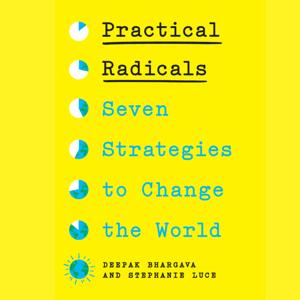


To succeed, any social movement needs people power. And, as the great Ella Baker preached, that takes a lot of slow, respectful work to forge relationships — what she called “spadework.” Base-building is the first of the “seven strategies to change the world” that we elaborate on in our book Practical Radicals. And base-building is so important that all of the other six strategies depend on it. So we’ve decided to devote two episodes to the topic: one on unions and one on community organizing.
Today’s episode focuses on base-building in the labor movement, especially the thrilling upsurge in Minnesota, where workers next week (March 2-9, 2024) are preparing to launch a massive, unprecedented general strike. Our guest is Greg Nammacher, president of SEIU Local 26, which represents janitorial, security, airport, and retail workers, and is a key player in this upcoming week of action. When he came to the local sixteen years ago, it was led by Javier Morillo, who wanted to usher in a new era of union democracy and militancy. And it worked! Local 26’s membership has doubled, and by embracing base-building and a “bargaining for the common good” framework, and not being afraid to strike, they’ve won astonishing victories that point the way for union success around the country. Nammacher’s interview is full of gems organizers need to hear: how to foster unity when members speak many languages; how to build “alignments,” not just coalitions or alliances; how to make organizing fun; and how to use social media smartly to build worker networks. Greg says American labor is in “an incredible moment, and we won't get a lot of these. And so how do we make the most of it so that our members can have better lives and we can have a long-term voice of power in this country?”
Minnesota Week of Action Fund: https://workingpartnerships.betterworld.org/campaigns/weekofactionfund
Schedule of Events for Week of Action in Minnesota (March 2-9)
Episode 3 transcript
Fundi: The Story of Ella Baker
The Rev. Dr. Martin Luther King famously said, “Power without love is reckless and abusive, and . . . love without power is sentimental and anemic.” But many on the left seem allergic to power. This episode starts with a fundamental question: What is power?
Drawing on the influential sociologists Michael Mann and Erik Olin Wright, Stephanie and Deepak present a novel typology, identifying six forms of power and giving examples of each. Then we hear from a guest who has brilliantly analyzed right-wing strategies to build power over the past several decades: Ilyse Hogue, former president of NARAL Pro-Choice America and co-author, with Ellie Langford, of The Lie that Binds (which is also a terrific 6-part podcast). Hogue debunks the myth that the Supreme Court’s 1973 decision in Roe v. Wade was the turning point in conservative organizing. In fact, she says the catalyst that activated a white, patriarchal, evangelical movement was Brown v. Board of Education, which challenged the power of churches in education. Hogue describes how in the 1970s, Phyllis Schlafly organized a mass movement to narrowly defeat the Equal Rights Amendment not, as many mistakenly believe, based on opposition to abortion but through scaremongering about women being drafted and being abandoned by husbands who would refuse to pay alimony. Schlafly’s skill at recruiting footsoldiers made her a kingmaker for Ronald Reagan and, decades later, Donald Trump. Hogue concludes with an insightful analysis of the parallels between these two presidents, the lessons we can learn from right-wing successes and failures in amassing power, and the strategic opportunities the left can seize on today to widen fissures within the conservative coalition.
Progressives need a strategy upgrade, and this episode points the way, first by delving into one of the greatest victories of the civil rights movement and the strategic masterstroke of Rev. Wyatt T. Walker. Next, we talk with Maria Poblet, Executive Director of the Grassroots Power Project, who argues that “the way strategy is being developed in progressive movements now in the United States is failing us.” She calls for progressives to build skill in what’s known as conjunctural analysis (pioneered by the great theorists Antonio Gramsci and Stuart Hall) and shares case studies of how it can lead to strategic breakthroughs. Then, Columbia Professor Alex Hertel-Fernandez details the lessons he learned from studying right-wing strategy for his book State Capture: How Conservative Activists, Big Businesses and Wealthy Donors Reshaped the American States and the Nation. The episode closes with a look at reverse engineering, one of thirty-six strategic tools described in the book Practical Radicals.
You can buy the book and find out more about the show at www.practicalradicals.org
Deepak and Stephanie welcome listeners and give a preview of some organizers and thinkers who will appear in future episodes: Maurice Mitchell of the Working Families Party, longtime progressive activist Ilyse Hogue, legendary activist and scholar Frances Fox Piven, and historian Manisha Sinha.
You can buy the book and find out more about the show at www.practicalradicals.org
From the publisher's feed

90,525 Listeners

43,838 Listeners

43,358 Listeners

38,650 Listeners

5,765 Listeners

10,532 Listeners

112,026 Listeners

25,111 Listeners

56,533 Listeners

10,244 Listeners

21,916 Listeners

2,066 Listeners

16,063 Listeners

265 Listeners

143 Listeners