
Sign up to save your podcasts
Or

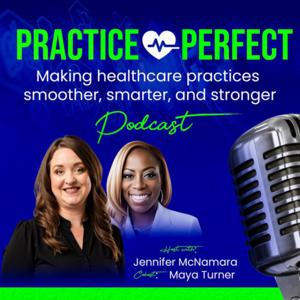


This episode dives deep into the confusion many practices face when it comes to rejections vs. denials. Jennifer and Maya welcome back Cameron Lewellen to talk about how AI and automation can transform how practices handle claim issues, boost efficiency, and get paid faster.
From hilarious personal stories to hard-hitting truths about insurance delays, this episode is packed with real talk and practical insights.
The difference between a rejection and a denial
Rejections never make it through the system. Denials are processed and then kicked back due to payer rules or errors.
Why automation matters
AI (like Athelas) can prevent delays by correcting errors before submission, automatically resubmitting denials, and eliminating lag time.
The power of site-specific vs. global rules
Cameron explains how custom rulesets based on payer and specialty drastically reduce denials.
Real-world examples
Including one from an autism center battling denials from unlisted codes—and how automation fixed it.
Domain-trained AI in action
Think: bots that sit on hold with payers so your staff doesn’t have to. Yes, really.
Underpayments and the dollars you're leaving on the table
AI can track every claim and compare it to your fee schedule to recover revenue you didn’t even know was missing.
The burnout problem
We talk about billers working weekends, late nights, and how automation can protect your team’s well-being.
“AI works on Saturdays.” – Cameron Lewellen
“You earned every dollar. AI helps you collect it.” – Jennifer McNamara
“Appeal letters should be short and to the point. If it’s two pages long, no one’s reading it.” – Maya Turner
Clearing up common misconceptions about rejections vs. denials
How AI augments—not replaces—your revenue cycle team
Using data to identify patterns and prevent denials
UI/UX in RCM software: why it matters
Operational tips for using automation to protect your AR
Benchmarking payer behavior and setting smarter expectations
Athelas – Learn more about their AI-driven RCM platform
Bone & Joint Summit – Join us July 17–18 to meet the Athelas team in person
Contact Cameron Lewellen for your free financial health analysis
Copy-paste documentation: it seems harmless, but it’s costing healthcare practices more than they realize. In this episode, Jennifer and Maya unpack the real risks behind cloned EMR notes—from audit red flags to compliance violations.
We’re talking:
– What copy/paste looks like in provider notes
– Why it's a major liability in audits
– How coders, auditors, and providers can clean it up
– Tips for starting the conversation with your team
– Real-world examples that prove shortcuts aren't worth it
🎧 Listen in to protect your documentation—and your bottom line.
📌 Need support with EMR audits or education?
Email [email protected]
In this insightful episode, we dive into one of the most commonly overlooked areas in healthcare compliance—behavioral health. Sonal Patel joins Jennifer McNamara and Maya Turner to discuss why behavioral health compliance deserves more attention, especially as demand for services grows. From documentation pitfalls to the nuances of medical necessity, we highlight key risks that can lead to denials, audits, and even enforcement action if ignored.
What You'll Learn:
Why behavioral health is a high-risk area for compliance breaches
The unique challenges providers face in documenting time-based services
Medical necessity requirements that often go unmet
Telehealth-specific compliance issues in behavioral care
How compliance audits can proactively reduce risks
Steps providers can take now to strengthen behavioral health compliance
Hot Topics Covered:
Time-based E/M codes and psychotherapy documentation
CMS expectations for medical necessity
Common audit triggers in behavioral health
Modifiers and telehealth policies under scrutiny
Real-world compliance examples and red flags
Takeaway Message:
Behavioral health is not immune from audits or enforcement. As the industry grows, so does regulatory scrutiny. Providers need proactive education and tools to remain compliant and protect their practices.
Resources Mentioned:
CMS Behavioral Health Guidance
OIG Compliance Recommendations
Telehealth Modifier Guidance
In this episode of Practice Perfect, Jennifer McNamara dives into the CMS G2211 complexity add-on code—specifically how it applies (or doesn’t!) to specialty practices. Whether you’re in orthopedics, ENT, plastics, or any other niche, we’ll unpack CMS’s intent, share real-world scenarios, and give you actionable tips to document and bill confidently.
What is G2211?
A quick refresher on the 2024 complexity add-on for longitudinal care and complex decision-making.
Specialty Scenarios
How CMS’s guidance plays out in orthopedics vs. general surgery vs. other specialties.
Documentation Must-Haves
What language drives approval—and what red flags to avoid.
Billing Best Practices
Reminder: as of 2025, you can bill G2211 with an AWV using modifier 25—here’s how to do it right.
In this episode, we break down two commonly misunderstood terms in healthcare coverage: "Statutorily Excluded" and "Not Medically Necessary."
While they may sound similar, these distinctions have major implications for providers, payers, and—most importantly—patients.
We explore how these classifications affect insurance claims, appeal rights, provider obligations, and patient financial responsibility. Whether you're a healthcare administrator, clinician, or just navigating your own care, understanding this difference can help you advocate more effectively within the system.
✅ What "statutorily excluded" means under federal healthcare programs like Medicare
✅ How "not medically necessary" determinations are made
✅ Why the distinction affects patient billing and appeals
✅ Key compliance and documentation tips for healthcare providers
Statutorily Excluded: Services never covered by law, regardless of medical need (e.g., cosmetic surgery under Medicare).
Not Medically Necessary: Services denied based on clinical judgment or guidelines—even if technically covered.
Appeal Rights: Patients typically cannot appeal statutory exclusions but can appeal denials based on medical necessity.
Documentation Matters: Accurate clinical notes can be the difference between a denied and an approved claim.
Proactive Communication: Providers should notify patients in advance using tools like ABNs (Advance Beneficiary Notices).
Advance Beneficiary Notice (ABN) Guide
Get to know how to reduce redundant billing headaches with our partners at Athelas
Get a DEMO today
Whether you’re a coder hunting for the right CPT, a tumor registrar assembling a perfect abstract, or a practice manager double‑checking documentation, that pathology report is gold— if you know how to mine it. In this episode Jennifer breaks down her go‑to process for turning dense, microscopic jargon into clean, billable data that tells the patient’s full story.
In this conversation you’ll learn:
How to navigate the four must‑read sections of every path report (and why the microscopic description isn’t always the MVP).
Pro tips for translating diagnostic phrases into precise ICD‑10‑CM codes—without over‑coding malignancy.
When a single tumor can drive multiple CPTs (and when bundling rules shut that down).
Common abstracting traps—margin language, laterality gaps, and “NOS” pitfalls—and how to fix them before they hit the claim.
Simple query templates that get pathologists to clarify size, grade, or margins without slowing the lab down.
Loved the episode? Subscribe, leave a review, and share it with your favorite lab or HIM team.
Stress is inevitable, but burnout doesn’t have to be. In this powerful episode of Practice Perfect, Jennifer and Maya dive into the real reasons behind workplace burnout and what healthcare teams can do about it. From overloaded coders and overwhelmed managers to providers stretched thin, we explore what it takes to create a culture that not only survives—but thrives.
You'll learn:
How to recognize the early signs of burnout
Why stress doesn’t always lead to burnout—but poor systems do
Real-world strategies to build calm into your workflows
How leadership can set the tone for psychological safety
Tools your team can use today to reduce chaos and improve morale
April is Stress Awareness Month, making it the perfect time to talk about how your team can reset, recharge, and reclaim productivity without sacrificing well-being.
If you’ve ever felt like your team is stuck in survival mode, this episode is your permission to make a change—and the roadmap to get there.
Hosts:
Jennifer McNamara – Founder of Healthcare Inspired LLC, expert in compliance, coding, and revenue cycle management.
Maya Turner – Owner of Turner Expert Consulting, passionate about helping practices thrive through expert guidance and simplified solutions.
Episode Summary:
In this episode, Jennifer and Maya bust some of the biggest myths surrounding payers. From payment delays to the misconceptions about small claim errors, they bring the truth to light with engaging facts and real stories. Listen in as they break down why you can—and should—negotiate with payers, and how to navigate common payer challenges for a healthier revenue cycle.
Key Topics Covered:
Common Payer Myths:
“Payers never pay on time.”
“Small claim errors always lead to rejection.”
“You can’t negotiate with payers.”
And lot's more...
Facts to Set the Record Straight:
Causes of payment delays and what you can do about them.
The truth about claim rejections and how to handle minor errors.
Negotiation strategies that work with payers to secure better deals.
Improving Your Payer Relationships:
How to use knowledge of payer myths to your advantage.
Building better payer relationships for improved revenue.
Featured Segments:
Jennifer’s Insights: The real impact of payer myths on revenue and how to approach them.
Maya’s Takeaways: Actionable tips for handling negotiations and improving payer relations.
Call to Action:
Stay tuned for the next episode, where we’ll uncover Abstracting from the Path Report. Learn essential abstraction techniques that can enhance accuracy and efficiency in medical coding. Subscribe, leave a review, and let us know your thoughts and questions!
Let's debunk those payer myths together!
Episode Summary:
In this episode of Practice Perfect Podcast, we break down the most overlooked yet crucial aspects of payer contracts. Are you leaving money on the table? Do you know when to negotiate, push back, or walk away? We’re diving into the must-know contract terms, red flags to watch out for, and insider tips to ensure you’re getting the best deal.
From understanding your leverage to why you should treat contracts like relationships (yes, sometimes you just need to walk away!), this episode is packed with practical advice, humor, and surprising insights to help your practice stay profitable and protected.
✅ Compare before you commit – How active comparisons and expert consultations can help you negotiate better contracts.
✅ Know your worth – If a payer doesn’t value your extended hours or patient care efforts, you CAN say no!
✅ Contracts aren’t forever – They’re like relationships—if it’s not working, don’t be afraid to walk away!
✅ Telehealth & reimbursement trends – What you need to know about chronic care management, remote patient monitoring, and compliance changes.
✅ Maximize your revenue – Smart ways to increase income beyond direct patient visits.
Next Up: Top Payer Myths – Fact vs. Fiction
Think you know payers? Think again! In our next episode, we’re busting some of the biggest myths, including:
🚫 "Payers never pay on time."
🚫 "Small claim errors always lead to rejection."
🚫 "You can’t negotiate with payers."
Join us as we separate fact from fiction and give you the tools to take control of your revenue!
📲 Follow us on all our platforms for more insights!
Episode Summary:
In this episode of Practice Perfect Podcast, we dive into the crucial role of quality assurance in coding and audits. Our guest, Robin Ingalls- Fitzgerald, joins us to discuss common coding errors, the impact of compliance, and why strong auditing processes are essential for healthcare organizations.
From modifier 25 and 59 issues to the challenges of telehealth, we uncover why consistent education, collaboration, and compliance are key to avoiding costly mistakes. Plus, we explore how outsourcing and coding support services can enhance accuracy and efficiency without replacing in-house teams.
Key Takeaways:
✅ Why audits matter – Identifying and preventing common errors before they become compliance risks.
✅ Telehealth regulations – The evolving landscape and its impact on coding and billing.
✅ Collaboration in coding – How external experts support practices without taking over.
✅ Common documentation mistakes – How small errors (like wrong laterality in orthopedics) can have big consequences.
✅ Education & training – The role of continuous learning in maintaining compliance and quality assurance.
Notable Quotes:
💬 "It’s not about taking over your team’s work, but supporting them in delivering accurate and compliant coding." – Jennifer Mcnamara
💬 "Compliance isn’t just about following rules—it’s about ensuring patients get the right care." – Robin Ingalls-Fuchs-Gerald
Don’t miss Episode 9, where we break down payer contracts and reveal what practices often overlook when negotiating with payers. Learn how to get the best deal and avoid costly mistakes! 💰📑
🔔 Subscribe, leave a review, and join the conversation!
📌 LinkedIn: Jennifer McNamara | Maya Turner | Robin Ingalls-Fitzgerald
Tune in now and take control of your coding and auditing process! 🎧