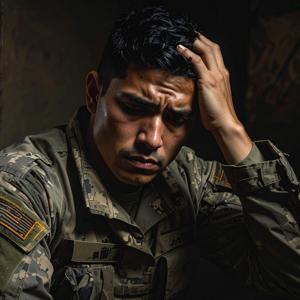
Episode 2 of The GRAP Files focuses on the Guard Recruiting and Assistance Program (G-RAP), positioning it not as a simple case of corruption, but as a catastrophic failure of high-level military policy and a betrayal of the average soldier.
The core description of the episode covers three main areas:
The host, Rogelio Guerra/Warstone, emphasizes his deep respect for the U.S. Army's system (ethics, efficiency, and sacrifice). He argues that the fundamental problem was not the system itself, but senior leaders who found holes, chose self-preservation over ethical engagement, and failed to fight what was fundamentally wrong to protect their careers. The host reveals that he himself was denied deployment to Iraq because he was deemed "too valuable as a recruiter," illustrating how command prioritized numbers over a soldier's duty.
The episode details how the post-9/11 recruiting crisis led the Army to abandon its ethical system and simply "throw money at the problem" using three simultaneous and poorly controlled budgets:
- Layer 1: The Full-Time Recruiter: The trained professionals who received audited salaries and justified expenses.
- Layer 2: The ADSW Money Pit: Funds wasted on Active Duty Special Work, short-term, high-cost orders given to soldiers frantically at the end of the Fiscal Year just to burn the budget, creating mass internal waste.
- Layer 3: The G-RAP External Incentive: The program where pay for recruits rapidly increased (up to 1$\$2,000$) and was shockingly administered by a private contractor, Docupak.2
The episode exposes the legal and administrative flaws of the G-RAP program, arguing it was designed to fail and set up soldiers to take the blame:
- Docupak as a "Shadow Employer": Docupak was an illegal private contractor hired to manage an "inherently governmental function." They treated Recruiter Assistants (RAs) as independent subcontractors (1099-MISC), creating an immediate tax burden and "ticking tax bomb" for the soldiers who were unprepared to save 33% of their earnings.
- Devaluation of Professionals: RAs were often selected and trained in only one day, yet received the full $\$2,000$ payment, instantly devaluing the 54 days of rigorous training completed by full-time recruiters.
- Unenforceable Rules: The rigid G-RAP rules, like the First Contact Rule and the ban on kickbacks, were impossible to enforce in the chaotic environment, turning every successful recruitment into a potential violation.
Conclusion: The host asserts that when the program cost exceeded a billion dollars, high-ranking officials needed a scapegoat. They chose to unjustly blame low-ranking soldiers for "stealing" the money rather than admitting to their own gross failures in budgetary oversight and the use of an illegal contract.
🎙️ Episode 2: The GRAP File Unsealed (The Anatomy of a Billion-Dollar Betrayal)1. The Betrayal of the System2. The Three Layers of Financial Chaos3. The Illegal Contract and The Scapegoat Setup