
Sign up to save your podcasts
Or

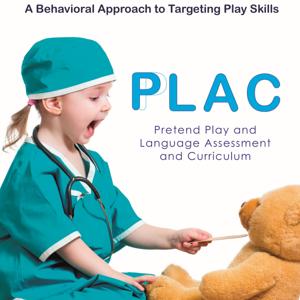


Welcome to the pretend play podcast. A podcast focusing on the research and application of pretend play and language skills. Today we take on the topic: What is Pretend Play. We begin by discussing definitions of play and the variance of terminology in the literature and different types of play. We go on to discuss the developmental stages of play, including the history of play taxonomies and ACI Learning Centers Developmental Sequence.
Looking at the correlation between play and language we discuss the developmental sequence of language and the pre-requisites to language including, joint attention, gestures and babbling. We wrap it up by identifying the various types of language in play.
Thank you for listening! Please visit our website for more information, to earn CEUs, or to purchase the Pretend Play and Language Assessment and Curriculum.
We encourage everyone to reach out to us if you have any questions about the show or suggestions on topics you would like to hear more about. You can reach out through Facebook or e-mail Melissa at [email protected]
References:
Barton, E. E., & Wolery, M. (2008). Teaching pretend play to children with disabilities: A review of the literature. Topics in Early Childhood Special Education, 28(2), 109-125.
Barton, E. E., & Wolery, M. (2010). Training teachers to promote pretend play in young children with disabilities. Exceptional Children, 77(1), 85-106.
Beaulieu, L., & Povinelli, J. L. (2018). Improving solitary play with a typically developing preschooler. Behavioral Interventions, 33(2), 212-218.
Charlop-Christy, M. H., Le, L., & Freeman, K. A. (2000). A comparison of video modeling with in vivo modeling for teaching children with autism. Journal of autism and developmental disorders, 30(6), 537-552.
Dupere, S., MacDonald, R. P., & Ahearn, W. H. (2013). Using video modeling with substitutable loops to teach varied play to children with autism. Journal of applied behavior analysis, 46(3), 662-668.
Hall, S., Rumney, L., Holler, J., & Kidd, E. (2013). Associations among play, gesture and early spoken language acquisition. First Language, 33(3), 294-312.
Kasari, C., Freeman, S., & Paparella, T. (2006). Joint attention and symbolic play in young children with autism: A randomized controlled intervention study. Journal of Child Psychology and Psychiatry, 47(6), 611-620.
Lifter, K., & Bloom, L. (1989). Object knowledge and the emergence of language. Infant Behavior and Development, 12(4), 395-423.
Lifter, K., & Bloom, L. (1998). Intentionality and the role of play in the transition to language. Transitions in prelinguistic communication, 7, 161-196.
MacDonald, R., Sacramone, S., Mansfield, R., Wiltz, K., & Ahearn, W. H. (2009). Using video modeling to teach reciprocal pretend play to children with autism. Journal of Applied Behavior Analysis, 42(1), 43-55.
MacDonald, R., Clark, M., Garrigan, E., & Vangala, M. (2005). Using video modeling to teach pretend play to children with autism. Behavioral Interventions: Theory & Practice in Residential & Community‐Based Clinical Programs, 20(4), 225-238.
McCune-Nicolich, L., & Carroll, S. (1981). Development of symbolic play: implications for the language specialist. Topics in Language Disorders.
McCune, L. (1995). A normative study of representational play in the transition to language. Developmental psychology, 31(2), 198.
Mills, P. E., Beecher, C. C., Dale, P. S., Cole, K. N., & Jenkins, J. R. (2014). Language of children with disabilities to peers at play: Impact of ecology. Journal of Early Intervention, 36(2), 111-130.
Orr, E., & Geva, R. (2015). Symbolic play and language development. Infant Behavior and Development, 38, 147-161.
Palechka, G., & MacDonald, R. (2010). A comparison of the acquisition of play skills using instructor-created video models and commercially available videos. Education and Treatment of Children, 33(3), 457-474.
Reagon, K. A., Higbee, T. S., & Endicott, K. (2006). Teaching pretend play skills to a student with autism using video modeling with a sibling as model and play partner. Education and Treatment of Children, 517-528.
Sani-Bozkurt, S., & Ozen, A. (2015). Effectiveness and efficiency of peer and adult models used in video modeling in teaching pretend play skills to children with autism spectrum disorder. Education and Training in Autism and Developmental Disabilities, 71-83.
Ulke-Kurkcuoglu, B., Bozkurt, F., & Cuhadar, S. (2015). Effectiveness of Instruction Performed through Computer-Assisted Activity Schedules on On-Schedule and Role-Play Skills of Children with Autism Spectrum Disorder. Educational Sciences: Theory and Practice, 15(3), 671-689.
Download
Welcome to the pretend play podcast. A podcast focusing on the research and application of pretend play and language skills. We begin by discussing deficits in play identified in children diagnosed with autism, language delays, or other developmental delays. We talk about functional play, the absence of elaborated play acts, and the use of gestures and vocalizations in play. We go on to discuss the correlations between play and language and the importance of targeting them simultaneously. In addition to language, play effects other developmental domains including cognition, social, self-regulation, school readiness, and more.
Looking more toward applications we address some common barriers we have encountered to teaching children appropriate play skills. As well as the necessary components that need to be in place when programming for pretend play. These components include looking at the developmental sequence and the importance of a systematic approach. To close things out we look at the importance of identifying play as a separate domain and the knowledge you can acquire by observing, assessing, and teaching pretend play.
Thank you for listening! Please visit our website for more information or to purchase the Pretend Play and Language Assessment and Curriculum.
We encourage everyone to reach out to us if you have any questions about the show or suggestions on topics you would like to hear more about. You can reach out through Facebook or e-mail Melissa at [email protected]
References:
Baron-Cohen, S. (1987). Autism and symbolic play. British Journal of Developmental Psychology, 5(2), 139-148.
Barton, E. E., & Wolery, M. (2008). Teaching pretend play to children with disabilities: A review of the literature. Topics in Early Childhood Special Education, 28(2), 109-125.
Casby, M. W. (2003). Developmental assessment of play: A model for early intervention. Communication Disorders Quarterly, 24(4), 175-183.
Charman, T., & Baron-Cohen, S. (1997). Brief report: Prompted pretend play in autism. Journal of Autism and Developmental Disorders, 27(3), 325-332.
Ingersoll, B., & Schreibman, L. (2006). Teaching reciprocal imitation skills to young children with autism using a naturalistic behaivioral approach: Effects on language, pretend play, and joint attention. Journal of Autism and Developmental Disorders, 36(4), 487-505.
Jahr, E. &. (2007). Changes in solitary play following acquistion of cooperative play by children with autism. Journal of Speech-Language Pathology and Applied Behavior Analysis(2.2), 182-188.
Lifter, K., Ellis, J., Cannon, B., & Anderson, S. R. (2005). Developmental specificity in targeting and teaching play activities to children with pervasive developmental disorders. Journal of Early Intervention, 27(4), 247-267.
McConnell, S. (2002). Interventions to facilitate social interaction for young children with autism: review of available research and recommendations for educational intervention and future research. Journal of Autism and Developmental Disorders, 32(5), 351-372.
McCune, L. (1995). A normative study of representational play at the transition to language. Developmental Psychology, 31(2), 198-206.
Mills, P. E., Beecher, C. C., Dale, P. S., Cole, K. N., & Jenkins, J. R. (2014). Language of children with disabilities to peers at play impact of ecology. Journal of Early Intervention, 36(2), 111-130.
Pierce-Jordan, S., & Lifter, K. (2005). Interaction of social and play behaviors in preschoolers with and without pervasive developmental disorder. Topics in Early Childhood Special Education, 25(1), 34-47.
Rowe, M. (2010). Shaving cream and cowboys: A descriptive study of play differences between typically developing and developmentally delayed preschoolers. Education Research and Perspectives, 37(2), 64-78.
Thiemann-Bourque, K. S., Brady, N. C., & Fleming, K. K. (2012). Symbolic play of preschoolers with severe communication impairments with autism and other developmental delays: More similarities than differences. Journal of Autism and Developmental Disorders, 42(5), 863-873.
Thorp, D. M., Stahmer, A. C., & Schreibman, L. (1995). Effects of sociodramatic play training on children with autism. Journal of Autism and Developmental Disorders, 25(3), 265-282.
Williams, E., Costall, A., & Reddy, V. (1999). Children with autism experience problems with both objects and people. Journal of Autism and Developmental Disorders, 29(5), 367-378.
Yoder, P. J. (2006). Predicting lexical density growth rate in young children with autism spectrum disorders. American Journal of Speech-Language Psychology, 15(4), 378-388.
From the publisher's feed