
Sign up to save your podcasts
Or



In-Jokes and Easter Eggs in Star Trek.
When Joe Menosky began writing for Star Trek in 1990, he brought with him a peculiar relic from his university days: an obsession with the number 47. This unassuming digit soon found its way into unofficial Trek lore, popping up with increasing frequency and creativity. Before long, Star Trek scripts were replete with the references to 47. Even the art department got in on the act, dotting PADDs, corridors, and weapons lockers with the designation. As the not-so-random inclusion of the number grew throughout the 1990s like a subliminal infestation of Tribbles, spotting them became a fan-favorite activity—the ultimate Star Trek Easter egg hunt.
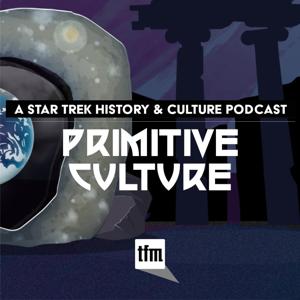
In this episode of Primitive Culture, hosts Duncan Barrett and Clara Cook are joined by Carlos Miranda from TrekNews.net for a look at in-jokes and Easter eggs in Star Trek. We consider the origin of such carefully hidden nuggets in Warren Robinett’s 1979 Atari 2600 video game Adventure, and how cleverly hiding references has become a familiar part of pop culture. We also look at some of Star Trek’s most popular running in-jokes, as well as the use of self-parody and quotation—in Deep Space Nine in particular—and consider what such creative gestures say about the unspoken contract between Trek’s producers and fans.
Chapters Intro (00:00:00) Pomona College and the original 47 (00:03:47) Robinett's Egg (00:11:04) Okudagrams (00:19:03) Cetacean Ops (00:33:21) Recurring (non-) characters (00:42:20) Quotation and parody (00:47:10) Flirting with the viewer (00:53:07) Fan silver-service (01:01:47) Final thoughts (01:13:00) Hosts Duncan Barrett and Clara Cook Guest Carlos Miranda Production Clara Cook (Editor) Duncan Barrett (Producer) C Bryan Jones (Executive Producer) Matthew Rushing (Executive Producer) Ken Tripp (Executive Producer) Norman C. Lao (Associate Producer) Amy Nelson (Associate Producer) Tony Black (Associate Producer) Richard Marquez (Production Manager) Brandon-Shea Mutala (Patreon Manager)
The Attica Prison Uprising and DS9’s Past Tense.
Typically, Star Trek’s two-parters have skewed toward the action-adventure formula rather than hard-hitting social commentary. But in Deep Space Nine’s third season, the writers decided to use the longer ninety-minute running time to delve into a weighty contemporary subject: the homeless crisis in the United States. The resulting story, “Past Tense,” took Trek in a surprisingly dark direction and offered a future that was distinctly dystopian.
“Past Tense” succeeded in shining a light on the treatment of the homeless in 1990s America. But there was another real-world influence that, according to DS9 head writer Ira Steven Behr, was the key to making it work. That inspiration was the 1971 uprising in Attica Prison, a maximum-security facility in rural New York state. It was Attica that lent the story its hostage-taking plot and much of its bleak cynicism—in particular the catastrophic failure of empathy for those hidden away behind concrete walls.
In this episode of Primitive Culture, hosts Clara Cook and Duncan Barrett look into the history of the Attica uprising, brilliantly reconstructed in Heather Ann Thompson’s Pulitzer Prize-winning book Blood in the Water. Comparing this ugly chapter of not-so-distant US history with one of Star Trek’s most biting examinations of human moral failure, we find that some of the most obvious lessons from both stories have yet to be learned—even decades later.
Chapters Intro (00:00:00) A Brief History of the Attica Uprising (00:09:15) Empathy and Understanding (00:27:49) Between Two Worlds (00:41:10) Julian 2.0 (00:50:27) Crossing Boundaries (00:59:30) Care in the Community (01:14:40) Final Thoughts (01:23:45) Hosts Clara Cook and Duncan Barrett Production Clara Cook (Editor) Duncan Barrett (Producer) C Bryan Jones (Executive Producer) Matthew Rushing (Executive Producer) Ken Tripp (Executive Producer) Norman C. Lao (Associate Producer) Tony Black (Associate Producer) Amy Nelson (Associate Producer) Richard Marquez (Production Manager) Brandon-Shea Mutala (Patreon Manager)
Star Trek and Repertory Theatre.
Compared with other science fiction shows, Star Trek has always been remarkably versatile, capable of rapidly switching genres, from romantic comedy one week to courtroom drama the next. For the actors hired to play given roles—sometimes for seven years or more—a similar versatility is required. This is perhaps most striking when they are called on to portray a character who other than the one to which their name is tied in the credits. This could be an ancestor, a Holodeck invention, a counterpart from the Mirror Universe, or even a dreamworld alter-ego such as Benny Russell. But for British actors of a certain vintage—Patrick Stewart among them—these challenges are nothing new. Thanks to the traditional repertory system, which would see a cast of players perform a completely new show every week, from Shakespeare to Noel Coward and beyond, these actors are always ready to step into another skin.
In this special Primitive Culture roundtable, recorded during the Destination Star Trek convention in Birmingham, UK, hosts Duncan Barrett and Clara Cook are joined by guests old and new to discuss the parallels between Star Trek and the old repertory system. We discuss the peculiar challenges faced by Star Trek actors and why the shows have traditionally favored those with a background in theatre, and share some of our own favorite episodes in which the regular cast take on new roles.
Chapters Intro (00:00:00) The Repertory System (00:02:54) Top Picks (00:05:54) “Bad” Acting (00:11:15) Ancestors and Relatives (00:15:06) Distortions and Alternates (00:18:35) Non-Actors and Immersive Theatre (00:20:15) Writing for the Cast (00:27:00) Flashbacks and Flashforwards (00:29:30) Double and Triple Threats (00:31:15) Genre Benders (00:32:15) Final Thoughts (00:34:17)
Hosts Duncan Barrett and Clara Cook
Guests Tony Black, Tony Robinson, Lee Hutchison, Rob Chapman, Rick Everson
Production Clara Cook (Editor) Duncan Barrett (Producer) C Bryan Jones (Executive Producer) Matthew Rushing (Executive Producer) Ken Tripp (Executive Producer) Norman C. Lao (Associate Producer) Tony Black (Associate Producer) Amy Nelson (Associate Producer) Richard Marquez (Production Manager) Brandon-Shea Mutala (Patreon Manager)
Live from Destination Star Trek.
Star Trek has always been influenced by real-world history. But, over the course of more than half a century, certain topics have recurred again and again, suffusing the imaginary world of the future with the legacies of our own, often troubled past. Two key influences in particular—World War II and the literature and culture of the sea—have been a pervasive influence on Star Trek’s storytelling, from the earliest episodes of The Original Series right up to Discovery.
In this episode of Primitive Culture, we present two panels recorded live at Destination Star Trek in Birmingham, UK. In the first, hosts Clara Cook and Duncan Barrett are joined by Primitive Culture co-founder Tony Black, former Earl Grey host Lee Hutchison, and Dr. Trek himself, Larry Nemecek. In the first, the group discusses the debt Star Trek owes to the history of World War II. In the second, Duncan and Tony explore Star Trek’s nautical influences, from Horatio Hornblower to Moby-Dick.
Larry Nemecek is author of the Star Trek: The Next Generation Companionand Stellar Cartography,and host of The Trek Files podcast: http://thetrekfiles.trekfm.libsynpro.com/website Lee Hutchison hosts Filibuster on The Nerd Party podcast network: https://www.thenerdparty.com/filibuster Tony Black runs The X-Cast podcast network and the entertainment website Set the Tape https://setthetape.com/ Duncan’s book Star Trek: The Human Frontier is available to order from Amazon: https://amzn.to/2PplQQ7
Chapters Intro (00:00:00) The Shadow of WWII (00:01:46) Never Forgetting (00:12:30) Heroism and Adventure (00:22:35) Q&A (00:26:25) The Starry Sea (00:35:13) Moby-Dick (00:43:30) Dead metaphors (00:49:20) Q&A (00:55:30)
Hosts Duncan Barrett and Clara Cook
Guests Tony Black, Lee Hutchison, Larry Nemecek
Production Clara Cook (Editor) Duncan Barrett (Producer) C Bryan Jones (Executive Producer) Matthew Rushing (Executive Producer) Ken Tripp (Executive Producer) Tony Black (Associate Producer) Norman C. Lao (Associate Producer) Amy Nelson (Associate Producer) Richard Marquez (Production Manager) Brandon-Shea Mutala (Patreon Manager)
Looking back on DS9 at Destination Star Trek 2018. Perhaps more than any other Star Trek series, Deep Space Nine has seen its reputation continue to rise in the years since it went off the air. Once considered the black sheep of the Trek family, it is now recognized as a groundbreaking work in its own right, pioneering a new form of serialized storytelling that led directly to the so-called golden age of television. Thanks to streaming services such as Netflix, the show has continued to find new viewers and has become the favorite Star Trek series. for many.
In this special episode of Primitive Culture, recorded at the Destination Star Trek convention in Birmingham, UK, hosts Duncan Barrett and Clara Cook are joined by a galaxy of stars to look back on the legacy of Deep Space Nine 25 years after the series first aired. In collaboration with Lee Hutchison of The Nerd Party and Carlos Miranda of TrekNews.net, we bring you interviews with actors Nana Visitor, Alexander Siddig, Nicole de Boer, Jeffrey Combs, Casey Biggs, and Chase Masterson, as well as DS9 showrunner Ira Steven Behr. We also attend the red-carpet premiere of Behr’s new documentary, What We Left Behind, where we are joined by acclaimed Star Trek novelist Una McCormack and Primitive Culture co-founder Tony Black to discuss our expectations and reactions to the film.
Chapters Intro (00:00:00) Nicole de Boer (00:07:02) Jeffrey Combs (00:21:58) Ira Steven Behr (00:31:13) Chase Masterson (00:50:44) Nana Visitor (01:09:55) On the red carpet with Casey Biggs and Alexander Siddig (01:39:02) Reactions to What We Left Behind (02:10:00) Closing (02:14:00)
For more information on Chase Masterson’s anti-bullying charity Pop Culture Hero, visit www.popculturehero.org.
Hosts Duncan Barrett and Clara Cook Guests Lee Hutchison, Tony Robinson, Tony Black, Una McCormack, The Trekkie Girls, Nicole de Boer, Nana Visitor, Ira Steven Behr, Alexander Siddig, Chase Masterson, Jeffrey Combs, Casey Biggs Production Clara Cook (Editor) Duncan Barrett (Producer) C Bryan Jones (Executive Producer) Matthew Rushing (Executive Producer) Ken Tripp (Executive Producer) Tony Black (Associate Producer) Norman C. Lao (Associate Producer) Amy Nelson (Associate Producer) Richard Marquez (Production Manager) Brandon-Shea Mutala (Patreon Manager)
Mental Health, Part II: From The Next Generation to Enterprise.
When Star Trek: The Next Generation debuted in 1987, there were two striking additions to the traditional bridge crew: Worf, an emblem of the newfound peace between the Federation and the Klingon Empire, and Deanna Troi, a professional psychotherapist. A sign of the times, perhaps, Troi’s role was given symbolic significance by the fact that she even had her own chair next to the captain’s. Yet, in practice, the TNG writers often struggled with finding the right role for a mental health professional in the 24th century. For the most part, the they did little more than dip a toe into the murky waters of mental illness and it was the two next series—Deep Space Nine and Voyager—that really took the mental health of their crews seriously, crafting complex, psychologically credible stories based on the internal struggles faced by the characters.
In this episode of Primitive Culture, we conclude our discussion of mental health in Star Trek with a look at The Next Generation, Deep Space Nine, Voyager, and Enterprise. We consider how these series charted new ground in the franchise’s depiction of mental health and illness through episodes that deal sensitively with depression, breakdown, suicide, and psychosis. We also share some thoughts about mental healthcare in the real world and the importance of removing the stigma that surrounds mental illness if our own societies ever hope to boldly go into Star Trek’s utopian future.
For those keen to look up the books Clara mentions, they are A Very Human Ending by Jesse Bering (https://amzn.to/2SsPDFz) and This is Going to Hurt by Adam Kay (https://amzn.to/2OWEXki).
Chapters Intro (00:00:00) Counselor on the Bridge (00:04:30) Depression in the Delta Quadrant (00:28:35) Suicide and Psychosis (00:49:35) Stiff Upper Lips (01:11:10) Final Thoughts (01:17:45) Hosts Duncan Barrett and Clara Cook Production Tom Whelan (Editor) Duncan Barrett (Producer) C Bryan Jones (Executive Producer) Matthew Rushing (Executive Producer) Ken Tripp (Executive Producer) Norman C. Lao (Associate Producer) Amy Nelson (Associate Producer) Tony Black (Associate Producer) Richard Marquez (Production Manager) Brandon-Shea Mutala (Patreon Manager)
Mental Health, Part I: Discovery and TOS. In space, no-one can hear you scream—whether out of terror or sheer misery. But while Federation doctors seem to hold the cure for virtually any ailment in the barrel of a hypospray, looking after their crews’ mental health can be more challenging. Like the members of any military organization, Starfleet officers experience trauma and loss on a regular basis—not to mention the whole gamut of more everyday psychological trouble: anxiety, depression, phobias, and more.
In this episode of Primitive Culture, the first in a two-part discussion recorded on World Mental Health Day 2018, hosts Duncan Barrett and Clara Cook look at mental health in Star Trek: The Original Series and Star Trek: Discovery. They also open hailing frequencies to receive correspondence from listeners who share stories of how Star Trek has helped them through difficult times.
Chapters Intro (00:00:00) Mailbag (00:03:03) Discovery: Breakdown vs. Fake-out (00:29:20) Saru: The Anxious XO (00:43:45) The Original Series: Criminally Insane? (00:53:15)
Hosts Duncan Barrett and Clara Cook Production Tom Whelan (Editor) Duncan Barrett (Producer) C Bryan Jones (Executive Producer) Matthew Rushing (Executive Producer) Ken Tripp (Executive Producer) Norman C. Lao (Associate Producer) Tony Black (Associate Producer) Amy Nelson (Associate Producer) Richard Marquez (Production Manager) Brandon-Shea Mutala (Patreon Manager)
2001: A Space Odyssey and Star Trek: The Motion Picture.
When Captain Kirk and the crew of the USS Enterprise boldly went into cinemas in 1979, languid art-house pacing, an elegant orchestral score, and an encounter with things unfashionably alien led to a transformative, almost religious experience. Star Trek: The Motion Picture took its cue not so much from the colorful action extravaganza of Star Wars, which premiered two years earlier, but from 2001: A Space Odyssey, a film dating back more than a decade to a time when The Original Series was still on the air.
In this episode of Primitive Culture, recorded live in London at the University of Greenwich, host Duncan Barrett is joined by film lecturer Chris Nunn and Tony Robinson of Continuing Mission for a look at the ties that bind these two mystical, complex, and sometimes problematic films. Taking a cue from another podcast, Missing Frames, we begin by screening 2001 for Duncan—who had never seen it—in order to contrast his raw first impressions with the insights of Tony—who has been obsessively rewatching it his entire life—and Chris, for whom it is a cornerstone of his teaching. We then move on to look at the ways in which this peculiar SF classic helped reinvent Star Trek for cinema, as well as some of the themes the two films share—from technology run amok to the birth of new life forms—and why Trek’s next cinematic outing, The Wrath of Khan, represents such an extreme course correction.
Chapters Intro (00:00:00) Great Expectations (00:03:41) Duncan Meets the Monolith (00:14:30) First Impressions of Time and Space (00:15:55) Douglas Trumbull, Master of the Universe (00:27:03) Tech Wars (00:38:58) Music of the Stars (00:51:28) Auteur on the Bridge (00:59:38) Encountering the Divine (01:09:03) Star Wars and the 1970s’ Trek Refit (01:13:18) Final Thoughts (01:24:23) Host Duncan Barrett Guests Chris Nunn and Tony Robinson Production Tom Whelan (Editor) Duncan Barrett (Producer) C Bryan Jones (Executive Producer) Matthew Rushing (Executive Producer) Ken Tripp (Executive Producer) Norman C. Lao (Associate Producer) Amy Nelson (Associate Producer) Tony Black (Associate Producer) Richard Marquez (Production Manager) Brandon-Shea Mutala (Patreon Manager)
Hawkeye Pierce, Milo Minderbinder, and Nog.
In a series celebrated for its long-form serialized storytelling, Deep Space Nine’s young Ferengi Nog enjoyed one of Star Trek’s most satisfying character arcs, going from illiterate juvenile delinquent to Starfleet officer on the fast track to command. But as much as the character transcended the venal, self-serving qualities which typically characterized the Ferengi, he never lost his natural business acumen. Two episodes in particular, “In the Cards” and “Treachery, Faith, and the Great River,” put Nog in the role of the wheeler-dealer, exploiting his bemused “customers” with ease and managing an absurdly intricate system of trades.
In this episode of Primitive Culture, host Duncan Barrett is joined by Justin Oser of Earl Grey to look at two of the major influences on these DS9 episodes: the 1970s US television series MASH and American author Joseph Heller’s satirical novel Catch-22. Together, they consider how the classic Star Trek ethos reconfigures the more pessimistic structures of its source material, the boundaries of comedy and drama in the grim context of war, and why we can’t help loving a rogue, even—perhaps especially—when they’re in uniform.
Chapters Intro (00:00:00) MASH (00:02:20) Comedy and Drama (00:12:16) Deep Space Korea (00:15:06) Whose War Is It Anyway? (00:32:58) Catch-22 (00:38:12) Exchange and Mart (00:51:54) From A to B (00:59:40) Final Thoughts (01:15:35) Host Duncan Barrett Guest Justin Oser Production Justin Oser (Editor) Duncan Barrett (Producer) C Bryan Jones (Executive Producer) Matthew Rushing (Executive Producer) Ken Tripp (Executive Producer) Norman C. Lao (Associate Producer) Amy Nelson (Associate Producer) Tony Black (Associate Producer) Richard Marquez (Production Manager) Brandon-Shea Mutala (Patreon Manager)
John Carpenter’s Christine and Voyager’s “Alice.” In 1983, horror maestro Stephen King was such a hot property that a movie adaptation of Christine, his story about a haunted 1958 Plymouth Fury that goes on a killing spree to protect its owner, was well underway before the novel had even left the presses. The resulting film, directed by John Carpenter, has become something of a cult classic. Many fans believe that it outstrips King’s original for thrills and adventure. Less successful was Star Trek: Voyager’s attempt to rework the Christine story for the sixth-season episode “Alice,” in which Tom Paris purchases a haunted shuttlecraft that gradually begins taking over his life and personality.
In this episode of Primitive Culture, host Duncan Barrett is joined by Brandon-Shea Mutala of Melodic Treks and Warp Five to discuss one of his favorite movies, Christine, and the novel that inspired it. We consider how well the central premise translates to the Delta Quadrant along with the dark side of nostalgia, the role of the automobile in American culture, and what happens when paying homage to an earlier work becomes stifling rather than inspiring.
Chapters Intro (00:00:00) Christine and Alice (00:03:05) A Suffocating Homage? (00:09:40) No Sex Please … We’re Starfleet! (00:15:40) Nostalgia (00:21:25) Teen Terror (00:31:22) Bad Dreams (00:39:00) The Open Road (00:43:34) Final Thoughts (00:47:41)
Host Duncan Barrett Guest Brandon-Shea Mutala Production Tom Whelan (Editor) Duncan Barrett (Producer) C Bryan Jones (Executive Producer) Matthew Rushing (Executive Producer) Ken Tripp (Executive Producer) Norman C. Lao (Associate Producer) Amy Nelson (Associate Producer) Tony Black (Associate Producer) Richard Marquez (Production Manager) Brandon-Shea Mutala (Patreon Manager)
From the publisher's feed
45 Listeners

16 Listeners
143 Listeners

159 Listeners

15 Listeners
113 Listeners
243 Listeners

76 Listeners
161 Listeners
125 Listeners
75 Listeners

8 Listeners

92 Listeners
111 Listeners
40 Listeners
6 Listeners
20 Listeners