Profits of Religion

Profits of Religion

Download on the App Store

Profits of Religion episodes

  • Clergymen Of The Church Of England-Anthony Trollope
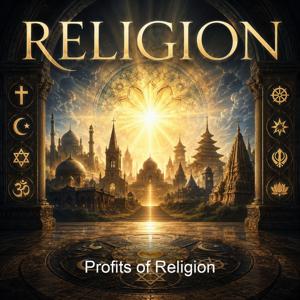
    The Profits of Religion: An Essay in Economic Interpretation" is a non-fiction book, first published in 1917, by the American novelist and muckraking journalist Upton Sinclair. It is a snapshot of the religious movements in the U.S. before its entry into World War I. In this book, Sinclair attacks institutionalized religion as a "source of income to parasites, and the natural ally of every form of oppression and exploitation." (Summary from Wikipedia)

    This episode includes AI-generated content.

    2 hr 43 min
  • Demian, The Story of Emil Sinclair's Youth-Hermann Hesse
    The Profits of Religion: An Essay in Economic Interpretation" is a non-fiction book, first published in 1917, by the American novelist and muckraking journalist Upton Sinclair. It is a snapshot of the religious movements in the U.S. before its entry into World War I. In this book, Sinclair attacks institutionalized religion as a "source of income to parasites, and the natural ally of every form of oppression and exploitation." (Summary from Wikipedia)

    This episode includes AI-generated content.
    5 hr 42 min
  • Anarchism and Other Essays-Emma Goldman
    The Profits of Religion: An Essay in Economic Interpretation" is a non-fiction book, first published in 1917, by the American novelist and muckraking journalist Upton Sinclair. It is a snapshot of the religious movements in the U.S. before its entry into World War I. In this book, Sinclair attacks institutionalized religion as a "source of income to parasites, and the natural ally of every form of oppression and exploitation." (Summary from Wikipedia)

    This episode includes AI-generated content.
    6 hr 58 min
  • Snowman in the Yard-Joyce Kilmer
    The Profits of Religion: An Essay in Economic Interpretation" is a non-fiction book, first published in 1917, by the American novelist and muckraking journalist Upton Sinclair. It is a snapshot of the religious movements in the U.S. before its entry into World War I. In this book, Sinclair attacks institutionalized religion as a "source of income to parasites, and the natural ally of every form of oppression and exploitation." (Summary from Wikipedia)

    This episode includes AI-generated content.

    35 min
  • Great Learning & The Doctrine of the Mean-Confucius 孔子, Zengzi 子輿, Zisi 子思
    The Profits of Religion: An Essay in Economic Interpretation" is a non-fiction book, first published in 1917, by the American novelist and muckraking journalist Upton Sinclair. It is a snapshot of the religious movements in the U.S. before its entry into World War I. In this book, Sinclair attacks institutionalized religion as a "source of income to parasites, and the natural ally of every form of oppression and exploitation." (Summary from Wikipedia)

    This episode includes AI-generated content.

    1 hr 54 min
  • Principles of Economics, Book 6 The Distribution of National Income-Alfred Marshall
    The Profits of Religion: An Essay in Economic Interpretation" is a non-fiction book, first published in 1917, by the American novelist and muckraking journalist Upton Sinclair. It is a snapshot of the religious movements in the U.S. before its entry into World War I. In this book, Sinclair attacks institutionalized religion as a "source of income to parasites, and the natural ally of every form of oppression and exploitation." (Summary from Wikipedia)

    This episode includes AI-generated content.
    8 hr 58 min
  • Citadel of Fear-Francis Stevens
    The Profits of Religion: An Essay in Economic Interpretation" is a non-fiction book, first published in 1917, by the American novelist and muckraking journalist Upton Sinclair. It is a snapshot of the religious movements in the U.S. before its entry into World War I. In this book, Sinclair attacks institutionalized religion as a "source of income to parasites, and the natural ally of every form of oppression and exploitation." (Summary from Wikipedia)

    This episode includes AI-generated content.
    9 hr 54 min
  • Age of Reason-Thomas Paine
    The Profits of Religion: An Essay in Economic Interpretation" is a non-fiction book, first published in 1917, by the American novelist and muckraking journalist Upton Sinclair. It is a snapshot of the religious movements in the U.S. before its entry into World War I. In this book, Sinclair attacks institutionalized religion as a "source of income to parasites, and the natural ally of every form of oppression and exploitation." (Summary from Wikipedia)

    This episode includes AI-generated content.
    8 hr 13 min
  • Clotel, or, The President's Daughter-William Wells Brown
    The Profits of Religion: An Essay in Economic Interpretation" is a non-fiction book, first published in 1917, by the American novelist and muckraking journalist Upton Sinclair. It is a snapshot of the religious movements in the U.S. before its entry into World War I. In this book, Sinclair attacks institutionalized religion as a "source of income to parasites, and the natural ally of every form of oppression and exploitation." (Summary from Wikipedia)

    This episode includes AI-generated content.
    5 hr 32 min
  • Select Conversations with an Uncle (Now Extinct) and Two Other Reminiscences-H. G. Wells
    The Profits of Religion: An Essay in Economic Interpretation" is a non-fiction book, first published in 1917, by the American novelist and muckraking journalist Upton Sinclair. It is a snapshot of the religious movements in the U.S. before its entry into World War I. In this book, Sinclair attacks institutionalized religion as a "source of income to parasites, and the natural ally of every form of oppression and exploitation." (Summary from Wikipedia)

    This episode includes AI-generated content.
    2 hr 15 min

About Profits of Religion

From the publisher's feed

Explore the intricate relationship between faith and commerce in a series that delves into the economic undercurrents of religious institutions. "Profits of Religion" serves as a thematic anchor,…