
Sign up to save your podcasts
Or

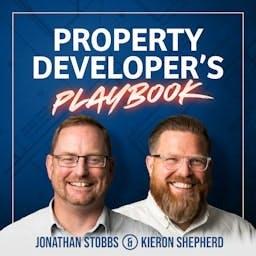


In this episode, Jonathan and Kieron take a look at one of the most challenging aspects of property development: planning permission and the associated regulations. They discuss the frustrations developers face when navigating the complexities of planning applications, including the impact of local authorities, ecological considerations, and the often lengthy approval processes.
KEY TAKEAWAYS
Navigating the planning process is one of the toughest aspects of property development due to its unpredictability and the various hurdles developers face, such as local regulations and community opposition.
Conducting thorough due diligence before purchasing land is crucial. This includes understanding local plans, policy contexts, and planning history, as well as consulting with planning professionals.
Having the right team in place, including planning consultants and architects, is essential. They should be knowledgeable and proactive in finding solutions rather than presenting obstacles.
Development is often a delayed gratification process. Developers need to be patient and resilient, as planning applications can take months or even years to be approved.
Engaging with local communities early in the planning process can help mitigate opposition and improve project outcomes. Public consultations and transparency about contributions to the community can foster goodwill.
BEST MOMENTS
"You must hold planning title, i.e. planning permission to do any kind of development on it."
"It's just taken way out, it's just too far, it's just crazy."
"You need to figure a different way out, all because of bats."
"You want someone who's coming up with solutions, not brick walls."
"Planning is one of the toughest parts of development because it's unpredictable."
HOST BIOS
Jonathan is a property developer and entrepreneur with a background in finance and construction. Originally from South Africa, he holds degrees in Accounting and Auditing and relocated to England in 2003. He gained financial and operational experience at firms such as RSM, Prudential, and Baker Tilly before transitioning into property. Since 2014, Jonathan has managed major commercial-to-residential conversions and new build developments, particularly across the South West. His analytical mindset and on-the-ground experience help listeners navigate the property world with confidence.
Kieron is a construction expert and entrepreneur with over 20 years of industry experience. Starting as a mason, he went on to found Shepherd Construction in 2012, delivering projects across both the public and private sectors. From extensions to luxury new builds, Kieron has earned a reputation for quality, precision, and strong leadership. As Managing Director, he’s involved in every stage—from design to delivery—offering a no-nonsense, deeply practical perspective to anyone looking to build with success.
https://www.facebook.com/jonathan.stobbs.7/
https://www.linkedin.com/in/jonathanstobbs/
https://www.facebook.com/kieron.shepherd.73
https://www.linkedin.com/in/kieron-shepherd-83b979aa/
https://www.propertydevelopersplaybook.co.uk/
In this episode, Kieron and Jonathan delve into one of the most challenging aspects of property development: build costs and construction risks. They discuss the impact of rising material prices, labour shortages, and the importance of effective communication between developers and contractors. The duo share their real-world experiences regarding the need for detailed planning, collaboration with trusted teams, and the significance of managing construction risks to ensure project success.
KEY TAKEAWAYS
Accurate estimation of build costs is crucial for property development. It's essential to consider local market conditions, material prices, and labour costs, which can fluctuate significantly.
Maintaining open lines of communication with contractors and team members is vital. Discussing potential issues early can prevent misunderstandings and costly delays later in the project.
Investing time and resources in detailed planning and design can minimise changes during construction. A comprehensive construction package of drawings helps avoid unexpected costs and delays.
While it's impossible to eliminate all construction risks, developers can manage and mitigate them through careful planning, fixed-price contracts, and regular cost reviews with contractors and quantity surveyors.
Establishing strong relationships with contractors and suppliers is key to successful property development. Trust and collaboration can lead to better outcomes and help navigate challenges that arise during the construction process.
BEST MOMENTS
"You make your money when you buy the site. But you keep it when you control your build."
"Construction is high risk and it's high risk anyway because the margins are tight for contractors."
"If you haven't got your prices secured or orders in before COVID, you were caught short."
"The worst thing a developer could have is where their contractor goes, thanks, but no thanks."
"Spend the money with the architect in planning that construction package of drawings."
HOST BIOS
Jonathan is a property developer and entrepreneur with a background in finance and construction. Originally from South Africa, he holds degrees in Accounting and Auditing and relocated to England in 2003. He gained financial and operational experience at firms such as RSM, Prudential, and Baker Tilly before transitioning into property. Since 2014, Jonathan has managed major commercial-to-residential conversions and new build developments, particularly across the South West. His analytical mindset and on-the-ground experience help listeners navigate the property world with confidence.
Kieron is a construction expert and entrepreneur with over 20 years of industry experience. Starting as a mason, he went on to found Shepherd Construction in 2012, delivering projects across both the public and private sectors. From extensions to luxury new builds, Kieron has earned a reputation for quality, precision, and strong leadership. As Managing Director, he’s involved in every stage—from design to delivery—offering a no-nonsense, deeply practical perspective to anyone looking to build with success.
https://www.facebook.com/jonathan.stobbs.7/
https://www.linkedin.com/in/jonathanstobbs/
https://www.facebook.com/kieron.shepherd.73
https://www.linkedin.com/in/kieron-shepherd-83b979aa/
https://www.propertydevelopersplaybook.co.uk/
Jonathan and Kieron take a look at the intricate relationship between archaeology, heritage, and property development. Following their previous discussions on the challenges faced by developers, they explore the importance of preserving historical sites while still delivering modern housing solutions. The conversation highlights real-life experiences, such as dealing with ransom strips and navigating the complexities of listed buildings and conservation areas.
KEY TAKEAWAYS
Developers should be aware of ransom strips—small pieces of land that may be necessary for access or development. Early communication with landowners is crucial to negotiate terms and avoid unexpected complications.
When developing properties, especially in areas with historical significance, it's essential to balance preserving heritage with modern development needs. Engaging with heritage consultants can help navigate these complexities.
Conduct thorough research on potential development sites, including checking for archaeological sensitivity and historical significance. Utilising local council interactive maps can provide valuable insights into the site's history.
Renovating or developing listed buildings often incurs higher costs due to the need for specialised materials and techniques. Developers should factor in these additional expenses when budgeting for projects.
Developers should consider holding community meetings to inform local residents about their plans, especially when working on heritage sites. This can help build trust and mitigate potential opposition to the development.
BEST MOMENTS
"Every developer dreads the words, archaeological survey required. It's a dread. But it comes with others as well. There's geology and there's others that need investigation."
"We need to highlight that strongly. Great Britain is great for a reason. We've got these temporal layers of beautiful architecture."
"It's a fine balance when you're analysing a deal and land value. If you're looking to take on that risk, double it and add some."
"If it's handled badly, that can damage your reputation as a developer. So to manage risk, definitely do your homework at the very beginning stage."
"There are properties out there that people listed for some reason, they just didn't need to be and they shouldn't have been."
HOST BIOS
Jonathan is a property developer and entrepreneur with a background in finance and construction. Originally from South Africa, he holds degrees in Accounting and Auditing and relocated to England in 2003. He gained financial and operational experience at firms such as RSM, Prudential, and Baker Tilly before transitioning into property. Since 2014, Jonathan has managed major commercial-to-residential conversions and new build developments, particularly across the South West. His analytical mindset and on-the-ground experience help listeners navigate the property world with confidence.
Kieron is a construction expert and entrepreneur with over 20 years of industry experience. Starting as a mason, he went on to found Shepherd Construction in 2012, delivering projects across both the public and private sectors. From extensions to luxury new builds, Kieron has earned a reputation for quality, precision, and strong leadership. As Managing Director, he’s involved in every stage—from design to delivery—offering a no-nonsense, deeply practical perspective to anyone looking to build with success.
https://www.facebook.com/jonathan.stobbs.7/
https://www.linkedin.com/in/jonathanstobbs/
https://www.facebook.com/kieron.shepherd.73
https://www.linkedin.com/in/kieron-shepherd-83b979aa/
https://www.propertydevelopersplaybook.co.uk/
Today, Jonathan and Kieron take a look at one of the most critical challenges in property development: securing the right finance and funding. They share real-life experiences, including Kieron's recent encounter with unexpected construction on his commercial site, highlighting the importance of proper planning and communication. They cover the complexities of financing, including the pitfalls of hidden fees, the significance of building strong relationships with brokers and investors, and the necessity of having a diverse funding strategy.
KEY TAKEAWAYS
It's crucial to start discussions with brokers and lenders early in the development process. This allows for better planning and understanding of financing options, rather than scrambling for funds when a deal arises.
Developers should be aware of hidden fees associated with financing, such as arrangement fees, exit fees, and interest on undrawn funds. These can significantly impact the overall cost of financing and should be factored into budgeting.
Establishing strong relationships with investors and lenders is essential. Networking and maintaining communication can lead to better opportunities and support when seeking funding for future projects.
Relying on a single source of finance can be risky. Developers should explore multiple funding options, including bridging loans, development finance, and equity partners, to ensure they have backup plans in case one source falls through.
When selecting valuers and monitoring surveyors, opting for local professionals can lead to more accurate valuations and lower costs. Local experts are more familiar with the market and can provide insights that national firms may overlook.
BEST MOMENTS
"Finance is always one of the most common hurdles that developers face. Even the best sites with the strongest GDVs don't always work unless you've got the right funding in place."
"It's just slapdash. It's really crap. We wouldn't get away with it in construction under HSE, but when you're a big phone company, they just bulldoze through."
"You need to be doing both all at the same time. Send it to a broker, get their thoughts on it and see what kind of indicative terms you can get on day one."
"You need to have like a pot of cash that you can work through to get to the results of getting the finance, the decision in principle."
HOST BIOS
Jonathan is a property developer and entrepreneur with a background in finance and construction. Originally from South Africa, he holds degrees in Accounting and Auditing and relocated to England in 2003. He gained financial and operational experience at firms such as RSM, Prudential, and Baker Tilly before transitioning into property. Since 2014, Jonathan has managed major commercial-to-residential conversions and new build developments, particularly across the South West. His analytical mindset and on-the-ground experience help listeners navigate the property world with confidence.
Kieron is a construction expert and entrepreneur with over 20 years of industry experience. Starting as a mason, he went on to found Shepherd Construction in 2012, delivering projects across both the public and private sectors. From extensions to luxury new builds, Kieron has earned a reputation for quality, precision, and strong leadership. As Managing Director, he’s involved in every stage—from design to delivery—offering a no-nonsense, deeply practical perspective to anyone looking to build with success.
https://www.facebook.com/jonathan.stobbs.7/
https://www.linkedin.com/in/jonathanstobbs/
https://www.facebook.com/kieron.shepherd.73
https://www.linkedin.com/in/kieron-shepherd-83b979aa/
https://www.propertydevelopersplaybook.co.uk/
In this episode, Jonathan and Kieron kick off a new mini-series on the top 10 challenges in property development. They discuss the most critical step in any development project: finding a viable site. Jonathan and Kieron share their personal experiences, including a recent success with a commercial-to-residential conversion, and emphasise the importance of due diligence, networking, and creativity in the search for a new project.
www.propertydevelopersplaybook.co.uk
KEY TAKEAWAYS
This episode introduces a new mini-series focusing on the biggest pain points for property developers, starting with finding the right site.
Jonathan and Kieron discuss the pros and cons of finding sites through traditional on-market channels like Rightmove versus off-market methods like direct-to-vendor marketing.
The importance of building relationships with people beyond commercial agents, including accountants, planning consultants, and architects, is highlighted.
Jonathan and Kieron discuss the value of looking at a site with a different perspective, giving the example of a concrete car park that was re-imagined as residential flats.
BEST MOMENTS
"No deal, no development, basically."
"That's the agent's dream, isn't it? They get a site, they send it out to a few of their preferred clients, and someone comes back with an offer, and they can go back to the client and say we've already got you offers and it hasn't even gone to market."
"You always hear these stories about people who get their valuations back and they've been down-valued, and clearly they've been too optimistic in their expectations."
"Don't think you're bugging [the agents] until they tell you you're bugging them."
HOST BIOS
Jonathan is a property developer and entrepreneur with a background in finance and construction. Originally from South Africa, he holds degrees in Accounting and Auditing and relocated to England in 2003. He gained financial and operational experience at firms such as RSM, Prudential, and Baker Tilly before transitioning into property. Since 2014, Jonathan has managed major commercial-to-residential conversions and new build developments, particularly across the South West. His analytical mindset and on-the-ground experience help listeners navigate the property world with confidence.
Kieron is a construction expert and entrepreneur with over 20 years of industry experience. Starting as a mason, he went on to found Shepherd Construction in 2012, delivering projects across both the public and private sectors. From extensions to luxury new builds, Kieron has earned a reputation for quality, precision, and strong leadership. As Managing Director, he’s involved in every stage—from design to delivery—offering a no-nonsense, deeply practical perspective to anyone looking to build with success.
https://www.facebook.com/jonathan.stobbs.7/
https://www.linkedin.com/in/jonathanstobbs/
https://www.facebook.com/kieron.shepherd.73
https://www.linkedin.com/in/kieron-shepherd-83b979aa/
In this episode, Jonathan and Kieron look at the transition from flipping properties to engaging in larger-scale developments. They discuss the potential for greater profits, smarter tax strategies, and the overall benefits of development compared to traditional methods like flipping and BRRR (Buy, Refurbish, Rent, Refinance). The duo shares insights from their recent projects, including design reviews and site visits, while emphasising the importance of building a strong team and understanding the development process.
KEY TAKEAWAYS
While flips and BRRR are effective strategies for generating income and building portfolios, development offers greater profit potential, smarter tax advantages, and the ability to create an instant portfolio through multiple units.
Development projects can benefit from lower VAT rates (0% for new builds and 5% for conversions) and preferential stamp duty rates for commercial properties, which can significantly enhance profit margins compared to residential flips and BRRR strategies.
Engaging in development allows for economies of scale, where fixed costs such as professional fees and construction expenses can be spread across multiple units, reducing overall risk and increasing profitability.
Success in property development relies heavily on assembling a competent team, including architects, planning consultants, and contractors. Building relationships with these professionals early in the process can facilitate smoother project execution.
Continuous learning and seeking mentorship are crucial for navigating the complexities of property development. Engaging with experienced developers and participating in supportive communities can help avoid costly mistakes and accelerate growth in the field.
BEST MOMENTS
"Development often provides a bigger opportunity, stronger returns, smarter tax advantages. But ultimately, people do flips to make money; development allows you to do that from the very outset and build communities."
"One of the misconceptions is the higher barriers to entry. Some developments can cost the same as residential houses, but you can create an instant portfolio."
"The more units you can have, you can spread your fixed costs across all that, your QS architects, your professional fees."
"Development isn't necessarily easier, but it can be far more rewarding in the long term, creating that instant portfolio."
HOST BIOS
Jonathan is a property developer and entrepreneur with a background in finance and construction. Originally from South Africa, he holds degrees in Accounting and Auditing and relocated to England in 2003. He gained financial and operational experience at firms such as RSM, Prudential, and Baker Tilly before transitioning into property. Since 2014, Jonathan has managed major commercial-to-residential conversions and new build developments, particularly across the South West. His analytical mindset and on-the-ground experience help listeners navigate the property world with confidence.
Kieron is a construction expert and entrepreneur with over 20 years of industry experience. Starting as a mason, he went on to found Shepherd Construction in 2012, delivering projects across both the public and private sectors. From extensions to luxury new builds, Kieron has earned a reputation for quality, precision, and strong leadership. As Managing Director, he’s involved in every stage—from design to delivery—offering a no-nonsense, deeply practical perspective to anyone looking to build with success.
https://www.facebook.com/jonathan.stobbs.7/
https://www.linkedin.com/in/jonathanstobbs/
https://www.facebook.com/kieron.shepherd.73
https://www.linkedin.com/in/kieron-shepherd-83b979aa/
https://www.propertydevelopersplaybook.co.uk/
In this episode, Kieron and Jonathan delve into the intricate relationship between architects and developers, emphasising the importance of collaboration over competition. They share insights from their recent project meetings, highlighting the need for architects to balance creativity with practicality and cost-effectiveness.
KEY TAKEAWAYS
Effective collaboration between developers and architects is crucial for successful projects. Both parties should work together from the concept stage to ensure that designs are practical, cost-effective, and aligned with the developer's goals.
Developers should communicate their budget and financial expectations clearly to architects. This helps in creating designs that are not only aesthetically pleasing but also financially viable, preventing over-engineering that can lead to inflated costs.
Engaging architects early in the development process allows for better integration of design and construction considerations. This can lead to more efficient designs that meet both aesthetic and practical requirements.
The traditional percentage-based fee structure for architects can lead to conflicts of interest, as higher costs may result in higher fees. A fixed fee based on time spent may be a more equitable approach, fostering trust and transparency between developers and architects.
BEST MOMENTS
"Architects are key members of your development team. It's about how we can best collaborate with architects rather than feel like we're working against them."
"Not every design is practical or profitable from a developer's point of view."
"I think architects should work with either contractors or QSs to understand costs."
"If the architects design outside of the budget, it's not going to be built, which isn't what they want."
"You want these properties to have that attractiveness from day one through to when they're being resold down the line as well."
HOST BIOS
Jonathan is a property developer and entrepreneur with a background in finance and construction. Originally from South Africa, he holds degrees in Accounting and Auditing and relocated to England in 2003. He gained financial and operational experience at firms such as RSM, Prudential, and Baker Tilly before transitioning into property. Since 2014, Jonathan has managed major commercial-to-residential conversions and new build developments, particularly across the South West. His analytical mindset and on-the-ground experience help listeners navigate the property world with confidence.
Kieron is a construction expert and entrepreneur with over 20 years of industry experience. Starting as a mason, he went on to found Shepherd Construction in 2012, delivering projects across both the public and private sectors. From extensions to luxury new builds, Kieron has earned a reputation for quality, precision, and strong leadership. As Managing Director, he’s involved in every stage—from design to delivery—offering a no-nonsense, deeply practical perspective to anyone looking to build with success.
https://www.facebook.com/jonathan.stobbs.7/
https://www.linkedin.com/in/jonathanstobbs/
https://www.facebook.com/kieron.shepherd.73
https://www.linkedin.com/in/kieron-shepherd-83b979aa/
https://www.propertydevelopersplaybook.co.uk/
In this episode, Jonathan and Kieron delve into the concept of "Developing with Purpose." They share updates on their latest project involving the conversion of an office building into residential flats, highlighting the importance of creating homes that enhance community living. Jonathan and Kieron also note the balance between profit and purpose, exploring how developers can make a positive impact on their communities while also achieving financial success.
KEY TAKEAWAYS
Property development should not only focus on profit but also aim to make a positive impact on communities by creating homes that enhance lifestyles and foster community spirit.
Engaging with local communities early in the development process is crucial. This helps to alleviate fears about change and allows developers to incorporate the community's history and needs into their projects.
Repurposing existing buildings instead of demolishing them is an eco-conscious approach that preserves cultural heritage and reduces carbon emissions associated with construction.
Developers should consider the long-term implications of their projects, focusing on the legacy they leave behind and the quality of life for future residents rather than just immediate financial returns.
Building a shared vision with investors, architects, and other stakeholders enhances buy-in and commitment to the project, ultimately leading to more successful and meaningful developments.
BEST MOMENTS
"Ultimately, when you get into developing, you're looking to make that your career. It could be a pivot or a movement forward."
"Developing, yes, we want to make money, but we also want to change lives. We want to create homes for people to move into."
"If you can create place, which we are responsible as the developers, if you can start and get that right, then I think you can do a lot of good."
"People like that. People like that room. It still reminds them, rather than be a complete change."
"If you design well, design with lifestyle in mind, it will sell well automatically."
HOST BIOS
Jonathan is a property developer and entrepreneur with a background in finance and construction. Originally from South Africa, he holds degrees in Accounting and Auditing and relocated to England in 2003. He gained financial and operational experience at firms such as RSM, Prudential, and Baker Tilly before transitioning into property. Since 2014, Jonathan has managed major commercial-to-residential conversions and new build developments, particularly across the South West. His analytical mindset and on-the-ground experience help listeners navigate the property world with confidence.
Kieron is a construction expert and entrepreneur with over 20 years of industry experience. Starting as a mason, he went on to found Shepherd Construction in 2012, delivering projects across both the public and private sectors. From extensions to luxury new builds, Kieron has earned a reputation for quality, precision, and strong leadership. As Managing Director, he’s involved in every stage—from design to delivery—offering a no-nonsense, deeply practical perspective to anyone looking to build with success.
https://www.facebook.com/jonathan.stobbs.7/
https://www.linkedin.com/in/jonathanstobbs/
https://www.facebook.com/kieron.shepherd.73
https://www.linkedin.com/in/kieron-shepherd-83b979aa/
Jonathan and Kieron look at the intriguing topic of artificial intelligence (AI) in the construction industry, exploring whether it is merely hype or a genuine game changer. They share their recent experiences with percolation testing at a construction site and discuss the importance of networking within the property development community.
They also highlight both the potential benefits and challenges of integrating AI into construction processes, speculating on the future of the industry, considering how AI and robotics might transform roles and improve efficiencies
KEY TAKEAWAYS
Percolation Testing: The process involves digging a hole and measuring how quickly water disperses into the ground, which is essential for drainage design.
AI in Construction: AI is increasingly being integrated into various aspects of construction and property development, including cost estimation, site management, and design.
Human Oversight is Crucial: While AI can assist in tasks like cost estimation and project management, it is essential to double-check AI outputs.
Future of Roles in Construction: The integration of AI and robotics is expected to change the roles of professionals in the construction industry.
Potential and Challenges of AI: While AI presents significant opportunities for improving efficiency and reducing costs in construction, challenges such as high upfront costs, skills gaps, and the need for human oversight remain.
BEST MOMENTS
Jonathan Stobbs: "AI is everywhere. Pretty much anything and everything that you look at has got AI some way written into it or customer services AI or something to that."
Kieron Shepherd: "The great thing about AI is it's very much based on your prompts. Good data in, good data out."
Kieron Shepherd: "I think the trades that are craftsmen will be highly valued. The general trades will be the proofreaders of the construction industry."
Jonathan Stobbs: "I think you need to embrace AI. I think you need to adapt."
Kieron Shepherd: "I think there's still that human interaction that we need, actually, as humans. It's important."
HOST BIOS
Jonathan is a property developer and entrepreneur with a background in finance and construction. Originally from South Africa, he holds degrees in Accounting and Auditing and relocated to England in 2003. He gained financial and operational experience at firms such as RSM, Prudential, and Baker Tilly before transitioning into property. Since 2014, Jonathan has managed major commercial-to-residential conversions and new build developments, particularly across the South West. His analytical mindset and on-the-ground experience help listeners navigate the property world with confidence.
Kieron is a construction expert and entrepreneur with over 20 years of industry experience. Starting as a mason, he went on to found Shepherd Construction in 2012, delivering projects across both the public and private sectors. From extensions to luxury new builds, Kieron has earned a reputation for quality, precision, and strong leadership. As Managing Director, he’s involved in every stage—from design to delivery—offering a no-nonsense, deeply practical perspective to anyone looking to build with success.
https://www.facebook.com/jonathan.stobbs.7/
https://www.linkedin.com/in/jonathanstobbs/
https://www.facebook.com/kieron.shepherd.73
https://www.linkedin.com/in/kieron-shepherd-83b979aa/
https://www.propertydevelopersplaybook.co.uk/
In this episode, Jonathan and Kieron delve into the concept of the development triangle, also known as the project management triangle or golden triangle, which encompasses time, cost, and quality. They discuss the challenges of balancing these three elements in property development, emphasising that achieving all three simultaneously is often elusive. They also share insights on value engineering, sourcing materials wisely, and the significance of maintaining a strong reputation as developers.
KEY TAKEAWAYS
Jonathan and Kieron discuss the development triangle, which consists of time, cost, and quality. Achieving all three simultaneously is challenging, and often compromises must be made.
Developers must balance the three elements of the triangle. For instance, if a project is completed quickly and cheaply, the quality may suffer. Conversely, high-quality projects may take longer and cost more.
The importance of value engineering is highlighted, where developers can cut costs without compromising quality by sourcing materials directly from manufacturers or wholesalers, thus eliminating middlemen.
A developer's reputation is crucial. Delivering high-quality projects leads to positive word-of-mouth and repeat business, while cutting corners can result in negative feedback and long-term damage to credibility.
Adhering to British standards and regulations is essential in construction. Developers must ensure that all materials and methods meet these standards to avoid costly rectifications and maintain quality.
BEST MOMENTS
"If you want good quality, well, actually, there are things like if you go to a fancy restaurant, you know you're going to pay through the nose, but you're going to get the best Michelin star food."
"Cheaper is not always best. It's not. Even if you're doing that, I know I see and hear people saying, there's just going to be buy-to-lets. People are going to ruin it anyway."
"You need to be thinking, right, what are they bringing here? Are they bringing me a time problem, a cost problem, or a quality problem?"
"Managing the trade-offs of the triangle can be challenging. Obviously vetting the team, you know, everyone's got to be on the same page, everyone's got to be the same vision in mind."
HOST BIOS
Jonathan is a property developer and entrepreneur with a background in finance and construction. Originally from South Africa, he holds degrees in Accounting and Auditing and relocated to England in 2003. He gained financial and operational experience at firms such as RSM, Prudential, and Baker Tilly before transitioning into property. Since 2014, Jonathan has managed major commercial-to-residential conversions and new build developments, particularly across the South West. His analytical mindset and on-the-ground experience help listeners navigate the property world with confidence.
Kieron is a construction expert and entrepreneur with over 20 years of industry experience. Starting as a mason, he went on to found Shepherd Construction in 2012, delivering projects across both the public and private sectors. From extensions to luxury new builds, Kieron has earned a reputation for quality, precision, and strong leadership. As Managing Director, he’s involved in every stage—from design to delivery—offering a no-nonsense, deeply practical perspective to anyone looking to build with success.
https://www.facebook.com/jonathan.stobbs.7/
https://www.linkedin.com/in/jonathanstobbs/
https://www.facebook.com/kieron.shepherd.73
https://www.linkedin.com/in/kieron-shepherd-83b979aa/
From the publisher's feed