
Sign up to save your podcasts
Or

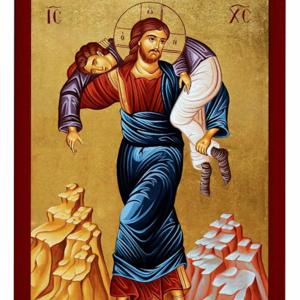


In the name of the Father and of the Son and of the Holy Spirit. Amen.
Welcome back to Purify the Heart. This is Pastor Zachary Courie. In Exodus 28, the Lord gave detailed instructions to Moses on the garments for the priests serving at the tabernacle. In Exodus 29, we hear about the consecration of the priests as servants of the Lord.
Exodus 29
29 “Now this is what you shall do to them to consecrate them, that they may serve me as priests. Take one bull of the herd and two rams without blemish, 2 and unleavened bread, unleavened cakes mixed with oil, and unleavened wafers smeared with oil. You shall make them of fine wheat flour. 3 You shall put them in one basket and bring them in the basket, and bring the bull and the two rams. 4 You shall bring Aaron and his sons to the entrance of the tent of meeting and wash them with water. 5 Then you shall take the garments, and put on Aaron the coat and the robe of the ephod, and the ephod, and the breastpiece, and gird him with the skillfully woven band of the ephod. 6 And you shall set the turban on his head and put the holy crown on the turban. 7 You shall take the anointing oil and pour it on his head and anoint him. 8 Then you shall bring his sons and put coats on them, 9 and you shall gird Aaron and his sons with sashes and bind caps on them. And the priesthood shall be theirs by a statute forever. Thus you shall ordain Aaron and his sons.
10 “Then you shall bring the bull before the tent of meeting. Aaron and his sons shall lay their hands on the head of the bull. 11 Then you shall kill the bull before the Lord at the entrance of the tent of meeting, 12 and shall take part of the blood of the bull and put it on the horns of the altar with your finger, and the rest of the blood you shall pour out at the base of the altar. 13 And you shall take all the fat that covers the entrails, and the long lobe of the liver, and the two kidneys with the fat that is on them, and burn them on the altar. 14 But the flesh of the bull and its skin and its dung you shall burn with fire outside the camp; it is a sin offering.
15 “Then you shall take one of the rams, and Aaron and his sons shall lay their hands on the head of the ram, 16 and you shall kill the ram and shall take its blood and throw it against the sides of the altar. 17 Then you shall cut the ram into pieces, and wash its entrails and its legs, and put them with its pieces and its head, 18 and burn the whole ram on the altar. It is a burnt offering to the Lord. It is a pleasing aroma, a food offering to the Lord.
19 “You shall take the other ram, and Aaron and his sons shall lay their hands on the head of the ram, 20 and you shall kill the ram and take part of its blood and put it on the tip of the right ear of Aaron and on the tips of the right ears of his sons, and on the thumbs of their right hands and on the great toes of their right feet, and throw the rest of the blood against the sides of the altar. 21 Then you shall take part of the blood that is on the altar, and of the anointing oil, and sprinkle it on Aaron and his garments, and on his sons and his sons’ garments with him. He and his garments shall be holy, and his sons and his sons’ garments with him.
22 “You shall also take the fat from the ram and the fat tail and the fat that covers the entrails, and the long lobe of the liver and the two kidneys with the fat that is on them, and the right thigh (for it is a ram of ordination), 23 and one loaf of bread and one cake of bread made with oil, and one wafer out of the basket of unleavened bread that is before the Lord. 24 You shall put all these on the palms of Aaron and on the palms of his sons, and wave them for a wave offering before the Lord. 25 Then you shall take them from their hands and burn them on the altar on top of the burnt offering, as a pleasing aroma before the Lord. It is a food offering to the Lord.
26 “You shall take the breast of the ram of Aaron’s ordination and wave it for a wave offering before the Lord, and it shall be your portion. 27 And you shall consecrate the breast of the wave offering that is waved and the thigh of the priests’ portion that is contributed from the ram of ordination, from what was Aaron’s and his sons’. 28 It shall be for Aaron and his sons as a perpetual due from the people of Israel, for it is a contribution. It shall be a contribution from the people of Israel from their peace offerings, their contribution to the Lord.
29 “The holy garments of Aaron shall be for his sons after him; they shall be anointed in them and ordained in them. 30 The son who succeeds him as priest, who comes into the tent of meeting to minister in the Holy Place, shall wear them seven days.
31 “You shall take the ram of ordination and boil its flesh in a holy place. 32 And Aaron and his sons shall eat the flesh of the ram and the bread that is in the basket in the entrance of the tent of meeting. 33 They shall eat those things with which atonement was made at their ordination and consecration, but an outsider shall not eat of them, because they are holy. 34 And if any of the flesh for the ordination or of the bread remain until the morning, then you shall burn the remainder with fire. It shall not be eaten, because it is holy.
35 “Thus you shall do to Aaron and to his sons, according to all that I have commanded you. Through seven days shall you ordain them, 36 and every day you shall offer a bull as a sin offering for atonement. Also you shall purify the altar, when you make atonement for it, and shall anoint it to consecrate it. 37 Seven days you shall make atonement for the altar and consecrate it, and the altar shall be most holy. Whatever touches the altar shall become holy.
38 “Now this is what you shall offer on the altar: two lambs a year old day by day regularly. 39 One lamb you shall offer in the morning, and the other lamb you shall offer at twilight. 40 And with the first lamb a tenth measure of fine flour mingled with a fourth of a hin of beaten oil, and a fourth of a hin of wine for a drink offering. 41 The other lamb you shall offer at twilight, and shall offer with it a grain offering and its drink offering, as in the morning, for a pleasing aroma, a food offering to the Lord. 42 It shall be a regular burnt offering throughout your generations at the entrance of the tent of meeting before the Lord, where I will meet with you, to speak to you there. 43 There I will meet with the people of Israel, and it shall be sanctified by my glory. 44 I will consecrate the tent of meeting and the altar. Aaron also and his sons I will consecrate to serve me as priests. 45 I will dwell among the people of Israel and will be their God. 46 And they shall know that I am the Lord their God, who brought them out of the land of Egypt that I might dwell among them. I am the Lord their God. (Exodus 29:1–46, ESV)
This is the Word of the Lord.
Thanks be to God.
Although Exodus 28 describes the priestly garments, we may not even know what a priest is. The Hebrew word is Cohen—a name you may recognize as a common first or last name. The role of the priest is to mediate between God and His people. At certain moments, the priest acts sacramentally—as God’s representative to the people. At other times, he acts sacrificially—as the people’s representative before God.
To be consecrated means to be sanctified or made holy—that is, to be set apart for God’s purposes. No one could serve as the official priest over Israel unless he was set apart by God. Women were not permitted to be priests, setting Israel apart from surrounding nations that had priestesses. But even among men, most were excluded. Only descendants of Levi could serve, and even then, not all Levites were priests. God raised up specific men for this sacred role—pointing ahead to His Son, whom He also raised up as the ultimate Mediator.
Christ is the true High Priest—the perfect Mediator of the true religion that unites God with His people, not just from Israel, but from every nation, tribe, l…
In the name of the Father and of the Son and of the Holy Spirit. Amen.
Welcome back to Purify the Heart. This is Pastor Zachary Courie. In Exodus 27, the Lord instructed Moses regarding the bronze altar, the tabernacle courtyard, and the perpetual light inside. In Exodus 28, the Lord gives detailed instructions to Moses on the garments for the priests serving at the tabernacle.
Exodus 28
28 “Then bring near to you Aaron your brother, and his sons with him, from among the people of Israel, to serve me as priests—Aaron and Aaron’s sons, Nadab and Abihu, Eleazar and Ithamar. 2 And you shall make holy garments for Aaron your brother, for glory and for beauty. 3 You shall speak to all the skillful, whom I have filled with a spirit of skill, that they make Aaron’s garments to consecrate him for my priesthood. 4 These are the garments that they shall make: a breastpiece, an ephod, a robe, a coat of checker work, a turban, and a sash. They shall make holy garments for Aaron your brother and his sons to serve me as priests. 5 They shall receive gold, blue and purple and scarlet yarns, and fine twined linen.
6 “And they shall make the ephod of gold, of blue and purple and scarlet yarns, and of fine twined linen, skillfully worked. 7 It shall have two shoulder pieces attached to its two edges, so that it may be joined together. 8 And the skillfully woven band on it shall be made like it and be of one piece with it, of gold, blue and purple and scarlet yarns, and fine twined linen. 9 You shall take two onyx stones, and engrave on them the names of the sons of Israel, 10 six of their names on the one stone, and the names of the remaining six on the other stone, in the order of their birth. 11 As a jeweler engraves signets, so shall you engrave the two stones with the names of the sons of Israel. You shall enclose them in settings of gold filigree. 12 And you shall set the two stones on the shoulder pieces of the ephod, as stones of remembrance for the sons of Israel. And Aaron shall bear their names before the Lord on his two shoulders for remembrance. 13 You shall make settings of gold filigree, 14 and two chains of pure gold, twisted like cords; and you shall attach the corded chains to the settings.
15 “You shall make a breastpiece of judgment, in skilled work. In the style of the ephod you shall make it—of gold, blue and purple and scarlet yarns, and fine twined linen shall you make it. 16 It shall be square and doubled, a span its length and a span its breadth. 17 You shall set in it four rows of stones. A row of sardius, topaz, and carbuncle shall be the first row; 18 and the second row an emerald, a sapphire, and a diamond; 19 and the third row a jacinth, an agate, and an amethyst; 20 and the fourth row a beryl, an onyx, and a jasper. They shall be set in gold filigree. 21 There shall be twelve stones with their names according to the names of the sons of Israel. They shall be like signets, each engraved with its name, for the twelve tribes. 22 You shall make for the breastpiece twisted chains like cords, of pure gold. 23 And you shall make for the breastpiece two rings of gold, and put the two rings on the two edges of the breastpiece. 24 And you shall put the two cords of gold in the two rings at the edges of the breastpiece. 25 The two ends of the two cords you shall attach to the two settings of filigree, and so attach it in front to the shoulder pieces of the ephod. 26 You shall make two rings of gold, and put them at the two ends of the breastpiece, on its inside edge next to the ephod. 27 And you shall make two rings of gold, and attach them in front to the lower part of the two shoulder pieces of the ephod, at its seam above the skillfully woven band of the ephod. 28 And they shall bind the breastpiece by its rings to the rings of the ephod with a lace of blue, so that it may lie on the skillfully woven band of the ephod, so that the breastpiece shall not come loose from the ephod. 29 So Aaron shall bear the names of the sons of Israel in the breastpiece of judgment on his heart, when he goes into the Holy Place, to bring them to regular remembrance before the Lord. 30 And in the breastpiece of judgment you shall put the Urim and the Thummim, and they shall be on Aaron’s heart, when he goes in before the Lord. Thus Aaron shall bear the judgment of the people of Israel on his heart before the Lord regularly.
31 “You shall make the robe of the ephod all of blue. 32 It shall have an opening for the head in the middle of it, with a woven binding around the opening, like the opening in a garment, so that it may not tear. 33 On its hem you shall make pomegranates of blue and purple and scarlet yarns, around its hem, with bells of gold between them, 34 a golden bell and a pomegranate, a golden bell and a pomegranate, around the hem of the robe. 35 And it shall be on Aaron when he ministers, and its sound shall be heard when he goes into the Holy Place before the Lord, and when he comes out, so that he does not die.
36 “You shall make a plate of pure gold and engrave on it, like the engraving of a signet, ‘Holy to the Lord.’ 37 And you shall fasten it on the turban by a cord of blue. It shall be on the front of the turban. 38 It shall be on Aaron’s forehead, and Aaron shall bear any guilt from the holy things that the people of Israel consecrate as their holy gifts. It shall regularly be on his forehead, that they may be accepted before the Lord.
39 “You shall weave the coat in checker work of fine linen, and you shall make a turban of fine linen, and you shall make a sash embroidered with needlework.
40 “For Aaron’s sons you shall make coats and sashes and caps. You shall make them for glory and beauty. 41 And you shall put them on Aaron your brother, and on his sons with him, and shall anoint them and ordain them and consecrate them, that they may serve me as priests. 42 You shall make for them linen undergarments to cover their naked flesh. They shall reach from the hips to the thighs; 43 and they shall be on Aaron and on his sons when they go into the tent of meeting or when they come near the altar to minister in the Holy Place, lest they bear guilt and die. This shall be a statute forever for him and for his offspring after him. (Exodus 28:1–43, ESV)
This is the Word of the Lord.
Thanks be to God.
You may have noticed that Exodus 28 says the priestly garments were made “for glory and for beauty.” That line alone is worth pondering.
Many Protestants struggle with the idea of glory and beauty in the Divine Service. Often, it’s because they misunderstand worship to be primarily our service to God rather than God's service to us. With that false view, anything ornate or beautiful, not to mention extravagant, in the church can seem inappropriate to some—“When I come before God,” the thinking goes, “it should be with nothing but humility.” That’s why some might say, “Jesus didn’t wear fancy clothes—so pastors shouldn’t either.”
But that’s missing the point.
If you’ve been following along the last few days, you've heard about the ark, the table for the bread of the Presence, the lampstand, the intricate details of the tabernacle, the altar, and the outer court. None of it was plain. Nothing was utilitarian or sterile (in a decorative sense). No white walls and bare plywood. No, the Lord commanded high-quality materials: acacia wood, overlaid with gold for the ark and the table, pure gold for the golden lampstand, bronze for the altar, silver for the bands and fillets around the courtyard.
The Lord wanted His dwelling to be beautiful—not because He needs shiny things, but because beauty reflects to us something about Him. The people weren’t to hoard the gold and jewelry that the Lord had them plunder from the Egyptians before they left Egypt, but to give it to the Lord for the construction of His house. Later, Solomon would build a temple that was even more magnificent than the portable tabernacle.
When we come to the garments for the priests, it’s no surprise that the Lo…
In the name of the Father and of the Son and of the Holy Spirit. Amen.
Welcome back to Purify the Heart. This is Pastor Zachary Courie. In Exodus 26, the Lord gave instructions for the tent of meeting (aka the tabernacle). In Exodus 27, the Lord instructs Moses regarding the bronze altar, the court outside of the tent of meeting, and the eternal flame inside.
Exodus 27
27 “You shall make the altar of acacia wood, five cubits long and five cubits broad. The altar shall be square, and its height shall be three cubits. 2 And you shall make horns for it on its four corners; its horns shall be of one piece with it, and you shall overlay it with bronze. 3 You shall make pots for it to receive its ashes, and shovels and basins and forks and fire pans. You shall make all its utensils of bronze. 4 You shall also make for it a grating, a network of bronze, and on the net you shall make four bronze rings at its four corners. 5 And you shall set it under the ledge of the altar so that the net extends halfway down the altar. 6 And you shall make poles for the altar, poles of acacia wood, and overlay them with bronze. 7 And the poles shall be put through the rings, so that the poles are on the two sides of the altar when it is carried. 8 You shall make it hollow, with boards. As it has been shown you on the mountain, so shall it be made.
9 “You shall make the court of the tabernacle. On the south side the court shall have hangings of fine twined linen a hundred cubits long for one side. 10 Its twenty pillars and their twenty bases shall be of bronze, but the hooks of the pillars and their fillets shall be of silver. 11 And likewise for its length on the north side there shall be hangings a hundred cubits long, its pillars twenty and their bases twenty, of bronze, but the hooks of the pillars and their fillets shall be of silver. 12 And for the breadth of the court on the west side there shall be hangings for fifty cubits, with ten pillars and ten bases. 13 The breadth of the court on the front to the east shall be fifty cubits. 14 The hangings for the one side of the gate shall be fifteen cubits, with their three pillars and three bases. 15 On the other side the hangings shall be fifteen cubits, with their three pillars and three bases. 16 For the gate of the court there shall be a screen twenty cubits long, of blue and purple and scarlet yarns and fine twined linen, embroidered with needlework. It shall have four pillars and with them four bases. 17 All the pillars around the court shall be filleted with silver. Their hooks shall be of silver, and their bases of bronze. 18 The length of the court shall be a hundred cubits, the breadth fifty, and the height five cubits, with hangings of fine twined linen and bases of bronze. 19 All the utensils of the tabernacle for every use, and all its pegs and all the pegs of the court, shall be of bronze.
20 “You shall command the people of Israel that they bring to you pure beaten olive oil for the light, that a lamp may regularly be set up to burn. 21 In the tent of meeting, outside the veil that is before the testimony, Aaron and his sons shall tend it from evening to morning before the Lord. It shall be a statute forever to be observed throughout their generations by the people of Israel. (Exodus 27:1–21, ESV)
This is the Word of the Lord.
Thanks be to God.
Exodus 27 describes three things connected to the tabernacle: the bronze altar, the courtyard, and the perpetual flame. Each one reveals something essential about how the Lord dwells with His people.
The bronze altar was the first thing you’d encounter as you entered the tabernacle courtyard. This is where sacrifices were made: burnt offerings for sin and guilt, fellowship offerings, grain offerings. Leviticus will spell all that out in greater detail. This altar is central because it’s where blood is shed. The people of Israel would come no closer to the holy presence of God without the blood of a substitute standing in for them.
We shouldn’t miss the connection between this altar and the ark of the covenant, which rested behind the curtain or veil in the Most Holy Place. The ark is where the Lord speaks to Moses and where atonement is made once a year with blood onto the mercy seat. But it’s the altar where blood is shed daily. In the life of the Church, this becomes the shape of our worship. The altar now stands at the front of our sanctuaries—not just as a symbol (though it is the primary emblem of God’s presence in the building), but also because it holds the body and blood of Christ, the final and once-for-all sacrifice, which distributes to us God’s mercy. Christ then is the altar and the sacrifice and the mercy seat.
Surrounding the tabernacle was a courtyard, which created a space where the people could draw near, even if they couldn’t enter the tent itself. In a way, the Church today still has this structure. The nave—where the people gather, usually with pews—is like the outer court. The sanctuary—where the altar stands—is where the Lord dwells and gives Himself to us. It’s not to keep people out, but to show that God draws people in by means of grace, namely His Word & Sacraments for us today.
Finally, the Lord commands that the lampstand inside the tent be kept burning continually. This flame is a sign of His abiding presence. In our churches today, it’s usually a red lamp that is located in the chancel, typically close to the altar. Interestingly, the people are to provide the oil to keep the lamp burning. In other words, the Lord makes Himself present for the people, but their desiring His presence, which they demonstrate by supplying the oil, is what keeps Him there. He doesn’t just want to be present in general, He wants to be present with them. Jesus’ parable of the ten virgins includes lamps going out for for all ten, both the five wise and the five foolish virgins. The difference between them is that the five wise had flasks of oil to relight their lamps to meet and join the returning Bridegroom for the celebration of the Wedding Feast. The five foolish virgins are without any oil, and so they miss His return and thus their chance of inclusion at the Feast. Christ gives us our lamps, and by the Holy Spirit, we work to supply the oil, which is the Lord including us in His work. In other words, the Lord is the light, but He wants His people to keep His light amongst them. This is like how John’s Gospel has Jesus saying, “I am the light of the world. Whoever follows me will not walk in darkness, but will have the light of life.” (John 8:12, ESV) In Matthew 5, Jesus tells His disciples, 14 “You are the light of the world. A city set on a hill cannot be hidden. 15 Nor do people light a lamp and put it under a basket, but on a stand, and it gives light to all in the house. 16 In the same way, let your light shine before others, so that they may see your good works and give glory to your Father who is in heaven. (Matthew 5:14–16, ESV)
Let us pray. Almighty God, by Your great goodness mercifully look upon Your people that we may be governed and preserved evermore in body and soul; through Jesus Christ, Your Son, our Lord, who lives and reigns with You and the Holy Spirit, one God, now and forever. Amen.
Let us pray. Almighty and everlasting God, You despise nothing You have made and forgive the sins of all who are penitent. Create in us new and contrite hearts that lamenting our sins and acknowledging our wretchedness we may receive from You full pardon and forgiveness; through Jesus Christ, Your Son, our Lord, who lives and reigns with You and the Holy Spirit, one God, now and forever. Amen.
Thanks for joining me to Purify the Heart! Tomorrow, in Exodus 28, the Lord continues with the details of the priestly garments. Until then, grace be with you. Amen.
In the name of the Father and of the Son and of the Holy Spirit. Amen.
Welcome back to Purify the Heart. This is Pastor Zachary Courie. In Exodus 25, the Lord gave instructions regarding the Ark of the Covenant, the table for the Bread of the Presence, and the golden lampstand. In Exodus 26, the Lord gives instructions for the tabernacle itself (the tent of meeting).
Exodus 26
26 “Moreover, you shall make the tabernacle with ten curtains of fine twined linen and blue and purple and scarlet yarns; you shall make them with cherubim skillfully worked into them. 2 The length of each curtain shall be twenty-eight cubits, and the breadth of each curtain four cubits; all the curtains shall be the same size. 3 Five curtains shall be coupled to one another, and the other five curtains shall be coupled to one another. 4 And you shall make loops of blue on the edge of the outermost curtain in the first set. Likewise you shall make loops on the edge of the outermost curtain in the second set. 5 Fifty loops you shall make on the one curtain, and fifty loops you shall make on the edge of the curtain that is in the second set; the loops shall be opposite one another. 6 And you shall make fifty clasps of gold, and couple the curtains one to the other with the clasps, so that the tabernacle may be a single whole.
7 “You shall also make curtains of goats’ hair for a tent over the tabernacle; eleven curtains shall you make. 8 The length of each curtain shall be thirty cubits, and the breadth of each curtain four cubits. The eleven curtains shall be the same size. 9 You shall couple five curtains by themselves, and six curtains by themselves, and the sixth curtain you shall double over at the front of the tent. 10 You shall make fifty loops on the edge of the curtain that is outermost in one set, and fifty loops on the edge of the curtain that is outermost in the second set.
11 “You shall make fifty clasps of bronze, and put the clasps into the loops, and couple the tent together that it may be a single whole. 12 And the part that remains of the curtains of the tent, the half curtain that remains, shall hang over the back of the tabernacle. 13 And the extra that remains in the length of the curtains, the cubit on the one side, and the cubit on the other side, shall hang over the sides of the tabernacle, on this side and that side, to cover it. 14 And you shall make for the tent a covering of tanned rams’ skins and a covering of goatskins on top.
15 “You shall make upright frames for the tabernacle of acacia wood. 16 Ten cubits shall be the length of a frame, and a cubit and a half the breadth of each frame. 17 There shall be two tenons in each frame, for fitting together. So shall you do for all the frames of the tabernacle. 18 You shall make the frames for the tabernacle: twenty frames for the south side; 19 and forty bases of silver you shall make under the twenty frames, two bases under one frame for its two tenons, and two bases under the next frame for its two tenons; 20 and for the second side of the tabernacle, on the north side twenty frames, 21 and their forty bases of silver, two bases under one frame, and two bases under the next frame. 22 And for the rear of the tabernacle westward you shall make six frames. 23 And you shall make two frames for corners of the tabernacle in the rear; 24 they shall be separate beneath, but joined at the top, at the first ring. Thus shall it be with both of them; they shall form the two corners. 25 And there shall be eight frames, with their bases of silver, sixteen bases; two bases under one frame, and two bases under another frame.
26 “You shall make bars of acacia wood, five for the frames of the one side of the tabernacle, 27 and five bars for the frames of the other side of the tabernacle, and five bars for the frames of the side of the tabernacle at the rear westward. 28 The middle bar, halfway up the frames, shall run from end to end. 29 You shall overlay the frames with gold and shall make their rings of gold for holders for the bars, and you shall overlay the bars with gold. 30 Then you shall erect the tabernacle according to the plan for it that you were shown on the mountain.
31 “And you shall make a veil of blue and purple and scarlet yarns and fine twined linen. It shall be made with cherubim skillfully worked into it. 32 And you shall hang it on four pillars of acacia overlaid with gold, with hooks of gold, on four bases of silver. 33 And you shall hang the veil from the clasps, and bring the ark of the testimony in there within the veil. And the veil shall separate for you the Holy Place from the Most Holy. 34 You shall put the mercy seat on the ark of the testimony in the Most Holy Place. 35 And you shall set the table outside the veil, and the lampstand on the south side of the tabernacle opposite the table, and you shall put the table on the north side.
36 “You shall make a screen for the entrance of the tent, of blue and purple and scarlet yarns and fine twined linen, embroidered with needlework. 37 And you shall make for the screen five pillars of acacia, and overlay them with gold. Their hooks shall be of gold, and you shall cast five bases of bronze for them. (Exodus 26:1–37, ESV)
This is the Word of the Lord.
Thanks be to God.
Many people read this chapter and think it’s boring or irrelevant. And it’s true—it doesn’t offer tips for fixing your marriage or conquering anxiety. It’s not a metaphor either, like “if you pitch a tent, the Lord will show up.” But Exodus 26 is far more profound than it may first appear.
The God of the universe—who made the constellations, who keeps the Earth from drifting too close to the sun, who ensures that seeds planted in spring will grow—that God wants to dwell with His people. Stop and think about that. The Lord who sustains the complexities of creation desires to live among Israel in a tent. It makes sense, then, that the movable tabernacle—and later the permanent temple—would be described in such careful detail. The details matter to our faithful Lord.
When God became man in Jesus of Nazareth, He didn’t appear as a generic silhouette. He took on real flesh and blood, a functioning heart, a distinct accent, a specific number of hairs on His head. He is the most fully human man who has ever lived—and at the same time, true God in the flesh. Someone might feel bored hearing about Jesus’ height or skin tone—until they realize this Man is the Light of the world who entered our darkness to overcome it completely.
Maybe your parents said to you once, “If you’re bored, you’re boring.” When we get to a chapter like this and feel uninterested, it’s a good reminder to pray. Jesus says in Matthew 7, “Ask, and it will be given to you; seek, and you will find.” The Lord rewards those who come to His Word with a seeking heart.
So read this chapter again—slowly. Picture the curtains, the clasps, the wood, the gold. Let your imagination walk through the tent of meeting, where God once dwelled in shadow and now dwells in the flesh of Christ, full of grace and truth.
Let us pray. Almighty God, by Your great goodness mercifully look upon Your people that we may be governed and preserved evermore in body and soul; through Jesus Christ, Your Son, our Lord, who lives and reigns with You and the Holy Spirit, one God, now and forever. Amen.
Let us pray. Almighty and everlasting God, You despise nothing You have made and forgive the sins of all who are penitent. Create in us new and contrite hearts that lamenting our sins and acknowledging our wretchedness we may receive from You full pardon and forgiveness; through Jesus Christ, Your Son, our Lord, who lives and reigns with You and the Holy Spirit, one God, now and forever. Amen.
Thanks for joining me to Purify the Heart! Tomorrow, in Exodus 27, the Lord continues with the details of those things associated with the tabernacle. Until then, grace be with you. Amen.
In the name of the Father and of the Son and of the Holy Spirit. Amen.
Welcome back to Purify the Heart. This is Pastor Zachary Courie. In Exodus 24, the covenant between the Lord and the Israelites was confirmed with blood. In Exodus 25, the Lord begins to give instructions for the tabernacle.
Exodus 25
25 The Lord said to Moses, 2 “Speak to the people of Israel, that they take for me a contribution. From every man whose heart moves him you shall receive the contribution for me. 3 And this is the contribution that you shall receive from them: gold, silver, and bronze, 4 blue and purple and scarlet yarns and fine twined linen, goats’ hair, 5 tanned rams’ skins, goatskins, acacia wood, 6 oil for the lamps, spices for the anointing oil and for the fragrant incense, 7 onyx stones, and stones for setting, for the ephod and for the breastpiece. 8 And let them make me a sanctuary, that I may dwell in their midst. 9 Exactly as I show you concerning the pattern of the tabernacle, and of all its furniture, so you shall make it.
10 “They shall make an ark of acacia wood. Two cubits and a half shall be its length, a cubit and a half its breadth, and a cubit and a half its height. 11 You shall overlay it with pure gold, inside and outside shall you overlay it, and you shall make on it a molding of gold around it. 12 You shall cast four rings of gold for it and put them on its four feet, two rings on the one side of it, and two rings on the other side of it. 13 You shall make poles of acacia wood and overlay them with gold. 14 And you shall put the poles into the rings on the sides of the ark to carry the ark by them. 15 The poles shall remain in the rings of the ark; they shall not be taken from it. 16 And you shall put into the ark the testimony that I shall give you.
17 “You shall make a mercy seat of pure gold. Two cubits and a half shall be its length, and a cubit and a half its breadth. 18 And you shall make two cherubim of gold; of hammered work shall you make them, on the two ends of the mercy seat. 19 Make one cherub on the one end, and one cherub on the other end. Of one piece with the mercy seat shall you make the cherubim on its two ends. 20 The cherubim shall spread out their wings above, overshadowing the mercy seat with their wings, their faces one to another; toward the mercy seat shall the faces of the cherubim be. 21 And you shall put the mercy seat on the top of the ark, and in the ark you shall put the testimony that I shall give you. 22 There I will meet with you, and from above the mercy seat, from between the two cherubim that are on the ark of the testimony, I will speak with you about all that I will give you in commandment for the people of Israel.
23 “You shall make a table of acacia wood. Two cubits shall be its length, a cubit its breadth, and a cubit and a half its height. 24 You shall overlay it with pure gold and make a molding of gold around it. 25 And you shall make a rim around it a handbreadth wide, and a molding of gold around the rim. 26 And you shall make for it four rings of gold, and fasten the rings to the four corners at its four legs. 27 Close to the frame the rings shall lie, as holders for the poles to carry the table. 28 You shall make the poles of acacia wood, and overlay them with gold, and the table shall be carried with these. 29 And you shall make its plates and dishes for incense, and its flagons and bowls with which to pour drink offerings; you shall make them of pure gold. 30 And you shall set the bread of the Presence on the table before me regularly.
31 “You shall make a lampstand of pure gold. The lampstand shall be made of hammered work: its base, its stem, its cups, its calyxes, and its flowers shall be of one piece with it. 32 And there shall be six branches going out of its sides, three branches of the lampstand out of one side of it and three branches of the lampstand out of the other side of it; 33 three cups made like almond blossoms, each with calyx and flower, on one branch, and three cups made like almond blossoms, each with calyx and flower, on the other branch—so for the six branches going out of the lampstand. 34 And on the lampstand itself there shall be four cups made like almond blossoms, with their calyxes and flowers, 35 and a calyx of one piece with it under each pair of the six branches going out from the lampstand. 36 Their calyxes and their branches shall be of one piece with it, the whole of it a single piece of hammered work of pure gold. 37 You shall make seven lamps for it. And the lamps shall be set up so as to give light on the space in front of it. 38 Its tongs and their trays shall be of pure gold. 39 It shall be made, with all these utensils, out of a talent of pure gold. 40 And see that you make them after the pattern for them, which is being shown you on the mountain. (Exodus 25:1–40, ESV)
This is the Word of the Lord.
Thanks be to God.
The Lord commanded Moses to receive freewill offerings from the people so that a sanctuary might be built. God could have created something entirely supernatural, but instead, He chose to dwell with His people through things made from His creation and shaped by human hands. This points forward to the incarnation. When the Son of God became man, He did not appear from thin air. He was conceived in the womb of the Virgin Mary, who contributed, as every mother does, to the growth and life of her child.
St. John writes, “The Word became flesh and dwelt among us.” The word for “dwelt” is literally “tabernacled.” God pitched His tent among us. That’s what the tabernacle was—a visible promise of God’s presence.
The sanctuary had both a broad and narrow sense. It referred to the whole tabernacle, but also specifically to the Holy of Holies, where the Ark of the Covenant was placed. That same dual meaning is reflected in our churches today. We may call the entire worship space the sanctuary, but especially the altar area—because there, Christ’s once-for-all sacrifice is given to us in His body and blood.
The ark, overlaid with gold inside and out, contained the tablets of the covenant—God’s Word—and later, the manna and Aaron’s staff. Like the Virgin Mary, it bore the presence of God in holiness. The mercy seat atop the ark was where the Lord promised to meet His people. On the Day of Atonement, blood was sprinkled there for the forgiveness of sins. That word “mercy seat” is used of Jesus in the New Testament: He is our propitiation, our atonement.
Beside the ark stood the table of the Bread of the Presence and the golden lampstand. The bread was a sign of fellowship and provision. Christ is the true bread of life. The lampstand gave light continually. Christ is the true light of the world.
In every detail of the tabernacle, God was preparing His people for Christ. In Him, the true sanctuary has come. In Him, we are brought into the presence of God with confidence.
Let us pray. Almighty God, our heavenly Father, Your mercies are new every morning; and though we deserve only punishment, You receive us as Your children and provide for all our needs of body and soul. Grant that we may heartily acknowledge Your merciful goodness, give thanks for all Your benefits, and serve You in willing obedience; through Jesus Christ, Your Son, our Lord, who lives and reigns with You and the Holy Spirit, one God, now and forever. Amen.
Let us pray. Almighty and everlasting God, You despise nothing You have made and forgive the sins of all who are penitent. Create in us new and contrite hearts that lamenting our sins and acknowledging our wretchedness we may receive from You full pardon and forgiveness; through Jesus Christ, Your Son, our Lord, who lives and reigns with You and the Holy Spirit, one God, now and forever. Amen.
Thanks for joining me to Purify the Heart! Tomorrow, in Exodus 26, the Lord continues with the details of the Tabernacle. Until then, grace be with you. Amen.
In the name of the Father and of the Son and of the Holy Spirit. Amen.
Welcome back to Purify the Heart. This is Pastor Zachary Courie. In Exodus 23, we heard more laws from the Lord on dealing justly, directions for worship, and the Lord’s assurance of the conquest of the Promised Land. In Exodus 24, the Sinaitic covenant between the Lord and the Israelites is confirmed with blood upon their vowing to do all that the Lord has commanded. Here we go!
Exodus 24
24 Then he said to Moses, “Come up to the Lord, you and Aaron, Nadab, and Abihu, and seventy of the elders of Israel, and worship from afar. 2 Moses alone shall come near to the Lord, but the others shall not come near, and the people shall not come up with him.”
3 Moses came and told the people all the words of the Lord and all the rules. And all the people answered with one voice and said, “All the words that the Lord has spoken we will do.” 4 And Moses wrote down all the words of the Lord. He rose early in the morning and built an altar at the foot of the mountain, and twelve pillars, according to the twelve tribes of Israel. 5 And he sent young men of the people of Israel, who offered burnt offerings and sacrificed peace offerings of oxen to the Lord. 6 And Moses took half of the blood and put it in basins, and half of the blood he threw against the altar. 7 Then he took the Book of the Covenant and read it in the hearing of the people. And they said, “All that the Lord has spoken we will do, and we will be obedient.” 8 And Moses took the blood and threw it on the people and said, “Behold the blood of the covenant that the Lord has made with you in accordance with all these words.”
9 Then Moses and Aaron, Nadab, and Abihu, and seventy of the elders of Israel went up, 10 and they saw the God of Israel. There was under his feet as it were a pavement of sapphire stone, like the very heaven for clearness. 11 And he did not lay his hand on the chief men of the people of Israel; they beheld God, and ate and drank.
12 The Lord said to Moses, “Come up to me on the mountain and wait there, that I may give you the tablets of stone, with the law and the commandment, which I have written for their instruction.” 13 So Moses rose with his assistant Joshua, and Moses went up into the mountain of God. 14 And he said to the elders, “Wait here for us until we return to you. And behold, Aaron and Hur are with you. Whoever has a dispute, let him go to them.”
15 Then Moses went up on the mountain, and the cloud covered the mountain. 16 The glory of the Lord dwelt on Mount Sinai, and the cloud covered it six days. And on the seventh day he called to Moses out of the midst of the cloud. 17 Now the appearance of the glory of the Lord was like a devouring fire on the top of the mountain in the sight of the people of Israel. 18 Moses entered the cloud and went up on the mountain. And Moses was on the mountain forty days and forty nights. (Exodus 24:1–18, ESV)
This is the Word of the Lord.
Thanks be to God.
When the Lord calls Moses with Aaron and his sons, and seventy of the elders of Israel, up into the mountain, only Moses may come near the Lord. Moses is like a son to the Lord, and the others can only be close to the Lord by being close to Moses. What Moses says is what the Lord says, because He is the Prophet, or mouthpiece, of God. This first and foremost points us to Christ, the only-begotten Son of God, in whom the Father abides, and with whom the Father is One. Whoever is close to Christ is close to the Father. The closeness of Christ then points us to all of Christ’s ordained ministers, starting with the Prophets and the Apostles, and then to all pastors who faithfully preach the Gospel and rightly administer the Sacraments. To be close to them is to be close to the Lord. What does that closeness look like? Receiving Christ from them in the way He’s promised to give Himself through them: in the ministry of Word & Sacraments. Just as the Israelites receiving from Moses meant receiving from the Lord, so also all people today who receive from faithful pastors are receiving from Christ, in His stead and by His command.
Also in our text, we see the Mosaic covenant being ratified. This covenant is what’s known as a “bilateral covenant”. In other words, it’s a two-way street. The Lord has His part to do by distributing blessings and curses in accord with the law, and the people’s part is obedience. Both parties of the covenant have something to do. But it’s imperative to understand that these same people are already under another covenant at this time, and that is the Abrahamic covenant. That covenant was a unilateral covenant. In other words, the Lord made promises of what He would do for the other party, and the other party does nothing but receive the work of the Lord. That covenant was established with Abraham and passed on to all the households of future generations by all the males being circumcised to ensure they were rightful heirs of that covenant.
Listen to St. Paul explain these ideas and their connection to Christ in Galatians 3:10-29:
10 For all who rely on works of the law are under a curse; for it is written, “Cursed be everyone who does not abide by all things written in the Book of the Law, and do them.” 11 Now it is evident that no one is justified before God by the law, for “The righteous shall live by faith.” 12 But the law is not of faith, rather “The one who does them shall live by them.” 13 Christ redeemed us from the curse of the law by becoming a curse for us—for it is written, “Cursed is everyone who is hanged on a tree”— 14 so that in Christ Jesus the blessing of Abraham might come to the Gentiles, so that we might receive the promised Spirit through faith.
15 To give a human example, brothers: even with a man-made covenant, no one annuls it or adds to it once it has been ratified. 16 Now the promises were made to Abraham and to his offspring. It does not say, “And to offsprings,” referring to many, but referring to one, “And to your offspring,” who is Christ. 17 This is what I mean: the law, which came 430 years afterward, does not annul a covenant previously ratified by God, so as to make the promise void. 18 For if the inheritance comes by the law, it no longer comes by promise; but God gave it to Abraham by a promise.
19 Why then the law? It was added because of transgressions, until the offspring should come to whom the promise had been made, and it was put in place through angels by an intermediary. 20 Now an intermediary implies more than one, but God is one.
21 Is the law then contrary to the promises of God? Certainly not! For if a law had been given that could give life, then righteousness would indeed be by the law. 22 But the Scripture imprisoned everything under sin, so that the promise by faith in Jesus Christ might be given to those who believe.
23 Now before faith came, we were held captive under the law, imprisoned until the coming faith would be revealed. 24 So then, the law was our guardian until Christ came, in order that we might be justified by faith. 25 But now that faith has come, we are no longer under a guardian, 26 for in Christ Jesus you are all sons of God, through faith. 27 For as many of you as were baptized into Christ have put on Christ. 28 There is neither Jew nor Greek, there is neither slave nor free, there is no male and female, for you are all one in Christ Jesus. 29 And if you are Christ’s, then you are Abraham’s offspring, heirs according to promise. (Galatians 3:10–29, ESV)
Let us pray. Almighty God, our heavenly Father, Your mercies are new every morning; and though we deserve only punishment, You receive us as Your children and provide for all our needs of body and soul. Grant that we may heartily acknowledge Your merciful goodness, give thanks for all Your benefits, and serve You in willing obedience; through Jesus Christ, Your Son, our Lord, who lives and reigns with You and the Holy Spirit, one God, now and forever. Amen.
Let us pray. Almighty and everlasting…
In the name of the Father and of the Son and of the Holy Spirit. Amen.
Welcome back to Purify the Heart. This is Pastor Zachary Courie. In Exodus 22, we heard the Lord give laws regarding property as well as various social relations. In Exodus 23, we hear more laws from the Lord on dealing justly, directions for worship, as well as regarding the plan for the Israelites continuing their journey.
23 “You shall not spread a false report. You shall not join hands with a wicked man to be a malicious witness. 2 You shall not fall in with the many to do evil, nor shall you bear witness in a lawsuit, siding with the many, so as to pervert justice, 3 nor shall you be partial to a poor man in his lawsuit.
4 “If you meet your enemy’s ox or his donkey going astray, you shall bring it back to him. 5 If you see the donkey of one who hates you lying down under its burden, you shall refrain from leaving him with it; you shall rescue it with him.
6 “You shall not pervert the justice due to your poor in his lawsuit. 7 Keep far from a false charge, and do not kill the innocent and righteous, for I will not acquit the wicked. 8 And you shall take no bribe, for a bribe blinds the clear-sighted and subverts the cause of those who are in the right.
9 “You shall not oppress a sojourner. You know the heart of a sojourner, for you were sojourners in the land of Egypt.
10 “For six years you shall sow your land and gather in its yield, 11 but the seventh year you shall let it rest and lie fallow, that the poor of your people may eat; and what they leave the beasts of the field may eat. You shall do likewise with your vineyard, and with your olive orchard.
12 “Six days you shall do your work, but on the seventh day you shall rest; that your ox and your donkey may have rest, and the son of your servant woman, and the alien, may be refreshed.
13 “Pay attention to all that I have said to you, and make no mention of the names of other gods, nor let it be heard on your lips.
14 “Three times in the year you shall keep a feast to me. 15 You shall keep the Feast of Unleavened Bread. As I commanded you, you shall eat unleavened bread for seven days at the appointed time in the month of Abib, for in it you came out of Egypt. None shall appear before me empty-handed. 16 You shall keep the Feast of Harvest, of the firstfruits of your labor, of what you sow in the field. You shall keep the Feast of Ingathering at the end of the year, when you gather in from the field the fruit of your labor. 17 Three times in the year shall all your males appear before the Lord God.
18 “You shall not offer the blood of my sacrifice with anything leavened, or let the fat of my feast remain until the morning.
19 “The best of the firstfruits of your ground you shall bring into the house of the Lord your God.
“You shall not boil a young goat in its mother’s milk.
20 “Behold, I send an angel before you to guard you on the way and to bring you to the place that I have prepared. 21 Pay careful attention to him and obey his voice; do not rebel against him, for he will not pardon your transgression, for my name is in him.
22 “But if you carefully obey his voice and do all that I say, then I will be an enemy to your enemies and an adversary to your adversaries.
23 “When my angel goes before you and brings you to the Amorites and the Hittites and the Perizzites and the Canaanites, the Hivites and the Jebusites, and I blot them out, 24 you shall not bow down to their gods nor serve them, nor do as they do, but you shall utterly overthrow them and break their pillars in pieces. 25 You shall serve the Lord your God, and he will bless your bread and your water, and I will take sickness away from among you. 26 None shall miscarry or be barren in your land; I will fulfill the number of your days. 27 I will send my terror before you and will throw into confusion all the people against whom you shall come, and I will make all your enemies turn their backs to you. 28 And I will send hornets before you, which shall drive out the Hivites, the Canaanites, and the Hittites from before you. 29 I will not drive them out from before you in one year, lest the land become desolate and the wild beasts multiply against you. 30 Little by little I will drive them out from before you, until you have increased and possess the land. 31 And I will set your border from the Red Sea to the Sea of the Philistines, and from the wilderness to the Euphrates, for I will give the inhabitants of the land into your hand, and you shall drive them out before you. 32 You shall make no covenant with them and their gods. 33 They shall not dwell in your land, lest they make you sin against me; for if you serve their gods, it will surely be a snare to you.” (Exodus 23:1–33, ESV)
This is the Word of the Lord.
Thanks be to God.
The Lord continues to reveal His justice and mercy in the laws given to Israel. He commands impartiality in judgment, protecting the rights of the poor and ensuring that justice is not perverted by false testimony or bribery. He instructs His people to return even their enemy’s stray ox or donkey, emphasizing that righteousness is not limited to how they treat their friends but extends even to their enemies.
This is the heart of God’s justice: it’s not about personal gain but about reflecting His own character. The Lord’s people are to be just and merciful because the Lord Himself is just and merciful. The command to give the land rest in the seventh year and to keep the Sabbath reminds Israel that they are dependent on the Lord’s provision. He calls them to trust Him rather than striving endlessly for gain. Even their servants and sojourners are to share in the Lord’s rest, showing that His mercy extends beyond Israel to all who dwell in their midst.
The Lord also establishes three major feasts—times of gathering, remembering, and rejoicing in His provision. The people are to bring their firstfruits, acknowledging that everything they have is from Him. They are to worship Him alone, keeping themselves separate from the idolatry of the nations.
Just as the justice of God and the year and day of rest point us to the righteousness and rest which Christ freely offers to us for His name’s sake, so also were those three major feasts pointing to Him. The Feast of Unleavend Bread is associated with the Passover, which we Christians celebrate as Easter. The more historic name for Easter is Pascha, which means Passover. The second feast, known as the Feast of Weeks or the Feast of Harvest, is fulfilled and made new at Pentecost in Acts 2, which made disciples, the firstfruits of the indwelling of the Holy Spirit. The third feast, called the Feast of Booths/Tabernacles, was an annual participation in the wilderness dwelling whenever Jews would sleep in tents for this feast. This one points to Jesus who is the true tabernacle or temple or tent of God, because in Him the fullness of God dwells, and we who are united to Christ by Holy Baptism, dwell in Him and He in us. Listen to Jesus’ words at the end of His celebration of the Feast of Booths in John 7, “37On the last day of the feast, the great day, Jesus stood up and cried out, “If anyone thirsts, let him come to me and drink. 38 Whoever believes in me, as the Scripture has said, ‘Out of his heart will flow rivers of living water.’” 39 Now this he said about the Spirit, whom those who believed in him were to receive, for as yet the Spirit had not been given, because Jesus was not yet glorified.”
In Exodus 23, the Lord also makes a remarkable promise: He will send His Angel before them to guard them and lead them into the land He has prepared. This Angel bears the Lord’s own name and voice, requiring Israel’s obedience. If they listen to Him, He will drive out their enemies and bless them abundantly. If they turn to false gods, they will bring destruction upon themselves. Who else is this Angel, but the very presence of the Lord among His people—the pre-incarnate Christ. Jesus is the One who goes before His people, lea…
In the name of the Father and of the Son and of the Holy Spirit. Amen.
Welcome back to Purify the Heart. This is Pastor Zachary Courie. In Exodus 21, the Lord continued applying the Decalogue, or Ten Commandments, to cases regarding slavery and restitution. Today, in Exodus 22, the Lord continues giving specific laws regarding property as well as various social relations.
Exodus 22
22 “If a man steals an ox or a sheep, and kills it or sells it, he shall repay five oxen for an ox, and four sheep for a sheep. 2 If a thief is found breaking in and is struck so that he dies, there shall be no bloodguilt for him, 3 but if the sun has risen on him, there shall be bloodguilt for him. He shall surely pay. If he has nothing, then he shall be sold for his theft. 4 If the stolen beast is found alive in his possession, whether it is an ox or a donkey or a sheep, he shall pay double.
5 “If a man causes a field or vineyard to be grazed over, or lets his beast loose and it feeds in another man’s field, he shall make restitution from the best in his own field and in his own vineyard.
6 “If fire breaks out and catches in thorns so that the stacked grain or the standing grain or the field is consumed, he who started the fire shall make full restitution.
7 “If a man gives to his neighbor money or goods to keep safe, and it is stolen from the man’s house, then, if the thief is found, he shall pay double. 8 If the thief is not found, the owner of the house shall come near to God to show whether or not he has put his hand to his neighbor’s property. 9 For every breach of trust, whether it is for an ox, for a donkey, for a sheep, for a cloak, or for any kind of lost thing, of which one says, ‘This is it,’ the case of both parties shall come before God. The one whom God condemns shall pay double to his neighbor.
10 “If a man gives to his neighbor a donkey or an ox or a sheep or any beast to keep safe, and it dies or is injured or is driven away, without anyone seeing it, 11 an oath by the Lord shall be between them both to see whether or not he has put his hand to his neighbor’s property. The owner shall accept the oath, and he shall not make restitution. 12 But if it is stolen from him, he shall make restitution to its owner. 13 If it is torn by beasts, let him bring it as evidence. He shall not make restitution for what has been torn.
14 “If a man borrows anything of his neighbor, and it is injured or dies, the owner not being with it, he shall make full restitution. 15 If the owner was with it, he shall not make restitution; if it was hired, it came for its hiring fee.
16 “If a man seduces a virgin who is not betrothed and lies with her, he shall give the bride-price for her and make her his wife. 17 If her father utterly refuses to give her to him, he shall pay money equal to the bride-price for virgins.
18 “You shall not permit a sorceress to live.
19 “Whoever lies with an animal shall be put to death.
20 “Whoever sacrifices to any god, other than the Lord alone, shall be devoted to destruction.
21 “You shall not wrong a sojourner or oppress him, for you were sojourners in the land of Egypt. 22 You shall not mistreat any widow or fatherless child. 23 If you do mistreat them, and they cry out to me, I will surely hear their cry, 24 and my wrath will burn, and I will kill you with the sword, and your wives shall become widows and your children fatherless.
25 “If you lend money to any of my people with you who is poor, you shall not be like a moneylender to him, and you shall not exact interest from him. 26 If ever you take your neighbor’s cloak in pledge, you shall return it to him before the sun goes down, 27 for that is his only covering, and it is his cloak for his body; in what else shall he sleep? And if he cries to me, I will hear, for I am compassionate.
28 “You shall not revile God, nor curse a ruler of your people.
29 “You shall not delay to offer from the fullness of your harvest and from the outflow of your presses. The firstborn of your sons you shall give to me. 30 You shall do the same with your oxen and with your sheep: seven days it shall be with its mother; on the eighth day you shall give it to me.
31 “You shall be consecrated to me. Therefore you shall not eat any flesh that is torn by beasts in the field; you shall throw it to the dogs. (Exodus 22:1–31, ESV)
This is the Word of the Lord.
Thanks be to God.
With the laws of restitution, we see the Lord executing justice for those who have been wronged while also restraining revenge so that it does not become excessive or unjust. The well-known principle of “eye for eye, tooth for tooth” (Exodus 21:24) is not a command for brutal retaliation but a limitation—ensuring that punishment is proportionate to the crime. If someone loses an eye, they are not permitted to take both eyes in revenge. God desires justice, but He also values life, even the life of the offender.
As we continue through these laws given to Israel, it is crucial to remember that they were specifically for Israel’s life together as God’s redeemed people. For example, when the Lord commands, “You shall not permit a sorceress to live” (Exodus 22:18), He is not directing Israel to seek out and execute sorceresses from other nations. Rather, He is dealing with an Israelite woman who has personally received the Lord’s salvation—either as one brought out of Egypt or as a descendant raised to know the God who redeemed His people. If she turns to demonic practices instead of calling upon the Lord, she is rejecting the very God who saved her. This is not just a matter of lawbreaking; it is a matter of apostasy, a rejection of life with God.
Again, in these various laws, we see the Lord’s high regard for human dignity. He upholds the father’s authority in protecting his virgin daughter, ensuring her well-being whether or not she is given in marriage to her seducer. He condemns bestiality because it degrades humanity, reducing the dignity of man—created in God’s image—to the level of the animals he was given dominion over (Genesis 1:26). He commands exclusive worship, forbidding the worship of other gods, and insists on honoring rulers because authority itself is given by God for the good of His people. All of these commands serve one purpose: that man might remain in communion with the Lord, who is the source of life.
This is why Jesus declares, “I am the way, and the truth, and the life. No one comes to the Father except through Me” (John 14:6). In these laws, we see Christ—the One who upholds human dignity and takes sin seriously. The eternal Son of God took on our human nature, healed the sick, raised the dead, and overcame the effects of sin at every turn. Then, in the greatest act of justice and mercy, He suffered as the true Sinner on behalf of all, bearing the punishment we deserved in His sacrificial death on the cross. Glory to God in the highest!
Let us pray. O God, whose glory it is always to have mercy, be gracious to all who have gone astray from Your ways and bring them again with penitent hearts and steadfast faith to embrace and hold fast the unchangeable truth of Your Word; through Jesus Christ, Your Son, our Lord, who lives and reigns with You and the Holy Spirit, one God, now and forever. Amen.
Let us pray. Almighty and everlasting God, You despise nothing You have made and forgive the sins of all who are penitent. Create in us new and contrite hearts that lamenting our sins and acknowledging our wretchedness we may receive from You full pardon and forgiveness; through Jesus Christ, Your Son, our Lord, who lives and reigns with You and the Holy Spirit, one God, now and forever. Amen.
Thanks for joining me to Purify the Heart! Tomorrow, in Exodus 23, we continue with more laws from the Lord on various relations, directions for worship, and regarding the Israelites continuing their journey. Until then, grace be with you. Amen.
In the name of the Father and of the Son and of the Holy Spirit. Amen.
Welcome back to Purify the Heart. This is Pastor Zachary Courie. In Exodus 20, the Lord gave the Decalogue, the Holy Ten Commandments. Today, in Exodus 21, the Lord applies the Ten Commandments to particular cases.
Exodus 21
21 “Now these are the rules that you shall set before them. 2 When you buy a Hebrew slave, he shall serve six years, and in the seventh he shall go out free, for nothing. 3 If he comes in single, he shall go out single; if he comes in married, then his wife shall go out with him. 4 If his master gives him a wife and she bears him sons or daughters, the wife and her children shall be her master’s, and he shall go out alone. 5 But if the slave plainly says, ‘I love my master, my wife, and my children; I will not go out free,’ 6 then his master shall bring him to God, and he shall bring him to the door or the doorpost. And his master shall bore his ear through with an awl, and he shall be his slave forever.
7 “When a man sells his daughter as a slave, she shall not go out as the male slaves do. 8 If she does not please her master, who has designated her for himself, then he shall let her be redeemed. He shall have no right to sell her to a foreign people, since he has broken faith with her. 9 If he designates her for his son, he shall deal with her as with a daughter. 10 If he takes another wife to himself, he shall not diminish her food, her clothing, or her marital rights. 11 And if he does not do these three things for her, she shall go out for nothing, without payment of money.
12 “Whoever strikes a man so that he dies shall be put to death. 13 But if he did not lie in wait for him, but God let him fall into his hand, then I will appoint for you a place to which he may flee. 14 But if a man willfully attacks another to kill him by cunning, you shall take him from my altar, that he may die.
15 “Whoever strikes his father or his mother shall be put to death.
16 “Whoever steals a man and sells him, and anyone found in possession of him, shall be put to death.
17 “Whoever curses his father or his mother shall be put to death.
18 “When men quarrel and one strikes the other with a stone or with his fist and the man does not die but takes to his bed, 19 then if the man rises again and walks outdoors with his staff, he who struck him shall be clear; only he shall pay for the loss of his time, and shall have him thoroughly healed.
20 “When a man strikes his slave, male or female, with a rod and the slave dies under his hand, he shall be avenged. 21 But if the slave survives a day or two, he is not to be avenged, for the slave is his money.
22 “When men strive together and hit a pregnant woman, so that her children come out, but there is no harm, the one who hit her shall surely be fined, as the woman’s husband shall impose on him, and he shall pay as the judges determine. 23 But if there is harm, then you shall pay life for life, 24 eye for eye, tooth for tooth, hand for hand, foot for foot, 25 burn for burn, wound for wound, stripe for stripe.
26 “When a man strikes the eye of his slave, male or female, and destroys it, he shall let the slave go free because of his eye. 27 If he knocks out the tooth of his slave, male or female, he shall let the slave go free because of his tooth.
28 “When an ox gores a man or a woman to death, the ox shall be stoned, and its flesh shall not be eaten, but the owner of the ox shall not be liable. 29 But if the ox has been accustomed to gore in the past, and its owner has been warned but has not kept it in, and it kills a man or a woman, the ox shall be stoned, and its owner also shall be put to death. 30 If a ransom is imposed on him, then he shall give for the redemption of his life whatever is imposed on him. 31 If it gores a man’s son or daughter, he shall be dealt with according to this same rule. 32 If the ox gores a slave, male or female, the owner shall give to their master thirty shekels of silver, and the ox shall be stoned.
33 “When a man opens a pit, or when a man digs a pit and does not cover it, and an ox or a donkey falls into it, 34 the owner of the pit shall make restoration. He shall give money to its owner, and the dead beast shall be his.
35 “When one man’s ox butts another’s, so that it dies, then they shall sell the live ox and share its price, and the dead beast also they shall share. 36 Or if it is known that the ox has been accustomed to gore in the past, and its owner has not kept it in, he shall repay ox for ox, and the dead beast shall be his. (Exodus 21:1–36, ESV)
This is the Word of the Lord.
Thanks be to God.
When we come to the laws in Exodus 21, we see something remarkable: God gives specific judgments for specific situations. These case laws provide objective certainty that Moses and the elders appointed to judge Israel’s disputes are not relying on their own opinions but on the will of God. This is crucial because human justice is often flawed. Even when godly men seek to judge rightly, there are regrets and errors. But here, the Lord Himself speaks, ensuring that His people have a foundation for justice that reflects His righteousness.
Some of these laws may seem strange to us, even unsettling. We might wonder why God would permit certain practices or why He prescribes particular punishments. But this is where we must remember the purpose of Purify the Heart. Our opinions must be shaped by God’s Word, not the other way around. What He says is true. What He judges is just. Even though these laws were given to Israel and do not directly apply to us, the principles behind them—the application of the Ten Commandments to real-life situations—are still worth meditating on.
Take, for example, the laws concerning slavery. When we hear the word slavery, we often think of the brutal and dehumanizing practice that plagued much of world history, especially the transatlantic slave trade. But the system in ancient Israel was different. It wasn’t rooted in racial oppression or lifelong bondage. Instead, it functioned more like indentured servitude—a way for a person to work off debts or secure provision in times of need. And God regulated it in such a way that human dignity was preserved.
This is not to say that slavery, in any form, is ideal. The very fact that laws were given to regulate it suggests that it existed because of human sin and weakness. (To put it in another way, just because the Lord permitted slavery doesn’t mean that He promoted it.) But here is where the greater story of redemption comes in: Christ came to set captives free—not merely from earthly bondage, but from the slavery of sin itself. Jesus did not merely give laws to regulate injustice; He bore injustice in His own body on the cross. He was treated as a slave, humbling Himself to the point of death, that we might become sons of God (Philippians 2:7).
Even if we have never owned a servant or an ox, we still need to be purified by God’s Word. Meditating on these laws helps us conform our thoughts and judgments to the Lord’s. More than that, Christ has forgiven us of our own injustices and given us His Spirit so that we would act justly. He is our true Judge, and His justice is never tainted by human error. As we reflect on how God’s law applies righteousness to everyday life, we are shaped into people who love what is good and hate what is evil—just as Christ does.
Let us pray. O God, whose glory it is always to have mercy, be gracious to all who have gone astray from Your ways and bring them again with penitent hearts and steadfast faith to embrace and hold fast the unchangeable truth of Your Word; through Jesus Christ, Your Son, our Lord, who lives and reigns with You and the Holy Spirit, one God, now and forever. Amen.
Let us pray. Almighty and everlasting God, You despise nothing You have made and forgive the sins of all who are penitent. Create in us new and contrite hearts that lamenting our sins and acknowledging our wretchedness we may receive from You …
In the name of the Father and of the Son and of the Holy Spirit. Amen.
Welcome back to Purify the Heart. This is Pastor Zachary Courie. In Exodus 19, the Lord revealed Himself in a terrifying manner to the people of Israel at the top of Mount Sinai, in fire and smoke, thunder and lightning, an earthquake and an alarming trumpet blast. Today, in Exodus 20, the Lord speaks His Ten Words, which will become known biblically as the Decalogue, most famously known as the Holy Ten Commandments.
Exodus 20
20 And God spoke all these words, saying,
2 “I am the Lord your God, who brought you out of the land of Egypt, out of the house of slavery.
3 “You shall have no other gods before me.
4 “You shall not make for yourself a carved image, or any likeness of anything that is in heaven above, or that is in the earth beneath, or that is in the water under the earth. 5 You shall not bow down to them or serve them, for I the Lord your God am a jealous God, visiting the iniquity of the fathers on the children to the third and the fourth generation of those who hate me, 6 but showing steadfast love to thousands of those who love me and keep my commandments.
7 “You shall not take the name of the Lord your God in vain, for the Lord will not hold him guiltless who takes his name in vain.
8 “Remember the Sabbath day, to keep it holy. 9 Six days you shall labor, and do all your work, 10 but the seventh day is a Sabbath to the Lord your God. On it you shall not do any work, you, or your son, or your daughter, your male servant, or your female servant, or your livestock, or the sojourner who is within your gates. 11 For in six days the Lord made heaven and earth, the sea, and all that is in them, and rested on the seventh day. Therefore the Lord blessed the Sabbath day and made it holy.
12 “Honor your father and your mother, that your days may be long in the land that the Lord your God is giving you.
13 “You shall not murder.
14 “You shall not commit adultery.
15 “You shall not steal.
16 “You shall not bear false witness against your neighbor.
17 “You shall not covet your neighbor’s house; you shall not covet your neighbor’s wife, or his male servant, or his female servant, or his ox, or his donkey, or anything that is your neighbor’s.”
18 Now when all the people saw the thunder and the flashes of lightning and the sound of the trumpet and the mountain smoking, the people were afraid and trembled, and they stood far off 19 and said to Moses, “You speak to us, and we will listen; but do not let God speak to us, lest we die.” 20 Moses said to the people, “Do not fear, for God has come to test you, that the fear of him may be before you, that you may not sin.” 21 The people stood far off, while Moses drew near to the thick darkness where God was.
22 And the Lord said to Moses, “Thus you shall say to the people of Israel: ‘You have seen for yourselves that I have talked with you from heaven. 23 You shall not make gods of silver to be with me, nor shall you make for yourselves gods of gold. 24 An altar of earth you shall make for me and sacrifice on it your burnt offerings and your peace offerings, your sheep and your oxen. In every place where I cause my name to be remembered I will come to you and bless you. 25 If you make me an altar of stone, you shall not build it of hewn stones, for if you wield your tool on it you profane it. 26 And you shall not go up by steps to my altar, that your nakedness be not exposed on it.’ (Exodus 20:1–26, ESV)
This is the Word of the Lord.
Thanks be to God.
When the Lord speaks His Holy Ten Commandments, He speaks them for His people. He doesn’t reveal these things to everyone all at once, and He prefaces the Decalogue with the words, “I am the Lord your God, who brought you out of the land of Egypt, out of the house of slavery.” All other nations are supposed to be taught the Decalogue from God’s chosen people, and only when those other nations are incorporated into the people of God through the covenant of circumcision. Then these Divine Laws will be applied to them as well. When Christ comes along, however, He’s born into the covenantal people, and comes for the express purpose of fulfilling God’s Law. But as God become man, He fulfills it not just for Israel, but for all of mankind, who He desires to incorporate into Israel by faith in Him as their true Savior.
In other words, the Israelites were not expected to keep the commandments in order to be saved, which is a common misunderstanding. They were already saved, and now they’re given these Commandments to live as God’s saved people. They weren’t saved from Egypt to be their own and do whatever they want; rather, they were saved from slavery to be the Lord’s own, because to be His own is to be truly free. This is true with regard to all of mankind. We cannot save ourselves by keeping the Law of God, as the Jews will go on to believe, especially the religious leaders in the New Testament known as the Pharisees. They were legalists whose faith was not in the Lord’s salvation, but in their own works. In the Exodus story, however, we see a microcosm of what the Lord is attempting to do with all of mankind. God created man to be the good reflection of Him in the world. Man willingly enters into the slavery of sin, death, under the dominion of the devil; however, the Lord doesn’t leave man to suffer all of the consequences of his self-chosen destruction. God redeems man, by the blood of Jesus, restores man to life, in order that man may live the life that God created him to live.
Each of the Ten Commandments are protecting a gift that God wants to give to us. Let’s look at each.
The First Commandment, “You shall have no other gods,” protects the gift of God giving Himself as King over his people.
The Second Commandment, “You shall not misuse the name of the Lord your God,” protects the gift of calling upon God’s name in every trouble, and to pray, praise and give thanks.
The Third Commandment, “Remember the Sabbath day by keeping it holy,” protects the gift of the preaching of God’s Word in which we find true rest and leisure whenever it’s meditated upon.
The Fourth Commandment, “Honor your father and your mother” protects the gift of authority.
The Fifth Commandment, “You shall not murder,” protects the gift of life.
The Sixth Commandment, “You shall nor commit adultery,” protects the gift of chastity and marriage.
The Seventh Commandment, “You shall not steal,” protects the gift of possessions.
The Eighth Commandment, “You shall not give false testimony against your neighbor,” protects the gift of reputation.
The Ninth and the Tenth Commandments, “You shall not covet your neighbor’s house,” and “You shall not covet your neighbor’s wife, or his manservant or maidservant, his ox or donkey, or anything that belongs to your neighbor,” protects the gift of contentment regarding our relationships as well as our possessions.
As Martin Luther explains in his summary of the Ten Commandments, “God threatens to punish all who break these commandments, therefore we should fear His wrath and not do anything against them. But He promises grace and every blessing to all who love Him and keep His commandments, therefore we should love and trust in Him, and gladly do what He commands.” None of this would be possible, however, without Christ having fulfilled the commandments perfectly as our human substitute, and having paid by His blood shed on the cross for our having utterly despised and broken the commandments. The Holy Spirit is then given to all who believe and are baptized so that we would be granted the forgiveness of sins and live now as God’s saved people according to His will expressed in the Holy Ten Commandments.
Let us pray. O God, whose glory it is always to have mercy, be gracious to all who have gone astray from Your ways and bring them again with penitent hearts and steadfast faith to embrace and hold fast the unchangeable truth of Your Word; through Jesus Christ, Your Son, our Lord, who lives and reigns with You and the Ho…
From the publisher's feed