
Sign up to save your podcasts
Or



In the name of the Father and of the Son and of the Holy Spirit. Amen.
Welcome back to Purify the Heart. This is Pastor Zachary Courie. In Exodus 18, Moses received godly advice from his father-in-law, Jethro, to carry out the task of dealing with the burdens, the individual cases, of God’s people. Today, in Exodus 19, the people settle at the foot of Mount Sinai and Moses interacts with God on the mountain, revealing Himself to the people in awesome and terrifying ways.
Exodus 19
19 On the third new moon after the people of Israel had gone out of the land of Egypt, on that day they came into the wilderness of Sinai. 2 They set out from Rephidim and came into the wilderness of Sinai, and they encamped in the wilderness. There Israel encamped before the mountain, 3 while Moses went up to God. The Lord called to him out of the mountain, saying, “Thus you shall say to the house of Jacob, and tell the people of Israel: 4 ‘You yourselves have seen what I did to the Egyptians, and how I bore you on eagles’ wings and brought you to myself. 5 Now therefore, if you will indeed obey my voice and keep my covenant, you shall be my treasured possession among all peoples, for all the earth is mine; 6 and you shall be to me a kingdom of priests and a holy nation.’ These are the words that you shall speak to the people of Israel.”
7 So Moses came and called the elders of the people and set before them all these words that the Lord had commanded him. 8 All the people answered together and said, “All that the Lord has spoken we will do.” And Moses reported the words of the people to the Lord. 9 And the Lord said to Moses, “Behold, I am coming to you in a thick cloud, that the people may hear when I speak with you, and may also believe you forever.”
When Moses told the words of the people to the Lord, 10 the Lord said to Moses, “Go to the people and consecrate them today and tomorrow, and let them wash their garments 11 and be ready for the third day. For on the third day the Lord will come down on Mount Sinai in the sight of all the people. 12 And you shall set limits for the people all around, saying, ‘Take care not to go up into the mountain or touch the edge of it. Whoever touches the mountain shall be put to death. 13 No hand shall touch him, but he shall be stoned or shot; whether beast or man, he shall not live.’ When the trumpet sounds a long blast, they shall come up to the mountain.” 14 So Moses went down from the mountain to the people and consecrated the people; and they washed their garments. 15 And he said to the people, “Be ready for the third day; do not go near a woman.”
16 On the morning of the third day there were thunders and lightnings and a thick cloud on the mountain and a very loud trumpet blast, so that all the people in the camp trembled. 17 Then Moses brought the people out of the camp to meet God, and they took their stand at the foot of the mountain. 18 Now Mount Sinai was wrapped in smoke because the Lord had descended on it in fire. The smoke of it went up like the smoke of a kiln, and the whole mountain trembled greatly. 19 And as the sound of the trumpet grew louder and louder, Moses spoke, and God answered him in thunder. 20 The Lord came down on Mount Sinai, to the top of the mountain. And the Lord called Moses to the top of the mountain, and Moses went up.
21 And the Lord said to Moses, “Go down and warn the people, lest they break through to the Lord to look and many of them perish. 22 Also let the priests who come near to the Lord consecrate themselves, lest the Lord break out against them.” 23 And Moses said to the Lord, “The people cannot come up to Mount Sinai, for you yourself warned us, saying, ‘Set limits around the mountain and consecrate it.’ ” 24 And the Lord said to him, “Go down, and come up bringing Aaron with you. But do not let the priests and the people break through to come up to the Lord, lest he break out against them.” 25 So Moses went down to the people and told them. (Exodus 19:1–25, ESV)
This is the Word of the Lord.
Thanks be to God.
As Israel encamps before Mount Sinai, Moses ascends to God. The Lord speaks to Moses, declaring Israel to be His “treasured possession among all peoples” if they will listen to His voice and keep His covenant. He reassures them of His faithfulness by pointing to what He has already done: “I bore you on eagles’ wings and brought you to myself.”
The Lord then defines Israel’s identity and role in the world: they are to be “a kingdom of priests and a holy nation.” To be holy means to be set apart for God’s purposes, distinct from the nations around them. Their calling as a kingdom of priests means they are to intercede—not only for one another but also for the nations—acting as representatives of God to the world and bringing the burdens of others before the Lord in prayer. They are chosen, not for privilege alone, but to serve as mediators of God’s blessings to all people.
Israel responds to the Lord through Moses, saying, “All that the Lord has spoken we will do.” They commit themselves to the covenant, acknowledging God’s authority and their responsibility to live according to His will. Yet, as the story of Israel unfolds, their repeated failures will prove that their obedience cannot be sustained on their own strength. They need something greater than their own resolve—they need a Mediator beyond Moses. This is like when the apostles, especially Peter, adamantly refuse to deny Jesus, but quickly and easily fall into denial of him, because they’re unaware of their own weakness.
Back to Exodus 19: the Lord then announces that He will descend upon the mountain in a thick cloud so that the people will hear His voice and trust Moses as His chosen servant. He instructs them to consecrate themselves, including washing their garments, a purification in preparation to encounter the holy God. On the third day, the Lord descends upon the mountain, and the experience is terrifying. God reveals Himself in the midst of fire, smoke, thunder, lightning, an earthquake, and a long and “very loud” trumpet blast. The people tremble in fear. The sheer power and holiness of God make it clear—they cannot approach Him on their own terms. A mediator is essential. God commands that only Moses and Aaron may ascend, while the rest must keep their distance.
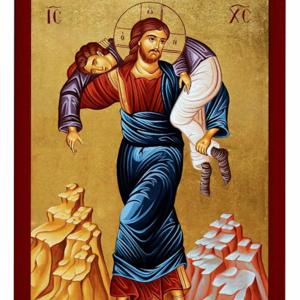
This scene foreshadows Christ, the greater Mediator. The people needed Moses to stand between them and God, just as we need Christ to stand in our place. Unlike Moses, who was a temporary mediator of the old covenant, Jesus is the eternal Mediator of the new covenant. He is not merely a prophet relaying God’s words—He is God Himself (God the Son specifically), who descended not to a mountain but into human flesh. While Mount Sinai showed the terrifying holiness of God that keeps sinners at a distance, Mount Calvary reveals the love of God that draws sinners near because there Christ endures the terror of God on our behalf. On another third day, Christ, who bore the fire of God’s judgment for us on the cross, rises from the dead, making a way for us to come to the Father without fear.
In Christ, we who were once far off are now called God’s treasured possession. We are made part of His kingdom of priests, not by our obedience to the law, but through His perfect obedience and sacrifice. St. Peter says of all Christians in 1 Peter 2:9-10, “You are a chosen race, a royal priesthood, a holy nation, a people for his own possession, that you may proclaim the excellencies of him who called you out of darkness into his marvelous light. Once you were not a people, but now you are God’s people; once you had not received mercy, but now you have received mercy.”
In Christ, we are purified—not merely by washing our garments, but by being clothed in His righteousness in the waters of Holy Baptism. He is our pure garment, as St. Paul says in Galatians 3:27, “For as many of you as were baptized into Christ have put on Christ.” Now, through our great Mediator, we can approach God with…
In the name of the Father and of the Son and of the Holy Spirit. Amen.
Welcome back to Purify the Heart. This is Pastor Zachary Courie. In Exodus 17, the Lord provided water for His grumbling people from the rock, and Moses’ assistant, Joshua, overcame Amalek while Moses held out his arms like Jesus on the cross. In Exodus 18, Moses is burning out from having to judge all of the cases of the people of Israel, and so he takes the advice of Jethro, his compassionate and godly father-in-law.
Exodus 18
18 Jethro, the priest of Midian, Moses’ father-in-law, heard of all that God had done for Moses and for Israel his people, how the Lord had brought Israel out of Egypt. 2 Now Jethro, Moses’ father-in-law, had taken Zipporah, Moses’ wife, after he had sent her home, 3 along with her two sons. The name of the one was Gershom (for he said, “I have been a sojourner in a foreign land”), 4 and the name of the other, Eliezer (for he said, “The God of my father was my help, and delivered me from the sword of Pharaoh”). 5 Jethro, Moses’ father-in-law, came with his sons and his wife to Moses in the wilderness where he was encamped at the mountain of God. 6 And when he sent word to Moses, “I, your father-in-law Jethro, am coming to you with your wife and her two sons with her,” 7 Moses went out to meet his father-in-law and bowed down and kissed him. And they asked each other of their welfare and went into the tent. 8 Then Moses told his father-in-law all that the Lord had done to Pharaoh and to the Egyptians for Israel’s sake, all the hardship that had come upon them in the way, and how the Lord had delivered them. 9 And Jethro rejoiced for all the good that the Lord had done to Israel, in that he had delivered them out of the hand of the Egyptians.
10 Jethro said, “Blessed be the Lord, who has delivered you out of the hand of the Egyptians and out of the hand of Pharaoh and has delivered the people from under the hand of the Egyptians. 11 Now I know that the Lord is greater than all gods, because in this affair they dealt arrogantly with the people.” 12 And Jethro, Moses’ father-in-law, brought a burnt offering and sacrifices to God; and Aaron came with all the elders of Israel to eat bread with Moses’ father-in-law before God.
13 The next day Moses sat to judge the people, and the people stood around Moses from morning till evening. 14 When Moses’ father-in-law saw all that he was doing for the people, he said, “What is this that you are doing for the people? Why do you sit alone, and all the people stand around you from morning till evening?” 15 And Moses said to his father-in-law, “Because the people come to me to inquire of God; 16 when they have a dispute, they come to me and I decide between one person and another, and I make them know the statutes of God and his laws.” 17 Moses’ father-in-law said to him, “What you are doing is not good. 18 You and the people with you will certainly wear yourselves out, for the thing is too heavy for you. You are not able to do it alone. 19 Now obey my voice; I will give you advice, and God be with you! You shall represent the people before God and bring their cases to God, 20 and you shall warn them about the statutes and the laws, and make them know the way in which they must walk and what they must do. 21 Moreover, look for able men from all the people, men who fear God, who are trustworthy and hate a bribe, and place such men over the people as chiefs of thousands, of hundreds, of fifties, and of tens. 22 And let them judge the people at all times. Every great matter they shall bring to you, but any small matter they shall decide themselves. So it will be easier for you, and they will bear the burden with you. 23 If you do this, God will direct you, you will be able to endure, and all this people also will go to their place in peace.”
24 So Moses listened to the voice of his father-in-law and did all that he had said. 25 Moses chose able men out of all Israel and made them heads over the people, chiefs of thousands, of hundreds, of fifties, and of tens. 26 And they judged the people at all times. Any hard case they brought to Moses, but any small matter they decided themselves. 27 Then Moses let his father-in-law depart, and he went away to his own country. (Exodus 18:1–27, ESV)
This is the Word of the Lord.
Thanks be to God.
Though God chose Israel to receive His covenants, His revelation, and His public protection, He also uses others outside of Israel for His purposes. In today’s passage, Moses’ father-in-law, Jethro, provides wise counsel that strengthens Moses’ leadership.
Jethro is introduced earlier in Exodus 2:16, after Moses flees Egypt in fear. The priest of Midian had seven daughters who came to draw water for their father’s flock, but shepherds drove them away. Moses intervened, saving them and watering their flock. When they told their father what had happened, he invited Moses to stay and later gave him his daughter, Zipporah, as a wife. Jethro appears again in Exodus 3:1, where Moses, tending his father-in-law’s flock, encounters the burning bush at Horeb. Before returning to Egypt, Moses seeks Jethro’s permission in Exodus 4:18: “Please let me go back to my brothers in Egypt to see whether they are still alive.” Jethro responds, “Go in peace.”
These repeated references to Jethro and Midian seem significant. Midian was named after one of Abraham’s sons by Keturah (Genesis 25). The Midianites appear prominently in Joseph’s story as well: when his brothers sought to kill him, they instead sold him to Midianite traders, who brought him to Egypt. This event ultimately led to Israel’s presence in Egypt and the beginning of the Exodus story. Later, Midian became a place of refuge for Moses before his call to return to Egypt and lead God’s people out of slavery.
Now, in Exodus 18, Jethro once again plays a crucial role. Seeing that Moses is overwhelmed by the burden of judging every dispute among the people, Jethro advises him to appoint capable men to handle smaller cases, bringing only the most difficult ones to Moses. Moses listens to his father-in-law and follows his advice (Exodus 18:24).
This contrasts with Adam’s failure in Genesis 3, where he listened to the voice of his wife instead of God, leading to sin. Here, the Lord uses Moses’ father-in-law to strengthen his leadership and help him fulfill his calling. Through Jethro’s wisdom, Moses is better equipped to care for God’s people as they journey through the wilderness.
Jethro’s advice to Moses foreshadows Christ’s role as the ultimate leader and mediator for God’s people. Moses, burdened by the weight of judging Israel, is given wise counsel to delegate authority so that the people may be properly cared for. In a greater way, Christ comes as the true and greater Moses, bearing the full burden of our sin and interceding for all of us before the Father. Unlike Moses, who needed help to lead, Jesus alone is able to carry the full weight of His people’s needs.
Furthermore, just as Moses appointed men to judge the people, Christ appoints His apostles and ministers to shepherd His flock. Through His wisdom and care, Christ leads His people by His Word through the wilderness of this life to the promised inheritance of eternal life.
Ultimately, Jethro’s advice points us to the wisdom of God revealed in Christ: our burdens are too great for us to carry alone, but Jesus, our true mediator and leader, carries them perfectly for us. In Matthew 11:28, Jesus says, “Come to me, all who labor and are heavy laden, and I will give you rest.”
Let us pray. O God, whose glory it is always to have mercy, be gracious to all who have gone astray from Your ways and bring them again with penitent hearts and steadfast faith to embrace and hold fast the unchangeable truth of Your Word; through Jesus Christ, Your Son, our Lord, who lives and reigns with You and the Holy Spirit, one God, now and forever. Amen.
Let us pray. Almighty and everlasting God, You despise nothing You have made and forgi…
In the name of the Father and of the Son and of the Holy Spirit. Amen.
Welcome back to Purify the Heart. This is Pastor Zachary Courie. In Exodus 16, the Lord rained down bread from heaven (called “manna”) and blew quail in from the sea for meat. In Exodus 17, the Lord provides water for His grumbling people from a rock. Joshua, the assistant to Moses, is introduced who will take down a new enemy of Israel by God’s miraculous use of Moses. Here we go!
Exodus 17
17 All the congregation of the people of Israel moved on from the wilderness of Sin by stages, according to the commandment of the Lord, and camped at Rephidim, but there was no water for the people to drink. 2 Therefore the people quarreled with Moses and said, “Give us water to drink.” And Moses said to them, “Why do you quarrel with me? Why do you test the Lord?” 3 But the people thirsted there for water, and the people grumbled against Moses and said, “Why did you bring us up out of Egypt, to kill us and our children and our livestock with thirst?” 4 So Moses cried to the Lord, “What shall I do with this people? They are almost ready to stone me.” 5 And the Lord said to Moses, “Pass on before the people, taking with you some of the elders of Israel, and take in your hand the staff with which you struck the Nile, and go. 6 Behold, I will stand before you there on the rock at Horeb, and you shall strike the rock, and water shall come out of it, and the people will drink.” And Moses did so, in the sight of the elders of Israel. 7 And he called the name of the place Massah and Meribah, because of the quarreling of the people of Israel, and because they tested the Lord by saying, “Is the Lord among us or not?”
8 Then Amalek came and fought with Israel at Rephidim. 9 So Moses said to Joshua, “Choose for us men, and go out and fight with Amalek. Tomorrow I will stand on the top of the hill with the staff of God in my hand.” 10 So Joshua did as Moses told him, and fought with Amalek, while Moses, Aaron, and Hur went up to the top of the hill. 11 Whenever Moses held up his hand, Israel prevailed, and whenever he lowered his hand, Amalek prevailed. 12 But Moses’ hands grew weary, so they took a stone and put it under him, and he sat on it, while Aaron and Hur held up his hands, one on one side, and the other on the other side. So his hands were steady until the going down of the sun. 13 And Joshua overwhelmed Amalek and his people with the sword.
14 Then the Lord said to Moses, “Write this as a memorial in a book and recite it in the ears of Joshua, that I will utterly blot out the memory of Amalek from under heaven.” 15 And Moses built an altar and called the name of it, The Lord Is My Banner, 16 saying, “A hand upon the throne of the Lord! The Lord will have war with Amalek from generation to generation.” (Exodus 17:1–16, ESV)
This is the Word of the Lord.
Thanks be to God.
When the Lord told Moses that He would stand on the rock and then commanded Moses to strike it so that water would come out, the Lord is pointing us to Christ. St. Paul says in 1 Corinthians 10, “For I do not want you to be unaware, brothers, that our fathers were all under the cloud, and all passed through the sea, 2 and all were baptized into Moses in the cloud and in the sea, 3 and all ate the same spiritual food, 4 and all drank the same spiritual drink. For they drank from the spiritual Rock that followed them, and the Rock was Christ.” (1 Corinthians 10:1–4, ESV) Notice there that St. Paul doesn’t say that the spiritual rock was “like” Christ, or that it “represented” Christ. Rather, he states, “the Rock was Christ.” (In the original Greek, St. Paul is using the past tense of the verb to be or is.) This is odd for us to consider, but long before the incarnation of the Son of God into our human flesh, he took on the form of a rock in the wilderness. This is like when the Holy Spirit takes on the form of a dove at the baptism of our Lord. The dove really was the Holy Spirit, even though all other doves are not. The rock that the Lord commands Moses to strike really is Christ, even though all other rocks are not. But they do all point us to Him.
The command of the Lord to Moses to strike the rock, in order for it to produce drinkable water, points us specifically to the crucifixion. There Christ was struck a heavy blow by the staff of God’s Law against all sin and unrighteousness, not to mention the physical torture by the various instruments of the Romans. Even more specifically, when Christ is pierced in His side by the soldiers’ spear, St. John recounts that from Christ’s side came forth not only blood, but also water.
The early Church Fathers connected that water to that of Holy Baptism. When the word of God is combined with plain water and applied to us for our salvation, our thirsting souls are quenched! Remember the quote I read to you yesterday from John 6:35 where Jesus says, “whoever believes in me shall never thirst”? In John 4, Jesus told the woman at the well, “‘If you knew the gift of God, and who it is that is saying to you, ‘Give me a drink,’ you would have asked him, and he would have given you living water.’ 11 The woman said to him, “Sir, you have nothing to draw water with, and the well is deep. Where do you get that living water? 12 Are you greater than our father Jacob? He gave us the well and drank from it himself, as did his sons and his livestock.” 13 Jesus said to her, “Everyone who drinks of this water will be thirsty again, 14 but whoever drinks of the water that I will give him will never be thirsty again. The water that I will give him will become in him a spring of water welling up to eternal life.” (John 4:10–14, ESV)
To many Protestants, the sacraments like Holy Baptism can’t exist, because they see God as working only internally, that is, within our hearts. They often are looking for “movements” of God within them, to give them certain emotions, like instincts, as to whether or not they are worthy or forgiven. To be sure, the Lord dwells within every Christian and forms and reforms every one’s conscience; but even the understanding that He gives us about those things are found in His external Word.
Throughout Scripture, from beginning to end, the Lord is attaching great power to mundane, common, and sometimes odd things by His Word. This is what’s going on with Moses raising His hands in order to make Israel prevail against Amalek. Though we’re not told of the specific word of God in this particular moment, we’ve seen it since Moses was first called by God and told him to throw his staff on the ground to become a serpent; so the assumption should be that God told Moses to do this. This is like God commanding the parents of Samson to have him grow his hair out long. You may remember, so long as Samson had long hair, he had a supernatural strength. When his hair was cut, he lost that strength. It wasn’t the hair in and of itself that gave him strength, but the Word of God combined with the hair. So it is with Moses raising his hands and Israel prevailing until his arms grew tired and when he lowered them, Amalek prevailed.
Many things in Holy Scripture are simply because God has declared them to be. This is why we cling to the Holy Sacraments of Baptism, Absolution, and the Eucharist or Lord’s Supper, which are all supernatural. They are instituted by God to give us certainty, not within ourselves, but to those things to which He has attached His Word and His sure & certain promises, most especially the certainty of the forgiveness of sins.
Let us pray. O God, You see that of ourselves we have no strength. By Your mighty power defend us from all adversities that may happen to the body and from all evil thoughts that may assault and hurt the soul; through Jesus Christ, Your Son, our Lord, who lives and reigns with You and the Holy Spirit, one God, now and forever. Amen.
Let us pray. Almighty and everlasting God, You despise nothing You have made and forgive the sins of all who are penitent. Create in us ne…
In the name of the Father and of the Son and of the Holy Spirit. Amen.
Welcome back to Purify the Heart. This is Pastor Zachary Courie. In Exodus 15, we heard the song of Moses and the beginning of the Israelites’ grumbling against the Lord and Moses regarding water to drink. Though the Lord miraculously provided for them, after having delivered them from slavery in Egypt, today, in Exodus 16, their grumbling continues with regard to food. Let’s find out how the Lord provides for them!
16 They set out from Elim, and all the congregation of the people of Israel came to the wilderness of Sin, which is between Elim and Sinai, on the fifteenth day of the second month after they had departed from the land of Egypt. 2 And the whole congregation of the people of Israel grumbled against Moses and Aaron in the wilderness, 3 and the people of Israel said to them, “Would that we had died by the hand of the Lord in the land of Egypt, when we sat by the meat pots and ate bread to the full, for you have brought us out into this wilderness to kill this whole assembly with hunger.”
4 Then the Lord said to Moses, “Behold, I am about to rain bread from heaven for you, and the people shall go out and gather a day’s portion every day, that I may test them, whether they will walk in my law or not. 5 On the sixth day, when they prepare what they bring in, it will be twice as much as they gather daily.” 6 So Moses and Aaron said to all the people of Israel, “At evening you shall know that it was the Lord who brought you out of the land of Egypt, 7 and in the morning you shall see the glory of the Lord, because he has heard your grumbling against the Lord. For what are we, that you grumble against us?” 8 And Moses said, “When the Lord gives you in the evening meat to eat and in the morning bread to the full, because the Lord has heard your grumbling that you grumble against him—what are we? Your grumbling is not against us but against the Lord.”
9 Then Moses said to Aaron, “Say to the whole congregation of the people of Israel, ‘Come near before the Lord, for he has heard your grumbling.’ ” 10 And as soon as Aaron spoke to the whole congregation of the people of Israel, they looked toward the wilderness, and behold, the glory of the Lord appeared in the cloud. 11 And the Lord said to Moses, 12 “I have heard the grumbling of the people of Israel. Say to them, ‘At twilight you shall eat meat, and in the morning you shall be filled with bread. Then you shall know that I am the Lord your God.’ ”
13 In the evening quail came up and covered the camp, and in the morning dew lay around the camp. 14 And when the dew had gone up, there was on the face of the wilderness a fine, flake-like thing, fine as frost on the ground. 15 When the people of Israel saw it, they said to one another, “What is it?” For they did not know what it was. And Moses said to them, “It is the bread that the Lord has given you to eat. 16 This is what the Lord has commanded: ‘Gather of it, each one of you, as much as he can eat. You shall each take an omer, according to the number of the persons that each of you has in his tent.’ ” 17 And the people of Israel did so. They gathered, some more, some less. 18 But when they measured it with an omer, whoever gathered much had nothing left over, and whoever gathered little had no lack. Each of them gathered as much as he could eat. 19 And Moses said to them, “Let no one leave any of it over till the morning.” 20 But they did not listen to Moses. Some left part of it till the morning, and it bred worms and stank. And Moses was angry with them. 21 Morning by morning they gathered it, each as much as he could eat; but when the sun grew hot, it melted.
22 On the sixth day they gathered twice as much bread, two omers each. And when all the leaders of the congregation came and told Moses, 23 he said to them, “This is what the Lord has commanded: ‘Tomorrow is a day of solemn rest, a holy Sabbath to the Lord; bake what you will bake and boil what you will boil, and all that is left over lay aside to be kept till the morning.’ ” 24 So they laid it aside till the morning, as Moses commanded them, and it did not stink, and there were no worms in it. 25 Moses said, “Eat it today, for today is a Sabbath to the Lord; today you will not find it in the field. 26 Six days you shall gather it, but on the seventh day, which is a Sabbath, there will be none.”
27 On the seventh day some of the people went out to gather, but they found none. 28 And the Lord said to Moses, “How long will you refuse to keep my commandments and my laws? 29 See! The Lord has given you the Sabbath; therefore on the sixth day he gives you bread for two days. Remain each of you in his place; let no one go out of his place on the seventh day.” 30 So the people rested on the seventh day.
31 Now the house of Israel called its name manna. It was like coriander seed, white, and the taste of it was like wafers made with honey. 32 Moses said, “This is what the Lord has commanded: ‘Let an omer of it be kept throughout your generations, so that they may see the bread with which I fed you in the wilderness, when I brought you out of the land of Egypt.’ ” 33 And Moses said to Aaron, “Take a jar, and put an omer of manna in it, and place it before the Lord to be kept throughout your generations.” 34 As the Lord commanded Moses, so Aaron placed it before the testimony to be kept. 35 The people of Israel ate the manna forty years, till they came to a habitable land. They ate the manna till they came to the border of the land of Canaan. 36 (An omer is the tenth part of an ephah.) (Exodus 16:1–36, ESV)
This is the Word of the Lord.
Thanks be to God.
As Psalm 103:8 says, “The LORD is merciful and gracious, slow to anger and abounding in steadfast love.” If you’ve been listening or reading along with the first 15 chapters, you likely feel like I do: how could the Israelites be complaining against Moses and the Lord after all the mighty works of God that have been accomplished for their sake so far! But, if you’re like me, you also realize that the grumbling of the Israelites is just a reflection of us Christians who grumble every time we suffer even the slightest affliction or trial. It’s as if we say, or at least think in our hearts, “Oh, Christ paid for all of my sins, reconciling me to God, making Him our Father, and giving us His Holy Spirit? Well, that’s nice and all, but why then am I having to suffer?” That’s the question, or something like it, of every Christian! Give us glory apart from having to bear our own cross! But like the Israelites, we were delivered to be like Christ in this world, in this life, right now.
The Lord certainly could have led them into the land of the Philistines, which was mentioned back in chapter 13, but He decided not to, and said, “Lest the people change their minds when they see war and return to Egypt.” Had he led them to that land, He no doubt could have provided for them with all of the food and resources of the Philistines; but that’s not how our Lord works. He prevents an excessively harsh situation, so that they don’t turn back. Yet, He leads them into the wilderness also for their good, for there they will have to learn to depend on Him completely.
The bread from heaven and the meat of the quail, which we could call flesh, points us to Jesus’ words to the Jews in John 6. When [those, who had been among the five thousand who were miraculously fed by Jesus,] found Jesus on the other side of the sea, they said to him, “Rabbi, when did you come here?” 26 Jesus answered them, “Truly, truly, I say to you, you are seeking me, not because you saw signs, but because you ate your fill of the loaves. 27 Do not work for the food that perishes, but for the food that endures to eternal life, which the Son of Man will give to you. For on him God the Father has set his seal.” 28 Then they said to him, “What must we do, to be doing the works of God?” 29 Jesus answered them, “This is the work of God, that you bel…
In the name of the Father and of the Son and of the Holy Spirit. Amen.
Welcome back to Purify the Heart. This is Pastor Zachary Courie. In Exodus 14, the Israelites’ exodus from Egypt was finalized, and so was God’s judgment on Pharaoh and his army. Today, Israel rejoices for one glorious moment, and then their infamous pattern of doubting the Lord’s providence, which started back in Egypt, continues.
Exodus 15
15 Then Moses and the people of Israel sang this song to the Lord, saying,
“I will sing to the Lord, for he has triumphed gloriously;
the horse and his rider he has thrown into the sea.
2 The Lord is my strength and my song,
and he has become my salvation;
this is my God, and I will praise him,
my father’s God, and I will exalt him.
3 The Lord is a man of war;
the Lord is his name.
4 “Pharaoh’s chariots and his host he cast into the sea,
and his chosen officers were sunk in the Red Sea.
5 The floods covered them;
they went down into the depths like a stone.
6 Your right hand, O Lord, glorious in power,
your right hand, O Lord, shatters the enemy.
7 In the greatness of your majesty you overthrow your adversaries;
you send out your fury; it consumes them like stubble.
8 At the blast of your nostrils the waters piled up;
the floods stood up in a heap;
the deeps congealed in the heart of the sea.
9 The enemy said, ‘I will pursue, I will overtake,
I will divide the spoil, my desire shall have its fill of them.
I will draw my sword; my hand shall destroy them.’
10 You blew with your wind; the sea covered them;
they sank like lead in the mighty waters.
11 “Who is like you, O Lord, among the gods?
Who is like you, majestic in holiness,
awesome in glorious deeds, doing wonders?
12 You stretched out your right hand;
the earth swallowed them.
13 “You have led in your steadfast love the people whom you have redeemed;
you have guided them by your strength to your holy abode.
14 The peoples have heard; they tremble;
pangs have seized the inhabitants of Philistia.
15 Now are the chiefs of Edom dismayed;
trembling seizes the leaders of Moab;
all the inhabitants of Canaan have melted away.
16 Terror and dread fall upon them;
because of the greatness of your arm, they are still as a stone,
till your people, O Lord, pass by,
till the people pass by whom you have purchased.
17 You will bring them in and plant them on your own mountain,
the place, O Lord, which you have made for your abode,
the sanctuary, O Lord, which your hands have established.
18 The Lord will reign forever and ever.”
19 For when the horses of Pharaoh with his chariots and his horsemen went into the sea, the Lord brought back the waters of the sea upon them, but the people of Israel walked on dry ground in the midst of the sea. 20 Then Miriam the prophetess, the sister of Aaron, took a tambourine in her hand, and all the women went out after her with tambourines and dancing. 21 And Miriam sang to them:
“Sing to the Lord, for he has triumphed gloriously;
the horse and his rider he has thrown into the sea.”
22 Then Moses made Israel set out from the Red Sea, and they went into the wilderness of Shur. They went three days in the wilderness and found no water. 23 When they came to Marah, they could not drink the water of Marah because it was bitter; therefore it was named Marah. 24 And the people grumbled against Moses, saying, “What shall we drink?” 25 And he cried to the Lord, and the Lord showed him a log, and he threw it into the water, and the water became sweet.
There the Lord made for them a statute and a rule, and there he tested them, 26 saying, “If you will diligently listen to the voice of the Lord your God, and do that which is right in his eyes, and give ear to his commandments and keep all his statutes, I will put none of the diseases on you that I put on the Egyptians, for I am the Lord, your healer.”
27 Then they came to Elim, where there were twelve springs of water and seventy palm trees, and they encamped there by the water. (Exodus 15:1–27, ESV)
This is the Word of the Lord.
Thanks be to God.
The song of Moses and the Israelites is a beautiful one. Not only do they realize that the right hand of God has saved them in ways that were impossible for them otherwise, but that He will continue to save them from other enemies. They anticipate going up against those enemies, and those enemies stepping down because they’ve heard of God’s work in favor of the Israelites. Their praise of the victory that is theirs because of God’s faithfulness was written down so that we would see what the nature of praise is: we overcome because God overcomes for us, which leads us to want to tell others who He is and what He does. Even when we, His baptized children, fall into doubt, He remains faithful to us. St. Paul says in 2 Timothy 2:11-13, 11 The saying is trustworthy, for: If we have died with him, we will also live with him; 12 if we endure, we will also reign with him; if we deny him, he also will deny us; 13 if we are faithless, he remains faithful—for he cannot deny himself. (2 Timothy 2:11–13, ESV)
By the way, you can listen here to hymn # 925, the Song of Moses and Israel, that’s been put to music in the Lutheran Service Book.
The song of Moses points us in multiple ways to Christ. All victory for God’s people is ultimately fulfilled in the victory that Jesus of Nazareth won for all of mankind by His sacrificial death on the cross. God’s enemies of sin, death, and devil have their dominion destroyed when Christ was destroyed, so to speak. Christ not only takes the place of the Israelites, but also of the Egyptians. He pays for their sins, too. This is part of His proclamation when He descends into hell after He’s laid to rest in the tomb: He proclaims to all those who rejected Him that God in fact provided for them a way out. What would otherwise be Gospel, or good news, to the ears of those who have fallen, becomes the fullness of hell’s punishment, of being made permanently cut off from God and His blessings, and yet most aware of it. The Lord wants us to know such things as He is a loving Father who disciplines us so that we won’t reject His abundant grace and mercy and His eternal redemption in Christ.
This is important to remember, because though we’re justified by faith alone, that is, that we are forgiven our sins freely for Christ’s sake, we must also strive to live in that state of forgiveness. When we don’t, we very quickly fall back into the habits of our sinful nature. This is exactly what we see with the Israelites who go from the moment of joyous victory to the next moment, three days later, of grumbling against the Lord and His mediator, Moses.
The Lord didn’t deliver His people from Pharaoh’s oppression so that they could live lives of ease, comfort, and pleasure. He saved them to become a nation that would praise the Lord to all other nations. He saved them to be His representatives to others, even as they are His representatives to one another. Their salvation is like a rebirth. They are a new people because they are now a freed people. But in their newness, they’re like infants, which means they have a lot of maturing to do. That maturing will include much grumbling on their part, but it will also include the Lord showing them time and again that He is dependable. This becomes a defining feature of faith. Faith doesn’t just believe, it depends on He who is dependable. It trusts in He who has proved Himself trustworthy.
This points us to our baptism into Christ Jesus. Jesus tells Nicodemas in John 3, “Truly, truly, I say to you, unless one is born again,” which He clarifies two verses later, “Unless one is born of water and the Spirit, he cannot enter the kingdom of God.” And yet, once a person enters into the kingdom of God, which is the Holy Christian Church, which is that state in which the Holy Spirit indwells each person, that doesn’t mean that his sinful nature is permanently destroyed. It will be permanently destroyed at the moment the Lord receives us into glory. But for now, the Lord has allowed it to remain in us, so th…
In the name of the Father and of the Son and of the Holy Spirit. Amen.
Welcome back to Purify the Heart. This is Pastor Zachary Courie. In Exodus 12 & 13, we heard about the immediate aftermath of the killing of the firstborn, both man and beast, of the Egyptians, while the Israelites were passed over and commanded by God to annually commemorate that great event. Today, the relationship between Pharaoh and Moses and the Israelites reaches its climax as the Lord miraculously leads His people through the parted waters of the Red Sea.
Exodus 14
14 Then the Lord said to Moses, 2 “Tell the people of Israel to turn back and encamp in front of Pi-hahiroth, between Migdol and the sea, in front of Baal-zephon; you shall encamp facing it, by the sea. 3 For Pharaoh will say of the people of Israel, ‘They are wandering in the land; the wilderness has shut them in.’ 4 And I will harden Pharaoh’s heart, and he will pursue them, and I will get glory over Pharaoh and all his host, and the Egyptians shall know that I am the Lord.” And they did so.
5 When the king of Egypt was told that the people had fled, the mind of Pharaoh and his servants was changed toward the people, and they said, “What is this we have done, that we have let Israel go from serving us?” 6 So he made ready his chariot and took his army with him, 7 and took six hundred chosen chariots and all the other chariots of Egypt with officers over all of them. 8 And the Lord hardened the heart of Pharaoh king of Egypt, and he pursued the people of Israel while the people of Israel were going out defiantly. 9 The Egyptians pursued them, all Pharaoh’s horses and chariots and his horsemen and his army, and overtook them encamped at the sea, by Pi-hahiroth, in front of Baal-zephon.
10 When Pharaoh drew near, the people of Israel lifted up their eyes, and behold, the Egyptians were marching after them, and they feared greatly. And the people of Israel cried out to the Lord. 11 They said to Moses, “Is it because there are no graves in Egypt that you have taken us away to die in the wilderness? What have you done to us in bringing us out of Egypt? 12 Is not this what we said to you in Egypt: ‘Leave us alone that we may serve the Egyptians’? For it would have been better for us to serve the Egyptians than to die in the wilderness.” 13 And Moses said to the people, “Fear not, stand firm, and see the salvation of the Lord, which he will work for you today. For the Egyptians whom you see today, you shall never see again. 14 The Lord will fight for you, and you have only to be silent.”
15 The Lord said to Moses, “Why do you cry to me? Tell the people of Israel to go forward. 16 Lift up your staff, and stretch out your hand over the sea and divide it, that the people of Israel may go through the sea on dry ground. 17 And I will harden the hearts of the Egyptians so that they shall go in after them, and I will get glory over Pharaoh and all his host, his chariots, and his horsemen. 18 And the Egyptians shall know that I am the Lord, when I have gotten glory over Pharaoh, his chariots, and his horsemen.”
19 Then the angel of God who was going before the host of Israel moved and went behind them, and the pillar of cloud moved from before them and stood behind them, 20 coming between the host of Egypt and the host of Israel. And there was the cloud and the darkness. And it lit up the night without one coming near the other all night.
21 Then Moses stretched out his hand over the sea, and the Lord drove the sea back by a strong east wind all night and made the sea dry land, and the waters were divided. 22 And the people of Israel went into the midst of the sea on dry ground, the waters being a wall to them on their right hand and on their left. 23 The Egyptians pursued and went in after them into the midst of the sea, all Pharaoh’s horses, his chariots, and his horsemen. 24 And in the morning watch the Lord in the pillar of fire and of cloud looked down on the Egyptian forces and threw the Egyptian forces into a panic, 25 clogging their chariot wheels so that they drove heavily. And the Egyptians said, “Let us flee from before Israel, for the Lord fights for them against the Egyptians.”
26 Then the Lord said to Moses, “Stretch out your hand over the sea, that the water may come back upon the Egyptians, upon their chariots, and upon their horsemen.” 27 So Moses stretched out his hand over the sea, and the sea returned to its normal course when the morning appeared. And as the Egyptians fled into it, the Lord threw the Egyptians into the midst of the sea. 28 The waters returned and covered the chariots and the horsemen; of all the host of Pharaoh that had followed them into the sea, not one of them remained. 29 But the people of Israel walked on dry ground through the sea, the waters being a wall to them on their right hand and on their left.
30 Thus the Lord saved Israel that day from the hand of the Egyptians, and Israel saw the Egyptians dead on the seashore. 31 Israel saw the great power that the Lord used against the Egyptians, so the people feared the Lord, and they believed in the Lord and in his servant Moses. (Exodus 14:1–31, ESV)
This is the Word of the Lord.
Thanks be to God.
Exodus 14 is one of the most famous events in history, such that the parting of the Red Sea is used in all kinds of pop culture references in our day, and mentioned by authors from various cultures for millennia.
In this event, we see God’s faithfulness to His chosen people, chosen to be the direct recipients of His mercy and miraculous signs and salvation. We also are shown the wrath and judgment of God upon those who persist in self-exaltation and rebellion against Him. Many unbelievers attribute tyranny to God because He punishes those who reject Him; but that shows a failure to realize that there is no neutral relationship with God. Whoever does not love God hates Him, and hates those who love Him. We see this right away in the Bible with Cain hating his brother Abel to the point of murdering Him, and certainly we see it with those crucified the Lord of glory. Select verses within today’s chapter alone show us that God still wanted the Egyptians to know Him rightly and to be recipients of His mercy when He chooses to use Pharaoh and his army as examples of recipients of His wrath.
The Exodus of Israel through the Red Sea also shows the mercy of God toward all of mankind by foreshadowing its fulfillment in Christ. When Jesus was baptized, He sanctified all waters for salvation, wherever His Word and command to baptize are applied to water. After His resurrection, He commissioned His apostles, saying:“Go and make disciples of all nations, baptizing them in the name of the Father and of the Son and of the Holy Spirit” (Matthew 28:19). And in Mark 16:16, He proclaimed: “Whoever believes and is baptized will be saved, but whoever does not believe will be condemned.”
St. Paul connects these events, writing to the Corinthians, “I do not want you to be unaware, brothers, that our fathers were all under the cloud, and all passed through the sea, and all were baptized into Moses in the cloud and in the sea” (1 Corinthians 10:1–2, 4).
Through Christ, the Passover and the Exodus are no longer merely historical events—they are the very means by which God reveals His plan of salvation and applies that salvation to us through His means of grace in the Sacraments of Holy Baptism and the Holy Eucharist.
Let us pray. O God, You see that of ourselves we have no strength. By Your mighty power defend us from all adversities that may happen to the body and from all evil thoughts that may assault and hurt the soul; through Jesus Christ, Your Son, our Lord, who lives and reigns with You and the Holy Spirit, one God, now and forever. Amen.
Let us pray. Almighty and everlasting God, You despise nothing You have made and forgive the sins of all who are penitent. Create in us new and contrite hearts that lamenting our sins and acknowledging our wretchedness we may receive from You …
In the name of the Father and of the Son and of the Holy Spirit. Amen.
Welcome back to Purify the Heart. This is Pastor Zachary Courie. In Exodus 12, the Lord passed over his people, especially the firstborn of Israel, though he slaughtered the firstborn, both man and beast, of the Egyptians. Not only that, but He led His people out of Egypt in what is specifically known as the Exodus.
Exodus 13
13 The Lord said to Moses, 2 “Consecrate to me all the firstborn. Whatever is the first to open the womb among the people of Israel, both of man and of beast, is mine.”
3 Then Moses said to the people, “Remember this day in which you came out from Egypt, out of the house of slavery, for by a strong hand the Lord brought you out from this place. No leavened bread shall be eaten. 4 Today, in the month of Abib, you are going out. 5 And when the Lord brings you into the land of the Canaanites, the Hittites, the Amorites, the Hivites, and the Jebusites, which he swore to your fathers to give you, a land flowing with milk and honey, you shall keep this service in this month. 6 Seven days you shall eat unleavened bread, and on the seventh day there shall be a feast to the Lord. 7 Unleavened bread shall be eaten for seven days; no leavened bread shall be seen with you, and no leaven shall be seen with you in all your territory. 8 You shall tell your son on that day, ‘It is because of what the Lord did for me when I came out of Egypt.’ 9 And it shall be to you as a sign on your hand and as a memorial between your eyes, that the law of the Lord may be in your mouth. For with a strong hand the Lord has brought you out of Egypt. 10 You shall therefore keep this statute at its appointed time from year to year.
11 “When the Lord brings you into the land of the Canaanites, as he swore to you and your fathers, and shall give it to you, 12 you shall set apart to the Lord all that first opens the womb. All the firstborn of your animals that are males shall be the Lord’s. 13 Every firstborn of a donkey you shall redeem with a lamb, or if you will not redeem it you shall break its neck. Every firstborn of man among your sons you shall redeem. 14 And when in time to come your son asks you, ‘What does this mean?’ you shall say to him, ‘By a strong hand the Lord brought us out of Egypt, from the house of slavery. 15 For when Pharaoh stubbornly refused to let us go, the Lord killed all the firstborn in the land of Egypt, both the firstborn of man and the firstborn of animals. Therefore I sacrifice to the Lord all the males that first open the womb, but all the firstborn of my sons I redeem.’ 16 It shall be as a mark on your hand or frontlets between your eyes, for by a strong hand the Lord brought us out of Egypt.”
17 When Pharaoh let the people go, God did not lead them by way of the land of the Philistines, although that was near. For God said, “Lest the people change their minds when they see war and return to Egypt.” 18 But God led the people around by the way of the wilderness toward the Red Sea. And the people of Israel went up out of the land of Egypt equipped for battle. 19 Moses took the bones of Joseph with him, for Joseph had made the sons of Israel solemnly swear, saying, “God will surely visit you, and you shall carry up my bones with you from here.” 20 And they moved on from Succoth and encamped at Etham, on the edge of the wilderness. 21 And the Lord went before them by day in a pillar of cloud to lead them along the way, and by night in a pillar of fire to give them light, that they might travel by day and by night. 22 The pillar of cloud by day and the pillar of fire by night did not depart from before the people. (Exodus 13:1–22, ESV)
This is the Word of the Lord.
Thanks be to God.
The consecration or sanctifying of the firstborn was commanded by God first and foremost because He had spared them by the blood of the lamb. The firstborn being set apart, or holy, means they are special to the Lord. This is not because they have inherently greater value than the rest of the children of a family, but this is simply by the declaration of God. The declaration of God is to be paid attention to most especially because it carries theological significance and instruction, as well as consolation for our souls. The firstborn of the beasts were consecrated by becoming a sacrifice to God. They were killed, but they were killed as innocent beasts, so to speak, as if they were sinless. The idea is that the firstborn was declared by God to be acceptable, and the sacrifice of that firstborn beast satisfied God’s wrath against the other children who were sinful. Because their eldest brother-beast was sacrificed for them, they were spared. Just as the Passover lamb points us to Christ, so also this is another foreshadowing. Everyone who is baptized into the name of the Father and of the Son and of the Holy Spirit has Jesus as their eldest brother. He who offered His truly innocent soul as an acceptable sacrifice to God has made us, who have been made to become His brothers and sisters, to be acceptable by His blood. In Holy Baptism, His blood is applied to us, as St. Paul says in Titus chapter 3: “He saved us through the washing of rebirth and renewal by the Holy Spirit, whom He poured out on us generously through Jesus Christ our Savior, so that, having been justified by His grace, we might become heirs having the hope of eternal life. This is a trustworthy saying.” (Titus 3:5-8)
The consecration of the firstborn human male was that he would be sacrificed in the sense that he would serve as a priest of God on behalf of his family. (Later, this role will be designated only to those who are from the tribe of Levi, but until the Lord institutes this for now, no doubt to impress this upon the simpleminded of Israel, so that the change later will have it’s own theological significance.) In this sense, the firstborn son becomes his family reduced to one: representing them to God, and in turn, representing God to them. This is why it’s right for us Christians to refer to Jesus not only as true Prophet, not only as a true King, but also as true Priest. Because He represents all families, as well as all Priests, He even is the true High Priest. Listen to what Hebrews 4:14-16 says:
14 Since we have a great high priest who has passed through the heavens, Jesus, the Son of God, let us hold fast our confession. 15 For we do not have a high priest who is unable to sympathize with our weaknesses, but one who in every respect has been tempted as we are, yet without sin. 16 Let us then with confidence draw near to the throne of grace, that we may receive mercy and find grace to help in time of need. (Hebrews 4:14–16, ESV)
The purpose of the consecration of the firstborn of both man and beast is to point us to God’s faithfulness in salvation, of the Israelites, yes, but also of all of mankind.
The institution of the Feast of Unleavened Bread also has theological significance. The Passover was instituted specifically to be a perpetual reminder, even for future generations, of the judgment that God’s people escaped by the blood of the lamb, and by eating the sacrifice. The Feast of Unleavened Bread specifically points to the exodus of God’s people from the land of slavery into the land of freedom. Leaven thus becomes related to sin in Scripture. Leaven isn’t sinful in and of itself, of course, but according to the declaration of God, at such an appointed time, it has that particular meaning. St. Paul refers to this idea in 1 Corinthians 5, where he says,
“6 Your boasting is not good. Do you not know that a little leaven leavens the whole lump? 7 Cleanse out the old leaven that you may be a new lump, as you really are unleavened. For Christ, our Passover lamb, has been sacrificed. 8 Let us therefore celebrate the festival, not with the old leaven, the leaven of malice and evil, but with the unleavened bread of sincerity and truth.” (1 Corinthians 5:6–8, ESV)
This becomes a central text for the Church at her celebrati…
In the name of the Father and of the Son and of the Holy Spirit. Amen.
Welcome back to Purify the Heart. This is Pastor Zachary Courie. In Exodus 11, the Lord threatened the tenth and final plague: the death of the firstborn. Today, we hear about the preparation of Israel for the final plague known as the Passover, the plague wreaking its havoc, culminating in the exodus of Israel from the land and the tyranny of Egypt.
Exodus 12
12 The Lord said to Moses and Aaron in the land of Egypt, 2 “This month shall be for you the beginning of months. It shall be the first month of the year for you. 3 Tell all the congregation of Israel that on the tenth day of this month every man shall take a lamb according to their fathers’ houses, a lamb for a household. 4 And if the household is too small for a lamb, then he and his nearest neighbor shall take according to the number of persons; according to what each can eat you shall make your count for the lamb. 5 Your lamb shall be without blemish, a male a year old. You may take it from the sheep or from the goats, 6 and you shall keep it until the fourteenth day of this month, when the whole assembly of the congregation of Israel shall kill their lambs at twilight.
7 “Then they shall take some of the blood and put it on the two doorposts and the lintel of the houses in which they eat it. 8 They shall eat the flesh that night, roasted on the fire; with unleavened bread and bitter herbs they shall eat it. 9 Do not eat any of it raw or boiled in water, but roasted, its head with its legs and its inner parts. 10 And you shall let none of it remain until the morning; anything that remains until the morning you shall burn. 11 In this manner you shall eat it: with your belt fastened, your sandals on your feet, and your staff in your hand. And you shall eat it in haste. It is the Lord’s Passover. 12 For I will pass through the land of Egypt that night, and I will strike all the firstborn in the land of Egypt, both man and beast; and on all the gods of Egypt I will execute judgments: I am the Lord. 13 The blood shall be a sign for you, on the houses where you are. And when I see the blood, I will pass over you, and no plague will befall you to destroy you, when I strike the land of Egypt.
14 “This day shall be for you a memorial day, and you shall keep it as a feast to the Lord; throughout your generations, as a statute forever, you shall keep it as a feast. 15 Seven days you shall eat unleavened bread. On the first day you shall remove leaven out of your houses, for if anyone eats what is leavened, from the first day until the seventh day, that person shall be cut off from Israel. 16 On the first day you shall hold a holy assembly, and on the seventh day a holy assembly. No work shall be done on those days. But what everyone needs to eat, that alone may be prepared by you. 17 And you shall observe the Feast of Unleavened Bread, for on this very day I brought your hosts out of the land of Egypt. Therefore you shall observe this day, throughout your generations, as a statute forever. 18 In the first month, from the fourteenth day of the month at evening, you shall eat unleavened bread until the twenty-first day of the month at evening. 19 For seven days no leaven is to be found in your houses. If anyone eats what is leavened, that person will be cut off from the congregation of Israel, whether he is a sojourner or a native of the land. 20 You shall eat nothing leavened; in all your dwelling places you shall eat unleavened bread.”
21 Then Moses called all the elders of Israel and said to them, “Go and select lambs for yourselves according to your clans, and kill the Passover lamb. 22 Take a bunch of hyssop and dip it in the blood that is in the basin, and touch the lintel and the two doorposts with the blood that is in the basin. None of you shall go out of the door of his house until the morning. 23 For the Lord will pass through to strike the Egyptians, and when he sees the blood on the lintel and on the two doorposts, the Lord will pass over the door and will not allow the destroyer to enter your houses to strike you. 24 You shall observe this rite as a statute for you and for your sons forever. 25 And when you come to the land that the Lord will give you, as he has promised, you shall keep this service. 26 And when your children say to you, ‘What do you mean by this service?’ 27 you shall say, ‘It is the sacrifice of the Lord’s Passover, for he passed over the houses of the people of Israel in Egypt, when he struck the Egyptians but spared our houses.’ ” And the people bowed their heads and worshiped.
28 Then the people of Israel went and did so; as the Lord had commanded Moses and Aaron, so they did.
29 At midnight the Lord struck down all the firstborn in the land of Egypt, from the firstborn of Pharaoh who sat on his throne to the firstborn of the captive who was in the dungeon, and all the firstborn of the livestock. 30 And Pharaoh rose up in the night, he and all his servants and all the Egyptians. And there was a great cry in Egypt, for there was not a house where someone was not dead. 31 Then he summoned Moses and Aaron by night and said, “Up, go out from among my people, both you and the people of Israel; and go, serve the Lord, as you have said. 32 Take your flocks and your herds, as you have said, and be gone, and bless me also!”
33 The Egyptians were urgent with the people to send them out of the land in haste. For they said, “We shall all be dead.” 34 So the people took their dough before it was leavened, their kneading bowls being bound up in their cloaks on their shoulders. 35 The people of Israel had also done as Moses told them, for they had asked the Egyptians for silver and gold jewelry and for clothing. 36 And the Lord had given the people favor in the sight of the Egyptians, so that they let them have what they asked. Thus they plundered the Egyptians.
37 And the people of Israel journeyed from Rameses to Succoth, about six hundred thousand men on foot, besides women and children. 38 A mixed multitude also went up with them, and very much livestock, both flocks and herds. 39 And they baked unleavened cakes of the dough that they had brought out of Egypt, for it was not leavened, because they were thrust out of Egypt and could not wait, nor had they prepared any provisions for themselves.
40 The time that the people of Israel lived in Egypt was 430 years. 41 At the end of 430 years, on that very day, all the hosts of the Lord went out from the land of Egypt. 42 It was a night of watching by the Lord, to bring them out of the land of Egypt; so this same night is a night of watching kept to the Lord by all the people of Israel throughout their generations.
43 And the Lord said to Moses and Aaron, “This is the statute of the Passover: no foreigner shall eat of it, 44 but every slave that is bought for money may eat of it after you have circumcised him. 45 No foreigner or hired worker may eat of it. 46 It shall be eaten in one house; you shall not take any of the flesh outside the house, and you shall not break any of its bones. 47 All the congregation of Israel shall keep it. 48 If a stranger shall sojourn with you and would keep the Passover to the Lord, let all his males be circumcised. Then he may come near and keep it; he shall be as a native of the land. But no uncircumcised person shall eat of it. 49 There shall be one law for the native and for the stranger who sojourns among you.”
50 All the people of Israel did just as the Lord commanded Moses and Aaron. 51 And on that very day the Lord brought the people of Israel out of the land of Egypt by their hosts. (Exodus 12:1–51, ESV)
This is the Word of the Lord.
Thanks be to God.
The Lord did as He had threatened. Blessed and wise is the one who fears the Lord, but full of sorrow are those who refused to listen, exalting themselves only to be humbled by God Almighty.
To this day, the Jewish people celebrate the Passover annually, commemorating God’s deliverance of Isr…
In the name of the Father and of the Son and of the Holy Spirit. Amen.
Welcome back to Purify the Heart. This is Pastor Zachary Courie. In Exodus 10, the Lord plagued Egypt with locusts and darkness they could feel. In Exodus 11, we come to the final plague threatened by God through Moses against Pharaoh and his people.
Exodus 11
11 The Lord said to Moses, “Yet one plague more I will bring upon Pharaoh and upon Egypt. Afterward he will let you go from here. When he lets you go, he will drive you away completely. 2 Speak now in the hearing of the people, that they ask, every man of his neighbor and every woman of her neighbor, for silver and gold jewelry.” 3 And the Lord gave the people favor in the sight of the Egyptians. Moreover, the man Moses was very great in the land of Egypt, in the sight of Pharaoh’s servants and in the sight of the people.
4 So Moses said, “Thus says the Lord: ‘About midnight I will go out in the midst of Egypt, 5 and every firstborn in the land of Egypt shall die, from the firstborn of Pharaoh who sits on his throne, even to the firstborn of the slave girl who is behind the handmill, and all the firstborn of the cattle. 6 There shall be a great cry throughout all the land of Egypt, such as there has never been, nor ever will be again. 7 But not a dog shall growl against any of the people of Israel, either man or beast, that you may know that the Lord makes a distinction between Egypt and Israel.’ 8 And all these your servants shall come down to me and bow down to me, saying, ‘Get out, you and all the people who follow you.’ And after that I will go out.” And he went out from Pharaoh in hot anger. 9 Then the Lord said to Moses, “Pharaoh will not listen to you, that my wonders may be multiplied in the land of Egypt.”
10 Moses and Aaron did all these wonders before Pharaoh, and the Lord hardened Pharaoh’s heart, and he did not let the people of Israel go out of his land. (Exodus 11:1–10, ESV)
This is the Word of the Lord.
Thanks be to God.
The Lord reveals to Moses that there will be one final plague, after which Pharaoh will finally let the Israelites go. He then commands Moses to have all the Israelites ask their Egyptian neighbors for silver and gold jewelry. Not only will the Egyptians give these willingly, but they will hold Moses in high regard.
Moses announces the final plague: the death of the firstborn. This will be the most devastating blow to Egypt, for now the Lord will make clear the value of His beloved people. Back in Exodus 4:21–23, the Lord had told Moses to say to Pharaoh, “Thus says the Lord, Israel is my firstborn son, and I say to you, ‘Let my son go that he may serve me.’ If you refuse to let him go, behold, I will kill your firstborn son.” Pharaoh has refused to listen, and now the Lord will act.
To some, the final plague—and indeed all the plagues—may seem like cruel and unusual punishment. But they serve to reveal the serious and real judgment of the personal Creator, who alone sustains and redeems His creation. Besides, all of this was avoidable. Pharaoh’s stubborn rebellion has led to devastating consequences.
It is important to recognize that while the firstborn of Egypt were condemned to death, this does not necessarily mean they were condemned to hell. This may have been a temporal judgment rather than an eternal one. In verse 8, Moses tells Pharaoh that all his servants “shall come down to me and bow down to me, saying, ‘Get out, you and all the people who follow you.’” This may suggest that at least some among the Egyptians feared the Lord—including perhaps some of the firstborn who perished.
The death of Egypt’s firstborn points us to Jesus. John’s Gospel declares that Jesus is the only-begotten Son of God, and St. Paul calls Him the “firstborn of all creation” (Colossians 1:15). Scripture makes clear that the Son of God became man so that He might die and rise again for the salvation of mankind. This is why He had to be born a Jew—He came as the true Israel, the nation reduced to one, to bear their sins and fulfill their calling.
Why is the firstborn significant? The firstborn receives the inheritance of his parents and has the authority to share that inheritance with his siblings. This points us to Christ, the firstborn and only-begotten Son of God, who shares His rightful inheritance of eternal glory with us. As St. Paul wrote to the Ephesians:
“In [Christ] you also, when you heard the word of truth, the gospel of your salvation, and believed in him, were sealed with the promised Holy Spirit, who is the guarantee of our inheritance until we acquire possession of it, to the praise of his glory.” (Ephesians 1:13–14)
Let us pray. O Lord God, You led Your ancient people through the wilderness and brought them to the promised land. Guide the people of Your Church that following our Savior we may walk through the wilderness of this world toward the glory of the world to come; through Jesus Christ, Your Son, our Lord, who lives and reigns with You and the Holy Spirit, one God, now and forever. Amen.
Let us pray. Almighty and everlasting God, You despise nothing You have made and forgive the sins of all who are penitent. Create in us new and contrite hearts that lamenting our sins and acknowledging our wretchedness we may receive from You full pardon and forgiveness; through Jesus Christ, Your Son, our Lord, who lives and reigns with You and the Holy Spirit, one God, now and forever. Amen.
Thanks for joining me to Purify the Heart! Tomorrow, we’ll continue with Exodus 12, the Passover. Until then, grace be with you. Amen.
In the name of the Father and of the Son and of the Holy Spirit. Amen.
Welcome back to Purify the Heart. This is Pastor Zachary Courie. In chapter 9, the Lord plagued Egypt with pestilence upon Egypts livestock, boils on the bodies of man and beast, and destructive hail with thunder and lightning. Today, we continue with plagues 8 and 9.
Exodus 10
10 Then the Lord said to Moses, “Go in to Pharaoh, for I have hardened his heart and the heart of his servants, that I may show these signs of mine among them, 2 and that you may tell in the hearing of your son and of your grandson how I have dealt harshly with the Egyptians and what signs I have done among them, that you may know that I am the Lord.”
3 So Moses and Aaron went in to Pharaoh and said to him, “Thus says the Lord, the God of the Hebrews, ‘How long will you refuse to humble yourself before me? Let my people go, that they may serve me. 4 For if you refuse to let my people go, behold, tomorrow I will bring locusts into your country, 5 and they shall cover the face of the land, so that no one can see the land. And they shall eat what is left to you after the hail, and they shall eat every tree of yours that grows in the field, 6 and they shall fill your houses and the houses of all your servants and of all the Egyptians, as neither your fathers nor your grandfathers have seen, from the day they came on earth to this day.’ ” Then he turned and went out from Pharaoh.
7 Then Pharaoh’s servants said to him, “How long shall this man be a snare to us? Let the men go, that they may serve the Lord their God. Do you not yet understand that Egypt is ruined?” 8 So Moses and Aaron were brought back to Pharaoh. And he said to them, “Go, serve the Lord your God. But which ones are to go?” 9 Moses said, “We will go with our young and our old. We will go with our sons and daughters and with our flocks and herds, for we must hold a feast to the Lord.” 10 But he said to them, “The Lord be with you, if ever I let you and your little ones go! Look, you have some evil purpose in mind. 11 No! Go, the men among you, and serve the Lord, for that is what you are asking.” And they were driven out from Pharaoh’s presence.
12 Then the Lord said to Moses, “Stretch out your hand over the land of Egypt for the locusts, so that they may come upon the land of Egypt and eat every plant in the land, all that the hail has left.” 13 So Moses stretched out his staff over the land of Egypt, and the Lord brought an east wind upon the land all that day and all that night. When it was morning, the east wind had brought the locusts. 14 The locusts came up over all the land of Egypt and settled on the whole country of Egypt, such a dense swarm of locusts as had never been before, nor ever will be again. 15 They covered the face of the whole land, so that the land was darkened, and they ate all the plants in the land and all the fruit of the trees that the hail had left. Not a green thing remained, neither tree nor plant of the field, through all the land of Egypt. 16 Then Pharaoh hastily called Moses and Aaron and said, “I have sinned against the Lord your God, and against you. 17 Now therefore, forgive my sin, please, only this once, and plead with the Lord your God only to remove this death from me.” 18 So he went out from Pharaoh and pleaded with the Lord. 19 And the Lord turned the wind into a very strong west wind, which lifted the locusts and drove them into the Red Sea. Not a single locust was left in all the country of Egypt. 20 But the Lord hardened Pharaoh’s heart, and he did not let the people of Israel go.
21 Then the Lord said to Moses, “Stretch out your hand toward heaven, that there may be darkness over the land of Egypt, a darkness to be felt.” 22 So Moses stretched out his hand toward heaven, and there was pitch darkness in all the land of Egypt three days. 23 They did not see one another, nor did anyone rise from his place for three days, but all the people of Israel had light where they lived. 24 Then Pharaoh called Moses and said, “Go, serve the Lord; your little ones also may go with you; only let your flocks and your herds remain behind.” 25 But Moses said, “You must also let us have sacrifices and burnt offerings, that we may sacrifice to the Lord our God. 26 Our livestock also must go with us; not a hoof shall be left behind, for we must take of them to serve the Lord our God, and we do not know with what we must serve the Lord until we arrive there.” 27 But the Lord hardened Pharaoh’s heart, and he would not let them go. 28 Then Pharaoh said to him, “Get away from me; take care never to see my face again, for on the day you see my face you shall die.” 29 Moses said, “As you say! I will not see your face again.” (Exodus 10:1–29, ESV)
This is the Word of the Lord.
Thanks be to God.
Let’s recap:
The Lord tells Moses that He hardens Pharaoh’s heart for three reasons: 1) to show His signs among them, 2) so that Moses and the Israelites would tell their children how He dealt harshly with the Egyptians, and 3) to reveal the signs He performed among them.
Moses warns Pharaoh of an impending plague of locusts, emphasizing its devastating effects. Pharaoh’s own servants rebuke him, urging him to release the Israelites since “Egypt is ruined.” Pharaoh then calls Moses and Aaron back to negotiate, allowing only the Israelite men to go and hold a feast to the Lord.
Later, the Lord brings thick darkness upon Egypt, so dense that no one can see another person. Yet, somehow, a messenger from Pharaoh makes it to Goshen, where the Israelites dwell in light. Still, Pharaoh’s arrogance remains. With a vengeful heart, he threatens Moses with death if he ever sees him again. Moses solemnly vows to honor Pharaoh’s threat.
Locusts, like frogs, gnats, and flies, were part of God’s good creation before man’s fall into sin. Yet in His judgment upon Egypt, the Lord uses these creatures to bring devastation upon rebellious humanity. This points us to the reality of hell. Scripture describes hell with physical imagery—fire, undying worms, and outer darkness—but these descriptions emphasize torment rather than physical location. Hell is the total absence of God’s goodness and blessing. It is a place of unending sorrow and rage, where those who rejected God’s mercy experience His love not as comfort but as unbearable torment. Just as the Lord’s good creatures became instruments of suffering in Egypt, so His love and justice become like a lake of fire to those who persist in unbelief.
Yet, just as the plagues upon Egypt served a purpose beyond punishment, so too do God’s judgments in this life. They are not meant to condemn us but to awaken us to repentance. When we hear the Law and recognize our sin for what it truly is—no matter how small—it is both judgment and grace at work. As the Lutheran Confessions state, “we will never be able to recognize Christ’s benefits unless we understand our evils” (Apology of the Augsburg Confession, Article II, Original Sin, 50).
Christ came in His first advent not to condemn but to save. He took upon Himself the eternal judgment we deserved, suffering even the plague of thick darkness at His crucifixion. True God and true man, He endured the full weight of hell in our place, as if He Himself were guilty. That moment in history was worth all eternity—Christ suffering our punishment so that we might receive God’s eternal blessings. Through faith and Holy Baptism, we now have access to the Lord, who is Himself Life eternal.
Let us pray. O Lord God, You led Your ancient people through the wilderness and brought them to the promised land. Guide the people of Your Church that following our Savior we may walk through the wilderness of this world toward the glory of the world to come; through Jesus Christ, Your Son, our Lord, who lives and reigns with You and the Holy Spirit, one God, now and forever. Amen.
Let us pray. Almighty and everlasting God, You despise nothing You have made and forgive the sins of all who are penitent. Create …
From the publisher's feed