
Sign up to save your podcasts
Or

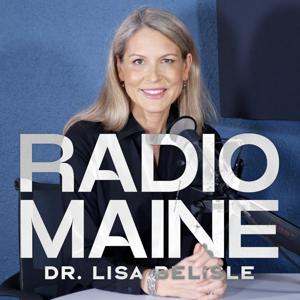


For 50 years, Mel Allen has been listening for stories. His first published piece appeared in the Maine Sunday Telegram in 1975, beginning a career that would take him throughout Maine and eventually to Yankee Magazine, where he rose from senior editor to editor-in-chief. Along the way, he met people whose lives might have unfolded in very different corners of New England but whose experiences revealed something larger about compassion, loss, community, and what connects us.
Many of those stories are gathered in his book, Here in New England: Unforgettable Stories of People, Places, and Memories That Connect Us All. Mel shares some of the people who have stayed with him: Samantha Smith's mother rebuilding a life after unimaginable loss; a community of tour boat captains stepping in after one of their own was catastrophically injured; and Mainers rallying around families and neighbors when life changed without warning.
Mel and Dr. Lisa consider why those stories may feel especially important now. In a moment when polarization can make people feel increasingly disconnected, Mel believes people are hungry for reminders that human beings are capable of more than accusation, fear, and division. The stories he has collected are rooted in particular people and places, but the emotions within them are not limited to New England.
They also explore Mel's approach to storytelling itself: curiosity, listening without relying on a fixed list of questions, earning the trust of the person whose story he is telling, and recognizing the responsibility that comes with putting another person's life into words. That philosophy has shaped not only his journalism but decades of teaching, from his earliest years as a fourth-grade teacher in Gorham to the writers he continues to teach today. Now 80 and retired from going into the office, Mel says he is not retired from looking for stories, reading great writing, or teaching. He and Lisa also consider what storytelling means in the age of AI - and why Mel believes human experience still supplies the heart, empathy, and texture that make a story worth remembering.
Join Dr. Lisa Belisle for this conversation with Mel Allen today on Radio Maine.
More Radio Maine episodes: https://radiomaine.com/episodes.html
Portland Art Gallery: https://portlandartgallery.com
Jeff Zachau grew up around construction. His father started a small carpentry business in 1969, his mother kept the books, and Jeff spent weekends and summers helping wherever he could. After graduating from the University of Maine with a background in accounting and finance, there wasn’t much discussion about what came next: the Monday after graduation, he went to work alongside his father.
Nearly four decades later, Zachau Construction has changed considerably—but Jeff believes many of the values behind it have not. Building honest relationships, doing good work, continuing to grow, giving back, and approaching problems with a positive attitude have become the articulated principles of a company whose culture Jeff traces back to his father’s earliest years in business.
Now Jeff is considering what it means to carry that legacy forward. After years of succession planning, Zachau Construction transitioned to employee ownership through an ESOP, creating an opportunity for employees to build meaningful value in the company themselves. At the same time, Jeff is watching a new generation enter Maine’s construction industry—bringing new technology and education to work that has traditionally depended heavily on hands-on experience and craftsmanship.
Jeff and Lisa also explore the creativity inherent in construction and business, the importance of creating opportunities for younger Mainers, and why growth doesn’t have to be measured only in revenue. For Jeff, it can mean giving talented people room to grow—and trusting them to help determine what comes next.
Join Dr. Lisa Belisle for this conversation with Jeff Zachau today on Radio Maine.
Dr. Carrie Niederman knew something had changed.
An athlete and veterinarian with a background in biochemistry, Carrie became suddenly ill in 2009 after what initially seemed like a viral infection. She never returned to her previous level of health. But as test after test came back normal, finding an explanation became increasingly difficult. Over the next eight years, Carrie moved through a healthcare system that often didn't know what to do with a patient whose symptoms were real but difficult to measure.
Eventually diagnosed with myalgic encephalomyelitis/chronic fatigue syndrome (ME/CFS), Carrie began confronting not only the realities of chronic illness, but the loss of the life she had known. She even gave her illness a name—“Vivi”—as part of learning to live with it rather than spending the rest of her life chasing the person she had been before.
Her experience also exposed gaps in a medical system she understood from the other side as a clinician: short appointments, fragmented specialty care, diagnostic uncertainty, and biases that can prevent patients from being fully heard. Carrie and Lisa consider what happens when a clinician doesn't have an answer—and why curiosity, continuity, and simply believing that a patient's experience is real can still be meaningful forms of care.
Now Carrie is bringing that perspective to future physicians, sharing her story with medical students in the hope that one encounter might cause someone to approach a complicated patient differently.
Join Dr. Lisa Belisle for this conversation with Dr. Carrie Niederman today on Radio Maine.
More Radio Maine episodes: https://radiomaine.com/episodes.html
Portland Art Gallery: https://portlandartgallery.com
Bibby Gignilliat stopped painting at age 10 after an encounter with a critical teacher helped turn her into a perfectionist. But the idea of becoming an artist never completely disappeared. After eight different careers and two decades running a successful culinary team-building company, Gignilliat began creating a runway toward the life she really wanted. She returned to painting, initially feeling like the worst student in the room, and eventually discovered a visual language built from collage, found materials, intuition, and layers of personal history. That process has taken on new meaning following the recent deaths of both her parents. Her mother’s paper dolls, report cards, family documents, and other saved fragments are now finding their way into paintings—sometimes visible, sometimes buried beneath the surface. Among those papers, Gignilliat even discovered a message from her younger self: she wanted to be an artist and a teacher. Join Dr. Lisa Belisle for this conversation with Bibby Gignilliat on Radio Maine. Full episode page: https://radiomaine.com/episodes/when-what-we-keep-becomes-art-bibby-gignilliat More Radio Maine episodes: https://radiomaine.com/episodes.html Portland Art Gallery: https://portlandartgallery.com/artist/bibby-gignilliat
Most of us already know the basics: move more, eat better, manage stress, stop working at a reasonable hour. So why can doing those things still feel so difficult? Wellness coach Jason Gootman calls the space between knowing and actually changing the “implementation gap.” In this conversation, he explains why lasting change depends less on willpower than on learning specific skills—and why making a healthy choice convenient, enjoyable, and personally meaningful can be far more effective than simply trying harder. Jason also turns the tables on Dr. Lisa Belisle, coaching her through a familiar challenge of working from home: how to step away from the screen and create a real end to the workday. Their exchange reveals why small steps, supportive relationships, and even our instinct for instant gratification can work in our favor. Join Dr. Lisa Belisle for this conversation with Jason Gootman today on Radio Maine. Full episode page: https://radiomaine.com/episodes/why-knowing-what-to-do-isnt-enough-jason-gootman More Radio Maine episodes: https://radiomaine.com/episodes.html Portland Art Gallery: https://portlandartgallery.com
Sometimes helping someone isn’t about doing something for them. It’s about standing beside them long enough for them to discover what they can do themselves. Stella Libby learned that lesson early, accompanying her grandfather as he volunteered with Maine Adaptive. Years later, while coaching Special Olympics athletes, she watched a skier attempt a bigger trail after Stella and others convinced her she could. That same belief in meeting people where they are now shapes Stella’s work with Best Buddies—and her plans for a career in veterinary medicine. In this conversation, Stella reflects on why genuine inclusion requires more than simply saying everyone is welcome, what 2,500 people gathered around a shared purpose taught her about community, and why caring for an animal sometimes begins with listening to the person who loves it. Across very different settings, her philosophy remains remarkably consistent: pay attention, understand what someone needs, and show up. Join Dr. Lisa Belisle for this conversation with Stella Libby today on Radio Maine. Full episode page: https://radiomaine.com/episodes/the-most-powerful-thing-you-can-do-is-show-up-stella-libby More Radio Maine episodes: https://radiomaine.com/episodes.html Portland Art Gallery: https://portlandartgallery.com
A hospital that looked dirty helped Dr. Stephanie Taylor question what a healthy environment actually is. While working in Papua New Guinea, she expected poor infection outcomes amid cracked concrete floors, limited gloves, and conditions that seemed far less sterile than American hospitals. Instead, patients often did surprisingly well. That experience helped send Taylor, a Harvard-trained physician, back to school for a master’s in architecture—and toward a career studying the largely invisible relationship between buildings and human health. In this conversation, she explains why dry indoor air can weaken our natural defenses within minutes, why eliminating microbes isn’t necessarily desirable, and how humidity, ventilation, building materials, and even dogs can influence the microbial environments that surround us. Taylor makes the case for treating human health as a measure of how well a building performs—and for moving medicine further toward prevention. Join Dr. Lisa Belisle for this conversation with Dr. Stephanie Taylor today on Radio Maine. Full episode page: https://radiomaine.com/episodes/what-if-the-building-is-part-of-the-treatment-dr-stephanie-taylor More Radio Maine episodes: https://radiomaine.com/episodes.html Portland Art Gallery: https://portlandartgallery.com
Watercolor asks an artist to give up something most of us spend our lives trying to hold onto: control. For Marion Wilson, that willingness to collaborate with water has become especially meaningful during a season of profound change. After years of teaching and creating ambitious public art projects, Marion lost the institutional support that had helped sustain that work. Instead of fighting her way back in, she asked a different question: What would it mean to become a painter again? That decision eventually led her toward a quieter, more personal daily practice. Now, following the recent death of her mother—an artist who lived determinedly on her own terms—Marion is giving herself permission to paint without judgment or expectations. She talks about grief, the freedom to break artistic rules, what plants can teach us, and why losing one path can sometimes make room for another. Join Dr. Lisa Belisle for this conversation with Marion Wilson today on Radio Maine. Full episode page: https://radiomaine.com/episodes/what-her-mother-taught-her-about-breaking-the-rules-artist-marion-wilson More Radio Maine episodes: https://radiomaine.com/episodes.html Portland Art Gallery: https://portlandartgallery.com/artist/marion-wilson
Growing up inside New York’s postwar art world gave Gina Sawin an extraordinary education. But becoming her own artist required something else: getting away from the center of it. In Maine, Sawin found the space to develop a painting practice rooted in birds, the natural world, and the delicate ecosystems her husband, conservationist Charles Gauvin, taught her to see more closely. Her paintings may appear to capture a flock observed in flight, but Sawin reveals that they are carefully constructed—composed to create the feeling of something that never existed exactly as painted. She and Lisa also consider the ancient human impulse to depict animals, from 25,000-year-old cave paintings to Sawin’s contemporary birds, and why solitude is only part of an artist’s life. Even alone in the studio, Sawin says, generations of teachers and artists remain present. Join Dr. Lisa Belisle for this conversation with Gina Sawin today on Radio Maine. Full episode page: https://radiomaine.com/episodes/the-freedom-of-not-being-at-the-center-artist-gina-sawin More Radio Maine episodes: https://radiomaine.com/episodes.html Portland Art Gallery: https://portlandartgallery.com
From the publisher's feed