
Sign up to save your podcasts
Or

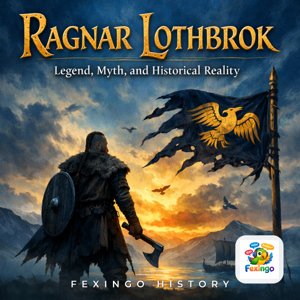


In this episode, Lucas and Luna delve into one of the most controversial and gruesome legends associated with Ragnar Lothbrok: the blood eagle. Was this a real Viking execution method, or a Christian invention to demonize the Norse? They explore the earliest sources, including the skaldic poem Knútsdrápa and the Gesta Danorum, and discuss the scholarly debate sparked by historians like Roberta Frank and Alfred Smyth. The hosts examine the lack of archaeological evidence, the practical improbability of the ritual, and the literary motifs that may have inspired the story. They also consider how the blood eagle legend has shaped modern perceptions of Viking brutality and its role in Ragnar's saga. Join them for a nuanced look at how myth and history intersect in the tale of Ragnar Lothbrok's death.
#Vikings #BloodEagle #RagnarLothbrok #GestaDanorum #Knútsdrápa #RobertaFrank #AlfredSmyth #SkaldicPoetry #ExecutionRitual #MythHistory #AngloSaxonChronicle #Northumbria #KingAella #Blóðörn #MedievalLegend #VikingMythology #History #FexingoHistory
Keep every episode free: buymeacoffee.com/fexingo
While the Great Heathen Army of 865 dominates the popular imagination, the Viking raids of the early ninth century were smaller, more opportunistic, and utterly devastating to coastal communities. In this episode, Lucas and Luna examine one of the most dramatic early raids: the attack on the monastery of Noirmoutier off the coast of Aquitaine in 799 AD. They explore how Frankish sources—like the Annals of Saint-Bertin and the Chronicle of Moissac—document these first encounters with Scandinavian raiders, long before Ragnar Lothbrok's supposed siege of Paris. The conversation unpacks the logistical realities of early Viking ships, the role of island bases like Noirmoutier for overwintering, and the surprising detail that the raiders in 799 were actually Frisian-speaking Danes hired by a local Frankish count. Lucas explains how this raid fits into the broader pattern of Scandinavian expansion, the weakness of Carolingian coastal defenses under Charlemagne, and why the monastery's community eventually abandoned the island altogether. No blood eagles, no great heathen armies—just the messy, human-scale beginning of an era that would reshape Europe. This episode also includes a brief, sincere mention of how listener support keeps the podcast ad-free.
#Noirmoutier #VikingRaids #Carolingian #Charlemagne #AnnalesBertiniani #ChronicleOfMoissac #Aquitaine #Frisians #Danes #799AD #VikingShips #EarlyMiddleAges #MonasteryRaids #CoastalDefense #VikingBases #ScandinavianExpansion #History #FexingoHistory
Keep every episode free: buymeacoffee.com/fexingo
In this episode, Lucas and Luna explore how the Great Heathen Army navigated its way across ninth-century Europe. They discuss Viking navigation techniques, including sunstones, landmark piloting, and the controversial Uunartoq disc. Lucas explains how the army's 865 landing in East Anglia was planned around coastal geography and tides, and how later winter camps like Torksey and Repton relied on river systems. The conversation also touches on the debate among historians over whether Vikings used magnetic compasses or relied on oral sailing directions, drawing on the Hauksbók manuscript and recent archaeological experiments. They finish by reflecting on how the army's mobility allowed it to shock Anglo-Saxon kingdoms out of their defensive grid.
#VikingNavigation #GreatHeathenArmy #Sunstone #UunartoqDisc #Torksey #Repton #Hauksbók #EastAnglia #AngloSaxonChronicle #Danelaw #NorseSeafaring #MycelHæþenHere #LucasAndLuna #FexingoHistory #History #NorthernEurope #RagnarLothbrok #VikingAge
Keep every episode free: buymeacoffee.com/fexingo
Ragnar Lothbrok's sons didn't just raid — they built kingdoms. This episode traces the Uí Ímair dynasty from the conquest of York in 866 to the last Norse king of Jórvík, Eric Bloodaxe, in 954. We explore how Ívarr inn beinlausi and Halfdan transitioned from the Great Heathen Army to settled rule, minting coins at York and blending Scandinavian and Anglo-Saxon traditions. We also look at the contested identity of the Uí Ímair — were they really Ragnar's sons? What do the Irish annals and the Anglo-Saxon Chronicle actually say? And we consider the fate of Eric Bloodaxe, whose death marks the end of independent Viking rule in Northumbria. From the first winter at Torksey to the last king expelled from York, this is the story of how Viking warlords became medieval monarchs.
#UíÍmair #York #Jórvík #EricBloodaxe #Ívarrinnbeinlausi #HalfdanRagnarsson #VikingKings #Northumbria #AngloSaxonChronicle #GreatHeathenArmy #Danelaw #VikingCoinage #NorseDublin #NorseHistory #VikingAge #MedievalHistory #History #FexingoHistory
Keep every episode free: buymeacoffee.com/fexingo
In this episode, Lucas and Luna explore the historical traces of Ragnar Lothbrok's sons as recorded in Frankish annals and Irish chronicles, moving beyond the Norse sagas. They focus on Ívarr inn beinlausi, Halfdan, and Amlaíb Conung, examining how contemporary sources like the Annales Bertiniani and the Fragmentary Annals of Ireland describe these figures. The discussion covers the Uí Ímair dynasty's activities in Ireland and Britain, the siege of Paris in 845, and the enigmatic figure of Amlaíb Conung. Lucas explains the scholarly debate about whether these historical figures were actually sons of Ragnar, or if the saga tradition later invented that connection. The episode also touches on the blood eagle controversy, contrasting saga accounts with Frankish evidence. Listeners will come away with a clear understanding of what we actually know from 9th-century sources versus later legend.
#RagnarLothbrok #UíÍmair #Ívarrinnbeinlausi #HalfdanRagnarsson #AmlaíbConung #AnnalesBertiniani #FragmentaryAnnals #SiegeofParis845 #VikingAge #FrankishChronicles #IrishHistory #MedievalHistory #NorseSagas #HistoricalLegend #Danelaw #GreatHeathenArmy #History #FexingoHistory
Keep every episode free: buymeacoffee.com/fexingo
In this episode, Lucas and Luna explore Ragnar Lothbrok's interactions with the Frankish Empire, focusing on the famous siege of Paris in 845 and the broader Carolingian response to Viking raids. They discuss the historical context of the siege, the role of Charles the Bald, the payment of Danegeld, and the lasting impact on Frankish defenses. The conversation also touches on the reliability of sources like the Annals of St. Bertin and the conflicting accounts of Ragnar's death. Along the way, they examine the evolution of Viking warfare and diplomacy in Western Europe, shedding light on a less-explored chapter of the Lothbrok legend.
#RagnarLothbrok #SiegeOfParis845 #CharlesTheBald #Vikings #FrankishEmpire #Danegeld #AnnalesBertiniani #Carolingian #VikingWarfare #WestFrankia #Einhard #Oseberg #RagnarsSaga #GestaDanorum #NorthSea #MedievalEurope #History #FexingoHistory
Keep every episode free: buymeacoffee.com/fexingo
In this episode of Fexingo History, Lucas and Luna explore the iconic Viking raid on Lindisfarne in 793 CE, a pivotal event that launched the Viking Age in the popular imagination. They examine the historical context of the raid, the monastery's significance, and the varied reactions recorded in sources like the Anglo-Saxon Chronicle and Alcuin's letters. The conversation delves into whether the raid was a one-off or part of a larger pattern, the ships and tactics used, and the legacy of Lindisfarne as a symbol of Viking terror. Lucas explains how the raid challenged Christian certainties and reshaped defensive strategies across England, while Luna asks sharp questions about the raiders' origins and motivations. They also touch on the scholarly debate over whether earlier raids occurred and how the event has been mythologized over centuries. This episode offers a nuanced look at a turning point in European history, blending archaeological evidence, textual analysis, and cultural memory.
#RagnarLothbrok #Lindisfarne #VikingAge #793 #AngloSaxonChronicle #Alcuin #Northumbria #MonasteryRaids #VikingShips #VikingRaids #EarlyMedieval #EnglishHistory #NorthSea #PaganRaiders #Christianity #History #FexingoHistory #VikingMyth
Keep every episode free: buymeacoffee.com/fexingo
In this episode, Lucas and Luna explore the Viking discovery and settlement of Iceland, a story that connects to the legendary Ragnar Lothbrok through his son Ívarr inn beinlausi and the Uí Ímair dynasty. They discuss the early Norse explorers—Naddoddur, Garðar Svavarsson, and Flóki Vilgerðarson—and the permanent settler Ingólfr Arnarson, who founded Reykjavík in 874. The conversation covers the Landnámabók, the Althing established in 930, and the adaptation of Norse society to a new land. They also touch on the controversial theory that Irish monks (Papar) may have preceded the Vikings, and how Iceland became a refuge for those fleeing the consolidation of power in Scandinavia and the British Isles. Finally, they reflect on how the sagas—including Ragnars saga loðbrókar—were written down in Iceland, preserving Viking history for future generations.
#Iceland #Viking #RagnarLothbrok #Landnámabók #IngólfrArnarson #Reykjavík #Althing #Naddoddur #GarðarSvavarsson #FlókiVilgerðarson #Papar #IrishMonks #Settlement #Norse #Sagas #FexingoHistory #History #NorthernEurope
Keep every episode free: buymeacoffee.com/fexingo
The blood eagle — blóðörn — is the most notorious Viking execution method, but did it ever actually happen? In this episode, Lucas and Luna dig into the evidence: the skaldic verses that describe it, the sagas that dramatize it, and the skeptical historians who argue it was a medieval Christian invention designed to demonize Vikings. They examine the accounts in Ragnars saga loðbrókar and Gesta Danorum of King Ælla's death, compare them with the more restrained Anglo-Saxon Chronicle, and consider the forensic plausibility of the ritual. Along the way, they touch on the etymology of the term, the only possible reference in skaldic poetry (the Knútsdrápa), and the role of the blood eagle in shaping modern pop culture's image of Viking brutality. The conversation is grounded in scholarship from Roberta Frank, Alfred Smyth, and others who have debated the historical reality of this grisly rite. Whether the blood eagle was real or propaganda, its power as a symbol of Viking otherness remains undimmed.
#RagnarLothbrok #BloodEagle #Blóðörn #VikingRitual #KingÆlla #RagnarsSaga #GestaDanorum #SkaldicVerse #Knútsdrápa #AngloSaxonChronicle #VikingExecution #MedievalPropaganda #RobertaFrank #AlfredSmyth #VikingHistory #NorthernEurope #FexingoHistory #History
Keep every episode free: buymeacoffee.com/fexingo
Where does the legend of Ragnar Lothbrok come from? In this episode, Lucas and Luna explore the medieval sources that created the myth: the 13th-century Ragnars saga loðbrókar, Saxo Grammaticus's Gesta Danorum, and the fragmentary skaldic verses attributed to Ragnar himself. They examine how the sagas blend history, folklore, and poetic invention—tracing the story of Ragnar's serpent-filled pit, his death at the hands of King Ælla, and the revenge of his sons. Lucas explains why scholars debate the historicity of the blood eagle (blóðörn), how the skaldic tradition preserved oral tales, and what the Anglo-Saxon Chronicle and Irish annals reveal about a real 9th-century Viking leader named Ragnar. The conversation also touches on the Uí Ímair dynasty in Dublin, the differences between saga versions, and why the legend endures. No clickbait—just careful history.
#RagnarLothbrok #RagnarsSaga #SaxoGrammaticus #GestaDanorum #SkaldicVerse #Blóðörn #VikingHistory #MedievalLegend #AngloSaxonChronicle #UíÍmair #DublinVikings #KingÆlla #BloodEagle #NorseSaga #VikingAge #History #FexingoHistory #Podcast
Keep every episode free: buymeacoffee.com/fexingo
From the publisher's feed