
Sign up to save your podcasts
Or

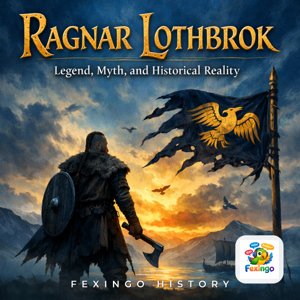


Where does the legend of Ragnar Lothbrok come from? In this episode, Lucas and Luna explore the medieval sources that created the myth: the 13th-century Ragnars saga loðbrókar, Saxo Grammaticus's Gesta Danorum, and the fragmentary skaldic verses attributed to Ragnar himself. They examine how the sagas blend history, folklore, and poetic invention—tracing the story of Ragnar's serpent-filled pit, his death at the hands of King Ælla, and the revenge of his sons. Lucas explains why scholars debate the historicity of the blood eagle (blóðörn), how the skaldic tradition preserved oral tales, and what the Anglo-Saxon Chronicle and Irish annals reveal about a real 9th-century Viking leader named Ragnar. The conversation also touches on the Uí Ímair dynasty in Dublin, the differences between saga versions, and why the legend endures. No clickbait—just careful history.
#RagnarLothbrok #RagnarsSaga #SaxoGrammaticus #GestaDanorum #SkaldicVerse #Blóðörn #VikingHistory #MedievalLegend #AngloSaxonChronicle #UíÍmair #DublinVikings #KingÆlla #BloodEagle #NorseSaga #VikingAge #History #FexingoHistory #Podcast
Keep every episode free: buymeacoffee.com/fexingo
In 1014, a battle on the coast of Dublin pitted the Viking king of the city, Sigtryggr Silkbeard, against an Irish alliance led by Brian Boru. This episode explores how the sons of Ragnar Lothbrok's descendants fought their last great battle in Ireland at Clontarf. We follow the Uí Ímair dynasty from their base in Dublin, their alliances with Irish kings like Máel Sechnaill, and the complex politics of early 11th-century Ireland. The battle itself was a brutal affair—thousands died, including Brian Boru, his son, and many Viking leaders. We also look at the aftermath: how the Uí Ímair survived but lost their dominance, and how the legend of Clontarf grew into a foundational Irish myth. Along the way, we touch on the crucial role of the Hiberno-Norse forces, the use of axe and sword, and the shifting loyalties that defined the era. If you've been following the story of Ragnar's sons in Ireland, this is the final chapter.
#Clontarf #BrianBoru #SigtryggrSilkbeard #UíÍmair #BattleofClontarf #VikingsInIreland #Dublin #HibernoNorse #NorseIrish #VikingAge #1014 #MedievalIreland #IrishHistory #VikingHistory #VikingDynasty #FexingoHistory #History #Podcast
Keep every episode free: buymeacoffee.com/fexingo
In this episode, we explore the legendary wives of Ragnar Lothbrok: Thora Borgarhjort and Aslaug, also known as Kráka. Drawing from the Völsunga saga, Ragnars saga loðbrókar, and Gesta Danorum by Saxo Grammaticus, we examine how these women shape Ragnar's story—and what they reveal about Viking-age ideals of queenship, prophecy, and family. We discuss Aslaug's supposed supernatural lineage as the daughter of Sigurðr Fáfnisbani and Brynhildr, her prophetic warnings that her sons would inherit her beauty and ambition, and the tale of her marriage test—arriving naked but covered by her long hair and a fishing net. We also compare the saga accounts with Saxo's more rationalized version, where Aslaug becomes a cunning manipulator. Was Aslaug a historical figure or purely mythological? We look at the archaeological evidence from Oseberg and other high-status female burials to ask what real Viking-age queenship looked like. Along the way, we touch on the possible historical kernel behind these tales—perhaps Ragnar's wife was a Danish princess who strengthened his political claims. The episode also includes our listener-supported, ad-free mission: if you enjoy this deep dive into legend and history, consider supporting us at buy me a coffee dot com slash fexingo.
#RagnarLothbrok #Aslaug #ThoraBorgarhjort #VikingQueens #RagnarsSaga #GestaDanorum #SaxoGrammaticus #VölsungaSaga #NorseMythology #VikingAge #Queenship #Prophecy #Legend #History #FexingoHistory #Podcast #NorthernEurope #Skalds
Keep every episode free: buymeacoffee.com/fexingo
This episode digs into the Irish branch of Ragnar Lothbrok's legacy — the Uí Ímair, or 'Descendants of Ívarr'. While the Great Heathen Army ransacked England, Ívarr the Boneless and his kin built a hybrid Norse-Gaelic kingdom in Dublin that lasted for centuries. We trace the career of Amlaíb Conung, the first Norse king of Dublin, and his alliance with the Irish king Cerball mac Dúnlainge. We examine the gall goídil — 'foreign Gaels' — who blurred the line between Viking and Irish. And we ask: was the Uí Ímair a genuine dynasty, or a later saga invention? Drawing on the Fragmentary Annals of Ireland, the Annals of Ulster, and recent DNA studies from Dublin excavations, we untangle fact from medieval political myth.
#UíÍmair #ÍvarrInnBeinlausi #AmlaíbConung #Dublin #VikingAgeIreland #NorseGaelic #GallGoídil #CerballMacDúnlainge #FragmentaryAnnals #AnnalsOfUlster #GreatHeathenArmy #RagnarLothbrok #VikingDublin #WoodQuay #VikingDNA #FexingoHistory #MedievalIreland #History
Keep every episode free: buymeacoffee.com/fexingo
Lucas and Luna explore the rich tradition of skaldic poetry associated with Ragnar Lothbrok and his legendary exploits. They examine how skalds like Bragi Boddason and Þorbjörn hornklofi composed verses that shaped the myth of Ragnar, and discuss the historical context of skaldic verse in Viking-era Scandinavia. The episode covers key poems such as Ragnarsdrápa and Haraldskvæði, the role of skalds in preserving oral histories, and the challenges of using skaldic poetry as a historical source. They also touch on the influence of skaldic tropes on the later sagas, including Ragnars saga loðbrókar and Gesta Danorum.
#SkaldicPoetry #RagnarLothbrok #VikingAge #NorseMythology #BragiBoddason #Ragnarsdrápa #ÞorbjörnHornklofi #Haraldskvæði #OralTradition #VikingSkalds #GestaDanorum #SaxoGrammaticus #RagnarsSaga #NorsePoetry #Dróttkvætt #History #FexingoHistory #VikingLegend
Keep every episode free: buymeacoffee.com/fexingo
Episode 155 of Fexingo History explores the Irish dimension of the Ragnar Lothbrok legend. Lucas and Luna trace the careers of Ívarr inn beinløysi and his brothers after the Great Heathen Army's campaigns in England, focusing on their establishment of the Uí Ímair dynasty in Dublin. They examine the archaeological evidence from Dublin's Viking waterfront, the political machinations between Norse-Gaelic kings and Irish overkings like Cerball mac Dúnlainge of Osraige, and the controversial figure of Amlaíb Conung—sometimes identified with Óláfr, son of Ragnar. The episode weighs the sagas' claims against contemporary Irish annals such as the Fragmentary Annals of Ireland and the Annals of Ulster, revealing how the 'Ragnarssons' became instruments of Irish political propaganda. Lucas unpacks the term 'gall goídil' (foreign Gaels) and the hybrid culture that emerged, with Dublin minting its own silver pennies under Sihtric Cáech. The conversation ends by questioning how much of the Ragnar legend was retrojected onto historical figures to legitimize later Norse-Gaelic rulers.
#RagnarLothbrok #UíÍmair #Dublin #Vikings #NorseIreland #AmlaíbConung #CerballmacDúnlainge #FragmentaryAnnals #AnnalsofUlster #GallGoídil #SihtricCáech #NorseGaelic #GreatHeathenArmy #VikingAge #MedievalIreland #IrishAnnals #History #FexingoHistory
Keep every episode free: buymeacoffee.com/fexingo
In this episode, Lucas and Luna explore the figure of Lagertha, the legendary shieldmaiden associated with Ragnar Lothbrok in Saxo Grammaticus's Gesta Danorum. They dig into the historical plausibility of Viking warrior women, examining archaeological evidence like the Birka grave Bj 581, which suggests a high-status female warrior. The conversation also touches on the sagas' portrayal of Lagertha compared to other legendary women like Freydís Eiríksdóttir, and how modern pop culture has reshaped her image. Along the way, they discuss Saxo's possible sources, the role of women in Viking society, and what the written sources actually tell us versus what we want to believe.
#Lagertha #Shieldmaiden #VikingWomen #GestaDanorum #SaxoGrammaticus #Birka #Bj581 #FreydísEiríksdóttir #VikingAge #WomenWarriors #Archaeology #Sagas #RagnarLothbrok #PopCulture #History #FexingoHistory #NorthernEurope #Medieval
Keep every episode free: buymeacoffee.com/fexingo
This episode explores the conflicting accounts of Ragnar Lothbrok's death. Did the legendary Viking die in a snake pit at the hands of King Ælla of Northumbria, as the sagas claim? Or did he meet his end in a storm while raiding the Frankish coast, as the Frankish annals suggest? Lucas and Luna examine the key sources: the Old Norse Ragnars saga loðbrókar, Saxo Grammaticus' Gesta Danorum, and the contemporary Annales Bertiniani. They discuss the political motivations behind the embellished saga version, the historical context of the 840s, and how the legend of Ragnar's death fueled the Great Heathen Army's invasion of England in 865. Along the way, they unpack the 'blood eagle' execution, the role of Ivar the Boneless in the revenge narrative, and what archaeology tells us about Viking kingship in the ninth century.
#RagnarLothbrok #VikingHistory #RagnarsSaga #GestaDanorum #AnnalesBertiniani #KingAella #IvarTheBoneless #BloodEagle #SnakePit #GreatHeathenArmy #Northumbria #VikingDeath #LegendVsHistory #NinthCentury #NorseMythology #Podcast #History #FexingoHistory
Keep every episode free: buymeacoffee.com/fexingo
In 872, the Great Heathen Army, led by Ivar the Boneless and Halfdan Ragnarsson, encamped at Torksey in Lincolnshire, a strategic winter base that reshaped Viking logistics in England. This episode examines the archaeological evidence from Torksey—thousands of coins, hack-silver, and trade goods that reveal how the army sustained itself through plunder, tribute, and long-distance trade networks stretching from the Baltic to Ireland. We explore the relationship between the winter camps at Torksey and Repton, the role of the River Trent in Viking mobility, and what the finds tell us about the army's internal economy and social structure. Drawing on the Anglo-Saxon Chronicle, coin hoards, and recent excavations, Lucas and Luna discuss how Torksey became a hub for recycling Anglo-Saxon wealth into Viking power. This episode offers a ground-level view of the mycel hæþen here—not just as conquerors, but as complex communities adapting to English soil.
#Torksey #GreatHeathenArmy #IvartheBoneless #HalfdanRagnarsson #VikingLogistics #AngloSaxonChronicle #Danelaw #HackSilver #VikingWinterCamp #Lincolnshire #RiverTrent #VikingArchaeology #CoinHoards #VikingEconomy #MycelHaethenHere #VikingAge #MedievalHistory #FexingoHistory
Keep every episode free: buymeacoffee.com/fexingo
Lucas and Luna explore the Ladby ship burial in Denmark, the only intact Viking ship burial found in the country. They discuss its discovery in 1935, the 21-meter-long ship with 32 shields, the remains of a horse and dog, and the absence of a human body. They examine how this site connects to the legend of Ragnar Lothbrok, the rituals of the Sea-Slavic Jomsvikings, and the Christian conversion that ended such burials. The episode shines a light on what archaeology can and cannot tell us about the Viking Age.
#LadbyShipBurial #RagnarLothbrok #VikingShipBurial #VikingRituals #FynDenmark #Jomsvikings #VikingAgeArchaeology #ShipBurial #ShieldDecoration #HorseSacrifice #DogSacrifice #VikingDeathRituals #GreatHeathenArmy #AngloSaxonChronicle #VikingFuneral #ScandinavianHistory #History #FexingoHistory
Keep every episode free: buymeacoffee.com/fexingo
From the publisher's feed