
Sign up to save your podcasts
Or

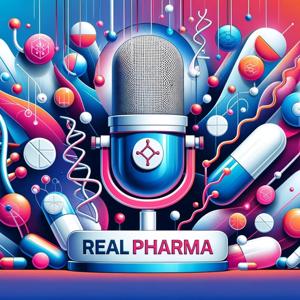


🎙️ Real Pharma – Episode Title: Breaking the Silence: Why Pharma Needs to Speak Up
In this episode of Real Pharma, Na-Ri and Ian sit down with Brian Reid—a healthcare communicator, strategist, and former journalist who's worked across government, pharma, and media—to explore a provocative question: Why is the pharmaceutical industry so quiet when it comes to telling its own story?
Together, they unpack the communication failures shaping drug pricing, PBMs, the Inflation Reduction Act (IRA), biosimilars, and the broader healthcare system. Brian argues that the problem isn’t a lack of data or platforms—it’s a lack of courage, clarity, and commitment to narrative.
From the importance of speaking up in a noisy media environment to the myth of reputational risk, this conversation is a must-listen for anyone in life sciences, policy, or healthcare storytelling.
Why pharma’s “default to silence” is damaging public trust—and what the industry can do instead
The communications trap around complex topics like PBMs, pricing, and benefit design
How public perception problems could have been avoided with smarter storytelling (hello, Hep C)
Why simplicity is power—and how “pharm-to-table” and Mark Cuban are reframing the narrative
The case for overcommunication in the face of misinformation and AI-driven “slop”
Why the Medicare Prescription Payment Plan was a missed communication opportunity—and how to fix it
“We're in a 30-year experiment of what happens when pharma steps back from the policy debate—and the results are in.” – Brian Reid
“I just want pharma to beat Bigfoot in public trust. That’s my goal.” – Brian Reid
“When in doubt, just shout. Say something. Do something.” – Na-Ri Oh
“It’s not always about having the perfect message—it’s about showing up and making the case.” – Ian Wendt
Cost Curve – Brian Reid’s daily newsletter on healthcare policy: ReidStrategic.com
KFF’s piece on complexity as a barrier to affordability
Examples from Mark Cuban’s Cost Plus Drugs and Eli Lilly CEO Dave Ricks’ public podcast appearances
💼 Website: ReidStrategic.com
📬 Newsletter: Cost Curve
💬 LinkedIn: Brian Reid
Episode Title: Formulation as Strategy: Why CDMOs Matter More Than Ever
In this episode of RealPharma, hosts Nari Oh and Ian Wendt sit down with Elizabeth Hickman, President and CEO of Austin Pharmaceutics, to unpack one of the most critical—and often misunderstood—elements of drug development: formulation and the evolving role of CDMOs.
As drug molecules become more complex and solubility challenges grow, CDMOs are no longer just manufacturing vendors. They are strategic partners helping biotech and pharma companies bridge the gap between discovery and commercialization. Elizabeth shares her journey from commercial pharma leadership to running a science-driven CDMO, and explains why formulation decisions made early can determine whether a promising molecule ever reaches patients.
The expanding role of CDMOs
Why formulation is make-or-break
From “undruggable” to developable
Inside Austin Pharmaceuticals’ approach
Small biotech vs. big pharma dynamics
Patient impact starts with formulation
The future of CDMOs
“Formulation is where promising molecules either become viable drugs—or stall out.”
Solving in-vivo performance alone isn’t enough; scalability and manufacturability must be designed in from day one.
The best CDMO relationships are built on transparency, urgency, and shared long-term vision.
Advanced formulation isn’t just a technical advantage—it’s a competitive and economic one.
Elizabeth Hickman is President and CEO of Austin Pharmaceutics, a U.S.-based early-phase CDMO specializing in formulation development for challenging small-molecule drugs. With a background spanning commercial strategy, drug launches, and executive leadership, Elizabeth brings a sponsor-centric mindset to CDMO partnerships—helping clients accelerate innovation while reducing risk.
🎧 Hosts: Na-Ri Oh & Ian Wendt
In this thought-provoking episode, hosts Na-Ri Oh and Ian Wendt sit down with Emma Cousin, a PhD candidate at the Choice Institute, University of Washington, to unpack the real-world implications of the Inflation Reduction Act (IRA)—particularly the Medicare Drug Price Negotiation Program.
Joining them is Amos Fung, a RealPharma intern who brings a front-line pharmacy perspective to the policy conversation.
Together, they discuss:
📜 A primer on the IRA’s healthcare provisions—what it is, how it came to be, and why it matters now.
💊 How CMS selects drugs for Medicare negotiation and whether this process constitutes true “negotiation.”
👩⚕️ The ripple effects on pharmacists, pharmacies, and patient care.
💸 The looming concerns around cashflow, operational readiness, and access as the 2026 implementation date approaches.
🧠 How researchers like Emma are modeling long-term effects—and what metrics we’ll need to track to assess the IRA’s success.
🔄 Unintended consequences and who might be left behind—especially independent pharmacies and vulnerable communities.
📈 A candid discussion on myths around drug pricing and why “good intentions” in policy still need strong evidence and thoughtful execution.
The IRA marks the first time Medicare can directly negotiate drug prices—albeit in a tightly structured format that raises questions about the fairness of “negotiation.”
Pharmacies face operational and financial strain, particularly smaller or independent ones, due to rebate lags and implementation complexities.
Patients will benefit from caps on out-of-pocket costs, but awareness and education are lacking—many don’t realize what the law offers.
Stakeholders like pharmacists, researchers, and policy influencers need better communication and clearer technical standards from CMS.
Evidence-based policy should be the north star for drug pricing reforms, but real-world implementation remains messy and evolving.
Brian Reid & Adam Fein – Top newsletters to follow for updates on drug pricing policy.
CMS Guidance Documents – Frequently updated, but often inaccessible to non-policy experts.
National Pharmaceutical Council, Milliman, Portal (Harvard) – Organizations doing forward-looking modeling and policy impact research.
In this episode, hosts Na-Ri Oh and Ian Wendt sit down with Dr. Andrew Gray — immune cell engineer, biotech founder, venture capitalist, and CEO of CellEcho — to explore how a new acoustic-powered gene-delivery platform may redefine the boundaries of cell therapy.
The conversation spans the current state of the cell therapy landscape, the persistent barriers to scalability, and why CellEcho’s ASOP platform (Acoustically Stabilized Oscillatory Pockets) could unlock a new era of faster, cheaper, and more effective cell engineering.
Despite scientific success, many pharma companies are exiting cell therapy due to cost, complexity, and manufacturing burdens.
Conversely, major players like BMS continue doubling down, acquiring companies such as Orbital Therapeutics.
Autologous therapies remain logistically overwhelming and expensive—often ~$400k per dose.
“Vein-to-vein” timelines are still measured in weeks, not days.
Manufacturing is bespoke: each patient’s cells must be extracted, engineered, expanded, frozen, shipped, and reinfused.
Viral vectors and current non-viral delivery methods introduce cost, complexity, and biological limits.
Allogeneic CAR-Ts remain challenging due to immune rejection and complex engineering.
In vivo CAR-T offers promise but is limited by the small genetic “payload capacity” of lipid nanoparticles.
Solid tumors remain particularly difficult: only ~9% response rates in some indications.
CellEcho’s technology emerged from UC Irvine’s microfluidics program. By applying precision acoustic energy, the platform can:
Hold cells in place using thousands of stable micro-eddies
Open controlled, programmable “portals” in cell membranes
Sequentially deliver multiple genetic payloads with high efficiency
Achieve 1 billion cells/hour processing rates
Reduce dose production costs by ~100×
Enable high-throughput engineering, not just manufacturing
This unlocks the ability to test dozens to hundreds of engineered CAR-T variants in days—rather than the years needed today.
One academic lab spent 6 years evaluating 11 CAR-T variants.
While CellEcho originally targeted faster manufacturing, Andrew shares that the bigger opportunity is designing entirely better therapies, not simply making today’s ones faster.
This includes:
Engineering CAR-Ts with multiple CAR constructs
Arming cells with resistance to tumor suppression signals
Precise control over expression levels (avoiding under- or over-expression)
Unlocking new indications: autoimmunity, neurodegeneration, regenerative medicine
Andrew shares how his mother's struggle with myasthenia gravis sparked his lifelong journey in immunology. His 20-year career investigating immune evasion, Tregs, and tumor microenvironments culminated in his conviction that next-generation cell engineering is essential.
Currently initiating pre-seed fundraising
Supported by multiple federal grants (including NSF SBIR)
Expanding early partnerships with Stanford, Mass General Brigham, and industry collaborators
Building a fully automated, AI-augmented cell therapy design platform
Dual strategy:
Cell-therapy-development-as-a-service
Proprietary therapeutic pipeline in select indications
Cell therapy works — but not broadly or efficiently enough.
Engineering complexity, not biology alone, is the rate-limiting step.
Acoustic microfluidics enables a scalable, programmable, non-viral way to engineer living cells.
High-throughput screening for cell therapies could transform discovery the way combinatorial chemistry transformed small molecules.
The real revolution isn’t just faster production — it’s better, more sophisticated therapies.
Visit: https://cellechobio.com
Na-Ri Oh & Ian Wendt
Dr. Ron Shigeta – Biotech visionary, co-founder of IndieBio, and food innovation expert.
In this deeply insightful and refreshingly candid episode, Ian and Nari welcome back biotech veteran Dr. Ron Shigeta to explore the evolving landscape where food, health, and biotech collide. From the collapse of the lab-grown meat hype cycle to the challenges of democratizing access to functional food, Ron brings hard truths, historical context, and cautious optimism to the table.
As the U.S. federal government embraces its Make America Healthy Again (MAHA) agenda—reforming food policy to prioritize public health—the conversation asks:
If you’ve ever wondered whether the future of wellness lies in your fridge, your pharmacy, or your feed, this one’s for you.
MAHA & Food Policy Shifts:
Cultured Meat's Cautionary Tale:
Ultra-Processed vs. Ultra-Useful:
Food as Preventative Medicine:
Pharma’s Cost Spiral & Innovation Trap:
The Neuroscience of Eating:
Why “Food Tech” is Bad Branding:
“Technology for the public will always win—because once people use it, they can’t let it go.” – Ron Shigeta
“We’ve invented healthcare Americans can’t afford.” – Ron Shigeta
“Nobody buys food because it’s high-tech. Nobody. That’s not how trust is built.” – Ron Shigeta
MAHA (Make America Healthy Again) policy initiative
GLP-1s and the rise of preventative obesity drugs
Blue zones and the elusive science of longevity
Golden rice and biotech’s public trust problem
OneSkin and peptide-based functional cosmetics
Ron’s upcoming book on food, neuroscience, and the future of health
🎙 Episode Title: From Job Search to Power Move: How Top Talent’s Playing 2025
Episode Summary
In this episode, Kristiaan Rawlings returns to RealPharma to deliver a data-backed pulse check on the state of hiring across the industry. Drawing from hundreds of hours of direct conversations with execs, talent leaders, and hiring managers, Kristiaan unpacks:
📈 Which therapy areas and functions are hiring (and which are not)
🧠 How AI is actually being used in recruitment—and where it falls short
👀 Why 70% of senior roles are now confidential
🤝 The traits that are getting candidates hired in 2025
💸 Sign-on bonuses: who’s getting them, how to ask, and what to watch out for
Whether you're job hunting, hiring, or just trying to read the market right—this conversation brings the clarity.
Resources & Links
Featuring Congressman Jake Auchincloss
Episode Summary
Auchincloss, a Marine veteran and member of the House Energy and Commerce Committee, brings a rare combination of policy depth and industry fluency. Together, they unpack how entrenched middlemen have distorted the system—and what bipartisan solutions could finally restore balance between innovation and access.
What You’ll Learn:
Why PBM reform has momentum but keeps stalling in Congress
How the Pharmacists Fight Back Act could level the playing field for independent pharmacies
The purpose of the Patients Before Monopolies Act and how it targets vertical integration
Auchincloss’s vision for a “biotech social contract” that links innovation, IP protection, and insurance design
The real story behind drug import tariffs and the risks of chaotic trade policy
How U.S. innovation compares to China’s rapidly advancing biotech ecosystem
The importance of aligning drug pricing reform with patient access and national competitiveness
Memorable Moments:
“PBMs deserve to be bulldozed for their behavior over the last two decades.”
Why It Matters:
Guest:
Hosts:
“Conversations, Not Campaigns: The Art of Authentic Engagement in Healthcare”
In this episode, hosts Dr. Na-Ri Oh and Ian Wendt sit down with Colin Hung — healthcare technologist, marketing strategist, and co-founder of the long-running #HCLDR (Healthcare Leadership) Twitter community. Colin shares his journey from biomedical engineering to becoming one of the most respected community builders in digital health.
Together, they explore what authentic engagement really looks like in the healthcare and pharma industries — from how companies can move beyond broadcasting to truly listening, to how AI can support rather than replace human connection in patient advocacy.
From Engineer to Connector: How Colin’s early career in biomedical engineering shaped his systems-thinking approach to digital health.
Building #HCLDR: The story behind one of the most influential online healthcare communities — what made it work, and how it evolved over 13 years.
Conversation > Communication: Why genuine listening and empathy are more powerful than any marketing message in healthcare engagement.
Pharma’s Challenge: How manufacturers can engage meaningfully online despite regulatory constraints — and why showing up as people first matters most.
AI in Healthcare: The promise and pitfalls of AI in patient engagement — and how to use it responsibly to empower, not replace, the human touch.
The Future of Digital Communities: What comes next for online healthcare engagement now that #HCLDR has passed the torch to new community creators.
Colin Hung is a healthcare technologist, community strategist, and co-founder of the #HCLDR community. With more than 25 years in health IT, Colin has been a driving force in bringing together patients, clinicians, and innovators to discuss the future of care. He’s also a writer, speaker, and advocate for inclusive, patient-centered technology.
🔗 Connect with Colin:
Twitter (X): https://twitter.com/Colin_Hung
#HCLDR (Healthcare Leadership) — A global online healthcare leadership community founded in 2012 that brought together patients, providers, and industry leaders for weekly discussions on improving healthcare.
Find The RealPharma Podcast on:
Spotify
Apple Podcasts
Google Podcasts
Building the Highway for AI in Pharma: A Conversation with Ilya Burkov
In this episode of RealPharma, hosts Na-Ri Oh and Ian Wendt sit down with Dr. Ilya Burkov, Head of AI Cloud at Nebius, to explore the critical infrastructure enabling the AI revolution in drug development.
While the headlines often focus on the promise of AI, Ilya brings us backstage—where the real acceleration happens. From GPU scalability and regulatory compliance to synthetic data and digital twins, this conversation unpacks how the roads, bridges, and power lines of cloud infrastructure are shaping the future of biopharma R&D.
Whether you're a biotech founder, pharma executive, or AI enthusiast, this episode offers a 360° view into the unseen tech powering the next generation of therapies.
Why AI needs more than just models—it needs muscle.
The role of GPUs-as-a-service in reducing drug discovery timelines
How infrastructure and compliance go hand in hand in regulated industries
Why digital twins and synthetic control arms could be the future of clinical trials
Challenges biotech startups face—and how AI-first models could level the playing field
The ethical promise of fully virtual drug pipelines
“Think of AI in pharma as the car. What we’re building is the highway—bridges, power, road signs—so researchers can just drive.”
Nebius AI Cloud
FDA Digital Health Initiatives
Dr. Ilya Burkov is Head of AI Cloud at Nebius, where he leads teams building cloud platforms purpose-built for AI workloads in life sciences. With a background in large-scale computing and a deep understanding of compliance in regulated industries, Ilya bridges the gap between bleeding-edge technology and real-world healthcare impact.
Find RealPharma on your favorite podcast platform:
👉 Don’t forget to rate and review the show—it helps others discover the future of pharma!
Inside the CMC Black Box: A Deep Dive with Reza Oliyai
What exactly is CMC — and why is it behind more FDA rejections than any other category?
In this episode of RealPharma, hosts Na-Ri Oh and Ian Wendt sit down with Dr. Reza Oliyai, former SVP of Pharmaceutical & Biologics Operations at Gilead Sciences, and now Founder & CEO of Oliyai Consulting, to demystify the world of Chemistry, Manufacturing, and Controls (CMC).
With over three decades of experience and a role in advancing 200+ drug candidates and 27 product launches, Reza offers a front-row seat to what goes wrong — and right — in the drug development journey.
What CMC really means — and why the "controls" part is most overlooked
Why 74% of FDA complete response letters involve CMC issues
The pitfalls of the “Phase 1 mentality” in late-stage development
AI in CMC: helpful tool or overhyped distraction?
How to evaluate CDMO partners (and why big pharma’s pick might be your wrong fit)
The evolving geopolitical landscape and its impact on global manufacturing
What startups, investors, and boards need to understand about CMC before it’s too late
Career advice: what it takes to lead in this increasingly complex field
“CMC is a black box to most executives. That’s a problem. Because it’s also the number one reason drugs get delayed.” — Dr. Reza Oliyai
Whether you're in manufacturing, regulatory, executive leadership, or just trying to understand what actually gets a drug to market — this episode is a must-listen.
Oliyai Consulting
FDA’s recent publication of Complete Response Letters
Dr. Reza Oliyai is a globally recognized leader in pharmaceutical operations, with deep expertise across small molecules, biologics, ADCs, peptides, siRNA, and more. After 28 years at Gilead Sciences, he now advises over 100 organizations worldwide through his firm, Oliyai Consulting.
From the publisher's feed

39,189 Listeners

26,216 Listeners

4,458 Listeners

134 Listeners

112,266 Listeners

1,426 Listeners
9,069 Listeners
348 Listeners

249 Listeners

6,069 Listeners

10,173 Listeners
33 Listeners

780 Listeners

57,804 Listeners

5,583 Listeners