
Sign up to save your podcasts
Or



An experimental audio piece by Latoya Briscoe, based on a visit with the girls of we.REIGN, Inc
This piece was hosted, recorded, and produced by Latoya Briscoe as part of Reckoning and Repair Season 3, "Black reproduction & justice in Philly," a set of immersive oral histories and multimedia figurations that engage with reproductive justice in Philly, drawing from the "Reproduction, Justice, and Care: Listening in Philly" course co-taught by Dr. Alissa Jordan and Dr. Daniela Brissett at the University of Pennsylvania.
For episode extras, and to learn more about the artists, hosts, and organizations involved, check out the Reckoning and Repair website: rnrphilly.com
Reckoning and Repair is part multimedia counter-archive, part laboratory, for telling stories and listening to stories in cities. Each season traces stories of resistance to (and repair from) the enduring and specific legacies of exclusion/withholding/erasure that haunt our cities. Through immersive oral histories and collaborative storytelling, student scholars, activists, and creatives illuminate the slow, difficult, yet vital work of accountability and healing in haunted worlds. The project is directed by Dr. Alissa Jordan at the Center for Experimental Ethnography at the University of Pennyslvania.
In this episode, Catherine Ellis speaks with Sarah Logan about paternalism and trauma in obstetrics, particularly the labor and delivery process, and how nurse-midwives, birthing people, and their communities can rebuild the current culture of birth in America.
This episode was hosted, recorded, and produced by Catherine Ellis as part of Reckoning and Repair Season 3, "Black reproduction & justice in Philly," a set of immersive oral histories and multimedia figurations that engage with reproductive justice in Philly, drawing from the "Reproduction, Justice, and Care: Listening in Philly" course co-taught by Dr. Alissa Jordan and Dr. Daniela Brissett at the University of Pennsylvania.
For episode extras, and to learn more about the artists, hosts, and organizations involved, check out the Reckoning and Repair website: rnrphilly.com
Reckoning and Repair is part multimedia counter-archive, part laboratory, for telling stories and listening to stories in cities. Each season traces stories of resistance to (and repair from) the enduring and specific legacies of exclusion/withholding/erasure that haunt our cities. Through immersive oral histories and collaborative storytelling, student scholars, activists, and creatives illuminate the slow, difficult, yet vital work of accountability and healing in haunted worlds. The project is directed by Dr. Alissa Jordan at the Center for Experimental Ethnography at the University of Pennyslvania.
Anandibai Joshee was the first South Asian woman to receive a degree in Western medicine in 1886 from the Women's College of Medicine of Pennsylvania, now known as the Drexel University School of Medicine. This speculative history and experimental audio piece by Mariam Rizvi brings life to the words of Anandibai's revolutionary 1886 thesis, exploring the dreams she carried for the field of obstetrics in Philadelphia in what may have been the very first insider feminist medical ethnography recorded in history.
This episode was written, recorded, and produced by Mariam Rizvi as part of Reckoning and Repair Season 3, "Black reproduction & justice in Philly," a set of immersive oral histories and multimedia figurations that engage with reproductive justice in Philly, drawing from the "Reproduction, Justice, and Care: Listening in Philly" course co-taught by Dr. Alissa Jordan and Dr. Daniela Brissett at the University of Pennsylvania.
For episode extras, and to learn more about the artists, hosts, and organizations involved, check out the Reckoning and Repair website: rnrphilly.com
Reckoning and Repair is part multimedia counter-archive, part laboratory, for telling stories and listening to stories in cities. Each season traces stories of resistance to (and repair from) the enduring and specific legacies of exclusion/withholding/erasure that haunt our cities. Through immersive oral histories and collaborative storytelling, student scholars, activists, and creatives illuminate the slow, difficult, yet vital work of accountability and healing in haunted worlds. The project is directed by Dr. Alissa Jordan at the Center for Experimental Ethnography at the University of Pennyslvania.
Society considers starting a family a big milestone in life. Often it is treated as an achievement or even a requirement. This oral history interview with Joel Austin looks at family in a unique light. With society's expectations and the responsibilities that come with having children with a partner, Joel reminds us that life is a blessing and to cherish the relationships we have.
This episode was hosted, recorded, and produced by Maryam Jamal as part of Reckoning and Repair Season 3, "Black reproduction & justice in Philly," a set of immersive oral histories and multimedia figurations that engage with reproductive justice in Philly, drawing from the "Reproduction, Justice, and Care: Listening in Philly" course co-taught by Dr. Alissa Jordan and Dr. Daniela Brissett at the University of Pennsylvania.
For episode extras, and to learn more about the artists, hosts, and organizations involved, check out the Reckoning and Repair website: rnrphilly.com
Reckoning and Repair is part multimedia counter-archive, part laboratory, for telling stories and listening to stories in cities. Each season traces stories of resistance to (and repair from) the enduring and specific legacies of exclusion/withholding/erasure that haunt our cities. Through immersive oral histories and collaborative storytelling, student scholars, activists, and creatives illuminate the slow, difficult, yet vital work of accountability and healing in haunted worlds. The project is directed by Dr. Alissa Jordan at the Center for Experimental Ethnography at the University of Pennyslvania.
Black youth are often adultified, criminalized, and sexualized in American society. In this episode, we’ll explore what it means for Black girls to have a future---as allowing children to be themselves and thrive is reproductive justice.
This episode was hosted, recorded, and produced by Hazel Ekeke as part of Reckoning and Repair Season 3, "Black reproduction & justice in Philly," a set of immersive oral histories and multimedia figurations that engage with reproductive justice in Philly, drawing from the "Reproduction, Justice, and Care: Listening in Philly" course co-taught by Dr. Alissa Jordan and Dr. Daniela Brissett at the University of Pennsylvania.
For episode extras, and to learn more about the artists, hosts, and organizations involved, check out the Reckoning and Repair website: rnrphilly.com
Reckoning and Repair is part multimedia counter-archive, part laboratory, for telling stories and listening to stories in cities. Each season traces stories of resistance to (and repair from) the enduring and specific legacies of exclusion/withholding/erasure that haunt our cities. Through immersive oral histories and collaborative storytelling, student scholars, activists, and creatives illuminate the slow, difficult, yet vital work of accountability and healing in haunted worlds. The project is directed by Dr. Alissa Jordan at the Center for Experimental Ethnography at the University of Pennyslvania.
In this conversation and mini-oral history, Dr. Tawanna Jones explores her life as an educator. She speaks on the way schoolspaces can be punitive and discriminatory, and how she's teaching Black girls to advocate for themselves and their communities through culturally competent civic education.
This episode was was hosted and produced by Avalon Hinchman as part of Reckoning and Repair Season 3, "Black reproduction & justice in Philly," a set of immersive oral histories and multimedia figurations that engage with reproductive justice in Philly, construed in the broadest way. This season was recorded, written, and produced as part of the "Reproduction, Justice, and Care: Listening in Philly" course co-taught by Dr. Alissa Jordan and Dr. Daniela Brissett at the University of Pennsylvania.
For episode extras, and to learn more about the artists, hosts, and organizations involved, check out the Reckoning and Repair website: rnrphilly.com
Reckoning and Repair is part multimedia counter-archive, part laboratory, for telling stories and listening to stories in cities. Each season traces stories of resistance to (and repair from) the enduring and specific legacies of exclusion/withholding/erasure that haunt our cities. Through immersive oral histories and collaborative storytelling, student scholars, activists, and creatives illuminate the slow, difficult, yet vital work of accountability and healing in haunted worlds. The project is directed by Dr. Alissa Jordan at the Center for Experimental Ethnography at the University of Pennyslvania.
This is an experimental oral history of Jasha Buckery, also known as the Saye Birth Doula, who helps anchor women through their self identity and body empowerment during their birth journeys.
Jasha's journey as a doula started with MamaGlow Doula Immersion program. It opened her eyes to the healing power of community in birth-work. Her practice incorporate methods that helps you in your own healing and inner work. She believes that birth is sacred and exposes the core of who we are, therefore a birthing person should be guided through the process holistically and with the knowledge they feel most important to their journey.
Her background has centered on advocating for others and organizing care for the most vulnerable individuals. She honors the diverse experiences of all mothers and birthing people. She's thrilled to support birthing people as they bring joy into this world and uplift them for the powerful individuals they are.
This episode was hosted, recorded, and produced by Mae Nagel as part of Reckoning and Repair Season 3, "Black reproduction & justice in Philly," a set of immersive oral histories and multimedia figurations that engage with reproductive justice in Philly, drawing from the "Reproduction, Justice, and Care: Listening in Philly" course co-taught by Dr. Alissa Jordan and Dr. Daniela Brissett at the University of Pennsylvania.
For episode extras, and to learn more about the artists, hosts, and organizations involved, check out the Reckoning and Repair website: rnrphilly.com
Reckoning and Repair is part multimedia counter-archive, part laboratory, for telling stories and listening to stories in cities. Each season traces stories of resistance to (and repair from) the enduring and specific legacies of exclusion/withholding/erasure that haunt our cities. Through immersive oral histories and collaborative storytelling, student scholars, activists, and creatives illuminate the slow, difficult, yet vital work of accountability and healing in haunted worlds. The project is directed by Dr. Alissa Jordan at the Center for Experimental Ethnography at the University of Pennyslvania.
De escapismo a pasión, el viaje de Cabaio Spirito en el arte callejero comenzó en medio de la crisis económica de Argentina. Después de sus turnos en el restaurante, Cabaio y su amigo Nico descubren el estarcido; transforman las calles en lienzos. Al principio, se percibe como vandalismo. Pero en una exhibición en un sótano de Palermo, una epifanía: ¿puede un hobby ser arte? ¿Puede llegar a lo más profundo y despertar algo más? A medida que Buenos Aires abraza el muralismo, la obra de Cabaio también evoluciona, absorbiendo la energía de la ciudad, deleitándose en sus condiciones propicias. Una revolución, reflexiona Cabaio, no necesita ser grandiosa; el arte revolucionó su propia vida, de la tristeza a la alegría, de camarero a artista. Ahora, enseñando estarcido en El Barrio Mugica, Cabaio es testigo del poder de expansión del arte: una herramienta para la perspectiva, para romper mitos, para imaginar mundos mejores.
For episode extras, and to learn more about the artists, hosts, and organizations involved, check out the Reckoning and Repair website: rnrphilly.com
Reckoning and Repair is part multimedia counter-archive, part laboratory, for telling stories and listening to stories in cities. Each season traces stories of resistance to (and repair from) the enduring and specific legacies of exclusion/withholding/erasure that haunt our cities. Through immersive oral histories and collaborative storytelling, student scholars, activists, and creatives illuminate the slow, difficult, yet vital work of accountability and healing in haunted worlds. The project is directed by Dr. Alissa Jordan at the Center for Experimental Ethnography at the University of Pennyslvania.
Hablando sobre la desaparición, Marcelo Brodsky comparte cómo su pasión por la fotografía y el arte floreció en medio de las dolorosas realidades de la última dictadura militar de Argentina. Exiliado y llorando la pérdida de su hermano y amigos entre las 30.000 víctimas, el regreso a casa de Brodsky lo vio canalizando el dolor en un impactante activismo artístico. Proyectos como Buena Memoria y Parque de la Memoria, las obras de Brodsky, lidian con las cicatrices de la violencia sancionada por el estado; afirman la memoria, la reflexión y el arte como bálsamos sociales. El arte es acción, sostiene Brodsky. Bajo regímenes opresivos, ¿qué debe hacer la expresión creativa para resistir? ¿Para reclamar la libertad? ¿Para trazar nuevos mundos?
For episode extras, and to learn more about the artists, hosts, and organizations involved, check out the Reckoning and Repair website: rnrphilly.com
Reckoning and Repair is part multimedia counter-archive, part laboratory, for telling stories and listening to stories in cities. Each season traces stories of resistance to (and repair from) the enduring and specific legacies of exclusion/withholding/erasure that haunt our cities. Through immersive oral histories and collaborative storytelling, student scholars, activists, and creatives illuminate the slow, difficult, yet vital work of accountability and healing in haunted worlds. The project is directed by Dr. Alissa Jordan at the Center for Experimental Ethnography at the University of Pennyslvania.
Cabaio Spirito is a street artist from Buenos Aires, Argentina. He began painting in the streets following the Argentine economic crisis of 2001 as part of the stencil collective Vomito Attack, a politically motivated group who used stencil art to unleash political commentary and anti-consumerist messages throughout Buenos Aires. Departing from Vomito Attack in 2005, he adopted the name Cabaio Stencil and began creating independently. Known for his immensely colorful collage-style murals, Cabaio Spirito uses hand-carved stencils to create the images, textures, shapes, symbols, and typography that are superimposed in his highly intimate, yet socially engaged murals. To date, Cabaio Spirito has exhibited in galleries around the world from Argentina and Brazil to the United States and Indonesia.”
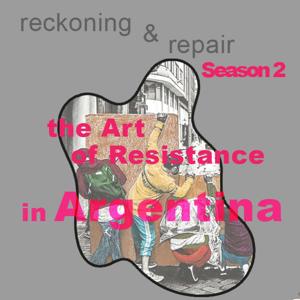
An experimental podcast project, season 2 of Reckoning and Repair: The Art of Resistance in Argentina endeavors to explore these stories and the legacy of art activists from Bueno Aires and beyond. Originally captured in Spanish from June to July 2022, these narratives have since been condensed and adapted into the English language to share these incredible artists and their activism more broadly. You can learn more and listen to extras at rnrphilly.com.
Audio Credits
For episode extras, and to learn more about the artists, hosts, and organizations involved, check out the Reckoning and Repair website: rnrphilly.com
Reckoning and Repair is part multimedia counter-archive, part laboratory, for telling stories and listening to stories in cities. Each season traces stories of resistance to (and repair from) the enduring and specific legacies of exclusion/withholding/erasure that haunt our cities. Through immersive oral histories and collaborative storytelling, student scholars, activists, and creatives illuminate the slow, difficult, yet vital work of accountability and healing in haunted worlds. The project is directed by Dr. Alissa Jordan at the Center for Experimental Ethnography at the University of Pennyslvania.
From the publisher's feed
An experimental oral history podcast with artists, curators, and organizers speaking on the need for reckoning, and the (im?)possibilities of repair in art worlds and social spaces around the…