
Sign up to save your podcasts
Or

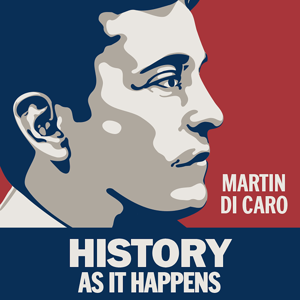

Seventy-six years ago, in August, 1945, President Harry Truman made one of the most consequential decisions in history. He ordered U.S. warplanes to drop atomic bombs on Hiroshima and, three days later, Nagasaki, instantly incinerating tens of thousands of civilians. The bombings ended the Second World War while ushering in a new age, where human beings harnessed science and technology to create weapons of previously unimaginable power. In this episode, world-renowned war historian Sir Antony Beevor answers one of the most difficult questions to arise in the aftermath of the war: was it necessary to drop the bomb?
 View all episodes
 By Martin Di Caro

4.4
6262 ratings
Seventy-six years ago, in August, 1945, President Harry Truman made one of the most consequential decisions in history. He ordered U.S. warplanes to drop atomic bombs on Hiroshima and, three days later, Nagasaki, instantly incinerating tens of thousands of civilians. The bombings ended the Second World War while ushering in a new age, where human beings harnessed science and technology to create weapons of previously unimaginable power. In this episode, world-renowned war historian Sir Antony Beevor answers one of the most difficult questions to arise in the aftermath of the war: was it necessary to drop the bomb?
8,474 Listeners
1,110 Listeners
743 Listeners

6,304 Listeners

724 Listeners

907 Listeners

14 Listeners

2,039 Listeners

7,244 Listeners

2,405 Listeners

16,525 Listeners

208 Listeners
385 Listeners
500 Listeners
496 Listeners