
Sign up to save your podcasts
Or



Send us Fan Mail
Have you tried everything to make bedtime easier, yet it still ends in frustration? Or do you find yourself snapping at your child and wondering why the same patterns keep repeating?
In this episode, I explore ideas from Tiny Experiments by Anne-Laure Le Cunff and how we can apply them to parenting. Instead of searching for one perfect solution, I share how collecting simple “field notes” can help us understand the many factors influencing our child's behaviour, including our own stress, energy, and connection at home.
In this episode, I explore:
A reflection to try: Choose one recurring parenting struggle and observe what happens before, during, and after it. What patterns do you notice? What is one small thing you could experiment with?
Support the show
Send us Fan Mail
Hi Reflective Parents,
In today's episode, we chat about The Tripartite Model of Parental Socialization! Yes, that's nerd talk for "How do kids learn to regulate/cope with emotions?"
This is important for all of us to learn because has a significant impact on our children's behaviour, our stress, their success in school and in building friendships and even their future well-being.
Learn how to create the best home environment that lowers your stress, teaches your child how to cope with emotions and supports healthier behaviour from all members of your family!
Don't miss my 8-week program starting October 27th! We meet every Tuesday at 12pm ET or 8pm ET (join with your partner at no extra cost!)
https://curiousneuron.com/reflective-parent-club/
Past episodes you might enjoy:
Blog post on curiousneuron.com
Support the show
Send us Fan Mail
As parents, we often step in to help our children because we love them and want to make life easier for them. However, when we constantly solve their problems, prevent frustration, or take over tasks they could learn to manage, we may unintentionally limit their opportunities to develop emotional regulation, resilience, problem-solving skills, and confidence.
In this episode, I explore the research on over-parenting, Jessica Lahey's book The Gift of Failure, and reflect on why allowing children to experience uncomfortable emotions, make mistakes, and face appropriate consequences is an important part of their development.
Three reflections to consider:
The goal isn't to let our children fail at everything. It's to create opportunities for them to struggle, learn, recover, and discover that they are capable of handling life's challenges.
**Join our book below to discuss this week's topics in school-aged children and get some tips!
Sources:
Support the show
Send us Fan Mail
I'm joined by occupational therapist and author Laura Petix to celebrate the launch of her new book, The Sensory Code. Laura shares the moment she took her own daughter to the ER because of daily meltdowns, and how that experience shaped her work with parents.
In this episode, we talk about:
Resources:
Support the show
Send us Fan Mail
As parents, many of us want our children to do well in school, but what if one of the most important skills they need is not memorizing information, but learning how to question it?
In this episode, you and I reflect on what it means to raise critical thinkers in a world filled with headlines, social media experts, AI-generated information, and endless opinions. Together, we explore how curiosity, thoughtful questions, and open conversations at home can help our children learn not just what to think, but how to think.
Drawing from Julie Bogart’s book Raising Critical Thinkers (the book I will discuss inside the book club this week) and the research of Dr. Mary Helen Immordino-Yang, in today's podcast episode, we will reflect on:
• Why curiosity may be one of the most important skills we can protect in our children
• How emotions, beliefs, and experiences shape the way we understand information
• Simple questions parents can ask to help children think more deeply
• How family conversations and respectful debates strengthen reasoning skills
• Why education is not only about learning facts, but about helping children become thoughtful, reflective human beings
• How we can model curiosity and critical thinking in our own everyday lives
You do not need to know all the answers to help your child become a critical thinker. Sometimes the most powerful thing we can do is pause, get curious together, and ask: Who says this? How do we know? What else could be true?
I hope this episode gives you a moment to reflect, learn, and continue growing alongside your child.
Listen to my conversation with Julie here:
https://podcasts.apple.com/ca/podcast/reflective-parenting-podcast-by-curious-neuron/id1440533170?i=1000561516016
Support the show
Send us Fan Mail
I'm back with part two of the conversation sparked by my episode with Georgiana but this time digging into one of the most misunderstood words in parenting: discipline.
Pulling from Dan Siegel and Tina Payne Bryson's No-Drama Discipline, I challenge how most of us were taught to think about the word — punishment, stopping a behavior that's annoying us — versus what actually works: discipline as teaching.
I share a moment from my son's soccer practice that stopped me in my tracks: a dad switching to Italian mid-practice to threaten his seven-year-old with "wait until we get home." It's the kind of moment most of us have been in, on one side or the other and I use it to ask a harder question: is that discipline, or something else?
I also walk through a study most parents haven't heard of, showing that verbal abuse — yelling, threats, name-calling, belittling — can impact a child's development as significantly as physical discipline. Lastly, I introduce a simple framework — the aggressive tiger, the passive mouse, and the assertive owl — to help you recognize your own voice in the heat of the moment.
This episode isn't about guilt. It's an invitation to notice, reflect, and start showing your kids what accountability looks like... starting with yourself.
The 3 Reflections I Share
Support the show
Send us Fan Mail
In this episode, I sit down with Georgianna Karamitos — a lawyer, educator, trauma-informed conflict resolution practitioner, and children's book author — to unpack the real difference between discipline and punishment. We dig into why repeating yourself doesn't work until a child feels heard, how power struggles hijack parent-child relationships, why "relational safety" is the missing piece in most conflict, and what the neuroscience actually says about spanking and harsh discipline. If you are a parent stuck in the loop of "I've said this ten times and nothing changes" then this episode is for you!
Resources:
Book: No Drama Discipline by Dan Siegal
Study: Spanking and Child Outcomes: Old Controversies and New Meta-Analyses
Guest Links:
https://margueritebooks.ca/
Support the show
Send us Fan Mail
Hi Reflective Parents, Ever feel stuck arguing about the same thing over and over with your partner? In this episode, I break down a key concept from the Gottmans' book Fight Right: that perpetual conflict often hides a deeper "dream" underneath it, and naming that dream can turn conflict into a chance for real intimacy.
I also reflect on what this means for parenting from bedtime battles to unrealistic expectations and how getting curious with your child, the same way you would with a partner, can change everything.
Come reflect with me!
Learn more from the Gottman Institute:
https://www.gottman.com/
Support the show
Send us Fan Mail
Hi Reflective Parents! As we jump into a new school year, I wanted to take some time to pause with you and reflect on how we can make this year feel a little less stressful and a lot more connected. This episode was inspired by a question from a mom that emailed me and I'm bringing in some unexpected inspiration — including a quote from a romance novel (Yours Truly) that changed the way I think about how we relate to our kids.
I'm sharing three things I believe can make a real difference this year:
If you're feeling the back-to-school hustle already, I hope this episode gives you a moment to breathe, reflect, and reconnect with what really matters this year. Happy reflections, my friends! See you inside our new book club!
Interested in joining our 8-week cohort? Apply below! Classes start October 12th.
https://form.typeform.com/to/F9qIbzPT?typeform-source=curiousneuron.com
Support the show
Send us Fan Mail
Hi Reflective Parents,
In today's episode, I share my honest thoughts about mental health care and honestly, they are not that positive.
It's been feeling a little heavy these days with the Lindsay Clancy trial, a father that reached out who is struggle with depression and my own mental health from not having been in our home since January.
I share my thought and as always, I share what I am doing to work through this hard season.
Come reflect with me and if you want more of this, don't forget to join our Reflective Parenting Book Club below to join the conversation and reflections with other parents.
Support the show
From the publisher's feed
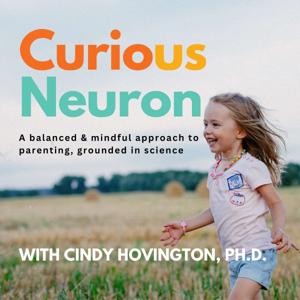
You don’t snap at your kids because you’re a bad parent. You snap because your stress builds faster than your awareness, and no one ever taught you how to handle that.
I’m Dr.…
This is not a podcast where I tell you how to be a perfect parent. I’m in it with you.
Each week, I invite you into my own reflections:
Together, we get curious about why we snap, shut down, or over-function in conflict, and what’s actually happening in our brain and body when we do. We talk about stress, shame, repair, boundaries, playfulness, and the quiet moments no one sees—so you can start to recognize your patterns and gently shift them.
By listening, you’ll learn to:
I’ll share where I struggle, what I’m practicing, and how I’m trying to grow, so you don’t feel like the only parent who finds this hard.
If you’re ready to move away from “perfect” parenting and toward reflective parenting—where every tough moment becomes data, not failure—pull up a chair.
Let’s learn, feel, and grow together.
Find out which book I will be covering next month:
https://curiousneuron.com/podcast/
Join the private group on Facebook:
www.facebook.com/groups/reflectiveparentingpodcast/
Start training your emotional awareness for FREE:
https://tremendous-hustler-7333.kit.com/84371dc0b2
Purchase my course The Emotionally Aware Parent.
https://curiousneuron.com/reflective-parent-club/
Follow us on Instagram @drcindyhovington or Facebook @curiousneuronparenting
3,635 Listeners

6,686 Listeners

355 Listeners

1,426 Listeners

176 Listeners

1,905 Listeners
1,407 Listeners
1,492 Listeners
246 Listeners

4,523 Listeners

41,346 Listeners

157 Listeners
97 Listeners

5,528 Listeners

335 Listeners