
Sign up to save your podcasts
Or

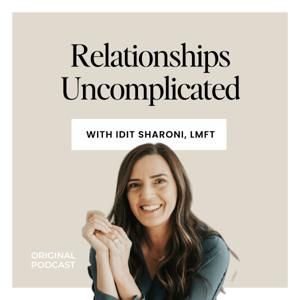


The affair is over. He's home. You're doing the work, and on paper things are moving in the right direction. So why does your chest still go tight when his name lights up your phone? Why does your mind race to the worst place when he's fifteen minutes late?
If your head has moved on from the betrayal but your body hasn't, you're not broken, and you're not going backwards. That's betrayal trauma, and trauma is treatable.
In this episode of Relationships Uncomplicated, Idit Sharoni, LMFT, is joined by Alana Tokayer, LMFT, one of the expert therapists on her team, who is trained in EMDR and works closely with hurt partners after infidelity. Together they explain why the discovery of an affair lives in your nervous system and not just in your thoughts, what EMDR (Eye Movement Desensitization and Reprocessing) actually does and what it doesn't, and what a session really looks like, including why you're never asked to retell the affair over and over. You'll hear how the belief so many hurt partners carry, "I'm not enough," can shift over the course of the work, why one client joked that it felt like sorcery, why intrusive thoughts often quiet down once a memory loses its charge, how to tell whether it's too early to start, and what can happen when this work is done inside a couples session with both partners in the room.
The goal was never to make you forget what happened. It's to help you move from reliving it to remembering it.
Mentioned in this episode: Episode 85, Do You Need Every Detail for Infidelity Recovery? https://iditsharoni.com/85-do-you-need-every-detail-for-infidelity-recovery/
At Relationship Experts, the couples work and the individual betrayal trauma work happen under one roof, with one team that knows your story. If this episode spoke to you, apply to work with us, and we'll figure out together what you and your relationship actually need: https://iditsharoni.com/45
You don't have to forget the story. You just don't have to keep living inside the worst chapter of it.
When you discover your partner's affair was with someone of the same sex, the betrayal comes with a second wave of questions you never expected to ask. Does this mean he's gay? Was our whole marriage a lie? Am I even enough? And almost everyone around you seems to have already decided what it means.
In this episode, Idit Sharoni is joined by two colleagues from her clinical team, Dr. Yael Haklai-Neagu and Alana Tokayer. All three are licensed marriage and family therapists who specialize in infidelity recovery, and all three have sat with couples in the aftermath of same-sex infidelity in a heterosexual marriage. Together they take apart the assumptions most people jump to in the first sixty seconds and open the door to what's actually true.
You'll hear why a same-sex affair doesn't automatically mean your partner is gay, why attraction, behavior, and identity are three separate things that don't always line up, and why this kind of betrayal feels like the worst case imaginable even though it isn't beyond repair. We talk about the real reasons a straight-identified partner might have a same-sex encounter, whether someone attracted to more than one gender can be faithful, and what actually predicts whether a marriage heals. This conversation is for the hurt partner and the unfaithful partner both, and it comes without any agenda about whether you stay or go.
We created a free guide to go with this episode, Navigating Betrayal and Identity. It reframes what this kind of betrayal really is, gives you clear language for the questions keeping you up at night, and walks you through an evidence-based way to understand sexuality so you can quiet the assumptions and see your situation more clearly. Download it here: https://iditsharoni.com/navigating-betrayal-and-identity-guide
And if you're ready to talk it through with someone who understands this, we offer a free 45-minute consultation. We'll help you understand where things stand and whether our program, It's Okay to Stay, is the right fit to help you heal and rebuild. Book your call here: https://iditsharoni.com/45
It's okay to stay. It's also okay to not know yet.
AI is officially in the room. In this roundtable, I sit down with our Relationship Experts team to unpack how tools like ChatGPT are showing up inside real relationships. We explore Dr. Shirley Glass's "walls and windows" model and ask a crucial question: Is AI helping you open the window between you and your partner, or is it becoming a new window that pulls you farther apart? You will hear clinical stories, practical guidelines, and a simple litmus test to make sure AI supports connection instead of replacing it.
In this episodeWhy AI feels so validating and why that can be risky for couples
"Walls and windows" explained for the AI era
Two roles AI often plays in relationships
Replacement companion that siphons emotional energy away from your partner
"Judge of facts" that fuels suspicion and confirmation bias
A healthy use case that actually deepens connection
Four therapist-approved guidelines to use AI wisely without eroding trust
00:00 Welcome, and why we are talking about AI now
02:18 Program note and invitation for a free 45-minute consultation
03:55 Walls and windows model applied to AI
06:55 When AI becomes a "perfect listener" and the partner gets sidelined
17:20 AI as the "decider of truth" and how that inflames anxiety
19:52 A pro-connection use case: AI helps find your own words of appreciation
22:35 Key distinction: AI as a tool to foster connection, not replace it
24:32 The "easy dopamine" problem and the investment mindset
31:34 Why AI cannot deliver the art of therapy or real human presence
44:40 It is not about quick answers, it is about the therapeutic process
51:55 Is turning to AI a form of micro-betrayal
56:18 Quick self-check questions to keep the window between you open
58:04 Final guidelines and takeaways
Sharing equals connecting. When sharing shifts from your partner to AI, disconnection grows over time.
AI can validate feelings quickly, but overuse can replace the effort that builds intimacy.
Be cautious when you ask AI to "decide facts" about your partner. Limited inputs plus anxious questions often return fear-confirming answers.
A healthy use of AI is as a tool that helps you find your own words so you can show up better with your partner.
Think like an investor. Put time and vulnerability into the relationship that gives real returns.
Not "Just Friends" by Dr. Shirley P. Glass — the "walls and windows" model that helps couples protect the boundary around their relationship.
Concepts discussed: confirmation bias, emotional investment, human presence in therapy.
This episode is sponsored by It's Okay to Stay, our 8-week infidelity recovery coaching program that combines a step-by-step online roadmap with personal one-on-one work with an Affair Recovery Specialist. If you want to stay together and heal, schedule a free 45-minute consultation: iditsharoni.com/45. We will understand your situation and see if the program is right for you.
DisclaimerThis podcast is educational and is not therapy. It does not substitute for professional advice, diagnosis, or treatment.
Forgiveness after infidelity is one of the most complicated—and misunderstood—parts of healing. Many couples ask: "Can I ever truly forgive this betrayal?"
In this episode of Relationships Uncomplicated, I sit down with Ana De La Cruz, LMFT—one of our expert therapists at Relationship Experts and a researcher currently writing her PhD dissertation on forgiveness. Together, we take a deep dive into what forgiveness actually means in the aftermath of an affair, how it differs from reconciliation, and why it matters so much for couples who want to rebuild.
You'll hear us talk about:
What forgiveness really is (and isn't) when it comes to infidelity.
The crucial difference between forgiveness and reconciliation.
Why "cheap forgiveness" often fails and how to avoid it.
The role of consistency, transparency, and accountability in making forgiveness possible.
How forgiveness can be learned and practiced, even if it feels impossible right now.
Why forgiveness is not a prerequisite for healing but often an outcome of true reconciliation.
If you've ever wondered whether forgiveness is possible—or worried that you have to forgive in order to heal—this conversation will give you clarity, compassion, and hope.
✨ Take the Next Step: At Relationship Experts, we guide couples through our structured It's Okay to Stay infidelity recovery program. If you're in the painful aftermath of an affair and don't know where to turn, we invite you to schedule a free 45-minute consultation with one of our program specialists.
👉 Learn more and schedule your free consultation here
Finding the right help after infidelity can feel overwhelming. When you're in the middle of heartbreak, trust issues, and emotional exhaustion, the last thing you need is more confusion about who to turn to for support.
In this episode of Relationships Uncomplicated, I'm sharing exactly how to recognize trustworthy, effective help after betrayal — and how to avoid the wrong kind of "experts" or programs that can set your healing back.
You'll learn:
This is one of those episodes you may want to listen to twice and even take notes on. And to make it easier, I created a free guide called Vetting Your Path Forward: How to Find the Right Help After Infidelity (and Avoid the Wrong One). No email required — just download it here: iditsharoni.com/vetting
💛 If you're ready to take the next step, you can also schedule a free 45-minute consultation with our program specialist to see if our Infidelity Recovery Program is the right fit for you: iditsharoni.com/45
You deserve real, qualified help — and a path forward you can trust.
You don't need to have all the answers to begin healing.
In this powerful and compassionate episode of Relationships Uncomplicated, Idit Sharoni, LMFT, is joined by Program Specialist and therapist Alana Tokayer, LMFT, to answer a question many hurt partners silently ask:
"Is it even worth starting the healing process if I'm not sure I want to stay?"
We explore why uncertainty is a completely normal—and expected—part of the aftermath of infidelity, and how beginning the healing process can actually lead to the clarity so many partners are searching for.
⏱ Episode Timestamps:00:02 – Why uncertainty after infidelity is normal Idit introduces the topic and explains how common it is for hurt partners to question whether healing is worth it when they're unsure about staying.
04:24 – The emotional duality of betrayal Alana describes the emotional seesaw many hurt partners experience—feeling both deep pain and lingering love—and why that doesn't mean something is wrong with you.
08:20 – Why you don't need to decide before you begin Idit explains how healing often leads to clarity, and that deciding to stay is not a requirement to start the recovery process.
14:40 – How healing helps clarify what's possible Alana shares the metaphor of the fogged-up window and how clarity emerges from experience—not from overthinking or pressure.
22:25 – The difference between being remorseful and acting remorseful Idit outlines what true remorse looks like and how an unfaithful partner can appear unremorseful even if they feel regret.
Why feeling unsure is normal and human after betrayal
The emotional duality of still loving someone who hurt you
Why you don't need to decide whether to stay before beginning healing
What leads to real clarity (hint: not overthinking!)
How unfaithful partners can act remorseful, not just feel remorse
Why trust is not a requirement to begin healing—it's the result of the process
Tips for couples sitting in the "gray zone" of uncertainty
Alana shares a moving story of a client named Jenna (name changed), who was completely stuck on the question of whether to stay or go. Through the healing process, without pressure, she found the clarity she was searching for—not all at once, but step by step.
💡 Key Takeaways:Feeling uncertain about staying after infidelity is completely normal.
You don't need to decide before you begin—healing can be the pathway to clarity.
Trust and remorse can grow with the right support and guidance.
You're allowed to hold the question and begin healing at the same time.
Set a short-term healing intention (2–3 months of guided work)
Find expert help trained in infidelity recovery
Build a safe, small support system
Be patient and kind with yourself—you're not supposed to know everything right now
It's Okay To Stay – Idit Sharoni's complete infidelity recovery coaching program for couples who want to rebuild trust and heal after betrayal.
📆 Book your FREE 45-minute consultation to see if this program is right for you: 👉 iditsharoni.com/45
🔗 Resources:Learn more about the Infidelity Recovery Program: iditsharoni.com
Book your consultation with a program specialist: iditsharoni.com/45
🔔 Subscribe so you never miss an episode. 📩 Share this with someone who may be sitting in that same place of uncertainty.
When news broke that tech CEO Andy Byron was allegedly caught in an intimate moment with his HR chief Kristin Cabot at a Coldplay concert, the headlines exploded—and so did public judgment. But what happens when we step away from the gossip and look at the human reality underneath?
In this episode, Idit Sharoni, LMFT, and our team of licensed infidelity recovery experts at Relationship Experts, offer a grounded, non-sensationalized discussion of what we're calling the "Coldplay Affair."
We dive into the emotional, relational, and societal layers of this story—from how betrayal impacts all parties involved, to the harm of public shaming, and why American culture often gets these stories wrong.
You'll hear us explore:
The quick and ruthless public reaction: no judge, no jury, just instant verdicts
Gossip vs. Reality: what the headlines don't show
How high-profile relationships and careers create "relational atomic bombs" when betrayal is exposed
The quiet pain of hurt partners, often made worse by public humiliation
Why it's time to stop acting shocked and start understanding the complexity of infidelity
We're not here to gossip. We're here to talk responsibly, with compassion and realism. If you're tired of the toxic spin on infidelity stories, this conversation will feel like a breath of fresh air.
Resources Mentioned: Learn more about our Infidelity Recovery Program – It's Okay to Stay: https://iditsharoni.com/infidelity-recovery-program
Schedule a free 45-minute consultation with one of our specialists: https://iditsharoni.com/schedule
Listen to more podcast episodes: https://iditsharoni.com/podcast
Connect With Us: Instagram: @therelationshipexperts
Website: https://iditsharoni.com
🎬 Timestamps: 00:00 Introduction to the Coldplay affair discussion 02:28 Meet the experts: Idit, Yael, and Ana introduce themselves 04:02 The Byron-Cabot affair and the idea of a "relational atomic bomb" 06:19 Why this situation is different: public exposure and professional implications 08:13 Social media virality and gloating: modern public shaming 10:10 The "quickest trial on earth": judgments without context 12:09 Moral superiority and the myth of "those people who cheat" 14:35 Digital courtrooms and the cultural impact on infidelity recovery 16:32 The ripple effect of betrayal on relationships and society 18:52 Judgment vs. empathy: what defines us after mistakes 20:41 Personal messages to current and future clients feeling triggered 22:47 What are these couples really going through behind the scenes? 25:04 The emotional crisis of both hurt and unfaithful partners 27:32 Public judgment and the deep shame of staying after betrayal 28:55 Wider impact on families, children, and the healing process 31:16 What would we say to the couples involved if they're listening? 32:09 Messages of hope, protection, and the right to privacy 35:50 How to build a safe emotional cocoon after betrayal 37:54 This is a trauma: validating what they're experiencing 40:05 Infidelity is a relational issue, not just an individual one 41:33 Final thoughts: Let it stay their business 42:41 Closing wishes and wrap-up
Tags: infidelity recovery, Coldplay affair, Andy Byron, relationship podcast, public shaming, affair recovery, cheating, marital betrayal, relationship experts, It's Okay to Stay, affair fallout
If you or your partner are navigating the aftermath of infidelity and wondering whether the sexual behavior involved was really "sex addiction," this episode is a must-listen.
In Episode 86, I'm unpacking one of the most common and confusing questions couples face after betrayal: Is it sex addiction—or is something else going on?
We'll explore:
Why "sex addiction" is not a recognized mental health diagnosis in the DSM-5
The risk of mislabeling sexual behavior and missing the deeper emotional drivers
What the Out of Control Sexual Behavior (OCSB) model is and why it offers a more compassionate, effective path forward
Actionable next steps for couples dealing with out-of-control sexual behavior—including excessive porn use or secretive sexual activity
This episode is especially supportive for couples who want to move beyond shame, blame, or one-size-fits-all labels and into real, values-based healing.
💛 Ready to take the next step in your healing? Book a FREE 45-minute consultation to learn how our It's Okay to Stay Infidelity Recovery Program can help you rebuild trust, restore connection, and create something new—together.
👉 Schedule your consultation here: iditsharoni.com/45
When infidelity is revealed, the hurt partner often experiences a deep sense of disorientation and a desperate need for answers. Many ask: Do I need to know every detail to heal—or am I just digging deeper into more pain?
In this episode of Relationships Uncomplicated, Idit Sharoni is joined by Dr. Yael Haklai-Neagu to explore a phase many couples get stuck in after betrayal: the forensic data collection phase. This is when questions about the affair—ranging from timelines to explicit details—dominate the recovery process, sometimes for months or even years.
Together, they discuss:
Why the urge to gather every detail is completely normal
What it looks like when this phase becomes a barrier to healing
How to know if you're still seeking coherence or getting stuck in the pain
Real-life examples of couples navigating this phase
Actionable steps to help you move forward, even when not all the answers are there
This episode offers clarity, compassion, and a gentle roadmap out of a phase that often feels endless. Whether you're the hurt partner or the unfaithful partner, you'll walk away with a deeper understanding of how to shift from stuck to supported.
If this episode resonates with you and you're ready for expert guidance, we invite you to schedule a free 45-minute consultation to learn more about our infidelity recovery program, It's Okay To Stay. Visit iditsharoni.com/45 to get started.
In this eye-opening episode, Idit Sharoni, licensed marriage and family therapist specializing in affair recovery, dives into one of the most common mistakes couples make after infidelity: postponing the healing process.
It's easy to fall into the trap of thinking that time alone will heal the wounds of betrayal, but the truth is, avoiding the hard work of healing can leave lasting scars on your relationship. From lingering pain and resentment to recurring trust issues, skipping this crucial step can silently erode your connection over time.
In this episode, Idit explores why healing after infidelity is non-negotiable, the hidden costs of avoidance, and how to take meaningful steps toward rebuilding trust and intimacy. Whether you're in the early stages of recovery or feeling stuck in a "good enough" relationship, this episode offers hope, clarity, and actionable advice to help you move forward.
What You'll Learn in This Episode:From the publisher's feed
1,672 Listeners

2,651 Listeners
288 Listeners
743 Listeners

301 Listeners
204 Listeners

27,762 Listeners
1,147 Listeners
362 Listeners

282 Listeners
1,060 Listeners

1,409 Listeners

19,254 Listeners
59 Listeners
345 Listeners