
Sign up to save your podcasts
Or

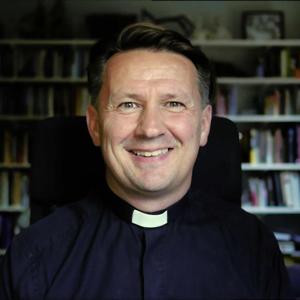


A parish priest and a churchwarden want to take the Church Commissioners to the High Court over Project Spire, the proposed £100 million reparations fund. And I support them.Rev Jamie Franklin and barrister Bijan Omrani have asked the Charity Commission for permission to bring charity proceedings. In this video I explain what they have actually done, what the Commissioners say in reply, and why I think this is a question about faithful stewardship and not just about history.
My earlier video on Project Spire:
The Times report (13 October 2026): https://www.thetimes.com/uk/religion/article/church-of-england-slavery-reparations-priest-challenge-7mp38ktwnChurch Commissioners’ FAQ on their historic links to enslavement: https://www.churchofengland.org/about/governance/national-church-institutions/church-commissioners-england/who-we-are/historic-links-enslavement/frequently-asked-questions
Another week, another Church of England headline — an award withdrawn, a memorial exhibition pulled, a cathedral renting itself out to a nightclub, a £100m reparations fund under legal challenge. It's easy to hear "the Church of England" and assume one institution made every one of those decisions.It didn't.In this podcast I break down what actually happened in each case — Lambeth Palace, Leeds Minster, St Paul's Cathedral, and the Church Commissioners — and why treating them as a single, coordinated failure gets you exactly the wrong conclusion. Then I give you a simple test for discerning which Church of England you're actually looking at, whether you're staying to contend for it or thinking about leaving altogether.If you've been wondering whether there's still a faithful, Bible-believing church inside the Church of England, this is for you.
🔗 The Alliance: https://alliancecofe.org/🔗 AMiE / ACE: https://www.anglicanmissioninengland.org/ https://aceanglicans.org/🔗 My video on leaving the Church of England:
🔗 My video on Project Spire:
Some mornings you wake up already behind, carrying yesterday's exhaustion into today before anything's even happened. Lamentations was written in the middle of genuine devastation, and right there in the wreckage comes a promise about what arrives fresh each day.
On the 25th anniversary of 9/11, the Archbishop of Canterbury personally presented an interfaith reconciliation award to a Pakistani cleric whose own council once gave Osama Bin Laden its highest honour — a title he defended in his own words, on the record. Within days, under public pressure, the award was withdrawn.
The Church of England has just been told it is running out of priests. Full-time stipendiary parish clergy have fallen to around 6,295 — down 28% since 2000 — and on the Church's own projection the number falls to 5,400 by 2033. Last year 379 clergy resigned. 278 retired.A report launched at the House of Lords this month by Save the Parish says the crisis isn't only numerical. It's theological. We have lost a confident account of what a priest is actually for.In this podcast, I go through the evidence — the Church's own Living Ministry wellbeing research, the 2014 growth study, the Commissioners' finances, and the decision on Kerrier Deanery in Cornwall that I covered back in the spring. Then I ask what Scripture actually says about a shortage of shepherds, and what faithfulness looks like for ordinary Anglicans in the pew.Substack: https://monoingles.substack.com/Website: www.btrministries.orgLinks: www.monoingles.comEmail: [email protected] Bible Study Bible - I have used this for years, it is excellent.UK - https://amzn.to/3Q7SqlyUS - https://amzn.to/3i5QeymSOURCESParish Ministry: Addressing the Crisis in Stipendiary Clergy Numbers (Save the Parish / St George's House, Windsor, March 2026)Lord for the Years: Clergy Wellbeing 2017–2025 (Living Ministry, Church House, December 2025)From Anecdote to Evidence (Church Growth Research Programme, 2014)Church Commissioners' hearing papers, Kerrier Deanery, MPCP(26)21Save the Parish General Synod Manifesto 2026
The General Synod of the Church of England is about to debate a motion on same-sex relationships. But the most important thing about this debate isn’t the motion itself — it’s the papers behind it.
GS 2455A, written by Professor Helen King of Oxford, openly names the 1975 precedent it’s modelled on — the same motion that began the forty-year process leading to women deacons, priests and then bishops. And GS 2455B, the Secretary General’s official response, describes in plain English the only two ways this can end if the motion passes.
They didn’t hide it. They cited it. In this video I walk through both documents carefully, show you exactly what they say, and explain why a sentence that technically changes nothing could matter enormously.
The internet exploded this week over a line in the Sovereign Grant Report claiming King Charles has redefined his role around a "multi-faith nation." Christians claimed the Coronation Oath had been broken. Almost none of it was true!
Sunderland Minster in the Diocese of Durham has put a transgender flag on its women's toilet door and offered to chaperone any woman who feels uncomfortable using them. In this video I look at what actually happened, whether the law was broken, and what it reveals about the Church of England right now. I also give one piece of plain pastoral advice for any discouraged believer trying to find a faithful church.
This July, the General Synod of the Church of England will debate a single sentence. Just one. And it could undo what the Church has taught about marriage and the body for two thousand years.It's a Private Member's Motion brought by Professor Helen King, affirming that same-sex relationships can be "entirely compatible with Christian discipleship." It doesn't change a single doctrine. It doesn't rewrite the marriage service. It asks something quieter than that — and that's exactly why it matters more than it looks. In this podcast, I want to give you three things: clarity on what's actually happening (and what isn't), the biblical ground to stand on while the Church debates, and a reason to be steady rather than shaken. Because this is the last Synod before the autumn elections — which means the vote in July is not the last word. The real question is whether the faithful will be as awake as everyone else.
Two reports landed within days of each other. One said the Church of England is growing for the fifth year in a row. The other said church attendance in Britain is below pre-pandemic levels and the so-called "Quiet Revival" never really existed.Both are true. And if you can hold them together, you'll understand more about the actual state of British Christianity than most people writing about it for a living.In this podcast, I walk through what the numbers really say, what they don't say, and what Scripture tells us about being a faithful Christian in a country that is genuinely turning away — without overselling the recovery or panicking about the decline.
From the publisher's feed