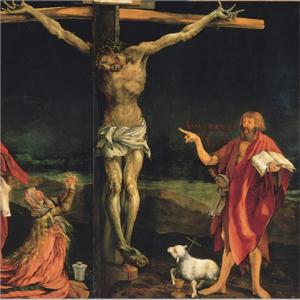
Audio recording Sermon manuscript: Tonight we are considering the question: What is baptism? Let’s begin with the word itself. Baptism is not an English word, but a Greek word. It comes from the Greek word Baptizdo, which means “to wash.” So to baptize something means to wash it. Normally when we are washing something we use water, and so it is also with Christian baptism, but, as our catechism puts it, it is “not just plain water.” Something has been added to it. What has been added to it is God’s command and God’s word. Baptism was not something that was invented by the apostles. As we heard in our second reading from the end of Matthew’s Gospel, after Jesus rose from the dead but before he ascended into heaven he told his disciples to baptize in the Name of the Father, and of the Son, and of the Holy Spirit. These disciples were commanded by their Master what they were supposed to do. They were also told how to do it. While applying water they were to do this in the Name of the Father and of the Son and of the Holy Spirit. So now we know what baptism is. It is the application of water while the words are said, “I baptize you in the Name of the Father, and of the Son, and of the Holy Spirit.” This is very simple. It takes less than a minute. So long as it is performed according to how Jesus instituted it, so long as the water and the words are used, it is a valid and effective baptism. We know what baptism is. What does it mean? Our two readings tonight from Matthew’s Gospel are helpful for answering this question. The first reading was from chapter three. This was before Jesus began to publicly preach, teach, perform miracles, and so on. It was before Jesus himself was baptized in the Jordan river—as we heard about in our reading. In this prehistory of Jesus’s work, the forerunner to Jesus is described—a man named John. He eventually became known as John the Baptizer, or, John the Baptist. You can probably guess how he got that name. He preached, and then those who were sorry for their sins, he baptized. So we can see that Christian baptism did not come out of nowhere. There was a precedent that had already been set with John, who was before Jesus, or possibly others, although the Bible doesn’t tell us anything about that. The meaning of baptism is already indicated in John’s baptism. We heard about the preaching that accompanied his baptism. He said, “Repent, because the kingdom of heaven is near!” This means that God, with his kingship, is coming. God, as king, will apply his judgments. How will you fare in that judgment? John says, “Already the ax is ready to strike the root of the trees. So every tree that does not produce good fruit is cut down and thrown into the fire.” Some of you may face this judgment from God in a very short time. It might be a year or two from now. Indeed, for any of us—no matter how old we might be, it could be this very night. For we know neither the day nor the hour. And what should happen when you are weighed in the balance? This is the kinds of things that John preached. But it is not really just John’s preaching, but the whole Bible’s preaching. John sounds very much like the Old Testament prophets who spoke about the coming of the great and terrible Day of the Lord. When God comes, when the king comes, there will be judgment. Many at the time of John the Baptist rejected this preaching. They thought that John was too worked up over nothing. So it was at the time of Noah. So it was at the time of Sodom. So it is also today. Most people never think of the idea of it at all, for years and years on end—even when they think about dying. And if it is brought to their attention they quickly dismiss it. Those who were baptized by John, however, did not dismiss this truth. When they considered the thought of being judged by God they were terrified of his justice and punishment. When they thought about the life that they had lived, they knew that they had committed many and grievous sins. The