
Sign up to save your podcasts
Or

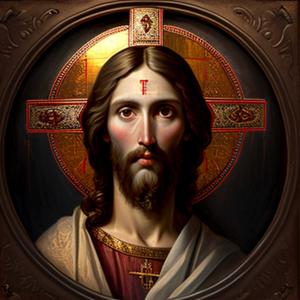


Orthodoxy does not, like centring (prayer) for example, have to search for meditative techniques in Eastern religions or for contemplative techniques in the western Christian mystical way that begins with the stage of purification, continues to illumination and arrives at the unitive state of the soul with the Divine. The reason for this is not merely that Orthodoxy already has, or is, the way of hesychasm or the Jesus prayer, but that the entire theological framework of Orthodoxy expresses the belief in the idea of theosis or deification.
https://www.amazon.com/dp/1475250231
ÁNGEL FRANCISCO SÁNCHEZ ESCOBARIn this book, I deal with Orthodox worship as it is today by describing its prayer cycles, meaning of the holy services, liturgical books, Scriptural reading, and a process model of catechesis, linked to worship and the liturgical periods. I will not address western rites and Canon Law, but it is a fact that western rites are legitimate western continuation of liturgies celebrated in the undivided Church, before the Schism of 1054. Also, liturgical law is part of canon law, as it legislates the ways in which we celebrate, the actions we use to give life to those celebrations and the design and environment of the space in which we celebrate.https://www.amazon.es/dp/1511978945
The Church Fathers are frequently cited and studied in the development of the doctrine and in the definition of dogmas. Such an approach provides a valid perspective from which to understand the Fathers. However, if we limit ourselves to this viewpoint we would confine Patristic to ecclesiastical literature parallel to the history of doctrines and dogmas, defining it and complementing it. Such stance would somehow demean the faith and the individual theological contributions of these Fathers. This book, limited to the eastern Fathers, attempts to portray the Fathers of the Church as they saw themselves and how they perceived their own faith vocation. The book has three chapters: Chapter I offers a general view of the Fathers of the Church; chapter II explains the role of ascesis in the lives and teachings of the Fathers; and chapter III deals with Hesychasm. (Ángel F. Sánchez-Escobar, MA, PhD, ThDhttps://www.amazon.com/dp/1505836905
BY ÁNGEL FRANCISCO SÁNCHEZ ESCOBAR, 2009 This book analyzes the Byzantine Empire from Constantine’s decision to legalize the Christian Church in 313 until the fall of Constantinople to the Ottoman Turks forces in 1453. From Emperor Constantine onward, the Church and the Empire started a very close and mutually beneficial relationship. The Church received imperial support and was truly a leaven of the society of which it was a part. The fourth through the tenth centuries represented a significant period for the Church’s internal development: the authoritative content of the New Testament was defined; the worship services attained a formal framework; the teachings of Christianity were developed by the “Fathers” of the church, great pastors and theologians; and missionary activity such as evangelization of the Slavs by Saints Cyril and Methodius flourished.https://www.amazon.com/dp/1503350398
BY ÁNGEL FRANCISCO SÁNCHEZ ESCOBAR, 2009 This book analyzes the Byzantine Empire from Constantine’s decision to legalize the Christian Church in 313 until the fall of Constantinople to the Ottoman Turks forces in 1453. From Emperor Constantine onward, the Church and the Empire started a very close and mutually beneficial relationship. The Church received imperial support and was truly a leaven of the society of which it was a part. The fourth through the tenth centuries represented a significant period for the Church’s internal development: the authoritative content of the New Testament was defined; the worship services attained a formal framework; the teachings of Christianity were developed by the “Fathers” of the church, great pastors and theologians; and missionary activity such as evangelization of the Slavs by Saints Cyril and Methodius flourished.https://www.amazon.com/dp/1503350398
This book concentrates on a period of three centuries, the pre-Nicean period, focusing on the general situation of the period to establish a context, on the apostolic age, on early Christianity and its relationship with the Roman Empire, as well as on a preliminary approach to the early development of the theology of early Christianity.https://www.amazon.es/dp/1503316661
The Problem of Conceptualizing the Concepts of Space-Time Transcendency.https://www.amazon.com/dp/1475287461
From the publisher's feed
These books on Eastern Orthodoxy are intended to help readers to understand the lengthy process followed by the Orthodox Church since its formative stage in the first century, passing through…