
Sign up to save your podcasts
Or



It was another wet and rainy day in Seattle. I was 27 years old, sitting on the couch, watching TV and drinking alone on a Friday night. These were the nights I looked forward to after working a job that kept me out of trouble during the week.
I had teammates I’d play rugby with. Surface level colleagues at work. Roommates who were nice. But weekends were usually like these. Drunk and high. By myself.
One morning, I thought, ‘should I just quit my job and disappear off the face of the earth?’
I wasn’t depressed in any clinical way. I was adrift. Coping with a break up that broke me. Trying to figure out who the hell I was and what I was doing with my life.
Millions of men are similarly without direction. Living some version of this same story that was my life less than a decade ago. That same lack of purpose, lack of drive, lack of hope, lack of connectedness. It’s a symptom of a larger cultural malaise hollowing out an entire generation of men.
I brought a hand gripper to the office—one of those things you squeeze to build grip strength. I kept it at my desk at work. Whenever the panic started rising, I’d grab it and squeeze. Something physical to ground me. Something I could control when everything else felt chaotic.
I used it so much I broke it.
Sitting at my desk. Staring at the broken hand grip. Trying to focus on the work in front of me. Unable to do so. Alarmed by the tightness in my chest. The heart rate increasing yet again. It wasn’t going away. Box breathing wasn’t cutting it. I couldn’t get it together.
I got up from my desk and paced around. Mind spiraling. Thoughts racing. Should I go home? Should I call my wife? Am I going to die? I looked outside at the trees swaying softly in the wind. But in trying to do anything I could to not think about it only made me think about it more.
There was no white knuckling this anymore. I needed to help myself before I collapsed under the weight of my own deficiencies. I’d rebuilt my life externally, but internally, I was running the same software.
I had to break the pattern. I had to take back control. I couldn’t keep living like this.
I’ve come a long way since this early 2025 chapter of panic attacks that shook me. Looking back, I got complacent. Too comfortable. I was running from myself instead of facing my current reality.
We all have a version of running from ourselves. Mine was alcohol in my twenties, then anxiety in my thirties. Somewhere along the way, sobriety wasn’t enough. I had stopped doing the uncomfortable work that kept me grounded, that kept me firing on all cylinders. The stress of fatherhood, marriage, and career combined to grind me down until I had nothing left.
My body cried out and I had to rewire my mind for resilience before it was too late. I had to rebuild because the structure I had worked so hard to put up was crumbling. Your life won’t change until you do. You are defined by how you respond when things get hard. I had done hard things before and this was another obstacle I had to overcome.
First, a quick rewind. I went to rehab in early 2018. Rock bottom hit hard right before that. Second DUI. Fired from my job. Family intervention that I stiff armed to keep drinking. Rehab was a reset. The first steps of a new path on a long journey.
I handled those days away so well my counselor actually asked me if I was faking it. I assured him I was not. There was a certainty in my mind for the first time in a while. I knew I had to be there. I knew I had to do this work to get back on track. I learned how to sit with my thoughts and see them for what they were—not letting them impact my mood or dictate my actions. I realized that nothing is permanent. Everything in life comes and goes. The mistakes you’ve made do not define you. How you move forward despite how you’ve fallen short is the true test of character. This helped me keep it all in perspective.
Rehab didn’t make me sober. It taught my nervous system how to stand still. It created space between craving and reaction. Cultivated a resilient mindset to be present for my life again and turn it into something I did not need to escape from. The shift from “I’m broken” to “I’m human—flawed but capable.”
I tested the new wiring in my brain in those early weeks out of rehab. Living in a sober living house, attending outpatient four days a week, going to meetings the other days, I had to get back to work that paid me. Sobriety and recovery was a full time job at the time, but I had to restart my career. I asked my outpatient group, “How should I address the gap in my resume?” The feedback: “Just be honest.”
Leading up to the interview, my palms were sweating. My mind was playing out all the possible worst case scenarios. I knew I had to be honest. But now that I was about to bear my soul to a prospective employer, I almost lost my nerve and took the easy way out. But I didn’t. When the big question came up, I took a breath and told them the truth. That I’d had a problem with drinking. That I’d gone to rehab. That if they took a chance on me, I wouldn't waste it. I got the job. Seven years later, that same managing director who interviewed me said: “he’s the best researcher I’ve ever worked with.”
Honesty, even when it costs you or exposes you, is the only way forward. In the years that followed, I stopped avoiding and started confronting. Taking one or two steps beyond my comfort zone. Choosing vulnerability. Choosing not to stagnate. I fell in love. Got married. Bought a house. Got a dog. Was promoted. Became a father. Did all the things. I thought I had it all figured out. That I had done the tough part. But it was just beginning. Beneath the surface, the wiring became disconnected.
Back to last year, the panic attacks nearly broke me. Work stress. Newborn chaos. No sleep. Marriage tension and transition. The system was overloaded. There was nothing wrong with my heart. There was no pill to do the work for me. My nervous system was stuck in overdrive. The only antidote was action. A system to keep anxiety at bay. Putting myself in the driver seat again.
Every hero faces this call to adventure. They can either leave the comfort of the cave they inhabit and push themselves to transform who they are or they can stay put and wonder what if. I had the choice to double down and push through or retreat to a life that was comfortable. In early recovery, I had learned to become comfortable with being uncomfortable. And I could do it again.
The decision: 4:30am wake-ups. Meditation back everyday. Structure rebuilt with fitness, reading, and writing before the sun comes up.
I chose different problems—the discomfort of boundaries, the grind of daily habits, the vulnerability of putting my sanity first. We cannot eliminate problems, but we can focus on the problems that demand our attention.
A significant change never sticks unless there is a strong foundation holding up the structure. Motivation only goes so far. In fact, motivation builds after you start—discipline creates drive, not the other way around
Every morning’s non-negotiables: cold water face dunks, then meditation for five to fifteen minutes. Everything else (writing my book, reading a book, working out, going for a walk, stretching, writing an article) is a bonus, depending on the reality of that morning. Sometimes my son wakes up early. Sometimes I sleep on the floor of his room. Some days I don’t wake up early and that's okay. I’ll get after it tomorrow. Adapt and evolve. Flexible and focused.
Action rewires anxiety into agency.
I don’t have it all figured out. I still fall short as a husband and father. I still let my emotions get the best of me sometimes. I’m no longer denying my shortcomings or pretending it’s all easy now that I am sober, married, and have a house and family. I am taking it all one day at a time. That’s all we can do. And that effort, showing up daily, no matter how imperfect, is where true growth comes.
On days you fall short, the system holds you up.
Three things changed everything for me.
Mindset. Stopped seeing discomfort as danger. Started seeing it as growth.
Action. Stopped escaping. Started sitting with it, then moving forward.
Structure. Stopped relying on willpower. Started building systems that work when motivation is nonexistent.
Life will always have something else in store for us. A curve ball we won’t be able to hit. The ability to face it all with grace and gratitude keeps it all in perspective.
Growth is never a straight line—it’s a constant cycle of failing, adapting, and rising stronger.
Your life won’t change until you do. It will take time. It will be uncomfortable—but that’s how you know you’re moving forward.
Don’t wait until you’re forced to change like I did. Take one step today, then another tomorrow. Then you’ll look back and smile at who you used to be.
Squeezed this until it broke. Learned you can't white-knuckle your way to calm.
Eight years ago today, I stopped drinking. January 26, 2018 was the day I entered a 40-day stint in rehab.
There was a lot of wreckage behind me. And a lot of uncertainty ahead. Looking back now, I feel grateful for where I’ve ended up.
Mid-October 2017, I got in my car after way too much to drink. I don’t remember going nearly 50 in a 25. I don’t remember the impact. I don’t remember what the four parked cars of crunched metal looked like. I don’t remember neighbors coming out to see what the loud noise was.
I do remember coming to in the hospital, handcuffed to the bed. Head pounding. Face scraped. Then, back to another night in county jail, sitting on a concrete bench. The smell of incarceration. The sorrow of regret.
This was my second DUI in seven years. I’d been flooring it to this moment for years. One drink at a time. One regret stacked on another.
I’m lucky I didn’t kill someone that night. I’m lucky I didn’t kill myself. In many ways, I was already trying to.
You’d think that brush with death would’ve scared me straight. It didn’t.
A few weeks later, there I was again—Tuesday morning, in a bathroom stall on the ground floor of the office building where I worked. I opened my backpack and pulled out a bottle of Pinot Grigio. Screw top, of course. I downed it in a couple minutes. 9am was approaching. The warmth calmed the shakes. Made me feel like everything was going to be okay.
For a moment, I stared at the bottle, knowing how fucked up this was while denying how empty I felt inside. This was far from the first time. Same stall two days earlier. More bottles the week before.
I was fired not long after.
I spent the better part of my twenties trying to escape myself. Running from it all. From the breakup, From the DUI. From my own dark thoughts. I thought if I drank enough, if I moved back home, if I reinvented myself, I could outrun the wreckage.
I couldn’t.
I had to lose my car, my job, my girlfriend, and nearly my life, to realize I was capable of becoming someone I respected.
Nearly eight years ago, I left the treatment facility. Sobriety didn’t start for me because I was brave. It started because I ran out of exits. Jail, institution, or death—those were my options.
I chose sobriety. I had no other choice.
Not everyone gets this chance. Fewer still take it. I chose to face my suffering, to not become another statistic, and to make the most of it.
Sobriety taught me how to stop running from myself. Early recovery forced me to observe my thoughts and feelings for what they are, not letting them dictate my actions. Rehab allowed me the opportunity to look deep inside myself, realizing the damage I’d done to myself and others, while giving me the structure to start to rebuild from the ground up.
For the first time in years, I stopped fighting myself and I actually enjoyed who I was becoming.
The eight years since haven’t been perfect. I didn’t stay active in meetings, but I stayed sober. I did the work—meditated, journaled, reflected. I learned to forgive myself. I learned to stay the course when things got hard. To choose the long game over the quick fix.
My anxiety didn’t disappear. The self-doubt didn’t go away. What changed was how I responded.
One day at a time. Then eventually, it got easier.
Sobriety gave me a real life. A wife I love. A house we own. A son I adore. Work I’m proud of. Self-respect earned. Not a perfect life—but an honest one.
I’m grateful to my parents, who held the umbrella while I weathered the storm. To the counselors who helped me rebuild a foundation. To the friends I made along the way and the ones who were always there for me. To the people who took a chance on me when I finally told the truth.
And most of all, I’m grateful to still be here.
Eight years later, I wake up clear-headed. I show up as a husband and father. Flawed but present.
I’m still standing. Still building. Still choosing to make the most of the chance I was given.
One day at a time.
At this time last year, I was having a panic attack nearly every day. I counted down the minutes until sleep would provide a temporary solace from the nightmare that was my reality. I woke up the next morning, got ready for work, and in the car I could feel it. The tightening in my chest. That looming sense of doom. There was no stopping it. This was my life. Day after day. My mind was telling me something, but my body was the form of communication.
I would get to work and it would subside a bit, still lurking in the background. I’d do everything I could to not think about it. But then the not thinking about it made me think about it. Then I would be distracted for a few hours by the work in front of me, it would subside until lunch time, then I felt like I was dying again. The workload I had, the poor job I’d been doing to manage it all, and the demands at home all kept the panic right there. My nervous system never reset. My inability to cope with the onslaught of stressors last January kept me on constantly on edge. Going a hundred miles an hour without any shoes on—not even knowing how to find my footing or even where my shoes were. No amount of motivation could change the fact that anxiety was at the wheel. I had to act and act fast. Getting back in the driver’s seat was the only way forward. If I failed, I could lose everything I’ve built and erase all the gains I’ve made.
I went to my doctor. EKG came back clean—nothing wrong with my heart. It was all in my head, a clear stream of communication I’d been ignoring. No pill would fix this. No therapist could do the work for me. It was on me to rewire my mind and build a foundation I could stand on.
The last 365 days have seen the integration of a system that has helped me find out what I’m made of—with meditation, movement, creativity, and adaptability—I have rediscovered the path. But I did not rely on motivation. It all came down to discipline, fueled by resilience, guided by purpose. I knew I needed a change and I kept at it because I had no other choice. Sometimes you do the thing you need to do because you have to, but I would suggest doing it before you get to the point of having a mental breakdown or becoming crippled with anxiety.
We’re all motivated the first week of January. This time of year, we’re inspired to make significant changes to our lives. But this feeling will fade. We will fall short of our resolutions. Our goals will not be achieved. The January desire to be better will disappear by Valentine’s Day and be consumed by the realities of our circumstances. Motivation will only get you so far. We all have reasons for wanting to improve. Countless ways to be a better version of ourselves than we were last year. The regrets pile up into a mountain that cannot be traversed unless we have a plan we can stick to, tirelessly climbing higher from checkpoint to checkpoint until finally reaching the summit. This time of year is for figuring out what can actually be accomplished, what systems can be implemented through repeatable habits done day after day, week after week, month after month.
As Arnold Schwarzenegger posted on X on January 1st:
“As you start today with all the motivation in the world, remember this: it won’t last.
Build a routine. Do it no matter what. When you really can’t, don’t quit or beat yourself up, just do it the next day. Show up, over and over.
It is the only thing that works.”
Be realistic about what you can actually accomplish. If you haven’t been to the gym in a year, don’t try to go five times a week on January 1. You’ll fail spectacularly. If you’ve never meditated before but want to give it a try, go for a minute, try guided meditations, then work your way up to five minutes instead of starting with a twenty minute silent meditation. We all need to push ourselves into the realm of discomfort to make sure we grow and develop, but we also need to stay inside the arena of possibility. If we fail to stick to our routine, we cannot falter, give up, or become despondent. Just take it in stride, get after it the next day, and adjust accordingly.
Habits. Routine. Systems. These pillars become the transformation, but they are held together with discipline. You can have all the motivation in the world but it will come and go and fluctuate with your emotions. You cannot solely rely on it. Though it can help occasionally, there has to be more than an internal desire to change. There has to be a persistent effort and sustainable drive to make it happen. A real gumption.
During my season of panic attacks last year, I was convinced there was something catastrophically wrong with my heart. I did not have the tools or the game plan to figure out how to get better. My motivation level was zero. Worse than zero actually. I felt broken. Weak. Like I’d never be normal again. Discipline helped me find my way again. My mornings with meditation and movement gave me back a sense of control. Breathwork tools provided a lifeline when the tightness came in the later months of the year. Over time, my nervous system finally settled and I began to feel like myself again. Going on walks, writing a book, and being present for my son and wife helped me get out of my head and be more in tune with my life. Moving from passenger to driver.
Motivation fails us because it depends on our emotions. We cannot rely on our emotions because they can send us down the wrong path. It is important to be in touch with our emotions and realize what they are telling us, but we cannot let them dictate our actions. Motivation also requires constant renewal. It will never stay at the level necessary to keep you engaged in a certain activity or framework, abandoning you when you need it most.
4:00am this morning. My alarm goes off. Son finally slept through the night. It’s been a rough return to preschool following winter break. I slept on the floor of my son’s room the night before to help regulate his nervous system. I’m exhausted. All I wanted was to hit snooze. But my wife was leaving early for an event today and this was the only time I’ll have to myself today. Motivation was zero. Inspiration was below zero. No voice inside my head telling me to stop being lazy and take on the day. But discipline kicked in because it’s something I’ve been cultivating and practicing over the last year. I woke up anyway, jumped out of bed, turned on the coffee maker, drank a cup of water, plunged my face into ice water, meditated, and am now writing this article. Not because I felt like it, but because it’s Thursday and I have a lot going on in my life and I have to make the time to do certain things like write on Substack, edit my book, and read books and articles that fill the soul.
So here I am. No secret sauce. No motivational soundtrack. Just doing the next right thing, no matter how I feel. So when my son wakes up early and my wife is out for the day, I can feel confident I did what I had to do for myself so I can be there for my family.
Discipline works because it is decision-independent. You do it no matter how you feel, creating an identity shift. I’ve become “the person who wakes up at 4:30am everyday.” Sometimes sooner depending on the day. Later on some days when I fall off the wagon, but those days are few and far between now thankfully. I became someone who does what I need to do in the morning before the demands of the day take over. I find solace in the pre-dawn hours, allowing me to face the rest of the unpredictability of the day ahead with grace.
Dig deep and surprise yourself with how disciplined you can be. Three actionable steps for 2026:
* Start small. Wake up 15 minutes earlier. Then earlier and earlier until you find the optimal time for you to maximize your morning routine. No idea how to get in shape? Start with a 10 minute walk. Then 5 push ups and 10 squats.
* Build systems. Goals are fine, if achievable. Resolutions are unnecessary. Writing a book? Don’t focus on the endgame of a finished book, simpl…
It’s been a hell of a year—personally, professionally, emotionally. 2025 was never easy, but it challenged me in the best way and rewarded me in the biggest way. I was pressured, pushed, and nearly cracked. I’m still standing. Still building. Ready to push myself farther and be better for those who rely on me.
The year forced me to reevaluate my priorities and reshuffle how I lived. A forced reset. Learning to let go and build intentionally. Prioritizing myself so I could be there for others. Handling competing demands and finding purpose in the chaos. 2025 brought clarity and urgency that realigned my actions with my values. It was about waking up and getting back on track. 2026 will be about building on these gains and laying a stronger foundation for my family and myself.
The Breaking Point
It started in January. My body sounded the alarm I’d been ignoring. Panic attacks hit hard and fast—physical, terrifying, destabilizing. Fear of dying while sitting on the couch doing nothing. Heart racing. Chest tightening. Convinced I was having a heart attack at 34. I was carrying too much, going too fast, never slowing down, white-knuckling life instead of living deliberately. This changed everything.
A slow, uncomfortable reckoning followed. The result: a rewired mind and newfound resilience. I tapped into something I’ve always had inside me. Trying to do everything without taking care of the little things nearly broke me. I rebuilt from the inside out—not like rehab years ago, but from a subtler breakdown: burnout, anxiety, distraction.
I got back my mornings. Leaned into meditation. Hit the gym. Walked more. Scrolled less. Started writing a book. Took back control. Started being present for my own life.
By summer, my body threw another curveball: shoulder pain, knee issues, a sore ankle. Just when I was in the best shape in years. Frustrating. Humbling. Another dose of reality I had to adjust to.
The Career Cage
At work, I no longer felt challenged or engaged. I’ve mastered my role and built a solid career. But after a rough start to the year, by summer it all felt misaligned. Comfortable? Yes. Safe? Sure. But deep down, I knew my job was a cage.
I was stuck in a role I’m objectively excellent at but no longer the best use of my time. I questioned everything: what I was doing, where, and why. I was headhunted for a bigger job in another city. Didn’t get it. But the opportunity shifted my mindset and stirred belief that I’m destined for more.
I’m now going after my next role actively—shaping my future and setting our family up to elevate accordingly. My wife has supported and pushed me to be my best. 2026 is the year I finally make the change. I’m leaving behind something I’m grateful for and proud of, but we all have to keep growing. Stagnation can’t be my daily experience.
The Home Front
At home, life was intense. Fatherhood focuses the mind but spikes the nervous system. The demands were constant, and I didn’t always handle them well. My son went through physical and emotional changes, and I became more aware of my flaws: distraction, impatience, emotional reactivity. We dealt with nonstop crying in the morning, tantrums before bedtime, 1 am wake-ups. Resistance to new foods. Inability to sit still. Now testing boundaries daily and saying “no” constantly.
My marriage hit several rough patches. My wife started her own business. She’s crushing it and I’m so proud of her. We navigated childcare challenges and recurring relationship issues. We would have the same fights time after time. Both of us stretched thin, holding on by a thread. It’s what we signed up for and we knew it was going to be hard. But in the thick of it, we both have had our regrettable moments. Two people learning to be partners while becoming parents, managing careers, finances, exhaustion, and emotions.
Our son started preschool in the fall—half-time. I helped out as much as I could with work flexibility. My wife’s business is thriving, but managing the workload at home has tapped us out. We took a much-needed vacation alone in November for our four-year anniversary. It was perfect. Then December hit like a whirlwind, and now we’re one week into our son’s two-week holiday break.
The Lifeline
And with this backdrop, I wrote a book. I’m editing it now and hope to publish in spring. Writing became the way I made sense of it all. I didn’t have time, but I made time because it was vital. A lifeline. A way to process what I’ve been through, how far I’ve come, and help others going through something similar.
I wrote before sunrise because it was the only time no one could take from me. I reclaimed my life and wrote about it. Substack has been a fulfilling exercise to hone my craft. Writing Rewired has been cathartic, clarifying, and transformative. It's my life distilled into a playbook for anyone ready to rebuild.
What I’ve Learned
No, I haven’t figured everything out. Not everything’s fixed. But things are stabilized. I feel more clarity and confidence in overcoming whatever arrives. I know what I need to work on and where I want to go.
I learned that anxiety isn’t weakness—it’s information. Comfort is a cage as dangerous as chaos. Presence is necessary as a father and husband. Discipline is self-respect. Growth requires risk, especially when the stakes are high.
I am not healed. Not enlightened. Don’t have it all figured out. But this year oriented me back on the path I needed to be on.
What I’m Leaving Behind
* Reaction instead of intention
* Numbing instead of feeling
* Coasting instead of choosing
* Comfort disguised as safety
* Confusing productivity with progress
What I’m Building in 2026
Three pillars: Better Husband | Better Father | Stronger Foundation.
These are identity-based, not outcome-based. Everything else is downstream.
Better Husband: It’s not about doing more—it’s about being emotionally steady instead of mentally absent. Listening instead of fixing or defending. Showing up regulated, ready to respond instead of react. No grand gestures. Just showing up calm, present, and available when things are hard. We have work to do to get back to being partners, and it starts with me.
Better Father: I’m a good father. I need to be great. All the time. This starts with presence and ends with grace. My son is observing everything. I need to put the phone away when I’m with him. Take a deep breath when he’s having a hard day. Be patient when he’s struggling. Model discipline without rigidity. Teach right from wrong. Raise a decent man. Through it all, he needs resilience to overcome what I struggled with.
Stronger Foundation: 2025 taught me that without sleep, movement, stillness, and physical maintenance, everything collapses. 2026 will be about margin—fewer maxed-out days, more consistent effort, fewer ignored warning signs. Sustainable effort leads to a stable foundation.
The Work Ahead
This year is about finding purposeful work. I’m done staying put and feeling stagnant. Done feeling small and underutilized. Done feeling competent but constrained. I’m ready for a massive step forward. 2026 will be about work that demands more and gives more back.
Writing is no longer a hobby—it’s a strategy for living. I’ll continue writing publicly here and get Rewired out to the world. Writing helps me think, process, and stay grounded. It keeps me awake and focused on growth.
The Shift
2025 taught me that discipline without alignment becomes pressure. Awareness without action becomes anxiety. Comfort without purpose becomes decay.
2026 isn’t about grinding harder. It’s about living my pillars truly and fully.
I’m building:
* A stronger internal operating system
* A steadier nervous system
* A clearer sense of purpose
* A man my son can watch and trust
* A partner my wife feels supported by
* A life aligned with values, not convenience
Forward momentum. Calm confidence. Becoming a published author. Writing regularly. Journaling consistently. Getting my body back in shape. Keeping my mind sharp. Settling my thoughts with meditation. Walking to see clearly. S…
Three years since the release of ChatGPT, we can finally stop talking about AI’s impact like it’s hypothetical. It’s here. It’s everywhere really. Embedded into day-to-day workflows and changing hiring patterns. What’s emerging isn’t a story of mass unemployment, at least not yet. So far, it is another iteration of the transformation of how work is done. AI is lifting output without the equivalent headcount growth, especially in task-heavy, entry-level office roles. This shift of higher productivity with fewer employees will have drastic implications on the workforce for years to come.
But it’s impact is already being felt.
Walmart CEO Doug McMillon said AI “is going to change literally every job.” It’s not wiping out whole departments, but it is stripping out the layers inside of them. Work that is codified, rules-based, and repeatable is getting automated or semi-automated. Work that relies on judgment, context, or nuance is staying human (so far). This is translated into fewer entry-level roles, higher expectations for current employees to adopt and implement AI-supported processes, and a growing premium on those who can leverage AI instead of just talking about it.
This article examines how AI is reshaping hiring, why younger workers are feeling the impact already, and what these shifts mean for the future of office demand, workforce development, and the future of Gen Z.
Early labor market signals and future forecasts
While we are still in the early innings, AI’s disruption on the nation’s labor market is inevitable. However, a recent Goldman Sachs study predicted the impact will be modest and relatively temporary: unemployment up 50 basis points and 2.5% of jobs at risk of related job loss. Unsurprisingly, the most exposed roles are in the white collar, office-using bucket: programmers, auditors, legal and administrative assistants, and customer service representatives.
As for its impact on the office property sector, a recent Green Street article stated that “the available evidence thus far suggests GenAI’s impact on the office sector will likely be negative.” The authors went on to also state “while the magnitude of the impact AI will have on the office-using workforce is highly uncertain, our initial lean is for it to be a headwind on aggregate office demand as office-using jobs face disruption.”
David Sacks, Chair of the President’s Council of Advisors on Science and Technology, said he doesn’t believe AI will trigger widespread unemployment. He frames it as a multiplier for human productivity, as other forms of new tech have been previously. After the dotcom bubble burst in early 2000, tech unemployment never surpassed overall unemployment, and fully recovered within a few years. On the other side of the argument, Anthropic CEO Dario Amodei is much less pessimistic, saying that AI could eliminate half of all entry-level white-collar jobs in the next one to five years.
Job postings are increasingly emphasizing AI skills and qualifications, and employers are willing to pay a premium. In past technological revolutions, the people who thrived weren’t the ones who resisted change. They were the ones who learned to leverage new tools to become indispensable. The same choice exists with AI.
But when you zoom into what’s really going on in offices across the country, the AI disruption is already being felt. A recent Stanford study tracking occupations where AI directly automates tasks found that employment for 22- to 25-year-olds fell after late 2022, even as employment for workers in the 35-49 range kept growing. In some tech roles—software developers in particular—the pullback for the youngest cohort was close to 20% from the late-2022 peak. Job postings data from office-using job postings for candidates with three years of experience or less this year were down 12.2% from the 2022-2024 average, while total office-using postings declined 9.0%. Meanwhile, job postings with AI skills or qualifications spiked 47% from the 12-month trailing average. Finally, the Bureau of Labor Statistics’ latest data from August revealed a 9.2% unemployment rate for 20- to 24-year-olds, which was 2.5 times the rate for prime-age workers.
However, a recent Yale paper argues the labor market has not been adversely affected by AI yet. “Overall, our metrics indicate that the broader labor market has not experienced a discernible disruption since ChatGPT’s release 33 months ago,” the paper concludes, “undercutting fears that AI automation is currently eroding the demand for cognitive labor across the economy.” Tell that to the 49% of young job seekers who now believe AI has made their degrees obsolete.
Whatever impact AI is having, a growing trend is emerging: large corporations are reducing their workforces while increasing their profits and AI is at least partly to blame.
How companies are responding
Companies have been experimenting and evaluating. Adjusting hiring and tweaking workflows.
PwC is planning to cut U.S. entry-level hiring in tax and assurance occupations by one-third by 2028. The Big Four accounting firm explicitly cited AI and offshore “acceleration centers,” plus lower attrition. As routine work becomes increasingly automated or altered, there will be fewer associate seats for recent graduates and a higher bar for AI literacy for those who do get in.
Klarna, an AI-powered global payments network, rolled out a GenAI assistant to handle two-thirds of customer service chats, doing the equivalent work of about 700 full-time agents and cutting average resolution time from 11 minutes to 2 minutes. Headcount fell from 5,000 to 3,800, and the company said most new hiring will be for engineers. Klarna did, however, reverse course this year and will be going on a hiring spree to ensure customers can still speak with a human.
Deloitte has been doing something similar on the professional services side. Auditors are upskilling on AI and other tasks are being automated. Its DARTbot helps 18,000 audit professionals handle routine tasks, which first-year associates historically did. PairD, pushed out to more than 75,000 employees, handles summarization, research, and other data-related tasks. Its Omnia audit platform is moving more testing into AI-assisted workflows. None of this replaces partners or executives. All of it eats away at the first rung of the ladder.
The tech industry has been hit especially hard since 2023. As of late October, 112,732 tech employees have been laid off in 2025, including almost 18,000 in October alone, according to Layoffs.fyi, following 417,000 layoffs in 2023-2024. While some of this was due to right-sizing following an over-hiring spree post-Covid, layoffs have accelerated as AI investment has increased. After paying $100 million or more for some AI researchers recently, Meta laid off 600 from its bloated AI unit. Paycom is replacing over 500 workers with AI at its Oklahoma City headquarters. Salesforce is laying off 262 in San Francisco after the CEO recently praised AI. Amazon announced 14,000 job cuts and is expected to reduce its corporate workforce by up to 30,000, or 10%. America’s largest private employer, Walmart, is also planning to freeze new hiring for the next three years.
The Big Five tech companies are doing more with less. Revenues at Apple, Microsoft, Google, Meta, and Amazon are all up this year while their global headcounts are down from their post-2020 peaks. Big Tech revenues were up an average of 12.9% year-over-year as of Q2 2025 while headcounts were down an average of 4.9% from 2021-2023 peaks. Meanwhile, these companies plan to invest $400 billion in AI this year, with more planned for 2026.
The transformation of the office sector
Just like remote work did not kill the office, AI will not destroy it either. Companies will still need places for teams to come together—to collaborate on high-value work, review AI output, integrate new w…
I am sitting in my comfy leather recliner writing this sentence at 4:59 A.M. A hot cup of coffee next to me. Still dark outside. No noise besides the clicking of the keys of my computer. I don’t mean to brag or flex. This is just the necessity of my life right now. And I love it.
I’ve always been a morning person, but now, more than ever, I crave the calm quiet predawn hours. They keep me grounded, focused, and productive in a world that pulls me in so many different directions. Mornings became my anchor in a sea of overwhelming anxiety and endless overstimulation.
Thanks for reading / listening! This post is public so feel free to share it.
This Thanksgiving hit different. It’s been a hell of a year for me personally and professionally. Through panic attacks, writing a book, raising a son, rethinking my career track, and rebuilding my life, gratitude helps keep it all in perspective. The stress, the feeling of not being enough, the inability to stay positive despite the progress I’ve made — all of that can be pushed aside with a healthy helping of gratitude.
The following list is a short reflection on what I’m thankful for as we near the end of 2025. It’s not about being sentimental. It’s focusing on the good to help rewire the mind and stay on an upward trajectory. Maintaining discipline in the face of adversity and remembering what keeps me grounded when life gets chaotic.
There I was. Sitting with my son as he played. I was happy. I was a father. But I was pulling my phone out. He reached out to me. I opened Instagram. I scrolled. My mind drifted away. Pulled into the social media time suck. How could I not be present for my son, who wants nothing more than to be with me in the here and now?
Fatherhood demands presence, and we are a distracted disconnected society.
Thanks for reading / listening! Subscribe for free to receive new posts and support my work.
I could feel it coming on again. Home alone. Sitting on the couch. Trying to watch TV and relax. My heart started racing. Chest tight. Mind spiraling.
I got up and walked around. Took some deep breaths. Put my hands behind my head and tried to stop the panic from taking over. My heart seemed to jump out of its chest and skip a beat. My eyes widened. I thought I was dying.
Thanks for reading! Subscribe for free to receive new posts and support my work.
Laying on the floor. Baby sleeping in the room next to me. I thought, “Could this be it?” A sense of doom enveloped me. A dark fear filled my head. This went on for what seemed like an eternity. I called my wife just to talk to someone. Didn’t tell her what was going on. Didn’t want to scare her. But I think she knew something was up.
I thought I was having a heart attack. Though nothing was actually wrong with me, this acute panic attack convinced me that something was physically off.
It would eventually pass. But it went on much longer than the ones that had come before. I finally realized it wasn’t my heart. It was my mind. And that scared me even more. But that night, I didn’t think I’d see the sun rise the next morning.
This was the latest in a string of similar episodes. I experienced a spate of panic attacks in early 2025. A multitude of stressors had combined to hijack my mind. These then manifested in overwhelming physical sensations. I was dealing with a significant situation at work that was showing no sign of resolution. I was stressed from the lack of time I had to myself. We had a newborn at home. I was navigating a marriage in transition: from husband and wife to dad and mom. My sleep was suffering. My mind was deteriorating. My body broke down.
I saw my doctor to confirm nothing was actually wrong with me. My heart was fine. I went to a psychiatrist. Pills did not work. In fact, they might’ve made things worse.
Shame. Confusion. Anxiety about anxiety. I was a wreck. I realized I can’t live like this. I have to take control. The panic wasn’t a breakdown. It was a message that would lead to a breakthrough. My body was saying what my mind refused to admit.
This wake up call helped me implement a mindset shift. But it started with action. Enter meditation. Slowing down. Sitting still with my thoughts instead of running from them. Breathing before spiraling. Rebuilding my life one day at a time. Recommitting to a quiet, creative, and productive morning routine. Meditating. Exercising. Reading. Writing. Not trying to eliminate anxiety, but to manage and understand it. I evaluated what I could do daily, weekly, over time — to aim higher and return to an upward trajectory. I could not control external forces. But I could control how I respond to life. I alone decide my thoughts, feelings, and actions. This shift in perspective has made all the difference.
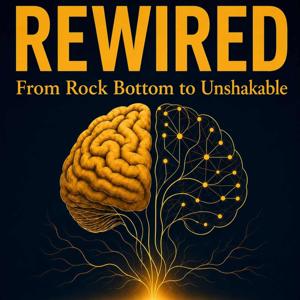
That experience became the backbone of Rewired — a book born from panic, rebuilt through discipline. Panic taught me about control, ego, and fear. It reminded me how life will always keep throwing obstacles in your way. How growth only occurs in discomfort. How anxiety is a part of life but it’s an invaluable warning system. How we have the power within ourselves to be resilient and overcome anything blocking our path. I listened to my body and rewired my mind. I do not have it all figured out but I’ve learned a lot along the way.
You can only run from your mind for so long.
If you’ve felt your heart beat fast for no reason, this book is for you. If you feel a tightness in your chest but know you’re physically fine, then there is something for you in these pages. If you don’t know where to go or feel like something is missing from your life, I might have some morsel of insight to inspire action and drive personal transformation.
Discomfort is the way forward. Discipline is the fuel. Resilience is the structure.
These panic attacks didn’t end me. They reintroduced me to myself. A wake up call to get my life together. Putting it all into perspective and driving a rebuilding process that is still very much underway.
I have kept my panic attacks at bay, written a book, and become a better version of myself. The anxiety is still there, but I am now equipped with the tools to make sure it does not escalate into overwhelming panic. I’m not perfect, but I’ve made an incredible amount of progress. Sometimes, we all need a little push to get back on track. Panic did that to me. Don’t wait until you’re at the end of your rope, on the ground feeling like you’re going to die, to make a change.
Thanks for reading! Subscribe for free to receive new posts and support my work.
From the publisher's feed