
Sign up to save your podcasts
Or

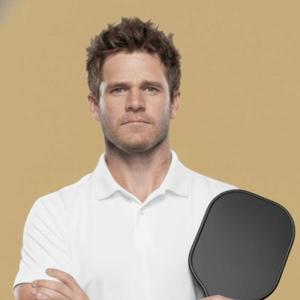


When I was 12, I was playing ping-pong at the Deer Run pool in Conyers, Georgia, with my shirt off. A kid came up and asked if I had chickenpox. I said no. He said, what are those? I said, moles. He was a kid asking an honest question. He meant nothing by it.
I never forgot it.
Looking in the mirror was different after that. I stopped seeing my body as a good thing. I saw every mole and every imperfection, one at a time. I compared my skin to the other boys, and nobody had anywhere near what I had. Other kids could tan and get dark. I burned, and the sun gave me freckles and more moles. I had moles on my feet that embarrassed me too, so I wouldn’t wear sandals or flip-flops. It caused so much stress throughout my teen years.
The Short List is a reader-supported publication. To receive new posts and support my work, consider becoming a free or paid subscriber.
I skipped pool parties, birthdays, and anything that might involve taking my shirt off. On a church trip to the North Georgia mountains, we played basketball, shirts versus skins. I got skins and stood there trying to talk my way out of it in front of everyone. In high school, I never changed in the locker room in front of other people. I always used a bathroom stall. On the tennis team at UNC Asheville, everybody practiced with their shirts off. I never did.
I remember the exact moment I decided I would never be able to get married. We were driving from our house in Conyers into town, maybe going to dinner. I was sitting in the back seat thinking, my body is so different that I don’t know if there’s ever going to be somebody who can love me with this. I’m never going to be okay showing somebody my body, and you have to do that if you’re married. So I’m never going to be able to get married.
I really believed it.
Writing it down now makes me sad. I was a kid sitting in the back seat deciding what the rest of my life would look like because of the skin on my chest.
People assume my biggest insecurity now would be the ostomy. My large intestine comes out of my abdomen and empties into a bag that will be there for the rest of my life. My ass is stitched shut. I don’t have an anus anymore. I still struggle more with the moles. It started with a simple question from a kid who meant no harm. Damn, how that stuff sticks with you.
In 2022, seton drains went in. They’re thin surgical cords that hold fistula tracts open so infection can drain. The last time I got into a pool or hot tub with other people was early 2023. I was training at Tyson McGuffin’s place in Idaho before the season. Snow covered the ground, and Connor Garnett was there with us. I had the drains in and no diagnosis yet. I’d read online that hot tubs were fine with setons, which tells you how reliable the internet can be on this stuff. I had just told Connor about the drains and how rough the past year had been. Then I got into the hot tub with him. I could tell he was uneasy. I said, “No, no, it’s fine. There’s nothing to stress about.”
Nothing happened. We’re both fine. I still feel guilty about it three and a half years later. I wouldn’t want somebody getting into a hot tub with me while they had open wounds draining into the water, chlorine or not. After that night, I made a rule for myself: no shared water spaces while I had seton drains and open wounds. There were plenty of times over the next three years when I skipped a hot tub. That was a real bummer because hot tubs feel good on my muscles and my body.
This January, surgeons removed my rectum. The ostomy I’d had for a year became permanent. I spent more months out of the water while everything healed.
Then Danélle and I went to the Seychelles for our honeymoon. We stayed on a little island called Platte, and our villa had a private pool. I hadn’t packed a swimsuit. I went in bare, bag on, Stealth Belt wrapped over it. The water was surprisingly chilly for the Seychelles. I walked in a few steps, said screw it, and jumped.
The bag took the impact and held. I knew it would. The adhesive had already survived competing in heavy humidity. I didn’t think about the seal. A year ago, when I was still getting comfortable with the ostomy, I probably would have monitored it the entire time. This time it never crossed my mind. And I didn’t think about the moles either.
I love having no clothes on in private. It feels like freedom.
With my clothes off, there’s nothing I can hide. The moles are visible. The scars are visible. The bag is visible. Danélle sees all of it. She fully accepts me. She loves the parts of my body I spent most of my life hiding.
My fear has always been public places. Strangers can look at me for a few seconds and decide whatever they want. I still have insecurities about public pools and the beach. The ostomy is part of that now too. With clothes on and my Stealth Belt, nobody would even know I have one. Shirtless, everybody would see it. I can say I’m comfortable with my ostomy. I don’t fully know yet. I haven’t let strangers see me with it.
I was naked in a pool on my honeymoon. Married. Every piece of that sentence is something the kid in the back seat had ruled out. There is somebody who can love me with this.
A kid asked me a simple question 29 years ago at the neighborhood pool. I still hide from most people. With Danélle, I’m learning to love what I’ve been hiding.
-rn
This newsletter is brought to you by Stealth Belt. The belt I wore into that pool is the same one I wear on the court. It held through the jump, it holds through matches, and it's the reason nobody knows I have an ostomy unless I tell them. If you have an ostomy and want to move without thinking about your bag, start here: https://stealthbelt.org/pages/robs-picks
Thanks for reading The Short List! This post is public so feel free to share it.
There’s a comment I get on almost every video. Some version of “my stuff is nothing compared to what you’ve been through.”
I always want to tell them the same thing. It’s all relative to your own experience. The worst pain you’ve ever felt is probably similar to the worst pain I’ve ever felt.
The Short List is a reader-supported publication. To receive new posts and support my work, consider becoming a free or paid subscriber.
This week I realized I do the same thing to myself.
I’m living in less pain now than I have in years. And somewhere in my head that started to mean my story matters less. Danélle lives in pain every single day. Other people are in the middle of the worst of it right now. I’m on the other side of surgery, playing padel, swimming on my honeymoon. So who am I to keep talking about it?
Then I remember the facts. I don’t have normal anatomy. I poop involuntarily through my abdomen into a bag, and I will for the rest of my life. The challenges that come along with that don’t change because I’m in less pain. And honestly, I can tell this story better now. When I’m white knuckling through pain, all I can report from is inside it. The clarity I have now is what lets me be honest about what the whole thing was actually like.
The strange part is how normal it all feels now. Outside of the body image stuff, which is its own thing, the ostomy feels like a fact about me instead of this hard thing I have to manage. It doesn’t stop me from doing anything I want to do. Literally anything. Seven flights on this trip, the Seychelles, Durban, back to George, including a round trip on a small plane to Platte Island. Swimming, padel, two weeks out of a suitcase. The bag stayed under a Stealth Belt for all of it. No issues, no incidents. Their slogan is “Go anywhere, do anything,” and it’s absolutely the truth.
Life can get so much better with an ostomy. For all the people out there who are scared of it or think it’s going to make their life worse, I can only speak for myself, but it genuinely saved my life. My quality of life is a hundred times better than it was over the last four years.
Four years ago I was in pain every day. Seton drains, fistulas, abscesses, all of it. It was truly awful. If that version of me could see this one, swimming in the Indian Ocean and not thinking twice about the bag, I don’t think he’d believe it. Having it be normal is the whole point and lesson for anyone that might be facing it. It shows that a full life, a great life, is possible.
Home. Somewhere in the middle of the honeymoon I noticed I missed George. Our mornings, sunrise and sunsets, the driving range, our dog, our family here. With such a transient life over the last decade, I’ve struggled to feel at home somewhere. I feel home in George. And with Danélle. This time I was eager to get home and back into routine. Yesterday I gathered the paperwork for my spousal visa. Once it’s submitted I can’t leave South Africa while it processes, could be months, and I felt relieved reading that. Our appointment is next Friday with immigration. Keep you posted.
Flexara. Still tweaking the formula. We’re chasing a specific osmolarity target, the number that decides whether electrolytes absorb into your bloodstream or pass through you. The osmolarity target keeps coming in a bit low. Every adjustment means the lab makes a new sample and ships it to me. I must re-test if it dissolves, how it tastes, how it behaves. Then we adjust again. It’s close. The loop is slow and there’s no way to skip it. If you want to know when it’s ready, the waitlist is at Flexara.com.
Padel. Played padel this week for the first time since moving to George. Most of it is learning the glass. Everything’s a slice so the ball dies on the wall. Hit topspin into the glass and it sits up easy. And the instincts are backwards. In tennis and pickleball, when someone’s about to smash, you back up to buy time. In padel you step forward, because the wall is what buys you time. I’m unlearning it point by point, same as when tennis habits had to die for pickleball. It’s fun being a beginner again. It’s true everywhere right now: padel, golf, Afrikaans, Flexara. I’m not good at any of it yet, and I’m enjoying it more than I expected to.
A question before I go. I’m a beginner at four things right now: padel, golf, Afrikaans, and building Flexara. Whatever you’re a beginner at, what’s the best piece of advice anyone ever gave you? Leave it in the comments. I’ll read all of them.
-rn
Stealth Belt is a paid partner. I wore their belts before they ever paid me. If you have an ostomy or you’re heading toward one, my picks are at stealthbelt.org/pages/robs-picks.
Thanks for reading The Short List! This post is public so feel free to share it.
We leave Seychelles tomorrow. One night on Mahé, then back to South Africa.
The Short List is a reader-supported publication. To receive new posts and support my work, consider becoming a free or paid subscriber.
If you don’t know where this is, the Seychelles sit in the Indian Ocean, directly east of Tanzania, southwest of India, and a bit west of the Maldives. It’s about a five-hour direct flight from Johannesburg to Mahé, which is all mountains rising out of the ocean and where the local language is Creole. From there we took a twelve-seater to Platte Island. Platte means flat, and it is, a flat little coral island where it barely rains. A fascinating thing about the weather here: the high during the day is 26 Celsius and the low at night is 25. That’s 79 and 77 for the Americans. You don’t get weather that steady in the US, daytime and evening basically the same temperature, especially somewhere this comfortable.
Some things about this country that got me. It’s 115 islands, and it’s the smallest country in Africa and also the richest per person. Nobody lived here at all until the 1700s, no indigenous people anywhere, the islands just sat empty in the ocean until the French showed up. The granite islands like Mahé are the only oceanic islands on earth made of granite, which normally only exists on continents, and it’s why Mahé looks like mountains dropped in the sea. There’s a palm here that grows the largest seed in the plant kingdom, up to 25 kilos. And my favorite: the whole country has about a hundred thousand people, and one atoll alone has a hundred and fifty thousand giant tortoises. There are more giant tortoises than humans in the Seychelles.
What makes this place is how remote it feels. From the daybed you look through the palms and there’s a gap in all that green, and through the gap is the turquoise water and a small stretch of beach. A path runs the whole way around the island with palms overhead the entire way. Hawksbill turtles. Blacktip sharks in the shallows. Giant tortoises. Birds I’ve never seen. The shower is outdoors, and at night the stars are brighter here than anywhere I’ve been. When I went to the Maldives a couple years ago I liked it, but you’d look out and see other resorts, other islands, construction across the water. Here you don’t see any of that. You’re away from everything.
The island itself is easy. There are bikes with your name on them and you ride everywhere, or a buggy comes and gets you. I played some padel, and the villa has its own pool, so I swam most days. Stealth Belt on for all of it, that’s what lets me play and swim without thinking about the bag.
The food is absurdly expensive, we’re talking seventy dollars for a pizza. To be clear, this isn’t how we live. I booked the stay on Hilton points and it was a treat. I still can’t recommend the place enough.
The days were slow. Long breakfasts, reading, and we painted a couple of times this week. Had ChatGPT walk us through it, how to mix the colors, what to actually do, since neither of us knew what we were doing. My painting was s**t. But to paint a palm tree you have to really look at one, closely. We put yellow in the leaves where they catch the light, and now I see it everywhere, every tree, it was always there. The pool does the same thing. The water isn’t blue, it’s about nine colors, and the ripples move the light around so it never sits still. I’ve been looking at palm trees and water my whole life, and I had to sit down and paint something very poorly to slow down enough to actually see the beauty all around me.
That slowing down is most of what this trip has been. Which is also why I’ve been paying attention to something I usually don’t.
They keep refilling these glass water bottles here, and for whatever reason it’s made drinking water easier than it ever is at home. I’ve been well ahead on it all week. And I still don’t feel fully hydrated, because for a body like mine water alone was never going to fix it.
When your colon is bypassed or gone, drinking a lot of plain water can work against you. It runs straight through and takes sodium with it, so you can drink all day and end up more depleted. What your body holds onto is water that comes in with sodium and a small amount of glucose in the right ratio. Water on its own isn’t enough.
I learned that the hard way. My last tournament was in December, in India. I’m always conscious of the heat there, so I did what you’re told to do and drank electrolytes all day. It was fine through the afternoon matches. Then the team match that evening, and my stomach got super squirrely. I’m used to playing through pain and discomfort. I focus on the ball and everything else fades. This team match, I felt pain between every single shot. Split step, move, hit, and my stomach would grab me before I could get ready for the next shot.
The electrolytes were the problem. They’ve always been a problem for me. To taste good, these products lean on sweeteners, sucralose and sugar alcohols and the rest, and for sensitive stomachs it can be brutal. They help hydrate me, but destroy my stomach.
The only real way to fix that is to take the flavor out.
That’s what I’ve been building. It’s called Flexara, hydration made for sensitive guts. It’s unflavored on purpose. It has a light salt taste and nothing else. The glucose in it isn’t there to make it taste good, it’s measured to the exact amount your gut needs to absorb the sodium and water, enough for optimal absorption for bodies that struggle to absorb, and nothing past that. Five ingredients, each one doing a job.
I’m building it as a daily baseline, not a heat-day emergency rescue. It’s for people who are chronically dehydrated and can’t get to a level baseline on water alone. I made it to be genuinely good for the people who need it most, ileostomies and high-output stomas, the ones who take this seriously every single day. But I have a colostomy and I struggle too. So do plenty of people who’ve never had surgery and just live dehydrated, or fall apart when they travel, or have a gut that reacts to the wrong artificial additives. I didn’t want to build something so narrow it only reached the most extreme case. I built the thing I wish I’d had on court in that team match in December.
It’s close now.
If you deal with any of this, chronic dehydration, gut issues, drinks that were supposed to help and didn’t, get on the list. The first people on it get first access and early supporter pricing when it launches. You can sign up at Flexara.com. And if you know someone who deals with this too, please send them there.
We pack tonight and fly back tomorrow.
-rn
We’re on our way to the Seychelles. It’s our proper honeymoon. A week on a small island, a trip we’ve been looking forward to for a while.
I almost didn’t want to go.
That’s a new feeling for me. I’ve spent a lot of the last decade getting on planes. But George feels like home now. I’ve got a routine. I’ve got the fireplace and the mountains and a loving home. When it came time to pack for a week away, I was excited for the trip and genuinely bummed to be leaving the house. It told me a lot about how right George feels.
The morning was already hectic. We got to the George airport late and they told us it was too late to check the bag and we had to get on a later flight or send it as cargo. Some kindness and some sweet talking got it onto the flight. We almost missed it, which would have blown our connection in Johannesburg. Danélle gets anxious flying already, and she’s on her feet a lot, so travel is hard on her body before anything goes wrong. We made the flight. We got to Johannesburg with a long layover ahead and a five-hour leg to the Seychelles after that.
Then we hit security in Johannesburg.
Danélle walks with a limp and uses a cane, especially when she knows there’s going to be a lot of walking, which an airport is. A man at the checkpoint came up and told her she had to take it back to the check-in counter and check it as baggage.
I jumped in. I said she needs it to walk. Why would she have a cane with her if she didn’t need it. That’s dumb. He said he watched her take a couple of steps back there without it, so she obviously doesn’t need it every step, so she can check it.
If Danélle doesn’t use the cane, her leg becomes very painful and very sore, so she uses it as much as she can. If she needs to get something out of her bag, she can stand and take a step or two without it. But his mind was made up. He kept tapping on the cane and telling her she had to go check it.
She finally said, “what do you want me to do, show you my leg?”
And then she did. She pulled up the white pants she was traveling in, in the middle of the line, in front of everybody, and showed him the scars. They had to cut open her entire right leg and put a titanium bone in it. Same with the hip.
The scar runs the full length, the inside of the thigh and the outside. It’s not subtle.
His face went white. He said okay, okay, okay, fine, fine. He let the cane through.
He never apologized. When I said that was unbelievable, that it was rude, he said he was just doing his job. He didn’t ask a single question. He decided a hundred-pound woman with a cane was trying to get away with something, and made her undress part of herself in front of strangers to prove she wasn’t.
Danélle had stage four osteosarcoma. They found it when she was seventeen, when her femur snapped while she was dancing. Bone cancer. Stage four. At seventeen.
She went into a trial with a group of other people who had it. Out of that group, she’s the only one who lived. She had close friends in it who didn’t. She wasn’t supposed to make it either.
That was fourteen years ago, and it hasn’t stopped since. Five hip replacements. More than thirty surgeries, and counting, because titanium fused into bone causes its own pain, and the connections come apart, and there’s no quick fix, it’s a full surgery every time. She has spent years of her life in hospitals.
She lives with pain every single day. She has never once gotten to be finished with it.
She told me after that people have no idea how hard it’s been. And she’s grateful for the leg most of the time, because it saved her life.
After security at JNB you go straight into immigration. The line is long. We were standing in it, Danélle still shaken, when a woman, maybe mid-thirties, came up and tapped her on the shoulder. Her eyes were a little teary. She said, I just wanted to tell you that you are absolutely gorgeous.
Danélle almost burst into tears. She gave her a huge hug and said thank you, you have no idea how much I needed that.
I don’t know for sure if the woman saw what happened at security. I think she did. She didn’t say anything about it. She walked up to a stranger in a long airport line and told her she was beautiful, at the exact moment she needed to hear it.
Danélle could use all of it. The wheelchair. The priority line. The disabled parking. She qualifies for every bit of it and uses none of it, because she thinks other people need it more. I fight her on a lot of it. Her answer is, what if someone’s actually in a wheelchair and can’t walk at all. She asks for nothing she’s entitled to, and at a checkpoint in Johannesburg she got told she had to prove it in front of a line of strangers. Just for using a cane to walk the same line as everyone else.
I don’t think he’s a bad person. He saw a small woman take a couple of steps without her cane and decided that was the whole story. If he knew the rest of it, the cancer at seventeen, the friends from the trial who didn’t make it, the 30+ surgeries, the pain she’s in every single day while standing in the same line as everyone else, I think he’d have been the one crying. He just never took the time to see her.
I’m writing this from the airport in the Seychelles. We landed late last night, stayed near the airport, and we’re waiting on the small flight to the island this morning. Danélle is next to me. She slept hard. The hard part of the trip is behind us and the good part is an hour away.
The next time someone in front of you is moving slower than you’d like, or sitting in a seat you don’t think they need, or holding up the line, give them the few seconds that man didn’t give my wife. You have no idea what they’ve already lived through to be standing there at all.
-rn
Paid partnership with Stealth Belt
I work with Stealth Belt and I wear one every day. It holds my ostomy bag tight and flat against my body so I’m not thinking about it, on a court, on a plane, or standing in a security line getting it unzipped. This week in the Seychelles I’ll have it on to swim, and to play pickleball and padel on holiday. It’s the one piece of gear that made the biggest difference for me, and if you or someone you love is figuring out life with an ostomy, it’s where I’d start. stealthbelt.org
It was just firewood.
Ten bags. Twenty kilos each. Delivered to the house when we need it because we’re moving into winter in George and the fireplace heats the home.
The Short List is a reader-supported publication. To receive new posts and support my work, consider becoming a free or paid subscriber.
I told myself I’d order it. Then something else grabbed my attention. The thought stayed open until later that day, when I saw the fireplace again.
That should’ve been a five-minute task. Order the wood. Pay the money. Wait for the delivery. Done.
I finally put the order in Thursday morning. Friday came and they hadn’t responded. Now they can’t deliver until Monday.
We can pick some up from the store if we need to. Everything’s fine. It’s the kind of thing I’m talking about though. A five-minute task became another errand because I didn’t handle it when it first came into my head.
That’s how something small can turn into something annoying. More steps. More time. One more thing in a day that already had enough.
I saw the pile getting low and felt annoyed. The firewood itself was small. I was annoyed because it reminded me of all the other things I might be forgetting.
There’s always more than I can hold in my head right now. Visa stuff. Home stuff. Money stuff. Sponsor stuff. Flexara stuff. Ostomy supplies. Content. Email. Paperwork. Follow-ups. Calls. All the little things that go into keeping a house running. All the little things I need to do to get a business off the ground. All the little things that make me feel like I’m either on top of my life or slowly drowning in it.
I can handle unfinished things. I have a harder time with unknown things.
That’s what I’ve been learning this week.
A lot of open loops can wait. Some of them should wait. The stress comes when I don’t know where they are. When they’re loose and bouncing around my head, then something jogs my memory, it makes me realize this is a pretty untrustworthy system. Forgetting one thing makes me wonder about everything else I’m forgetting.
None of those thoughts help me do better work. They take energy before the day has even started.
And this is what I’ve realized it all comes down to.
Energy.
Since my proctectomy, the pain is better. I’m grateful for that. For a long time, pain was one of the main things I managed. Deep pelvic pain. Fistula pain. Abscess pain. Drain pain. The pain of sitting, walking, flying, competing, and honestly, just living in this body that always seemed to break down.
It’s so nice to not constantly be worrying about that now.
The fatigue has become a new worry.
The Crohn’s fatigue is still there, and on many days it feels like I have good energy to start with, but then it quickly drops off a cliff when I start actually doing stuff.
With my body no longer being in unrelenting pain, part of me expects more from it. I’m out of the worst pain, so I want that to mean I’m back to full capacity.
It doesn’t feel that simple.
I’m not on biologics right now, and I like that. I like being off heavy medication. I like being away from the side effects and the mental weight that came with needing those drugs. I also wonder if there’s a way to solve the chronic fatigue that still comes with Crohn’s.
I hope there is.
For now, I’m managing the best I can.
That means my energy has to be protected on purpose.
I don’t have much room for sloppy.
I can still do a lot, which is part of what makes this tricky for me. I can work, create, train, send emails, take calls, build Flexara, film content, and push through the tired feeling while telling myself it’s fine. For a while, it looks like I’m getting away with it.
Then it catches up somewhere else.
My body feels it. My mood feels it. The version of me that shows up at home feels it.
I don’t want to keep repeating that.
I’m newly married. I’m in a new country. I’m building a home here. I’m trying to learn Afrikaans. I’m trying to build Flexara. I’m trying to create short-term income through partnerships while building a long-term business asset. I’m trying to take care of my health. I’m trying to become a better partner than some of my old patterns would let me be.
That takes capacity.
A relationship takes capacity. Conflict takes capacity.
I used to shy away from conflict. Big time. I thought avoiding it kept things calm. I’ve learned that avoiding conflict usually buries things. Then resentment gets room to grow.
Conflict is required. I believe that now. I don’t always like it. I don’t always feel good at it. I still have old patterns that show up. Being in a new place with a new life doesn’t mean I left myself behind.
My patterns came with me.
Marriage requires energy and enough mental space to listen. It requires enough emotional room to stay present. It requires enough energy to keep working on the things that strengthen a bond after the work is finished.
If I burn through all of that on email, sponsor outreach, Flexara tasks, content, and a hundred open loops I never wrote down, I should expect to have less available for the rest of my life.
I’m trying to change that.
Therapy this week was about stress and overwhelm. It was also about the fact that I knew I needed to change something, then didn’t do a great job changing it the week before.
That’s annoying to admit because I can usually explain the problem pretty well. I know the pattern. I can talk through it. I can see how too many open loops make me scattered, tired, reactive, and less sharp.
Knowing the pattern doesn’t mean I’ve solved it.
The last few mornings, I’ve been doing a complete brain dump on paper.
Nothing fancy. No app. No tracker. No dashboard. No productivity system I spent three hours building so I could avoid doing the actual work.
A notebook.
I’m being very analog and caveman right now because that’s what’s working.
I write down everything that feels open. Then I put it into three categories.
Life. Money. Create.
Life is the stuff that keeps me grounded, healthy, supplied, and somewhat functional.
Miracle Morning goes there. That’s the morning routine from Hal Elrod’s book. I’ve done it off and on for years. When I’m the best version of myself, I’m usually doing some version of it. It’s how I check in with myself, get grounded, and remind myself there’s a future I’m trying to build that I still feel excited about.
One hundred kettlebell swings go there.
Studying Afrikaans goes there, even if it’s only for a few minutes.
Firewood goes there.
Ostomy supplies go there.
All of the basic parts of life that have to be taken care of.
Money is short-term income and long-term Flexara work.
Sponsor outreach. Brand deals. Potential partnerships. Replies to people I’ve already been talking to. Packaging. Testing. Website. Email. Product development. The things that create income now and the things that build the business I want Flexara to become.
I’m okay financially right now, and I’m grateful for that. I still put pressure on myself because I want to build something that becomes the engine of my income. I want Flexara to be that. I want a real business asset that gives me more freedom with my time, energy, and resources.
The short-term reality is that Flexara will take money before it gives money back. Inventory. Packaging. Testing. Samples. The money that comes in from brand deals and partnerships matters because I don’t want to pull too much from the business too early.
That’s where I start telling myself a story that sounds responsible.
If I were crushing it financially, I wouldn’t feel like this.
So I need to work more until I get there.
That story sounds true when I’m scared.
The problem is that the more I work from that place, the worse I tend to work. I get mentally stressed. I get overwhelmed. I get physically tired. The fatigue gets heavier. My mind is less sharp. I’m technically working longer and getting less useful work done.
That’s hard for me to accept because I still have a part of me that trusts pressure more than peace.
Create is the third category.
That’s anything I’m bringing into the world that doesn’t exist yet.
Record three reels.
Write the first draft of The Short List.
Create the Flexara packaging guideline.
Build the Flexara waitlist page.
Connect it to an email provider.
Write something. Film something. Build something. Move an idea out of my head and into the world.
Once everything is out, I pick the few things from each category that would make the day feel good if I completed them.
That’s the part that’s helped the most.
A good day means I know what belongs to today and what’s allowed to wait.
I’m used to letting the whole list judge the day. If there are fifty open loops and I close eight, the remaining forty-two still have a way of making the day feel unfinished.
This week, I’ve been trying to give the day a smaller job.
Here are the things that matter today.
Do them.
Stop.
Yesterday, I stopped at 2 p.m.
Some days that might be 5 p.m. Some days it might be earlier. I don’t think the time matters as much as the agreement I made with myself in the morning.
I wrote down what would make the day count. I did the work. Then I stopped.
The strange part is that stopping didn’t make me feel lazy.
It made me feel clear.
I could go outside and chip balls in the backyard with our dog. I could go to the shop with Danélle. I could be there without quietly thinking about the thing I should be doing instead.
That’s the part I want more of.
Presence without the guilt tax.
I don’t always get that. A lot of the time, when I’m doing something fun or normal, my head is still at work. I’m with my wife and part of me is doing sponsor math in the background. That’s a miserable way to live. It also doesn’t make me better.
When I stop at the right time, manage my energy better, and work when I’m physically and mentally sharper, I get more done in less time. I do better work. I’m less scattered. I’m less resentful. I’m less likely to turn a five-minute task into another loose end that follows me around for three days.
I know the notebook isn’t the final version.
At some point, I’ll need a better place for the open loops to live. A loose-leaf notebook probably isn’t the long-term home for everything I need to track.
I also know myself.
I can take a thing that’s working and ruin it by trying to optimize it too early. I’ll create a tracker. Then categories inside the tracker. Then a better view of the categories. Then I’ll start thinking about whether the view is the right view. The system becomes the project and the original problem is still sitting there.
So right now, I’m staying with the ugly version because the ugly version works.
Write it down.
Pick the few things that matter today.
Do them.
Stop.
That’s enough structure for now.
The goal is to stop asking my brain to hold everything.
My brain is good for a lot of things. It’s a terrible storage unit.
When too much lives there, everything starts to feel urgent. The firewood. The email. The sponsor follow-up. The ostomy supplies. The half-built page. The idea I don’t want to lose. The message I meant to answer. The errand I told myself I’d handle.
Once those things have a place, they feel different.
They’re still unfinished. They’re just no longer unknown.
That’s the difference I’m trying to protect.
I’m trying to clear my head because my life needs more from me than work.
I want to have something left at the end of the day for the people and the life I came here for.
-rn
P.S. For the ostomates here, Stealth Belt has become part of my daily routine as I’m training, traveling, or just trying to have one less thing to think about with my bag. I don’t think any product removes the planning that comes with an ostomy, but good support gear can make the day feel a little less mentally loud. I even wear it to bed. It only comes off when I shower.
You can check them out here: Stealth Belt - Ostomy Support Wear
The Short List is a reader-supported publication. To receive new posts and support my work, consider becoming a free or paid subscriber.
I had therapy this week, and my therapist asked me a question I haven’t been able to put down since. What was I afraid would happen if I stopped calling myself a professional pickleball player?
I sat there for a while, because the honest answer was embarrassing. People might care less. The story might get smaller. The ostomy might lose some of its power if it wasn’t attached to a comeback.
The Short List is a reader-supported publication. To receive new posts and support my work, consider becoming a free or paid subscriber.
That last one is the one I’ve been avoiding. The ostomy was a proof point. Look what I can still do, even with this. As long as I was playing pro pickleball, the bag made me more impressive. If I stop playing, it’s just a bag. And I used that proof point on myself more than on anyone else. Turning the surgery into a comeback meant I never had to grieve what it took from me. Why would I grieve something that was giving me an identity?
Then two days ago, a PSA I filmed for the Crohn’s and Colitis Foundation went live. We shot it back in January. In it, I’m Rob the pro pickleball player, proof that you can have Crohn’s and an ostomy and still do all the things you want to do. Watching it launch this week, I realized it’s another piece of me holding onto that story. Because that’s the story people like. You can have a bag and still compete. You can be sick and still win.
And the story is true. That’s what makes this hard. I can still play. I can golf, train, travel, do almost everything I could do before, and most of it with less pain than I’ve had in years. The surgery didn’t end my pickleball career. If anything, it made one possible again. For the first time in a long time, I could actually train and practice without my body punishing me for it. I could not only get back to where I was, but get better than I was.
So the question was never whether I can. The question is what it would cost and what it would be for. When I’m honest, the answer to “what for” is mostly to show people I still can. I’m still one of the best players in the world. I know that. Most people watching from the outside have decided I’m not. That gap, between what I know I can do and what people think I can do, frustrates me more than anything else in this. I can’t control what they think. I know that too. I was still hoping for one more run at showing them.
But I know that thinking. One more tournament. One more project. One more yes. It’s run my life for years and it’s never satisfied. I could keep going, and that’s the problem. I can keep going when I shouldn’t.
It’s been seven months since my last pro tournament in India. People ask me all the time if I’m going to keep playing, and I never have a clean answer. That bothers me more than I’d like, because pro pickleball player is the best answer I’ve ever had when someone asks what I do. It came with a ranking, sponsors, a schedule. Now my answer is long. I live in George, South Africa. I’m married. I have Crohn’s and a permanent ostomy. I’m building a hydration company, I write a weekly newsletter, and I’m rebuilding my health and my income at 41. All of it is true and I chose all of it. It just takes three minutes to explain instead of three seconds.
The truth is I don’t miss the answer itself. I miss the certainty and credibility that came with it. Nobody questioned my ability when that was the introduction. Which means the whole thing was built on what other people thought of me, and I have to get okay with not caring about that.
I’ve written before about growing up feeling like nothing I did would ever be enough. That feeling didn’t go away when I turned pro, and it didn’t go away when I won titles. The wins never gave me much, honestly. But the label did. When I said pro pickleball player, I didn’t have to prove anything else. I’ve been chasing the feeling of being enough my whole life, and that label helped me feel closer to it.
I won’t pretend money isn’t part of this either. During the same season as the surgery and recovery, my biggest sponsorship ended. So I’m working through this while rebuilding income in a new country, knowing sponsors mostly pay for who’s playing and who’s winning. Some nights I think the smart move is to keep acting like a full-time touring pro because that’s what sells. But my audience has grown more since I stopped touring than it ever did while I was on tour, and most of the people who follow me now don’t care whether I play pickleball at all. They’re sick, or they have a bag, or someone they love does. They know what it’s like when your body changes the plan. I believe the right brand will see the value in that. Believing it doesn’t pay anything yet.
I’m still playing, to be clear. Later this year I’m going to Tanzania for a tournament, and I’ll play others when they make sense for my health, my family, and my income instead of costing all three. That’s not retirement. But it’s not the same life either.
Because when I picture what a real return would look like, I don’t want it. Three tournaments in three cities on back-to-back weekends. Being in certain places at certain times all year long. Giving up the open calendar I finally have. Maybe down the road I pick one month and play that month. But the year-round grind isn’t a life I’m willing to trade this one for. Getting to the top of a sport is hard to do. Walking away while you still feel like you can compete at the top is even harder. And still, I have no doubt it’s the right thing for me. It’s just hard.
The thing that’s helping is golf, weirdly. I live on a golf course now, so less than a month ago I started hitting balls at the driving range, and I had my second lesson this week. Sports have always come naturally to me, so I’m picking it up faster than most. But golf is hard, and I’m nowhere near good yet. I like that. Being new at something, seeing how far there is to go, wanting badly to get better. I hate being bad at something I feel like I should be good at. That drives me more than almost anything, and I’d forgotten the feeling. I got to become one of the best in the world at a sport millions of people play. That happened and it doesn’t change. Now I want to find out if I can do it again in business with Flexara, where the upside is bigger, the toll on my body is smaller, and I get to start at the bottom of something again.
That trade scares me. The old life came with clear income. Sponsorships, tournament earnings, appearance fees, a number I could count on. Now I’m in charge of my own destiny, which sounds good until you’re the one funding inventory and waiting out the months it takes a business to work. The real uncertainty is whether I can pull it off. Nothing is forcing this. My body could handle more. My game is still there. I’m choosing this while the door is still open, and that’s exactly what makes it hard.
I’m not at peace with it yet. The more I talk about it and write about it, the more okay I get, and this writing is part of that. I know it’s the right decision. I still want one more run. I’m learning to live with wanting it and not chasing it.
-rn
The Short List is a reader-supported publication. To receive new posts and support my work, consider becoming a free or paid subscriber.
I was lying on my side in a hotel room when it hit me.
Tender lump forming on my groin. Phone in my hand. Just reading. Trying to understand what had actually happened to my body a few hours earlier when a routine drain removal turned into a severed artery and an emergency vascular procedure.
This Substack is reader-supported. To receive new posts and support my work, consider becoming a free or paid subscriber.
The word I kept seeing was catastrophic.
And I felt something unfamiliar. Because I realized I was terrified. Genuinely, deeply terrified. And the terrified feeling wasn’t about the procedure itself or the artery or the doctor’s face going solemn in a way that doctor’s faces don’t usually go. It was about how close it was. How close it was and how much I didn’t want it to go that way.
That was new. I hadn’t felt that in a while.
For a long time, if you had asked me honestly how I felt about dying, I wouldn’t have had a strong answer either way. I wasn’t actively hoping I’d die. It’s just that years of chronic pain changes your relationship with being alive in ways that are hard to explain until you’re not stuck in the thick of it.
I’m a professional pickleball player. My job requires me to travel 25 to 30 weeks a year and then actually perform when I get there. On court. Competing. While managing four pieces of gauze stuffed between my cheeks every day, three to four changes a day, every hard airport seat making everything worse, every long line adding to the pain, every flight a countdown.
And then a year ago I got my ostomy on top of all of that. Supplies that have to come with me everywhere. Draining an ostomy bag in an airplane lavatory on your knees by yourself, cramped, trying to manage something that most people don’t even know exists, while also preparing to compete professionally. Nobody around you knows what’s happening. You figure it out alone because you have to.
You keep going because that’s the job and that’s the life. You adapt so completely you forget you’re adapting and that suffering is normal. And somewhere in all of it you slowly lose the attachment to being alive.
That was just where I was.
I’ve been let down a lot over the last four years trying to fix this.
The seton drains in 2022. Biologics. The loop colostomy a year ago, which gave me the most hopeful walk I’d had in years. Half a mile from a condo to the beach, first time I’d done it without fistula pain grinding through every step. That walk felt like things were going to be different. And then a few months later the pain came back and it wasn’t the fix I had hoped it would be.
So I went into the proctectomy cautious. Tempered. I had adapted so completely to the pain that I didn’t even fully know anymore how bad it actually was. It had just become my normal.
Somewhere in those four years I stopped being that attached to being here anymore.
And then I was lying in that hotel room reading the word catastrophic on my phone.
And I was terrified.
Not in the moment of the procedure. I didn’t understand what was happening in the room. I was face down on the table, I felt a burning sensation, the room shifted, the doctor’s face changed, my mom gave consent in the waiting room. I got through it without fully grasping what it meant.
The grasping came later. Alone. In the quiet of a hotel room with a lump on my groin that hadn’t been there that morning.
And what the terror told me was that I had more hope than I knew I had. That somewhere underneath the four years of letting go, underneath the adapted expectations and the failed treatments, I still wanted to see what was on the other side of this surgery.
That shook me. That I didn’t know that about myself until a fifteen minute drain removal almost went completely wrong.
A few days prior I went outside for the first time in two weeks. Airbnb ten minutes from Mayo, just me. Cool air on my face. Sun. Just walking.
And the grip had loosened. That deep fistula pain that had been my normal for so long I forgot it wasn’t everyone’s normal. It was different. Quieter.
I’ve had a walk like this before. After the colostomy, half a mile to the beach, I thought that walk meant something definitive. It did for a while. Then it didn’t.
So I’m not calling this one anything definitive either. I’m cautiously optimistic in the way that someone gets cautiously optimistic after being wrong enough times. But I’m also aware now, in a way I wasn’t before the hotel room moment, that I actually want this to work. That I have things I’m moving toward. A partner. A home that’s actually mine somewhere. Friendships with more depth than a transient life allows. My body doing what it used to do on a pickleball court. The people going through their own version of this who need someone to show them it doesn’t have to stay this way forever.
It brings me to tears honestly, thinking about how bad my normal actually was. That I lived in that for four years and adapted so completely I forgot what I was adapting from. And now, even in recovery, even still on pain meds, I can already feel the difference.
Over the last four years I wouldn’t have cared if I died. Not really.
A walk, a hotel room, a phone screen and the word catastrophic told me that wasn’t true anymore.
That’s the most hopeful thing that’s happened to me in a long time.
-rn
Next post: Another four weeks of being still, doctor’s orders. Learning what I can control and what I can’t.
This Substack is reader-supported. To receive new posts and support my work, consider becoming a free or paid subscriber.
From the publisher's feed