
Sign up to save your podcasts
Or

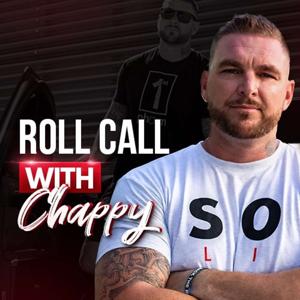


Peter “Chappy” Meyerhoff sits down with ex-con filmmaker Seth Ferranti.
A military brat, Seth was into drugs at the ripe young age of 13. At age 19 in high school, he had built an empire, supplying around 15 colleges across five states. In 1991, he became one of the first targets in the expanded war on drugs. He was initially arrested on the state level for “conspiracy to distribute LSD”. But upon discovering his extensive, nationwide network, he was reindicted at the federal level with a Continuing Criminal Enterprise (CCE) charge.
Seth decided to fake his suicide in order to avoid jail time and moved to L.A. to lay low until all was forgotten. However, y then, he was one of the U.S. Marshals’ 15 Most Wanted Fugitives and it was quickly discovered that his “suicide” was a hoax. He was incidentally arrested when a shop owner called the cops after finding Seth and a friend smoking a joint behind his property, and in three days, the police matched Seth’s prints.
At 23 years old, Seth was sentenced to 25 years.
Determined to move past this period in his life as fast as he could, Seth found refuge in education. His love for writing and studying brought him a surprising amount of success while in prison: Seth earned three college degrees, including a Master’s, wrote 22 books on gangsters, drug lords, and prison gangs, and, alongside his wife, founded a publishing house and website, Gorilla Convict, and started a career as a journalist writing for VICE, Penthouse, and others.
After being released he started making films. In 2017, Seth wrote and produced White Boy, which is currently on Netflix. He currently has numerous projects in production and development.
Topics Discussed:
Connect with Seth Ferranti:
Connect with Peter Meyerhoff:
Tommy Vext wouldn’t be alive today were it not for grace — and a phone call. The heavy metal singer and songwriter was poised to throw himself in front of a train when a young kid in the throes of addiction reached out for help. That one decision — to answer his phone and step up as a sober brother — saved Tommy’s life and kept the former lead vocalist for Bad Wolves on a path that today serves as an inspiration to everyone who comes into contact with him and his message. This episode of the Roll-Call with Chappy podcast unspools a career and life trajectory like none other — from unimaginably low lows to a life full of personal and professional highs; from multiple near-death experiences to transcendent peace and inspiration within his recovery.
Host Peter “Chappy” Meyerhoff takes Tommy through an amazing set of life milestones. You’ll hear about the traumatic childhood roots that shaped the life of Thomas Cummings, who grew up a biracial New York kid in a home dominated by addiction and mental illness. Their conversation touches on the emotional toll that violence took on Tommy’s family — and the powerful ways in which 12-step recovery ultimately transformed his life, as well as his loved ones’. He has gone from being a young boy powerless to protect his mom, to buying her the safe, comfortable home in which she lives her life today, supporting others through her work with AlAnon.
It’s all about breaking the cycle, showing up and doing the work. “We’re not in the results business. We’re in the work business. We try to show up and do what’s right and wonderful things happen,” says Tommy, who has 37 songs ready for release, a forthcoming biography and plans to tour internationally. You’ll appreciate Tommy’s brutal honesty about the fear, pain and loss he suffered repeatedly coming up — even as he somehow resisted relapse. Whether confronting his brother’s homicidal mania or working with musicians who don’t share his ethos, Tommy explains why nothing shakes his bedrock of 13 years’ sobriety: “There are no mistakes in God’s world.”
Connect with Tommy Vext:
Connect with Peter Meyerhoff:
Peter “Chappy” Meyerhoff sits down with Carlos Vasquez. The two met not long after Carlos was released from prison six months prior to this conversation.
As a child, Carlos dreamed of becoming a baseball player, and he had a seemingly picture-perfect Catholic upbringing. Everything changed around the time he turned 13 when he discovered that his father had a secret family. Almost without warning, his dad abandoned his real family to be with them, forcing Carlos’s mom to take on three jobs to support her children. Not long after that, his 16-year-old sister became pregnant, and Carlos himself hit the streets.
He was quickly initiated into the gang life and committed his first crime—armed robbery—at the age of 15 and, at 18, he was faced with a 20-year sentence with two strikes. Now suicidal and thinking he would never leave that place, Carlos went to prison with the intention of “being the craziest person that anybody has ever seen.”
13 years into his sentence, however, his life took a dramatic turn. He recalls being in the hole, totally alone with his own thoughts, and asking himself the question, “I’ve made it this far and I’m still alive. Why am I not dead? Maybe I need to do it.”
He mulled over that thought for the next few days until he and a chaplain crossed paths. He offered Carlos a Bible, which he proceeded to read cover-to-cover. Around the same time, he received a letter from a friend who had just received a 110-year sentence. That friend was 15 years old, and it was partly due to Carlos’s influence that he went down a similarly dark path.
That was the final straw for Carlos. He committed—to God and to himself—that he was going to change. He decided to take back control of his life. At the same time, he believes that God led him to become a role model for men and boys who are currently going through the same dark phase he did.
In Carlos’s own words: “Something told me: ‘You’re not supposed to just walk away. You’re supposed to put yourself back in that place and help change the culture. Use your influence. Use your leadership and communication skills to help these guys find the inspiration to change.’”
Topics Discussed
Connect with Carlos Vasquez:
Connect with Peter Meyerhoff:
Peter “Chappy” Meyerhoff sits down with DJ Cruse, who works for the Arizona Department of Corrections, Rehabilitation and Reentry as a Program Project Specialist II.
Since he was a boy, DJ had an unquenchable fascination with the military and envisioned a career for himself in the Armed Forces, where he would become a Green Beret and, once he had accomplished all he could with the Army, join the police force and lead SWAT in a major city.
When he was a kid, DJ’s love for adventure first led him to join the Boy Scouts. To anyone from the outside looking in, the young DJ seemed to be on a bright and promising path. And he was—until his insatiable curiosity and openness to new experiences nudged him down a dark detour towards the dangerous world of drugs, alcohol, and gangs. He was only 12 years old when that downward spiral began.
DJ landed in prison for the first time as a ninth grader, where he spent the next six months getting into fights with his fellow inmates and essentially doing everything that didn’t involve learning from his mistakes. He picked up right where he left off once he was out, and would later find himself behind bars once again. That next sentence would last 170 months, or just over 14 years.
It was on December 14, 2017 when DJ regained his freedom. He was still a lost, scared, and unstable mess of a man, but he was determined to make a change. Sometime following his release, he was invited by a friend to a local church where he was quite literally floored by the presence of God. He also underwent rehab, which finally allowed him to come to terms with who he had become over the past three decades, and from there he would chart a new course.
Today, DJ’s life is defined by giving back, 24/7. Not only does he now work for the Department of Corrections, but he has also partnered with the ministry IdentiFreed, whose purpose is to “spread the gospel to the church, recovery, homeless and incarcerated community and to the nations on a global scale.”
Topics Discussed:
Connect with DJ Cruse:
Connect with Peter Meyerhoff:
Key Quotes:
Chappy kicks things off by offering a perspective shift by bringing up his wholehearted belief that “your worst day out on the street is a hundred times better than your best day in prison.”
“To get a different perspective,” he continues, “you’ve got to look at somebody who has a worse situation than you.”
Chappy goes on to share how he had to rewire his brain the second he was released from prison. He talks about all the people around him who had to remind him that, in the real world, threatening others, asserting your dominance, and everything else that was acceptable—expected, even—in the prison yard is completely off-limits outside those walls.
Taylor and Chappy close out the show with a discussion on making an impact. With a little faith, a focus on keeping things in perspective, and constantly reminding yourself that everyone has a purpose, seemingly insignificant decisions will result in a life full of blessings not only for you, but for everyone that you touch.
Topics Discussed:
Connect with Guest:
Connect with Peter:
Key Quotes:
Peter “Chappy” Meyerhoff sits down with country music superstar Josh Scott.
After losing his dad due to medical malpractice, Josh turned to meth, which “made everything in life that was important unimportant, and all the dumb shit that’s unimportant really important.” He proceeded to go “off the deep end” and ended up in prison in 2005 at the age of 27.
Josh went straight back to drugs after he was released and, soon after, he came across a string of opportunities that eventually led him to a breakthrough gig in Las Vegas. At that point, the majority of Josh’s life was a terrible combination of showbiz, and drug and gambling addiction. He lived a double life: performing three days, committing felonies and rubbing shoulders with the mob the other four days.
As fate would have it, Josh found himself in jail for another nine years and ended up missing out on countless milestones in the lives of his family, including his son’s graduation. His lengthy time behind bars was a transformative period in his life and taught him lessons he would never forget.
Today, not only is Josh a successful country music artist, but he also dedicates his time to doing good in the lives of others, from his various philanthropic initiatives to coaching her daughter’s high school basketball team.
“God gave me a second chance,” says Josh. “He gave me an angle to do some good, and that’s all I want to do.”
Topics Discussed:
Connect with Guest:
Connect with Peter Meyerhoff:
Key Quotes:
Peter “Chappy” Meyerhoff sits down with Sheriff Mark Lamb of Pinal County.
Listen in as Sheriff Lamb touches on his days as an entrepreneur years before his foray into law enforcement at the age of 34. He speaks in particular of his involvement in bringing the number of drive-by shootings in Arizona’s Navajo Reservation from 76 in 2009 down to 0 in 2011.
He was elected Sheriff of Pinal County, Arizona in 2017, initially inspired by a decision to make a big impact on his community due to his dissatisfaction with the Obama administration.
Asked about the keys to success and looking past money as the end-goal, Sheriff Lamb talks about the importance of deciding on a cause to fight for beyond one’s own personal gain.
He crucially defines the difference between believing that you’re “special” versus believing that you’re “unique”, and that the latter is fundamental to helping you discover your strengths and purpose while keeping your ego at bay.
Sheriff Lamb explains how he used the marketing concepts he learned as a business owner and applied them to his benefit while running for Sheriff, and then to improve upon the current Department after he was elected.
He goes on to share how he used his platform as Sheriff to promote God, family, and freedom, including establishing the subscription-based streaming service American Sheriff Network.
Topics Discussed:
Connect with Sheriff Lamb:
Connect with Peter Meyerhoff:
Peter “Chappy” Meyerhoff sits down with his brother Matt Jr.. The younger Meyerhoff looks back on the horror of witnessing his older brother’s descent into drugs and thievery, while feeling powerless to help since Matt was only an 8th grader at the time.
Matt remembers endless nights filled with tears following Peter’s sentencing and enduring those 12 long years with nothing but hope in his heart.
He recalls Peter’s release and the grand welcome he prepared for his brother, including a festive gathering of family and friends and a brand new flatscreen TV.
This, of course, wasn’t the end of the darkest chapter of the Meyerhoffs’ lives. Matt then reflects on those first few moments after hearing the news that Peter overdosed on drugs and his initial doubts that Peter would ever become sober.
Finally, Matt assures Peter that giving up on his brother has never—and will never—become a possibility in his mind.
Soon after Peter’s decision to quit the car business right on the heels of his best month, Matt could see that there would be no limits to the amount of success and significance that would come Peter’s way in the coming years.
Topics Discussed:
Connect with Peter Meyerhoff:
Key Quotes:
Peter “Chappy” Meyerhoff kicks off the podcast with three very special guests: his father Matt, mother Celeste, and stepmother Lynette.
Listen in as the Meyerhoffs reflect on the most trying chapters in their family’s lives beginning with the moments that led up to a false accusation of sexual assault thrown at a then-teenaged Peter, to the drug-fueled downward spiral and falling out with his family that immediately followed, to his finally getting arrested at the age of 18.
Peter was sentenced to jail for 12 years—an absolute shock to both him and his family who expected no more than six years after Peter took the plea bargain. They describe the horror of the moment when the judge read his sentencing and how they all coped in the days that immediately followed.
In spite of all this, the Meyerhoffs’ troubles had just begun. Peter, who was determined to garner respect among his inmates, got involved in prison politics and continued to abuse drugs while doing his time.
Even after being released from prison, Peter’s most life-changing experience was yet to come. He found comfort in drinking alcohol in this new life and, before he knew it, he woke up one morning in an ambulance and was informed that he had overdosed on drugs while intoxicated and was close to death when he was found.
As he lay on that hospital bed, the switch finally flipped. Peter recalls telling himself, over and over, that he would not let this latest chapter in his troubled life be his last. He knew that he had to make a real change.
This was the seed of an epiphany that would inspire Peter to become a role model to others. By sharing his story and the events that finally motivated him to turn his life around, Peter proves that redemption is a very real thing, and that there is life after prison.
Topics Discussed:
Connect with Peter Meyerhoff:
Key Quotes:
From the publisher's feed

4,454 Listeners

99,641 Listeners