
Sign up to save your podcasts
Or

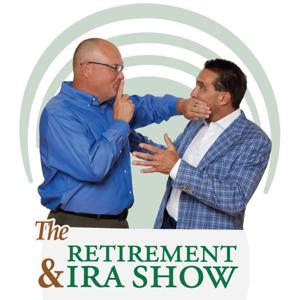

If you are not in the mood for Jim and Chris’s delightful banter, you can skip ahead to (5:45).
Chris’s Summary
Jim and I continue working through Ed Slott’s advisor quiz. After introducing the mandatory Roth catch up rule last week, we now focus on how W-2 wage definitions determine who’s affected, which plan types are exempt, and how administrative delays impact implementation. We also clarify rules around QCDs from inherited IRAs and debunk common errors made by ChatGPT when interpreting the 60-day rollover rule and plan eligibility.
Jim’s “Pithy” Summary
Chris and I keep going with the Ed Slott quiz, diving deeper into how the mandatory Roth catch up rule will actually work when it takes effect. We go through how wages are defined for this purpose—specifically Box 3 of the W-2, not Box 1—and why that matters for who’s subject to the rule. That single detail creates big carve-outs for groups like self-employed individuals and many state or local government employees who don’t pay into Social Security. We also highlight how a plan’s design matters. If your employer doesn’t offer a Roth option and you’re over the wage limit, you won’t be allowed to make catch up contributions at all. And we explain how the one-year look-back works, including why a job change can give someone a temporary exemption.
ChatGPT joins us again and gets several key questions wrong—like saying the rule applies to SIMPLE IRAs (it doesn’t), or insisting QCDs can’t come from inherited IRAs. Wrong again. If the beneficiary is over 70½, QCDs are allowed, and the IRS has even designated a code on the 1099-R for that exact scenario. Once it thought a little harder, Chat backed off and conceded. Smack talk retracted.
We close with a scenario on the 60-day rollover rule—what happens if a distribution check shows up while you’re out of town for months. Chat claimed the clock starts when it hits your mailbox. But that’s not how it works. According to private letter rulings, the 60-day window starts when you actually receive the check.
The post Roth Catch Ups and the 60-Day Rollover Rule: EDU #2535 appeared first on The Retirement and IRA Show.
 View all episodes
 By Jim Saulnier, CFP® & Chris Stein, CFP®

4.3
704704 ratings
If you are not in the mood for Jim and Chris’s delightful banter, you can skip ahead to (5:45).
Chris’s Summary
Jim and I continue working through Ed Slott’s advisor quiz. After introducing the mandatory Roth catch up rule last week, we now focus on how W-2 wage definitions determine who’s affected, which plan types are exempt, and how administrative delays impact implementation. We also clarify rules around QCDs from inherited IRAs and debunk common errors made by ChatGPT when interpreting the 60-day rollover rule and plan eligibility.
Jim’s “Pithy” Summary
Chris and I keep going with the Ed Slott quiz, diving deeper into how the mandatory Roth catch up rule will actually work when it takes effect. We go through how wages are defined for this purpose—specifically Box 3 of the W-2, not Box 1—and why that matters for who’s subject to the rule. That single detail creates big carve-outs for groups like self-employed individuals and many state or local government employees who don’t pay into Social Security. We also highlight how a plan’s design matters. If your employer doesn’t offer a Roth option and you’re over the wage limit, you won’t be allowed to make catch up contributions at all. And we explain how the one-year look-back works, including why a job change can give someone a temporary exemption.
ChatGPT joins us again and gets several key questions wrong—like saying the rule applies to SIMPLE IRAs (it doesn’t), or insisting QCDs can’t come from inherited IRAs. Wrong again. If the beneficiary is over 70½, QCDs are allowed, and the IRS has even designated a code on the 1099-R for that exact scenario. Once it thought a little harder, Chat backed off and conceded. Smack talk retracted.
We close with a scenario on the 60-day rollover rule—what happens if a distribution check shows up while you’re out of town for months. Chat claimed the clock starts when it hits your mailbox. But that’s not how it works. According to private letter rulings, the 60-day window starts when you actually receive the check.
The post Roth Catch Ups and the 60-Day Rollover Rule: EDU #2535 appeared first on The Retirement and IRA Show.
443 Listeners

803 Listeners

1,313 Listeners

458 Listeners
534 Listeners

552 Listeners

671 Listeners

581 Listeners

812 Listeners

199 Listeners

567 Listeners

946 Listeners

183 Listeners
141 Listeners
105 Listeners