
Sign up to save your podcasts
Or

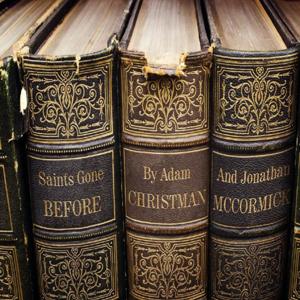


With a severe shortage of chocolate, Saints Gone Before is proud to present part 5 of The First Epistle of Clement, starting with ch. 53 v. 1. Today's reading completes the text. Joseph B. Lightfoot finished this translation in 1890. For more context on the letter, please listen to the opening for episode 55 of Saints Gone Before.
Check us out in 2 weeks to see what we're reading next!
Requests for readings: churchhistorypodcast (at) gmail (dot) com, or @OralHistoryPod on Twitter, or "An Oral History of the Church" on Facebook.
Reader: Adam Christman
Saints Gone Before created by Jonathan McCormick and Adam Christman
Produced and edited by Adam Christman
With the knowledge that I don't have to carry the weight of who I've been, Saints Gone Before is reading part 4 of The First Epistle of Clement, starting with ch. 39 v. 1. Joseph B. Lightfoot finished this translation in 1890. For more context on the letter, please listen to the opening for episode 55 of Saints Gone Before.
Our next episode will finish First Clement.
Requests for readings: churchhistorypodcast (at) gmail (dot) com, or @OralHistoryPod on Twitter, or "An Oral History of the Church" on Facebook.
Reader: Adam Christman
Saints Gone Before created by Jonathan McCormick and Adam Christman
Produced and edited by Adam Christman
With a warm winter smile, Saints Gone Before is reading part 3 of The First Epistle of Clement, starting with ch. 24 v. 1 and ending with ch. 38. Joseph B. Lightfoot finished this translation in 1890. For more context on the letter, please listen to the opening for episode 55 of Saints Gone Before.
Requests for readings: churchhistorypodcast (at) gmail (dot) com, or @OralHistoryPod on Twitter, or "An Oral History of the Church" on Facebook.
Reader: Adam Christman
Saints Gone Before created by Jonathan McCormick and Adam Christman
Produced and edited by Adam Christman
With a welcome respite, Saints Gone Before presents part 2 of The First Epistle of Clement, starting with 14:1 and ending at 23:5. Joseph B. Lightfoot finished this translation in 1890. For more context on the letter, please listen to episode 55 of Saints Gone Before, the episode right before this one.
Requests for readings: churchhistorypodcast (at) gmail (dot) com, or @OralHistoryPod on Twitter, or "An Oral History of the Church" on Facebook.
Reader: Adam Christman
Saints Gone Before created by Jonathan McCormick and Adam Christman
Produced and edited by Adam Christman
With a cup of kindness yet, Saints Gone Before is kicking off 2018 with a reading of The First Epistle of Clement, or The First Epistle of Clement to the Corinthians, translated by Joseph B. Lightfoot in 1890. The purpose of the letter was to address the Corinthian church after several elders were charged and removed for what the Corinthians thought was especially grievous sin. Clement thought the disciplinary action they used was not exactly appropriate. This letter was written in the first or second century AD, probably somewhere between the years 80 and 140. Some even date it to the same period in which John wrote The Book of Revelation. This letter is unsigned and, therefore, anonymous, but scholarship is largely agreed that it is likely it was written by Clement of Rome, the bishop of Rome in that period in history. It is one of the earliest Christian documents written outside of the New Testament. Because of what is found within, not only was it well-received in many congregations across the ancient church, it was even considered part of the NT canon in Egypt and Syria, for a time. Stay tuned to the end for two special announcements at the end of the episode.
Requests for readings: churchhistorypodcast (at) gmail (dot) com, or @OralHistoryPod on Twitter, or "An Oral History of the Church" on Facebook.
Reader: Adam Christman
Saints Gone Before created by Jonathan McCormick and Adam Christman
Produced and edited by Adam Christman
With no gift to bring that's fit to give the King, pa rum pa pum pum, Saints Gone Before offers a special "Saints at Christmas" episode. The titles and authors for each short text is located in the show notes.
"A Creed for Christmas Worship." It is adapted from Philippians 2:5-11 by Randolph W. Sly in vol. 5 of "The Complete Library of Christian Worship," ed. Robert E. Webber.
"Ah, Dearest Jesus, Holy Child", written by Martin Luther in 1535, translated into English by Catherine Winkworth.
"All Praise to Thee, Eternal Lord," also by Luther (1524), translated anonymously in 1858.
A reading of Luke 2:1-40 from the King James Version (1611).
Requests for readings: churchhistorypodcast (at) gmail (dot) com, or @OralHistoryPod on Twitter, or "An Oral History of the Church" on Facebook.
Reader: Adam Christman
Saints Gone Before created by Jonathan McCormick and Adam Christman
Produced and edited by Adam Christman
With a rudimentary lathe, Saints Gone Before is proud to present a reading of John Calvin's "The Institutes of the Christian Religion." This is the second reading of a short, two-part series consisting of Book Three, Chapter 7, "A Summary of the Christian Life. Of Self Denial." The translation is by Henry Beveridge in 1845. Calvin's Institutes have a significant impact on Protestant theology starting with its Latin first edition in 1536. Stay with us until the end of the episode to hear what we're offering next Monday on Christmas Day, 2017.
Requests for readings: churchhistorypodcast (at) gmail (dot) com, or @OralHistoryPod on Twitter, or "An Oral History of the Church" on Facebook.
Reader: Adam Christman
Saints Gone Before created by Jonathan McCormick and Adam Christman
Produced and edited by Adam Christman
With a conspicuous flange, Saints Gone Before is proud to present a reading of John Calvin's "The Institutes of the Christian Religion." This is Book Three, Chapter 7, "A Summary of the Christian Life. Of Self Denial." The translation is by Henry Beveridge in 1845. Calvin's Institutes have a significant impact on Protestant theology starting with its Latin first edition in 1536.
This new series is part 1 of 2 for a very short series. Come back next week for the final reading of Calvin on Self-Denial in the Christian life.
Requests for readings: churchhistorypodcast (at) gmail (dot) com, or @OralHistoryPod on Twitter, or "An Oral History of the Church" on Facebook.
Reader: Adam Christman
Saints Gone Before created by Jonathan McCormick and Adam Christman
Produced and edited by Adam Christman
With an inaugural year, Saints Gone Before is proud to present Martin Luther's "The Babylonian Captivity of the Church," part 18. The translation comes by Henry Wace and C. A. Buchheim, First Principles of the Reformation, London: John Murray, 1883. "Babylonian Captivity" is a text in which Luther re-examines the seven sacraments of the Catholic Church in light of his readings of Scripture. Today's reading features Luther's thoughts on "Extreme Unction," and is the final reading in this text, which happens to coincide with the one year anniversary of our launching this podcast. For the name of next week's reading, please stay tuned through the end of the episode.
Requests for readings: churchhistorypodcast (at) gmail (dot) com, or @OralHistoryPod on Twitter, or "An Oral History of the Church" on Facebook.
Reader: Adam Christman
Saints Gone Before created by Jonathan McCormick and Adam Christman
Produced and edited by Adam Christman
With an iridescent persimmon, Saints Gone Before is proud to present Martin Luther's "The Babylonian Captivity of the Church," part 17. The translation comes by Henry Wace and C. A. Buchheim, First Principles of the Reformation, London: John Murray, 1883. "Babylonian Captivity" is a text in which Luther re-examines the seven sacraments of the Catholic Church in light of his readings of Scripture. Today we're finishing his section on sacraments. Next Monday will be the final reading in this series! That means a different text is only 2 weeks away.
Requests for readings: churchhistorypodcast (at) gmail (dot) com, or @OralHistoryPod on Twitter, or "An Oral History of the Church" on Facebook.
Reader: Adam Christman
Saints Gone Before created by Jonathan McCormick and Adam Christman
Produced and edited by Adam Christman
From the publisher's feed