
Sign up to save your podcasts
Or

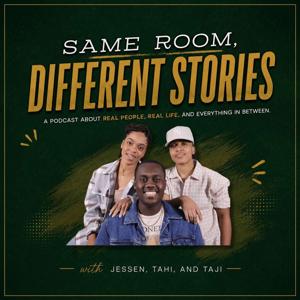


Does something have to last forever to mean something? Can a friendship end without being a failure? And why do we sometimes find ourselves missing people, places, and moments we didn't even realize were so important while we were living them?
In Episode 7 of Same Room, Different Stories, Jessen, Tahi, and Taji have an honest conversation about nostalgia, friendship breakups, relationships, love, loss, change, and the experiences that shape who we become. We explore why certain memories stay with us long after a chapter has ended, how we make sense of relationships that don't last, and whether something can still be meaningful even when the people involved remember it differently.
From losing a longtime best friend to missing the community of an old apartment, we talk about the friendships, places, and everyday experiences that once felt permanent. Jessen shares the story of an unforgettable date in Miami, a night that meant more to him than he expected, and the complicated feeling of wondering whether it meant just as much to the other person. We also reflect on Call Me by Your Name and All of Us Strangers, and how those films explore temporary love, longing, grief, and the beauty of experiences we can't hold on to forever.
But nostalgia isn't always comforting. Sometimes remembering how good something once was makes us wonder whether we'll ever experience anything like it again. We discuss the fear of comparing every new experience to the past, the difficulty of letting go, and the possibility that some of our best moments are still ahead of us.
The conversation also turns toward the present. How often do we tell ourselves we'll finally start living once we lose the weight, find a relationship, reach a career milestone, or become the person we imagine we're supposed to be? Jessen reflects on body image, working in healthcare, and a memorable encounter with a patient that reminded him how even brief connections can leave a lasting impact. And what happens when we realize that the ordinary moments we're rushing through today might eventually become the memories we miss most?
Ultimately, we reflect on the importance of community, chosen family, and appreciating the people in our lives while they're still here. This episode isn't about pretending that endings don't hurt or that moving on is always easy. It's about recognizing that something doesn't have to be permanent to be valuable, learning to appreciate what we have while we have it, and making room for whatever comes next. As always, there are different stories in the same room.
In This Episode:
Chapters:
00:00:00 — Cold Open
00:00:26 — Welcome to Same Room, Different Stories
00:01:12 — Would You Still Go for It? (Opening Game)
00:03:51 — Losing a Best Friend
00:11:06 — Does Ending Mean Failing?
00:14:28 — Missing What Places Represent
00:17:38 — Community College & the Good Old Days
00:21:53 — Does It Have to Mean the Same for Both People?
00:23:49 — The Miami Date
00:36:02 — Lessons from Call Me by Your Name & All of Us Strangers
00:38:20 — Can It Ever Be This Good Again?
00:45:20 — Are We Waiting for Life to Start?
00:53:56 — When Does Holding On Become a Problem?
00:57:40 — Appreciating Our Community While It's Here
01:03:30 — Final Thoughts & Outro
Join the Conversation!
Is there a friendship, relationship, place, or moment from your past that you still think about? Do you believe something can be meaningful even if it doesn't last? And if you could relive one of your favorite memories knowing exactly how it would end, would you still choose to experience it?
We want to hear your story, your perspective, or what you would have said if you were sitting in the room with us.
Join the Room!
Want to stay connected beyond the episodes? Subscribe to our newsletter for behind-the-scenes updates, episode announcements, exclusive reflections, and more conversations from Same Room, Different Stories.
Newsletter: https://bit.ly/JointheRoomSRDS
Follow us on Instagram and TikTok: @srdspod
Email us: [email protected]
Website: https://srdspod.transistor.fm
Same Room, Different Stories is hosted by Jessen, Tahi, and Taji. We may be in the same room, but we never have the exact same story.
#Nostalgia #FriendshipBreakups #Relationships #LettingGo #PersonalGrowth #Podcast
What does it actually mean to be a kind person, and can kindness ever really come without expectations?
In Episode 6 of Same Room, Different Stories, Jessen, Tahi, and Taji have an honest conversation about kindness, people-pleasing, boundaries, reciprocity, resentment, friendship, and the expectations we place on the people we care about.
We explore the difference between being nice and being kind, where we learned to put other people first, and what happens when generosity starts costing us more than we realize. From gift-giving and birthdays to money, showing up for friends, and being the person everyone knows they can depend on, we talk about the ways being “the nice one” can slowly turn into over-giving.
But when does wanting the same effort back become keeping score?
We talk about what it feels like to constantly show up for someone who doesn’t show up for you, realizing that someone you consider a best friend may not see the friendship the same way, and the resentment that can build when you continue giving long after something feels uneven.
The conversation also challenges the idea that the people closest to us should automatically know what we need. If you have to ask someone to check in, show up differently, or treat you a certain way, does it still count? And at what point does forgetting stop being an accident and start becoming a pattern?
We also reflect on the difference between someone naturally understanding you and someone intentionally taking the time to learn you. Because relationships change, people change, and sometimes the people who care about us most are not the ones who instinctively “get it”, they’re the ones willing to keep paying attention.
The conversation keeps coming back to one question: if kindness really is free, why do we feel hurt when it isn’t returned?
Maybe expecting reciprocity doesn’t mean every favor needs to be repaid or every relationship has to be perfectly equal. Maybe the “price” of kindness is simply effort, consideration, communication, and knowing that the people you pour into are willing to pour into you too.
This episode is not about becoming less kind. It is about learning when kindness needs boundaries, when expectations are reasonable, and when the way someone shows up for you is telling you something about the relationship.
As always, there are different stories in the same room.
In This Episode:
Chapters:
00:00:00 — Cold Open
00:00:21 — Welcome to Same Room, Different Stories
00:00:55 — What Are the Benefits of Being Nice?
00:03:26 — Where Did We Learn to Be Nice?
00:18:58 — Is Being Nice Still Important?
00:36:26 — The Hardest Lessons About Being Nice
00:37:31 — Reciprocity vs. Keeping Score
00:48:07 — What Does It Mean to Show Up for Your Friends?
00:52:43 — When Doing Too Much Turns Into Resentment
01:03:53 — Should Someone Naturally “Get” You or Learn You?
01:08:40 — Final Thoughts & Outro
Join the Conversation!
Have you ever realized you were giving more to a friendship or relationship than the other person was?
Do you think expecting reciprocity makes kindness transactional, or is some level of mutual effort necessary for a healthy relationship?
And if you have to tell someone how you want to be treated, does their effort afterward still feel genuine?
We want to hear your story, your perspective, or what you would have said if you were sitting in the room with us.
Stay in the Room
Want more than what makes it into the episode?
Join the Same Room, Different Stories newsletter for updates from the room, episode previews, behind-the-scenes moments, early looks at what we’re working on, and more from the conversations that continue after the cameras stop rolling.
Join the mailing list through our website:
Want to stay connected beyond the episodes? Subscribe to our newsletter for behind-the-scenes updates, episode announcements, exclusive reflections, and more conversations from Same Room, Different Stories.
Newsletter: https://bit.ly/JointheRoomSRDS
Follow us on Instagram and TikTok: @srdspod
Email us: [email protected]
Website: srdspod.transistor.fm
Same Room, Different Stories is hosted by Jessen, Tahi, and Taji.
We may be in the same room, but we never have the exact same story.
#Friendship #Boundaries #PeoplePleasing #Reciprocity #Kindness
What makes something masculine, and why do we so often treat masculinity and manhood like they mean the same thing?
In this episode of Same Room, Different Stories, Jessen, Tahi, Taji, and Dre unpack the ways masculinity shows up across gender, sexuality, relationships, family, fatherhood, and everyday life.
We talk about what we were taught masculinity was supposed to look like growing up, how those expectations still shape the way we move through the world, and what happens when the person you actually are does not fit neatly inside that definition.
From navigating masculinity as a masc lesbian and a gay man, to the expectations placed on straight men, dating, emotional vulnerability, friendships, protector roles, and fatherhood, the conversation keeps coming back to one question, how much of masculinity is who we are, and how much of it are we performing because we were taught to?
We also turn the conversation back on ourselves. Even when we recognize the limitations of traditional gender roles, how often do we still reinforce them in who we date, what we expect from partners, who we expect to protect us, and what we consider masculine or feminine?
This episode is not about deciding the “right” way to be masculine. It is about questioning what we inherited, figuring out what still fits, and deciding which parts of masculinity we actually want to carry forward.
As always, there are different stories in the same room.
In This Episode:
Chapters
00:00:00 — Cold Open
00:00:34 — Welcome to Same Room, Different Stories
00:01:05 — Icebreakers with Dre
00:05:15 — What Does Masculinity Mean?
00:06:00 — How We Met Dre
00:12:30 — What We Learned About Masculinity Growing Up
00:21:15 — How Masculinity Affects Us Today
00:44:00 — Performance vs. Authenticity
00:55:00 — How Different Environments Change the Way We Show Up
1:01:00 — Masculinity in Relationships
1:05:00 — Fatherhood & Masculinity
1:09:00 — Are We Reinforcing the Same Stereotypes?
1:17:00 — What Does Healthy Masculinity Look Like?
1:24:00 — Final Thoughts & Outro
Join the Conversation!
What does masculinity mean to you now, and how much of that definition came from what you were taught growing up?
We want to hear your story, your perspective, or what you would have said if you were sitting in the room with us.
Follow us on Instagram/TikTok: @srdspod
Want to stay connected beyond the episodes? Subscribe to our newsletter for behind-the-scenes updates, episode announcements, exclusive reflections, and more conversations from Same Room, Different Stories.
Newsletter: https://bit.ly/JointheRoomSRDS
Email us: [email protected]
Website: srdspod.transistor.fm
Same Room, Different Stories is hosted by Jessen, Tahi, and Taji.
We may be in the same room, but we never have the exact same story.
Who gets the full version of you—and who only gets the edited version?
In this episode of Same Room, Different Stories, Tahi leads a conversation about the ways we make ourselves smaller depending on the room we’re in, the people we’re around, and what we’ve learned we need to do to feel accepted.
We talk about where shrinking starts, how family, relationships, work, and past experiences can shape the way we show up, and how easy it is to confuse being agreeable with being authentic.
The conversation gets especially personal when we get into relationships: performing a version of yourself you think someone else will love, walking on eggshells, compromising without losing yourself, and learning that the right people should make room for who you actually are.
We also talk about the responsibility that comes with healing. Even if someone else taught you to make yourself smaller, at what point do you have to decide that you’re ready to take up space again?
In this episode, we talk about:
CHAPTERS
00:00:00 Cold Open
00:00:14 SRDS Bumper & Intro
00:00:50 Who Gets the Full You?
00:07:05 Why Do You Shrink?
00:08:22 Times We Were Told “Too Much”
00:10:13 High School Stories
00:16:00 Finding Authenticity in College
00:17:20 Wrong Place, Wrong Audience
00:20:42 Shrinking in Relationships
00:27:02 Trauma Explains, Not Excuses
00:29:45 Does Love Require You to Shrink?
00:33:08 Small Talk & Deep Connections
00:43:20 Making Others Feel Small
00:49:42 Taking Up Space vs. Making It About You
00:55:28 What Won’t You Tone Down?
01:02:43 Closer
We may be in the same room, but we never have the exact same story.
Where have you caught yourself shrinking—and what part of yourself are you no longer willing to make smaller?
Follow or subscribe to Same Room, Different Stories on YouTube, Apple Podcasts, Spotify, or wherever you listen to podcasts.
Leave a comment or review and let us know what you thought about the episode.
Want to stay connected beyond the episodes? Subscribe to our newsletter for behind-the-scenes updates, episode announcements, exclusive reflections, and more conversations from Same Room, Different Stories.
Newsletter: https://bit.ly/JointheRoomSRDS
Follow us @srdspod for clips, updates, and more from the show.
Have a story, critique, or perspective you want to share? Reach out to us at [email protected].
Find more from us at srdspod.transistor.fm.
New episodes every other week.
Have you ever liked someone so much that you started falling for who you thought they could be instead of who they were actually showing you?
In this episode of Same Room, Different Stories, Jessen, Tahi, and Taji are joined by their friend Andy for a conversation about attraction, projection, mixed signals, red flags, and the stories we sometimes build around the people we want.
Jessen and Andy share the unusual way they became friends through someone they had both been interested in—and how differently they experienced that connection. From there, the room gets into the bigger question: When we really like someone, how much are we seeing them clearly, and how much are we filling in the gaps ourselves?
We talk about chemistry versus compatibility, believing in someone’s potential, recognizing behavior that doesn’t match the version of a person we created in our heads, and the frustrating gray area between being misled and ignoring what was already in front of us.
As always, there are different stories in the same room.
In This Episode:
Chapters
00:00 Cold Open
00:43 Intro & Icebreakers
10:45 The Topic & Code Names
12:21 Andy’s Story: George
18:07 Taji’s Story: Seth
21:00 Tahi’s Story: Jane Doe
24:40 The Cody Lore
40:25 What Did You Add?
48:15 Red Flag, Green Flag Game
1:01:00 Why Do We Hold Onto Potential?
1:10:19 Being Alone in a Relationship
1:13:31 Closing Reflections
1:19:55 Outro
Join the Conversation!
Have you ever realized that the person you liked and the person they actually were weren’t quite the same?
We want to hear your story, your perspective, or what you would have said if you were sitting in the room with us.
Follow us on Instagram/Tiktok: @srdspod
Want to stay connected beyond the episodes? Subscribe to our newsletter for behind-the-scenes updates, episode announcements, exclusive reflections, and more conversations from Same Room, Different Stories.
Newsletter: https://bit.ly/JointheRoomSRDS
Email us: [email protected]
Website: srdspod.transistor.fm
Same Room, Different Stories is hosted by Jessen, Tahi, and Taji.
We may be in the same room, but we never have the exact same story.
We all grow up with some version of a plan — the career, the relationship, the timeline, and the person we think we're supposed to become. But what happens when that plan changes, falls apart, or stops feeling like something you even want?
In this episode, Taji, Jessen, and Tahi look back at the lives they once imagined for themselves and how differently things actually turned out. From Tahi nearly joining the Army, to Jessen letting go of a lifelong plan to become a doctor, to Taji navigating career changes, military aspirations, and learning not to attach her identity to a role, the three unpack what it means to change direction without treating that change as failure.
The conversation gets into family and cultural expectations, feeling behind while watching other people reach their milestones, the pressure to make the “right” career choice, relationships that didn't work out, reacting versus responding when life changes, and the difference between having a plan and trying to control exactly how your life unfolds.
Most importantly, they ask whether Plan B really has to be second best — or whether some of the best parts of life only become possible once Plan A falls apart.
In this episode:
Question of the episode: What happens after Plan A?
We'd love to hear yours! What did you originally think your life would look like, what changed, and what happened after?
Subscribe to Same Room, Different Stories on Apple Podcasts, Spotify, YouTube, or wherever you listen to podcasts.
Website: srdspod.transistor.fm
Want to stay connected beyond the episodes? Subscribe to our newsletter for behind-the-scenes updates, episode announcements, exclusive reflections, and more conversations from Same Room, Different Stories.
Newsletter: https://bit.ly/JointheRoomSRDS
Email: [email protected]
New episodes every other week!
00:00 Intro
00:18 Podcast Cold Open
01:04 Meet the Hosts & Episode Intro
01:35 Our Original Plan A
06:43 How Close Did We Get?
09:42 Why We Switched Paths
17:23 Reacting vs. Responding
27:51 Letting Go of Plan A
37:40 Nursing Journey
39:51 Social Media & Comparison
52:14 Defining Resilience
1:02:39 Fear of the Unknown & Plan B
1:10:28 Wrapping Up
Three friends—Jessen, Tahi, and Taji—launch their podcast Same Room, Different Stories with the question, “Is this really my personality or just what happened to me?” They discuss traits people associate with them—lazy/quiet/funny, reserved/respectful, nice/blunt—and how identity shifts by setting, especially as Haitian Americans raised to “perform.” The conversation moves into roles in friendships and family, including follower/supporter, helper, “mother/dad” leader, dependable one, black sheep vs. golden child, and how validation, boundaries, and needing to feel useful affect them.
A Hawaii zip-lining mishap—road closure, missed instructions, car stuck in mud, no service, rain, and mosquitoes—becomes a lesson in being present and reading texts. They play “Personality or Coping,” labeling humor, overthinking, conflict avoidance, avoiding help, emotional distance, over-explaining, staying busy, and people pleasing. Ultimately, they conclude that personality is a mix of nature and experience, with an emphasis on outgrowing overextending and learning balance.
Subscribe to Same Room, Different Stories wherever you listen so you don't miss an episode — and if something in this one hit home (or you think we got it wrong), email us at [email protected]. We want to build this into a real community, so your stories and criticism are genuinely welcome. Check us out on our website: SRDSPod.transistor.fm
Want to stay connected beyond the episodes? Subscribe to our newsletter for behind-the-scenes updates, episode announcements, exclusive reflections, and more conversations from Same Room, Different Stories.
Newsletter: https://bit.ly/JointheRoomSRDS
00:00 Cold Open
01:04 Show Intro
01:24 What Traits Define You?
07:59 Roles We Play
15:19 Where We Feel Authentic
16:21 Coming Out & Family Reactions
23:26 Choosing vs. Inheriting Roles
30:00 Roles We're Ready to Let Go Of
37:02 The Hawaii Road Trip Story
43:10 Game: Personality or Coping
01:04:14 Outro & Sign Off
From the publisher's feed