What if you want to honor your health, nourish your body, and have a peaceful relationship with food?
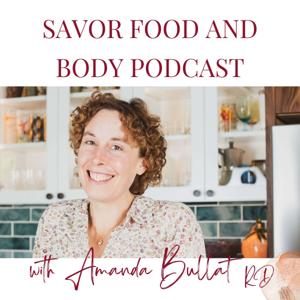
If we haven't already met, I'm Amanda Bullat RDN - registered dietitian, certified intuitive eating counselor, and a strong advocate for helping you savor food and body in midlife.
As a former athlete with disordered eating and a woman in my 40s, I live for helping women in midlife undiet their lives through intuitive eating, mindfulness, and wellness without obsession.
During the Month of January, I'll be teaching you the principles of intuitive eating and how they relate to midlife.
If you'd like more personal connection, I'm offering free drop-in office hours on Zoom every Friday, January 13 - Feb 3 at 9 AM pacific time.
Register below to get the link for these free sessions
https://alpinenutrition.ck.page/officehours
If you're not familiar with Intuitive Eating or its principles, they were co-created by 2 dietitians Evelyn Tribole RDN and Elyse Resch RDN in the mid-1990s.
I'll be sharing them in the order I typically walk clients through.
In this episode, I'll show you how to challenge the food police and discover the satisfaction factor.
The food police is that critical voice in your head speaking directly to the food you're thinking about eating or are currently eating. It's slightly different than the inner critic who shames your body shape and size, but they're close siblings.
My clients often describe the food police in 2 ways. The "health police" and the "don't gain weight" police. Examples include:
Health police: "you shouldn't eat sugar you'll get diabetes" or "you shouldn't eat fast food you'll get heart disease."
Weight police: "don't eat carbs you'll gain weight" or "you ate too many sweets/snacks over the weekend, you'd better get back on track."
How do you deal with either police?
Discover the satisfaction factor can help you deal with the food police thoughts.
This principle involves mindfulness when you make food choices and while you're eating. Some examples include, asking yourself do you want something sweet, savory, spicy, herby…something hot, cold, or room temp…something creamy, crunchy, or somewhere in between - like a salad with creamy dressing.
As you start eating whatever you chose, continue the mindfulness practice by asking yourself, is this food satisfying? Is it what you were expecting? If so, great! If not how would you change it?
The beauty of these mindfulness practices honing in on the food qualities in the present moment is that your brain has a really hard time criticizing your food choices when you're thinking about the tastes, textures, and temperatures of the food. Being present with the food allows you to savor the eating experience and notice what you like and don't like about food without commentary f
Get additional blog posts and resources for intuitive eating during menopause on my website www.alpinenutrition.org
Before you go, subscribe to the show, leave a review, and share the episode with a friend!